ON THE GROUND
Visiting Israel, Steven H. Lavin donates $30M to Hebrew University to boost physician training
The food processing magnate brought along family, friends, colleagues for the trip, particularly his children so 'they could start to become more involved' in philanthropy, he tells eJP
Courtesy
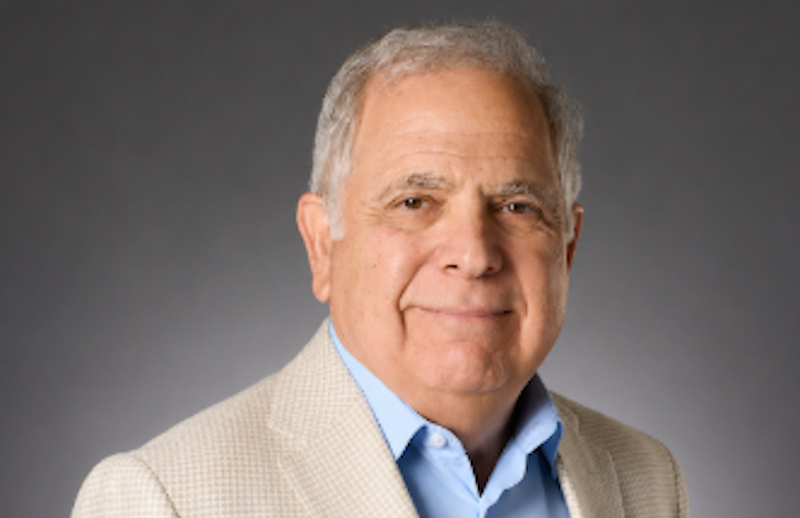
Steven Lavin.


 Add EJP on Google
Food processor and philanthropist Steven H. Lavin was supposed to visit Israel last year, but last summer’s war with Iran forced him to push off the trip. For at least 20 years, Lavin has been seriously donating to causes in Israel — not counting “when I was in cheder and we had to put dimes into the JNF [boxes] for the trees,” he quipped — and since the Oct. 7 terror attacks, he has also been on the Israel allocations committee for Chicago’s Jewish United Fund, overseeing the entire federation’s support for Israeli organizations and initiatives.
Currently in Israel, Lavin, 71, the chairman of OSI Group, the main supplier of hamburger meat to McDonald’s, among other major food chains, announced a $30 million donation to Hebrew University, for a program that is meant to significantly increase the number of physicians that its medical school can train. To his chagrin, he said, the university is also awarding him an honorary doctorate in the humanities on Monday.
“I told them they could find somebody better, but they got upset, so my wife told me to behave,” he told eJewishPhilanthropy, speaking while visiting southern Israel. “That’s the truth. So I’ll take the degree. It’s very nice of them.”
In addition to Hebrew University in Jerusalem, Lavin — joined by his children, family and friends — is visiting a wide array of organizations, communities and initiatives that he and the Chicago federation have supported and may be supporting in the future. The group also included his sisters, friends from the Chicago federation, employees from the family’s foundation, a non-Jewish couple and other family members.
Lavin said bringing “the next generation” along for this trip was important for him “so that they could start to become more involved in what’s happening in [terms of] philanthropy,” he said.
His $30 million donation to Hebrew University, he said, comes as a result of a long-standing relationship with the school and its vice president for university advancement and external relations, Yossi Gal, and a desire to merge his support for Israel with his family’s existing contributions toward medicine.
“Because of the severe shortage and growing shortage of doctors — and psychologists and technicians — both before the war but also [even] more and more visibly in the aftermath of Oct. 7, we decided to focus on that area, as well as others, but that’s the primary focus right now,” Lavin said.
“Yossi Gal, who’s an old friend of mine, from when he was the former ambassador to France, which is where I first met him, he and I had many discussions – and with the dean of the Faculty of Medicine — [about] how can how can we, the collective we as the Jewish People, can kick-start the effort to [increase] medical students in Israel,” he said.
Those discussions, he said, led to his support for the Hebrew University of Jerusalem Center for Advanced Medical Education, an initiative that aims to use artificial intelligence and other technological solutions to increase the number of medical students that can be trained in each cohort, “while keeping clinical judgment and compassionate care at the heart of medical education,” the university said in a statement.
For years, Israeli health experts have warned of a growing shortage of medical professionals in the country, with 3.5 physicians per 1,000 people (compared to an OECD average of 3.9) and only 5.6 nurses per 1,000 people (compared to an OECD average of 9.5). This has been growing as both older doctors retire — many of whom came as immigrants from the former Soviet Union — and as hundreds of Israeli physicians leave the country. Israel, which also tightened its regulations on which foreign medical schools it recognizes, has struggled to grow the number of physicians, launching several initiatives in a bid to do so. This includes opening several new medical schools — at the University of Haifa, Ariel University and Reichman University — and encouraging Jewish doctors from abroad to immigrate.
The new Hebrew University venture aims to use technology to boost the number of doctors it can train by removing as many human bottlenecks as possible, handing off training to digital solutions where it can, the school said.
“The Lavin family’s extraordinary generosity gives Hebrew University the opportunity to do something truly transformative: create a new model for medical education that responds to an urgent national need while setting a standard for the world,” said professor Tamir Sheafer, president of Hebrew University.
In a statement, the university said that the new program will also better train physicians to use artificial intelligence in their work, to learn where it can be useful and where it is limited.
“The future of medicine requires more than teaching students to use new technologies. It requires us to rethink how physicians acquire knowledge, develop clinical judgment, demonstrate competence, and learn to place the needs of the patient first,” said Dr. Eli Pikarsky, dean of the Faculty of Medicine at the Hebrew University of Jerusalem. “By combining advanced technology with rigorous assessment, expert mentorship, and human-centered care, this center will allow us to educate more physicians to a higher and more consistent standard, and to share what we learn with medical schools around the world.”
Lavin said that he arrived at the issue of the physician shortage through his work on the Chicago federation’s allocations committee, which mapped the issues in Israeli society.
“Being on the allocations committee dealing with just post-Oct. 7 issues for the federation, a lot of work was done… to see where we need to help in Israel,” he said.
“That was one factor. The second factor is that my family has been involved with the medical field and vetting medical work,” he said. “So it’s a natural fit for us to look at medical [issues].”
Lavin added that creating a center like this required far less “red tape” than other initiatives, so this could get up and running quickly, “so therefore we can have an impact faster, which is what’s important to me as well.”
Lavin said that his family’s gift also required Hebrew University to work and share its findings with other medical schools, both in Israel and around the world, including Chicago’s Rush Medical Center, which the family has supported for many years.
This was not the Lavins’ first donation to Hebrew University, having previously given $18 million to establish the Sheldon Lavin Center for Safe, Secure and Sustainable Food Systems, named in honor of Lavin’s father.
“Generally, we’ve been very quiet. Usually, these things are anonymous, but this time Yossi twisted my arm to become more public on it,” Lavin said. “It may be more helpful, and other people might want to step up and join us.”
In the spirit of his requirement that Hebrew University work with other medical schools on the program, Lavin’s group has also been visiting a number of other Israeli universities, hospitals and nonprofits.
This includes a stop at Ben-Gurion University in Beersheva; the Ibim absorption center, which houses new immigrants from Ethiopia; Kibbutz Nir Oz and other communities that were hit in the Oct. 7 attacks; and the Israel-Egypt-Gaza border.
They also visited the Adi Negev-Nahalat Eran rehabilitation center, which Lavin said the family has been supporting for some 15 years. The group’s founder, Jewish Agency Chairman Doron Almog “and Didi, his wife, are very old friends of ours,” he said.
At the rehabilitation center, Lavin said that they visited a geriatric treatment area, which is one of the only such facilities in the region, and also stopped by a recently launched school training Israelis to create prosthetics.
“It’s important to go to these places and hear from people that are actually on the ground,” he said. “When you’re in any business, you want to hear from all the people. You don’t want to just hear from one person who reports up to you. You want to talk to the people that are actually facilitating getting the objectives met. That’s kind of what we do here.”
Related News
CLOSING WORDS
In AZM address, Cosgrove links communal ‘orthodoxy’ on Israel to rising anti-Zionism among young Jews

MAGICAL EXPERIENCE
Shefa launches psychedelics retreat for Jewish professionals suffering burnout

MAJOR GIFTS
Center for Jewish History celebrates 25 years with a $25M matching grant
EXIT INTERVIEW
Elizabeth Sokolsky, longtime EVP of Birthright Israel, to retire next year
ADVANCING A VISION
N.Y. federation donates $1M toward building shared-society center named for peace activist killed on 10/7