Opinion
BACK TO THE START
A disproportionate presence: Project Prism and the case for funding early childhood Jewish education


 Add EJP on Google
In Short
How Project Prism's findings support giving early childhood Jewish education a place at the center of communal funding.
Ask most Jewish communal leaders to name the highest-leverage investment in the Jewish future, and they will point to teen trips, campus fellowships or young adult engagement. But what happens before any of that? Early childhood Jewish education (ECJE), what many still call preschool, often gets treated as a feeder system at best and babysitting at worst. New national research says the field may be overlooking its true role.
Project Prism, a recent national study of Jewish young adults commissioned by the Jim Joseph Foundation, found that 84% of respondents who attended a Jewish high school, 60% of respondents who were active in teen youth organizations and nearly 50% of respondents who joined Jewish organizations on their college campus were alumni of ECJE programs (referred to by Project Prism as “Jewish pre-school”).
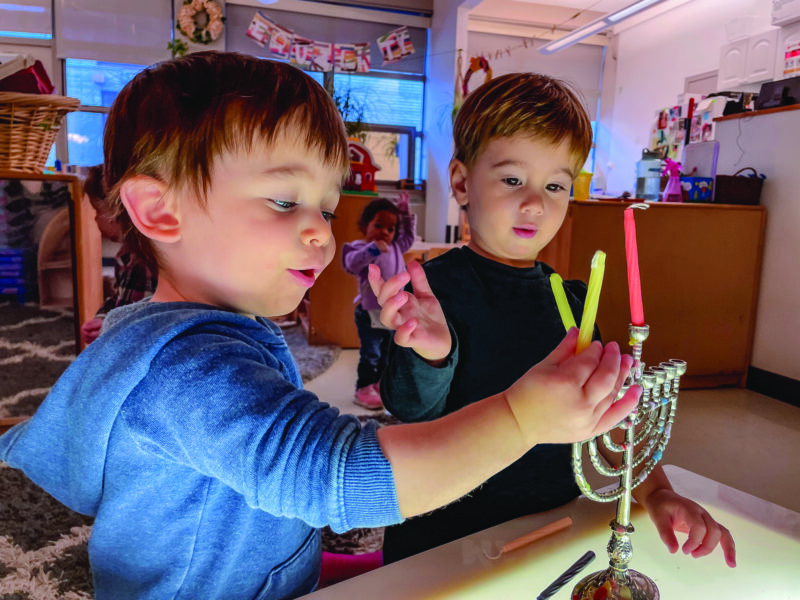
Courtesy/JCC Chicago
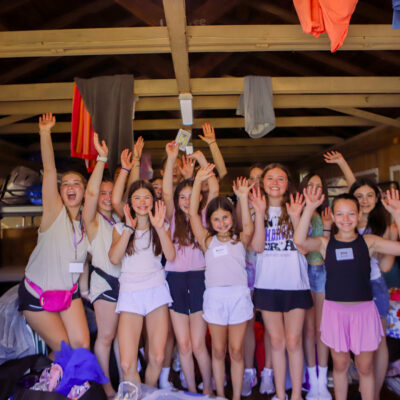
Illustrative. Children in a JCC early childhood education program in Chicago.
The key detail: Only 23% of Project Prism respondents attended an ECJE program.
It is worth being precise about what this data proves and what it does not. The pattern above reflects a strong statistical association, not a guaranteed sequence. The study does not support a causal chain running from early childhood education to camp to youth group to campus involvement. But what the study does indicate is that ECJE is disproportionately represented in the backgrounds of people who go on to engage deeply. If early childhood programs help shape that pathway, even in part, then strengthening them can give every later stage a larger pool of engaged young people to draw from.
If early childhood education is this impactful, why did it rank comparatively low in terms of giving respondents a sense of belonging, according to Project Prism data? Among all respondents who ever attended ECJE programs, only 38% said it gave them a sense of belonging, compared to 66% for summer overnight camp and 63% for becoming a bar or bat mitzvah. On this measure, early childhood education ranks near the bottom of the list.
That comparison is arguably imperfect: The wider field of research distinguishes between ECJE and Jewish camp as milestone experiences targeting different developmental stages and serving different strategic functions, and the difference in social-emotional maturity at bar- and bat-mitzvah age could account for the difference there as well.
Perhaps a more important metric for a gateway experience like ECJE is that 96% of respondents who attended ECJE said they didn’t come away from the experience feeling uncomfortable or out of place, the highest rate for any activity Project Prism measured. This emphasizes ECJE’s standing as a low-risk entry point to Jewish life as well as one with potentially high returns in Jewish engagement.
What more investment could do
A 2023 national compensation study found that low pay is pushing teachers out of the field. Centers that cannot staff a classroom turn families away. ElevatEd, the national initiative I lead, invests in educator training, mentoring and director support across 16 communities, and it offers an early look at what a modest investment achieves in a system that remains underfunded.
In a single program year, ElevatEd’s emerging educators’ reported ability to facilitate Jewish learning experiences rose from 57% to 85%, and 88% of those same educators say they are now more likely to stay in the field. Directors see it too: 85% say the investment improved retention on their team. Growth showed up across three measures of bringing Judaism into the classroom.
If we want more young adults at Hillel and in federation leadership a generation from now, early childhood classrooms are a strong place to start. For funders, this means ECJE should be funded robustly enough to make every classroom excellent; for communal leaders, it means putting early childhood education on the same strategic footing as day schools and camps, because this foundation is where the rest of Jewish communal life begins. What remains is the decision to treat ECJE like it matters this much — in funding, in professional strategy and in the everyday choices communities make about where their attention goes.
Orna Siegel is the executive director of ElevatEd, a national initiative designed to transform the field of early childhood Jewish education by recruiting, training, mentoring and supporting teachers and directors.