Opinion
HERITAGE SITE
Joseph and Rebecca Bau’s love story is now a global film. Can we save the museum that preserves their legacy?




 Add EJP on Google
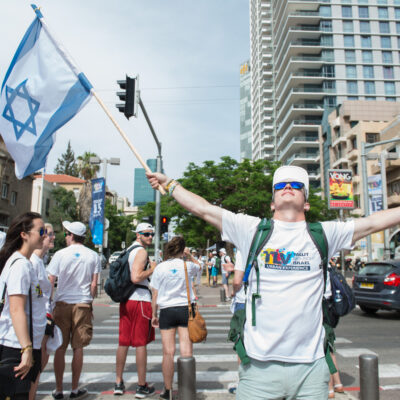
I first visited the Joseph Bau Museum in March 2024 during a volunteer trip to Israel. I expected to learn about art and history; instead, I found family.
Joseph Bau’s daughters, Clila and Hadasa Bau, greeted me warmly inside their father’s former studio in Tel Aviv. They quickly noticed my last name and laughed, declaring that I must be a long-lost cousin — their mother Rebecca Bau’s maiden name was also Tennenbaum. That moment of humor and connection set the tone for everything that followed.
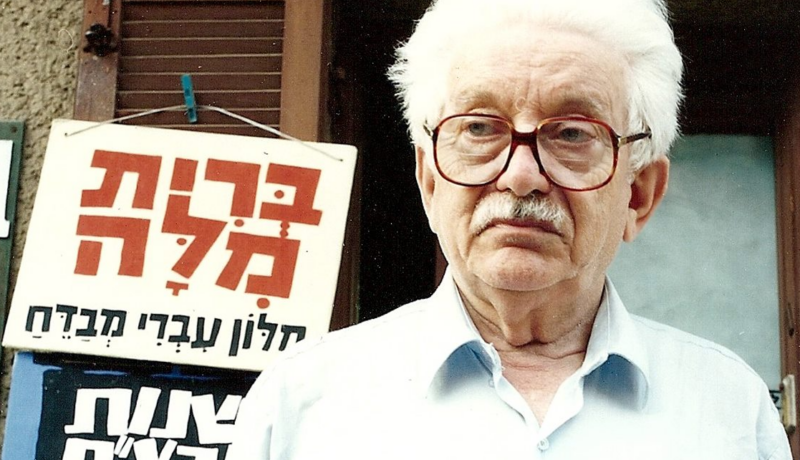
Surrounded by Joseph Bau’s original drawings, experimental animation equipment, self-designed Hebrew fonts, poetry and handmade film projectors, I encountered a story that was deeply human, creative and defiantly joyful. It was not a conventional Holocaust museum experience. It was alive.
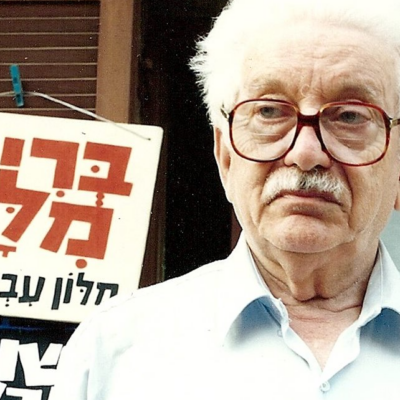
That visit gave new direction to my retirement. For the past two years, I have volunteered alongside Clila and Hadasa as a promotion and marketing consultant, helping them sustain and amplify their parents’ extraordinary legacy. In the months since that first visit, I have been privileged to learn more about Joseph Bau: an artist, forger, survivor, humorist and builder of culture whose creativity was itself a form of resistance.
Like many people, I was not initially familiar with Joseph Bau beyond learning — later — that his secret wedding to fellow prisoner Rebecca Tennenbaum held in 1944 inside the Plaszów concentration camp was depicted in Steven Spielberg’s Schindler’s List. With a veil made of scraps and fellow prisoners standing watch, their whispered vows were an act of defiance against Nazi terror.
But Joseph and Rebecca Bau’s cannot be contained in a single cinematic scene that, powerful as it is, offers only a narrow glimpse of far larger lives.
Forgery, survival and creative resistance
Before and during his imprisonment, Joseph Bau used his artistic skills to forge documents that saved Jewish lives in the Kraków Ghetto and the Plaszów labor camp, and later at Oskar Schindler’s ammunition factory in Brünnlitz. His talent for typography, forgery and visual detail became tools of survival.
After the war, Joseph and Rebecca rebuilt their lives in Israel, carrying trauma but also an unshakable commitment to creativity and joy. Joseph emerged as one of Israel’s pioneering animators and graphic artists. Often described as the “Israeli Walt Disney,” he worked as an artist, animator, typographer, poet, satirist, inventor, author and publisher.
Underlying all of his work was a singular belief: joy itself is an act of resistance.
In 1960, Joseph Bau opened his art studio in Tel Aviv. It became a cultural laboratory — part workshop, part salon, part theater — where humor, design, poetry and ideas collided. That studio is now the Joseph Bau Museum, preserving not only Bau’s artwork, but his worldview.
Joseph’s creative ingenuity also extended into covert state work. He later produced documents for the Mossad that supported the capture of Adolf Eichmann and assisted legendary Israeli spy Eli Cohen. These chapters of his life further illustrate the unusual intersection of art, intelligence and survival that defined his legacy.
For more than two decades, Clila and Hadasa Bau have managed the Joseph Bau Museum, one of more than 200 officially recognized heritage sites in Israel. Unlike institutional museums, this space remains intimate and deeply personal.
The museum houses what is considered the smallest theater in the world, where visitors watch Bau’s animations and view his original, self-made projection and copying equipment. His humor is everywhere — sometimes gentle, sometimes biting, but always human. Visitors consistently describe leaving not only informed but reawakened, reminded of creativity’s power to sustain life even after atrocity. Perhaps that explains why, in 2023 and 2024, TripAdvisor named the Joseph Bau Museum Best of the Best, placing it in the top 1% of global attractions and ranking it #1 out of 300 things to do in Tel Aviv.
And yet, recognition does not guarantee security.
The building that houses Joseph Bau’s original studio has been sold and is slated for demolition. Without a viable relocation, this singular museum — intimate, original, and irreplaceable — could disappear.
A story reaching the world at a critical moment
At the very moment the museum’s future has become uncertain, Joseph and Rebecca Bau’s story has reached a global audience through cinema.
I was honored to join Clila and Hadasa at the September 21 premiere of Paramount’s feature film “Bau, Artist at War” at the Museum of Tolerance in Los Angeles. Watching their parents’ story unfold on the big screen—survival, espionage, love, humor, and reinvention—was profoundly moving. It underscored why preserving the Joseph Bau Museum matters, not only as a memorial, but as a living testament to creativity, resistance and moral courage.
At the premiere, Clila and Hadasa walked the red carpet as stewards of a legacy that survived genocide, espionage, war, love, and reinvention — and now must contend with the pressures of modern real estate. The film’s international release has brought renewed global attention to the Bau story at precisely the moment when the museum’s future is most uncertain.
Directed by Sean McNamara, “Bau, Artist at War” was released in the United States and Canada in September 2025 and screened internationally, including special screenings in Israel. Not only is the film now available for home viewing, but it is also among the offerings on Delta, United, and American Airlines flights, introducing Joseph and Rebecca Bau’s story to travelers around the world.
Emile Hirsch stars as Joseph Bau, delivering a performance that captures Bau’s irreverent wit, moral courage, and creative defiance. Hirsch portrays Bau not simply as a Holocaust survivor, but as a multidimensional artist whose humor and imagination were essential tools of resistance. Opposite him, Inbar Lavi portrays Rebecca Tennenbaum Bau with quiet strength and emotional depth. Her performance foregrounds Rebecca’s intelligence, resilience, and moral steadiness—qualities that sustained both her and Joseph during and after the war.
The screenplay was written by Deborah Smerecnik, who also served as a producer on the film. Drawing from Joseph Bau’s memoir and extensive historical research, Smerecnik crafted a narrative that balances historical accuracy with emotional intimacy. Her dual role as writer and producer helped ensure that the Bau family’s voice, values, humor, and lived experience remained central to the film’s development.
In a parallel milestone, Joseph Bau’s memoir, Dear God Have You Ever Gone Hungry?, was republished in January 2025 by Blackstone Publishing as Bau: Artist at War. The new edition includes a foreword by daughters Clila and Hadasa Bau, offering readers insight into their father’s legacy and voice, as well as an introduction by McNamara and an afterword by Lavi.
Together, the film and the memoir allow global audiences to encounter Joseph Bau’s story in his own words and through cinematic interpretation — at the very moment the physical space preserving his life’s work is at risk.
We are living in a time when Holocaust survivors are leaving the world and historical truth is increasingly challenged. The Joseph Bau Museum is not just a repository of artifacts; it is a living expression of how one man, and one family, chose creativity, humor and love in the aftermath of devastation.
To lose a museum this personal, this joyful, and this defiant would mean losing a rare compass for understanding how art can confront hatred without surrendering humanity.
Joseph and Rebecca Bau did not endure the Holocaust only to have their legacy quietly erased by circumstance. They survived to teach us that love can outlast empires, humor can subvert tyranny and creativity can rebuild what hatred tries to destroy.
Their story is not only history — it is instruction. And preserving it — through film, books and the living space where it was created — is a responsibility that extends beyond any one family or institution. It is a reminder that the brightest resistance is not only to survive, but to build, to create and to love anyway.
Joseph and Rebecca Bau did not simply leave behind history. They left a model for how to carry light forward even when the world grows dark.
Learn more about Joseph and Rebecca Bau, the film, the museum, the memoir, the traveling exhibition, in-person and virtual tours and related educational initiatives, and experience Joseph Bau’s legacy firsthand by visiting the Joseph Bau Museum at 9 Berdichevsky Street in Tel Aviv (beside Rothschild Blvd.) on their next trip to Israel and by exploring the museum’s immersive virtual tour.
Lee Tanenbaum is a metro Atlanta-based writer and volunteer advocate for the Joseph Bau Museum.