Valuing Our Advancing Jewish Professionals




 Add EJP on Google
by Mark S. Young
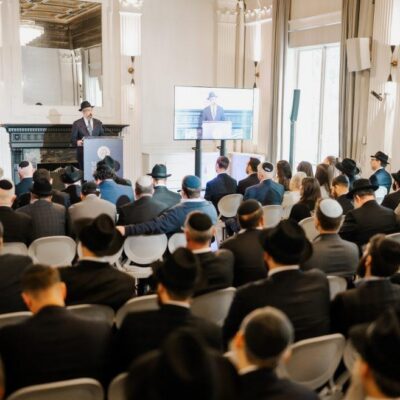
While attending The Jewish Education Project’s Jewish Futures Conference earlier this week in New York, I figured it a safe bet that the hundreds in attendance are all working to secure the Jewish future. If we indeed all are, it would be logical to prioritize training, nurturing, and valuing those who dedicate their professional lives to our community so we are strong for generations to come. I imagine few reading this article would disagree with this statement.
Is this our practice? In isolated situations I don’t doubt, though I would argue that collectively, it is not. We pour communal resources into engaging youth, teen and college-age Jews to live an active Jewish adult life while federations and foundations generously finance several graduate programs training Jewish educators and communal professionals. This is great and I have benefited from both. However, when these excited individuals enter the Jewish professional world, this attention and value appear to be lacking. Young Jewish professionals have few opportunities for meaningful professional development. Compensation levels appear to be unfairly lower than in other industries, and they are told to accept this reality. Few managers are rigorously trained in effective supervision. Each day that this reality continues, we provide advancing Jewish professionals with ample reason to remove their talents, passion, and intelligence from the field.
Last year I joined the board of Advancing Jewish Professionals of New York City (AJP-NYC). AJP-NYC, a local group of the Jewish Communal Service Association (JCSA) and supported by UJA-Federation of New York, hosts a half-dozen professional development-and community-building events at no or minimal cost to Jewish professionals each year, targeting those in the first ten to fifteen years of their career. AJP-NYC inspired me as a 22-year-old entry level Jewish professional to dedicate my career to this soul-filling work, despite temptations of better pay and supervision elsewhere. I fear that Jewish professionals today still must make this unfair choice, and may not choose to stay.
What can both leaders and consumers of Jewish communal life do to better value our advancing Jewish professionals? To ignite and hopefully sustain this conversation, I propose eight action steps.
1. Meaningful and regular professional development opportunities
Advancing Jewish professionals desire multiple opportunities for professional development, networking and community support. These opportunities ignite curiosity, challenge assumptions, strengthen skill sets, and promote healthy, directed professional growth. AJP-NYC has played a key role over the past decade for professionals in Metro NYC. By providing workshops on fundraising, marketing, and organization skills, opportunities to volunteer, and social events, AJP-NYC creates a community of like- minded individuals who care about each other’s work and appreciate guidance from peers and community leaders. Similar groups, often called JPros in cities across North America, are doing the same. Organizations who hire these advancing Jewish Professionals should also provide more professional development and community-building opportunities for their young staff.
2. Good and Fair Compensation
Today’s economy continues to be challenging for Jewish organizations but this should not be an excuse to de-value young talent with low compensation levels. It is also hurtful and inefficient to the organization that aims to retain talent and succession plan for the future. Therefore, it is only logical that organizations properly recognize and adequately pay advancing Jewish professionals. Through strong participation in the just released Jewish Communal Professional Compensation Survey, we hopefully will soon find out how stark this pay inequity likely is. I challenge organizations to consider the high-costs of turnover or micromanaging an under-qualified employee when setting compensation levels. Over time, valuing talented advancing Jewish professionals through attractive compensation will be less costly and increase each organization’s mission success. It is worth the investment.
3. Proper supervision
Most advancing Jewish professionals agree with the saying, “I didn’t leave my job because of the organization or my role, I left because of my boss!” Are managers in our Jewish organizations setting clear and reasonable goals, scheduling and keeping weekly check-ins with subordinates, practicing effective delegation and providing clear positive and constructive feedback? For managers without these skills, organizations should invest in more management training, auditing current practices, exposing management weaknesses and investing resources to reform and re-tool.
4. Celebrate successes
Organizations should recognize advancing Jewish professionals’ success on the job loudly and more often. They need to know when and how they are making impact, and that leadership is noticing and valuing them. Let us celebrate their achievements with more gusto, so that this recognition can be a source of motivation to excel even more.
5. Utilize Failures as Learning Experiences
Organizations and managers must also take failure or mistakes as an opportunity to promote learning and growth. Technology companies have become famous for embracing failure. Failure is how we learn and it can eventually breed success. Our advancing Jewish professionals can learn from honest and unintentional mistakes too, knowing that failure is okay and can lead to future accomplishments. Organizational leadership can take on the role of Jewish educator. They can view mistakes as teachable moments and as opportunities for mutual exploration. They can use as discussion topics that can reveal new learning. These processes can empower advancing Jewish professionals to be creative and excited to do better work, instead of feeling deflated and dejected.
6. Harness the Power of Mentorship
Speaking personally, I wouldn’t have had confidence to move forward and take risks without mentorship from several amazing Jewish leaders and colleagues. They gave me guidance, great ideas, and support when I was down, and challenged me when I might have become complacent. Our organizations should be proactive in identifying (and training) mentors for their advancing Jewish professionals. Mentors who provide confidence and fresh perspectives make a world of difference in an advancing Jewish professional’s career path and ultimate impact on the Jewish community.
7. Model what you expect
Leaders must model the behaviors, attitudes and attributes that we expect from our advancing Jewish professionals. Are we actively listening to our colleagues, our fellow organizations, even our adversaries? Are we emulating the work/life balance necessary to be successful and happy over the long-term? Are we setting fair goals for our subordinates – those that we (in theory) would set for ourselves? I suggest that each manager, leader, educator, and administrator reading this piece examine the behaviors you are modeling for your staff, identify whether those behaviors meet your own expectations and assess whether these behaviors are really healthy for the advancing Jewish professionals who work for you. Advancing Jewish professionals deserve to model healthy work practices from those they respect and admire.
8. Reflect, Reflect, Reflect
As a trainer of Jewish experiential educators, I continue to appreciate the importance of reflection, intentionally looking back on our experiences to uncover new insights, questions and ideas. Advancing Jewish professionals and their supervisors must engage in more structured reflective practice to appreciate together their work and to re-examine shared goals. Reflecting on our processes and challenging our assumptions will make us more efficient, cooperative, collaborative, and productive.
I don’t pretend that these action steps are new, innovative, or even disagreeable to most readers. I do believe they are not stated and discussed enough and therefore need to be heard, re-heard, understood and applied. Groups like AJP-NYC will continue to enhance our work and hope to collaborate with organizations and communal leaders to fulfill our mission with your support, ideas, and passion. We honor the work of our advancing Jewish professionals and hope they continue to provide their intelligence, passion and energy to the important work of strengthening the Jewish community and working for a bright Jewish future.
Mark S. Young is the Program Coordinator of the Experiential Learning Initiative at the William Davidson Graduate School of Jewish Education at the Jewish Theological Seminary. Mark is also the incoming Board Chair of the Advancing Jewish Professionals of New York City, a local group of the JCSA.