Opinion
READER RESPONDS
Synagogues as relational playgrounds




 Add EJP on Google
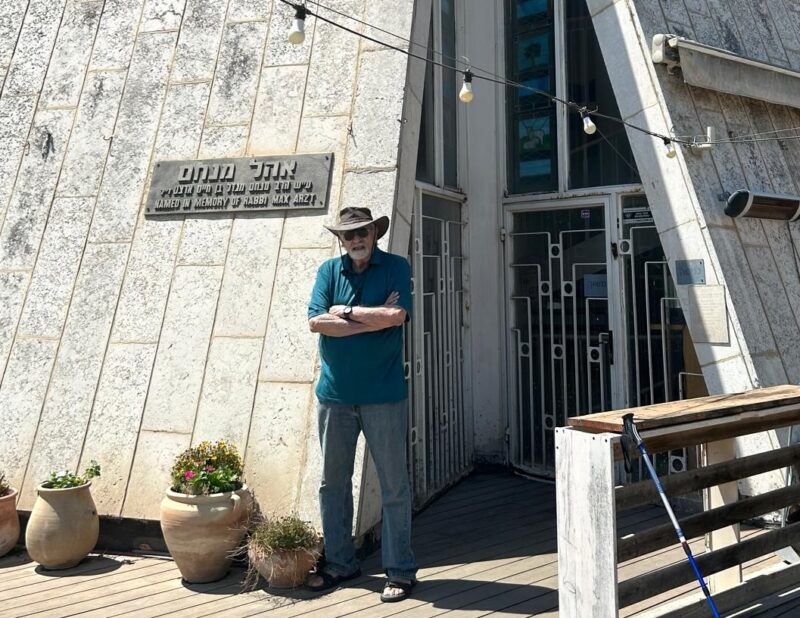
If you happen to go on a Shabbat morning to Kehillat Ramot Zion in Jerusalem’s French Hill neighborhood, you will find an 85-year-old guard sitting outside.
He comes every single week, rain or shine. He wears a big cowboy hat and has a smile on his face. He hasn’t used his gun in 50 years.
Courtesy
The author's father, Joe Romanelli.
That man is my father, Joe Romanelli.
My father didn’t grow up observant. He made aliyah almost 50 years ago. Since then, he has gone to this synagogue, his synagogue, every single week. For decades now, he has been the volunteer sitting outside the door.
I asked him once why he is so committed to going every Shabbat. He answered: comfort and connection. I come for these people. These people are my family.
That generation knew something about community. All those Americans who made aliyah alone created their community. They used their beit knesset as its name implied — a place of gathering. They would gather to connect and support each other. It was all about the relationships.
But for me, as an Israeli kid growing up in Israel, that seemed odd. Why do you need a synagogue to be in relationships? Can’t you just meet people in the street? What’s so special there?
Fast forward 40 years. Transplanted from Israel to the suburbs of New Jersey, suddenly I understood.
In Israel, everyone is in your face. You don’t have to do any work to be relational. In the suburbs in America, you need to make a conscious effort to really encounter someone.
We recently joined a synagogue. At the end of the new members’ evening, a junior rabbi caught me right outside the door and said it must be difficult being the only Israeli in the room, for people not to understand your experience.
In that moment, he didn’t heal me. He didn’t inspire me with a moving d’var Torah. He didn’t preach. He just saw me. He was relational. That comment made me feel seen and special. It just made me feel good. The whole ride back, I was touched by that one moment.
That is real relational Judaism.
Just like Rabbi Joshua Rabin wrote here recently, I also love synagogues. I agree that we should invest more in our synagogues. My proposal is that the next investment should be specifically in applied relational Judaism.
As technology gets faster and more polarizing, relationships are the one thing we can’t replace. ChatGPT can’t offer me care. It cannot offer me warmth. It can’t really make me feel seen and cared for and feel like a complex, multifaceted subject. My rabbi can. The people of my synagogue can.
People come to synagogue for the relationships. My dad got that. His generation excelled in creating communities.
I would like to offer a new way for our generation to see synagogues: as relational playgrounds.
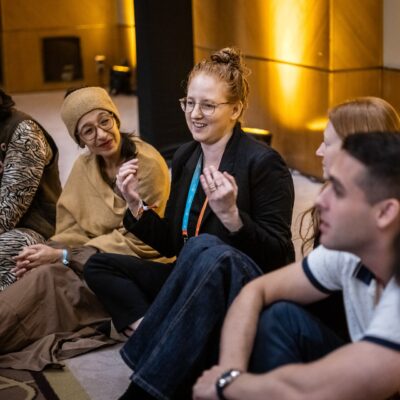
Children explore, develop and learn about themselves in the playground. For us adults, that’s what our synagogue could offer. A place where we get to see and be seen. Where we get to hear and to talk. Where we go to encounter other people who care and know us, enjoy short emotional and mental encounters and get to share different parts of ourselves with different people.
At my synagogue on Shabbat, I watch the rabbis move through the community, shaking hands and greeting people. I keep noticing the people whom they don’t see but who — for 10 seconds, 20 seconds — are eagerly awaiting that brief encounter where they can, for a short moment, be seen and validated. They are searching for that fleeting I-Thou moment.
In his book Relational Judaism, Ron Wolfson writes that “the rabbinical seminaries will need to find room for courses in relational engagement strategies, interpersonal skills, and entrepreneurship; they can and they must.” Since arriving in the U.S., I have met with over a hundred Jewish clergy and professionals. When I mention relational Judaism, they tell me the same thing: Yeah, Ron Wolfson is great. We loved his ideas. That was big 10, 12 years ago. We tried that. We tried small groups. We tried name tags.
But have we equipped our clergy and professionals with pragmatic relational skills?
I believe now is the time for the next relational evolution. It’s time to call back relational Judaism not just as a concept but as applied interpersonal skills based on our rich tradition; not just name tags and greeters, but rather a detailed, embodied relational practice that lives in one-on-one encounters. As technology alienates and polarizes us, our communities need to be a place of connection. And the way we connect is by small moments of connection, intimacy and vulnerability.
Synagogues are hiring professionals for membership engagement which is important. But the way you really engage people is through real relationships. It’s by caring. It’s one-on-one, just like that rabbi who came up to me. That is a skill that can be developed, harnessed and practiced.
Some of us want our rabbi to be knowledgeable in Torah and to inspire us, but we all want somebody who authentically cares. Somebody who remembers that I had a hip replacement, that my son is going off to college, that we just immigrated from Israel.
If we want our synagogues to become relational playgrounds, then the people in charge of the playground — the clergy and the professionals — need to be masters of those skills.
In the IDF we say “Pnei Hatsevet, Kipnei Hamefaked” (The face of the team is like the face of the commander). This movement must come from the top. Why? Because these clergy and professionals model and give permission to the congregants that it’s ok to be vulnerable, playful, honest and even flawed and lacking sometimes. It’s ok to be human. And that validation you can only get when you believe the other really sees you.
When you’re in a relationship with someone.
When you’re relational.
Jewish Relational Development
Every generation is tasked with keeping Judaism strong, relevant and meaningful to the younger generations. The world of tech and AI is moving fast, are we preparing ourselves for the next millenium?
Let’s not wait until mainstream synagogues will be less relevant.
Let’s do something different.
Let’s be proactive: I suggest we go relational.
But where and when can these professionals learn and develop them? We’re talking about people in roles where, oftentimes, there is no behind-the-scenes, backstage space. They are always in service, always performing — always “on.”
The Jewish community should invest in relational gyms for Jewish professionals. Clergy, professionals and board members can work on their interpersonal skills without pressure; where they don’t have to represent or model, but rather relax, meet and share different parts of themselves.
I envision relational development retreats called Yachasim (relations), run by Jewish relational educators, artists and clinicians, generously funded by foundations. Places would be offered to Jewish communities that are ready to go more relational. That dare to prioritize the relational over other dimensions of the service or activity.
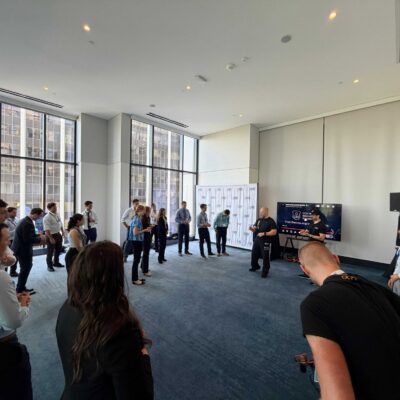
These retreats would be run in “summer camps” energy of fun, feeling and experimentations. They would be composed experiential modalities of individual, pairs and small group exercises. Participants would explore and challenge themselves through movement, psychodrama, storytelling, process groups, communication skills, conflict management, breathing, visualization, vocal explorations and more.
The focus would be on applied relational intelligence.
Such trainings would require open communication and willingness of the community to experiment with an old-new tradition.
Since this would be a deep systemic second order change for the community, we need to be prepared for resistance. Change is hard. Some members are not looking for more relationality in the spiritual experience. And that is OK. We might lose some members that refuse the change, but I believe that will attract a bigger cohort of relational jews looking for a safe, loving playground.
Real relational skills will future-proof synagogues and communities, and ensure they remain relevant and attractive for a new generation of Jews who are looking to feel. Wolfson says it best: “Internal Jewish identity is shaped by the relationships in my life.”
I now understand what my father and his generation got. It is all about relationships.
Assael Romanelli is a couples therapist and co-director of The Potential State with his wife, Galit Romanelli, where they teach applied relational Judaism to professionals, couples and communities.