Q&A
With Michael Rashes as chair, Birthright Israel Foundation aims to boost fundraising, participation
Having started his four-year term in January, Rashes will oversee most of the foundation’s campaign to raise $900 million and send 200,000 to Israel over five years
Courtesy
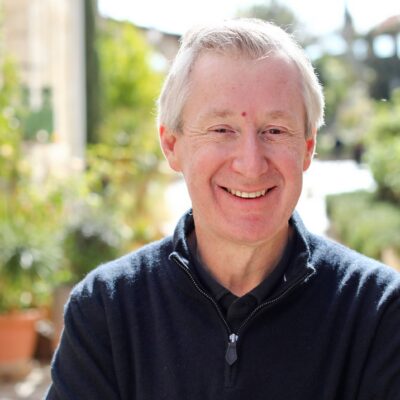
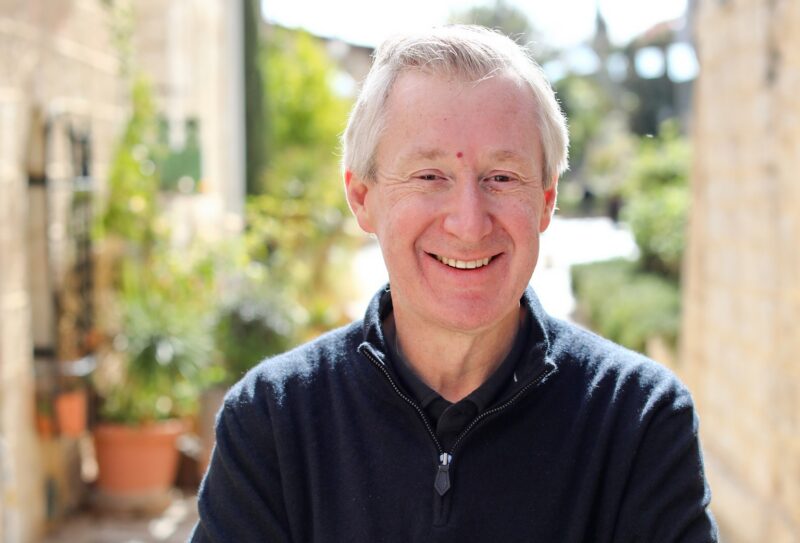
Michael Rashes




 Add EJP on Google
Michael Rashes, who was selected to serve as board chair of the Birthright Israel Foundation last month, enters the role as the organization presses forward, with ambitious goals, following a tumultuous few years both for the foundation and for the field of Israel travel more generally in the wake of the COVID-19 pandemic and the Oct. 7 terror attacks.
In January 2022, the first year of the four-year term of Rashes’ predecessor, Phil de Toledo, the organization’s trips were just beginning to rebound from pandemic-related travel declines. That year, participation rose to 35,000, up from just a few thousand travelers the year prior. “[de Toledo] helped guide the Birthright Israel Foundation, ensuring that we had the financial strength to bring all those participants to Israel after a two-year hiatus,” Elias Saratovsky, the foundation’s president and CEO told eJewishPhilanthropy.
But just a few months later, the Adelson family announced that it was scaling back its financial commitment to the foundation — after donating $500 million over 15 years — urging other donors to fill the gap. As a result, in the summer of 2023, Birthright reduced the number of participants it sent annually to Israel for its free, 10-day trip, leaving a waiting list of 20,000 participants.
“The Adelson thing was really, in my mind, misreported in many ways. What Dr. Adelson did was challenge the Jewish community that Birthright Israel should not just be a project of the Adelson family, but a project of the Jewish people,” said Saratovsky. “And under Phil’s leadership, and our entire board and our professional team, we did exactly that, right?”
Under de Toledo and Saratovsky, the foundation prioritized diversifying the donor base that sustains its mammoth operation.
And then came the Oct. 7 terror attacks, causing an enrollment drop but also the launch of a new volunteer mission. But even as Birthright Israel’s enrollment dipped, fundraising increased, Saratovsky told eJP in December 2024. In 2025, Birthright Israel had 28,000 participants, and the foundation raised over $100 million, said Saratovsky, a record both in total funds raised and in the number of donors.
In the next five years, Birthright Israel and its foundation have set their sights on a new goal — raising $900 million (of which $220 million had already been secured in November), and bringing 200,000 participants to Israel.
“Michael is the first one to raise his hand and say, ‘We have to go for this,’” Saratovsky told eJP. “He’s driven to succeed. He is unafraid to take risks, and he knows how to inspire people to make decisions that will ultimately help us motivate and inspire Jewish young adults.”
Earlier this month, eJewishPhilanthropy spoke with Rashes, partner emeritus at the Bracebridge Capital hedge fund, about his first month in the position and his vision for the foundation.
This interview has been lightly edited for length and clarity.
Nira Dayanim: What has your first month looked like?
Michael Rashes: It’s been great so far. I feel like I’m learning a lot, and to some extent, it’s like drinking from a fire hose. . I have been meeting a lot of people, both in the community, people who you know, tell me, tell me that they’ve been on trips, and tell me about their experiences, and it’s been a wonderful opportunity to really get to know the staff at Birthright even better. I don’t know that I was fully prepared for the enormity of it, to be honest. But, you know, I’m just so excited because I really think that this is just such critical work for the Jewish people. I think that what Birthright is setting out to do, to send over 200,000 participants over five years really is going to be definitional for the next generation of Jewry in the Diaspora.
ND: On that note, the foundation has embarked on an ambitious long-term fundraising goal, $900 million over five years. That’s happening even as many Jewish institutions are facing donor fatigue and competing post-war priorities. What case do you plan to make to funders?
MR: Wearing my hat as a donor, I genuinely believe that this is an “and” decision, not an “or” decision. Birthright is serving a crucial role in defining what Judaism looks like. Creating another generation of strong, proud, joyful Jews. It’s really important for us to show young people the amazing aspects of being Jewish. Being Jewish isn’t just about honoring the sacrifices made before us, and it’s not just about all the ways that we’ve suffered. There’s a lot of joy that goes along with the “oy” and we need to teach young Jews about their heritage, their homeland, and give them inspiration to want to be Jewish.
I’ve had kids in college for the last several years. I think it’s obvious to everybody in our community that antisemitism didn’t start on Oct. 7, and also, the antisemitism on campuses didn’t start then. It obviously flared up in a terrible way in certain places. And I feel like for a lot of the kids on those campuses, they’ve felt in a constant state of defense this whole time. Birthright has just an incredibly huge role to play in terms of helping young Jewish adults develop their passion for being Jewish.
One of my greatest regrets since joining the Birthright board in 2020 is that we had a waiting list of 20,000 kids in 2023. We could have sent an additional 20,000 kids. We just didn’t have the funding to do that.
Obviously, you know, our waiting list of 20,000 on Oct. 6 was a waiting list of zero on Oct. 8. But I just think about how different the tone on campuses would have been if we’d sent those 20,000 kids, and let’s say 12,000 of them would have still been on college campuses on Oct. 7… I think that it was a real loss for our young adults, that we didn’t have those proponents of Israel, supporters of Israel, on campus, who had just been there on Birthright trips. I always go back to what Sheldon would always say. He’d say over and over again that, “As long as I’m alive, there won’t be a single young Jewish adult who wants to go to Israel and doesn’t get to go.” And he kept that promise.
I think that Birthright is a gift for the Jewish people, by the Jewish people, and we need to carry that torch forward, and we need to make sure that we never face a situation again where we have young Jewish adults who are eager to explore their heritage, to visit their homeland and to delve deeply into Jewish Llfe — and to not give them that experience.
So that’s really what drives me. This is the moment where we make a decision for ourselves about what we want the future to look like. And I’m an optimist by nature, and I really feel like you know, we can just make a huge difference going forward. And the current campaign is really a massive undertaking, but it’s what we need to do. And I don’t think failure is an option.
ND: You mentioned that you’re an optimist. How confident are you about the fundraising goal? What is it going to require?
MR: There’s a lot of heavy lifting to be done, both by the organization and by the community. It’s obviously more fundraising than we’ve ever done, but I feel like we’re on a good path. In 2025, we exceeded our fundraising goal by over 10%. We have a lot of momentum going into 2026. We are setting out to raise $115 million this year, and that’s gonna be reflected in a pretty big increase in the number of participants that we’re planning on sending this year. We sent 28,000 participants in 2025 and our plan is to send 39,000 this year between our four programs. We have a number of very generous multi year pledges to kind of give us some momentum going into this year and the subsequent years. And the way that we’re going to accomplish this is by broadening and deepening our donor base. Our plan for 2029 is to have almost three times as many donors as we had last year. This is really a communal effort. It’s not just a handful of mega generous donors that are going to pay for the whole thing. This is really an effort that needs to be carried by the entire community.
My wife and I are doubling our gift this year. We’re very confident in the prospects for raising this money. My hope is that we have even more young adults who want to go on these trips than we have planned. And that, you know, those fundraising goals turn out to be a, you know, a base or a minimum and not an upper goal. If you look back to the pre-COVID period, we sent 48,000 participants. That was without the volunteer program. We’ve sent over almost 20,000 volunteers since Oct. 7. That’s a program that didn’t exist on Oct. 7. We sent our first volunteer about six weeks after Oct. 7. We didn’t have onward as part of the birthright platform. So, you know, we’re going to send over 3,000 onward participants this year, which is more than [the Onward program] ever sent. So when I think about 200,000 participants over five years, I think it’s a wonderful target.
It’s actually really amazing to think that about 100,000 Jews are born every year outside of Israel. So we were basically sending half of the Jews born outside of Israel every year to Israel pre-COVID. It’d be amazing for us to get back to numbers like that. With the volunteer program and Onward, we could even exceed those numbers. Before too long, we’re going to send our millionth participant. I think we need to take a moment to be very proud of what we’ve accomplished up to this point, but then we need to, like, turn to the future and think about how we’re going to send the next million participants to Israel.
ND: Beyond the scope of the Generations campaign, what is your vision for the next four years? Where do you think the foundation needs to go?
MR: There are a number of initiatives that have already started, but I think they are only going to get stronger over time. We need to lean into them. One is to really activate and energize our alumni network. We’ve sent over 900,000 participants. Something like half of Jewish community professionals are Birthright alums. We need to reach out to that community of alums and take their experiences and their enthusiasm and their energy and use that to propel us forward.
We have a lot of work to do with the federation system. Last year, we just launched a partnership with the federation system, with the volunteer program. I’m a federation person; my wife and I have been very involved in our federation, and have seen the amazing things that the federation system can do. Working together can only make both Birthright and the federation system stronger.
And then I really think that it’s important for us to broaden and deepen our donor base. Obviously, the targets are very ambitious relative to past fundraising. We’re talking about almost doubling our fundraising targets over five years. But the first year of the generations campaign was incredibly encouraging. We raised over $100 million last year, you know, versus a target of $92 or $93 million. This year we’re going to be targeting $115 million, so obviously there’s a lot of work to be done. But you know, I think that it’s really important for those who are familiar with the Birthright story, and for the power of the program to spread the word and to share the stories and the accomplishments and the role that Birthright plays.
Related News

MAJOR GIFTS
Center for Jewish History celebrates 25 years with a $25M matching grant

MAGICAL EXPERIENCE
Shefa launches psychedelics retreat for Jewish professionals suffering burnout

EXCLUSIVE
Detroit-based philanthropists Nancy, James Grosfeld donate $8M to renovate JDC’s Israel campus
PRESIDENTIAL REBUKE
Israel’s Herzog: Mamdani ‘makes no effort’ to hide disdain for Israel, Jews must fight back
ADVANCING A VISION
N.Y. federation donates $1M toward building shared-society center named for peace activist killed on 10/7