Q&A
Jewish Federation Bay Area DAF drive ends with 200 new accounts, bringing in millions in new assets
The organization hoped to get 60 new accounts, but a generous bonus, a tax change and an advertising campaign brought in more than three times that

SPORST/FLICKR CC BY 2.0
The Jewish Community Federation in San Francisco on Oct. 21, 2009.




 Add EJP on Google
Toward the end of last year, the Jewish Federation Bay Area launched a pilot program to encourage members of the community to open donor-advised funds.
The promotion offered a $1,800 grant credit for anyone who opened a DAF with at least $10,000 and offered a $1,800 credit to anyone who referred a new DAF holder. The goal for the pilot was to get 60 new donor-advised funds. When the campaign came to an end in mid-December, more than 200 people had opened DAFs — more than three times the number that the organization had hoped for and increasing its total number of DAFs by roughly 20%.
The DAF push is part of the organization’s recent restructuring and refocusing, which it began rolling out last year.
According to Rebecca Randall, the federation’s chief philanthropy officer, managing these donor-advised funds is both a boon to the federation’s bottom line and provides the organization a key tool for directing donors to worthwhile causes. While she credited the federation with attracting new DAF holders through advertising and person-to-person referrals through the community’s existing networks, she also acknowledged that the effort was buoyed by changes to the tax code that incentivized giving in 2025.
eJewishPhilanthropy spoke with Randall to hear more about the DAF push, how the federation attracted new donors and what other communities can learn from it.
The interview has been lightly edited for clarity.
Judah Ari Gross: What prompted this drive for donor-advised funds?
Rebecca Randall: Well, our federation has had DAFs for decades, and it is a growing part of our business and our overall revenue model, which then puts money back into the Jewish community. So it’s a win-win because it really allows us to help guide and bring donors along, connecting them to federation priorities, but more importantly, to Jewish communal priorities. So it gives the donors themselves a tax-efficient vehicle for their giving and gives our advisors the opportunity to really make recommendations and suggestions about where there are needs in the community and the most amazing organizations that are working to help address those needs. So big picture, DAFs for us are nothing new.
We hold in total at the organization about $2.5 billion of assets under management, with the biggest amount coming from our donor-advised funds. And we now have, thanks to the promotion, over 1,250 donor-advised funds — 208 of which we opened during the four-month promotion period. Particularly after Oct. 7, 2023, we’ve seen, like everywhere else, an increase in the level of Jewish engagement, whether that is political, social or philanthropic, that we haven’t really seen in decades. So I think that the moment was ripe for us to be able to do that.
And for our community, I mean, as much as DAFs are growing across the country, there are still a lot of people who don’t know what they are. So this was an opportunity to promote them not only to the donor community but also to the Jewish organizations that we partner with. So we took a two-pronged approach with the promotion: We marketed directly to donors and to all of the people in their lives who we thought might refer people to us to open a fund. And we marketed to our Jewish institutions, because for them, this was an opportunity to actually get more grant money.
The promotion was: Open a donor-advised fund and get a $1,800 Jewish bonus grant credit in your DAF account. And that was for anyone newly opening a fund, as well as for anyone who has a current DAF who would refer someone. So for the current DAF holder, they get a referral, and they get the grant money for the organization that might be promoting it. The hope is, of course, that their organization would then be the recipient of the new fund-holder’s $1,800 bonus. And we’ve put about $475,000 of new dollars into the community through this program, through opening the new DAFs and for the referrals as well.
JAG: For how many of the people opening DAFs is this their first one versus someone who already has a DAF at Fidelity or Schwab and is now moving it over to the Jewish federation?
RR: I don’t know precise numbers, but I know anecdotally that I would say the biggest percentage of the 208 that opened are from new DAF holders, with smaller percentages that have either moved from a Fidelity or a Schwab to the federation or decided to actually open two DAFs. This allows them to be part of the Jewish community, part of our membership that has special access to information, to our advisory services, our impact investing opportunities, but that for whatever reason, they are also holding a DAF elsewhere.
JAG: In terms of your existing DAFs, what do payouts look like from them?
RR: On average, we see anywhere between about like a 20% to a 25% DAF payout on an annual basis ‚ if we take out one or two outliers.
JAG: Outliers in which direction? People who are paying out a lot more or people who are paying out a lot less?
RR: Outliers in a direction where they hold a tremendous amount of assets. So even when they do a significant amount of grantmaking — frankly they’re not going to put a dent into their assets because the account is that large. This would be a DAF that is in the hundreds of millions of dollars in terms of an account balance.
JAG: Gotcha. In terms of the DAF promotion campaign, what was the communication like with the community? How did the federation get it out there? Direct outreach to individuals? Flyers? Community events?
RR: There was no silver bullet. We took a multipronged approach to all of the marketing. For the first time, we did paid digital marketing, which we’ve never done before. We spent not that much money to do ads on LinkedIn and Meta and paid search through Google. It was not a lot of money at all to do that.
We knew that that was just more about building awareness and building reputation and weren’t really expecting a lot to come through the advertising because that’s more transactional and our entire business model is really about relationships. But we did get a handful that came in through digital advertising, even $1 million DAF. That was a big surprise to us. Typically, a fund of that size would be more relationship-oriented.
We more than tripled the page views to the landing pages that we created through paid advertising, which I would just say really increased visibility and brand awareness. And by and large didn’t contribute a huge number of referrals. The referral source that we tracked really came largely from current DAF holders, as well as our federation board and committee members.
We have a really robust lay leadership governance structure, where not only do we have our board, but we also have a variety of advisory committees that are helping to really inform our work. About 50% came from the board, committee members and our current DAF holders.
The other was through Jewish organizations and the institutions that I had mentioned previously. We created for both the Jewish organizations as well as our current fund holders and boards and whatnot toolkits that they could utilize to help promote the program.
So for the Jewish organizations, for example — and about 15% of referrals came from Jewish organizations — they received an email and a phone call from the federation. The email included a link to a tool kit that gave them images, suggested language to help get the word out. We gave them a flyer if they happened to want to print something at one of their events.
JAG: Are you looking to sort of export this model and this kind of campaign to other Jewish federations, other communities? Are you in talks with Jewish Federations of North America? Are you in direct talks with any of the other federations?
RR: Absolutely. And I’ve already received requests and had conversations with a variety of different federations across the country that are interested in potentially replicating something of this nature.
JAG: Is there anything unique about the Bay Area that would make it difficult for this to be replicated in other communities?
RR: I don’t see any reason why it couldn’t be plugged into different communities. That said, not all federations have a DAF program. So it’s only relevant to those that actually sponsor DAFs, and creating a DAF program is a whole other process. But I think that there is a growing recognition that DAFs are an important vehicle for the donor community. And for federations, it helps support a sustainable business model as well.
JAG: Going back to the payout issue. Does the federation try to incentivize people to pay out more? Or is the federation focused on providing information about giving opportunities? Or are there economic incentives that go into it, such as grant-matching? How do you encourage people to take that money that has been set aside and get it out where it can do good?
RR: This was the first time we have ever provided a monetary incentive, and I hesitate to even say it’s a monetary incentive. It was a grant incentive, right? People didn’t get cash. This was not transferable for cash. They could only use the $1,800 to give to a Jewish organization. So I’m just careful with the language there. But that’s the first time we’ve done an incentive like that. Clearly, it was successful. I don’t know if it was the amount or just the idea of it that was really a hook and a lever to get people excited.
I also think it helps distinguish us from someone like a Schwab or a Fidelity, who frankly just want to grow their assets. Period, full stop. That’s why they are much more transactional in nature and don’t provide the kinds of services that we offer to all of our donor-advised funds. We feel like all boats rise with the tide in getting the money out the door and increasing payout, and really allowing there to be more funds for the benefit of the community. So all of the advisory services and everything that we do, I would say, helps to foster that culture of giving.
Right now, people want to get involved and be invested in the community. So every donor-advised fund holder is assigned an advisor, so you know exactly who to call with questions or if you need advice. We also push content out and try to pull people in. We have curated giving guides across a variety of different issues and topics that provide a little bit of information about the communal need and then recommend anywhere between eight and ten organizations that address that need. And that is largely at a local level, as well as in Israel.
We also created what we call collective impact portfolios, which are almost like a mutual fund where a donor-advised fund could select a portfolio [for multiple organizations focused on a specific topic]. And as a donor, you could put money into the collective impact fund, pool it with other donors, and then it would be distributed to all of those organizations.
JAG: For the organization, bringing on 208 new DAF holders, if everyone’s paired with an advisor, have you had to bring on new staff to handle the additional load?
RR: We are trying. We have positions that we are about to post. This was one of those unintended but very positive consequences that we are now navigating.
JAG: And just to be clear, the promotional campaign is over now, correct?
RR: Yes. That is probably a best practice for anyone who is looking to replicate this. I would strongly recommend having a time-bound campaign because it increases urgency. It was also not a coincidence that we did this at the end of the calendar year. And the tax laws changed in 2026. From a charitable giving perspective, making contributions in 2025 made more sense than doing so in 2026 because of the tax law changes. So if anyone had any kind of event or came into some kind of inheritance, doing a bigger contribution in 2025 was, in all likelihood, tax advantageous. So there was some added incentive from a tax perspective.
Related News

EXCLUSIVE
Detroit-based philanthropists Nancy, James Grosfeld donate $8M to renovate JDC’s Israel campus

MAJOR GIFTS
Center for Jewish History celebrates 25 years with a $25M matching grant

MAGICAL EXPERIENCE
Shefa launches psychedelics retreat for Jewish professionals suffering burnout
HIGHER EDUCATION
As Jewish donors reconsider academia, Jan Koum doubles down, endowing Israel studies at Stanford
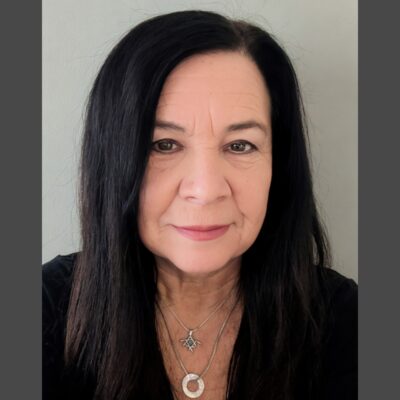
EXIT INTERVIEW
Elizabeth Sokolsky, longtime EVP of Birthright Israel, to retire next year