Opinion
MISSING LINK
We need to rethink the Jewish leadership pipeline




 Add EJP on Google
We talk often about the need for the next generation of Jewish leaders. We worry about who will step up, who will give, who will lead. But the truth is, we are not lacking passionate young people. We are lacking a clear and intentional path to help them become leaders.
Over the years at Chai Lifeline, I have met hundreds of young volunteers who care deeply about their communities. They show up. They give their time. They want to make a difference. And yet, for many of them, there is no clear next step. No roadmap for how to grow from someone who helps into someone who leads.
Courtesy/Chai Lifeline
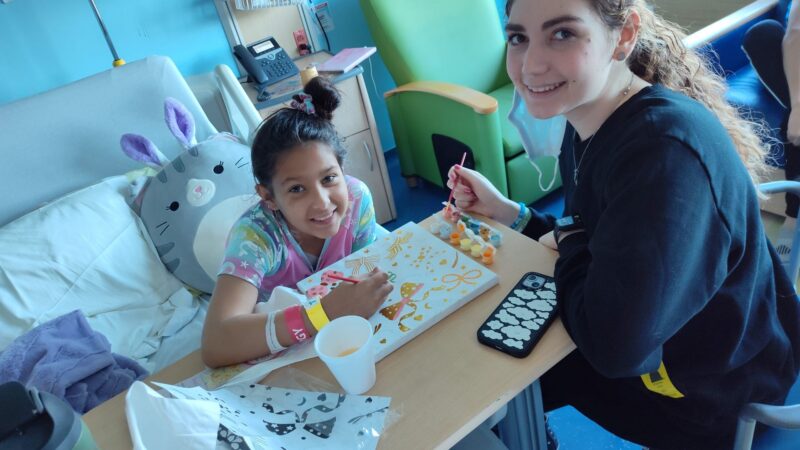
A Chai Lifeline volunteer visits a child in the hospital.
This is not unique to one organization. It is a broader challenge across the Jewish nonprofit world. We rely heavily on hiring leaders once they are already formed, rather than investing in their development earlier. We celebrate volunteerism, but we rarely build structured pathways that transform those volunteers into future lay leaders, professionals and decision-makers.
Leadership does not simply emerge on its own. It must be cultivated. It must be taught, experienced and nurtured over time.
That realization led to the creation of the Lubeck Fellowship in Jewish Nonprofit and Communal Leadership. Designed for young men and women who have already shown a deep commitment to volunteerism and community, the fellowship helps them better understand what leadership in the Jewish communal world can look like, and how to pursue it with purpose and impact.
Under the leadership of Rabbi Ari Dembitzer, the program is intentionally experiential. Over the course of eight sessions, fellows engage directly with leaders across the nonprofit and communal spectrum, gaining insight not from textbooks but from real people doing real work. They are challenged to think about where they can make a difference, what kind of leaders they want to become, and what responsibility they carry toward their communities.
What has been most meaningful to see is not just what the fellows learn, but what they do next.
In just three cohorts, the Lubeck Fellowship has already trained dozens of young adults, many of whom are now stepping into meaningful roles across the Jewish communal landscape.
Graduates of the program have begun stepping into roles across the Jewish communal landscape. Some have joined Chai Lifeline in meaningful positions, helping lead volunteer initiatives, manage programs and support families in need. Others have taken their skills into different organizations, entrepreneurial ventures and even public service. Many, regardless of their professional path, have emerged with a renewed sense of responsibility as lay leaders, individuals committed to giving their time, energy and resources to strengthen the community around them.
This is not only about developing professionals for the nonprofit world. It is about cultivating people who see themselves as responsible for the future of the Jewish people.
None of this would be possible without the vision and generosity of Pam and Joe Lubeck and their family. Their investment in this fellowship reflects a deep understanding that the future of our community depends not only on the programs we build today, but on the people who will lead them tomorrow. They recognized that leadership development is not a luxury. It is a necessity.
At the same time, programs like this succeed because of the individuals who bring them to life. Rabbi Ari Dembitzer has helped shape this fellowship into something deeply personal and impactful, guiding fellows not only through ideas, but through a process of self-discovery and growth.
The early results are encouraging, but this is only a beginning.
If we want strong Jewish communities in the decades ahead, we cannot wait for leaders to appear. We must identify those who care, give them the tools to grow and create real opportunities for them to step into leadership roles.
Every organization should be asking itself the same question: not just who leads today, but who is being prepared to lead tomorrow.
The future of Jewish communal life will not be built by accident. It will be built by those who are given the opportunity, the guidance and the responsibility to lead.
Our task is to make sure that opportunity exists.
Rabbi Simcha Scholar is the CEO of Chai Lifeline, an international health and crisis support network.