Opinion
CRACKS IN THE FOUNDATION
Why embracing Jewish Peoplehood is a matter of urgency




 Add EJP on Google
In Short
While "peoplehood," "shared fate" and "destiny" may sound abstract, they are the scaffolding of our communal and global enterprise.
A few weeks ago, I published an op-ed in eJewishPhilanthropy titled “How the language of Jewish Peoplehood can move us forward from the current crisis” (Jan. 15). In that piece, I proposed shifting our focus toward revisiting the constitutive values of Jewish Peoplehood and providing fresh answers to foundational questions: What does being responsible for fellow Jews mean today? Which components of our ethos remain vital? How do we navigate the tensions between these values when they clash?
In response, some readers asked: Why now? What has changed? What is the urgency?
Getty Images
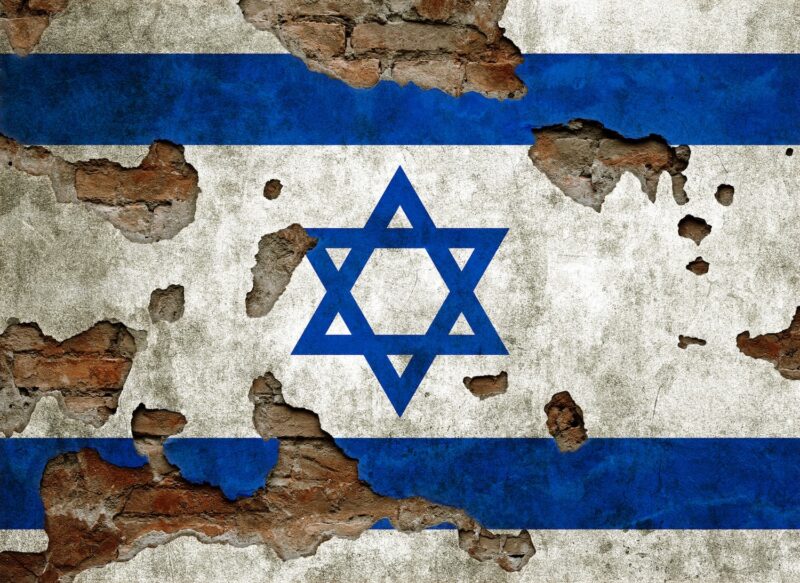
Illustrative.
So much has changed in Israel and the Jewish world since Oct. 7, 2023, raising questions about some fundamental aspects of what it means to be a part of the Jewish People. For instance, to what extent does our sense of mutual responsibility include the duty to express and share concerns and disagreements with Israel’s policies? In the context of our collective ethos, how should we address issues that seem to be in conflict with what we believe defines our unique identity? These challenges and others demand that we re-visit the very foundations of our collectivity and adapt our interpretation of the covenants we believe bind us.
Peoplehood scholar Rogers Smith identifies two core goals in “people-building”: trust and worth. Trust encompasses both the bonds between members of a community and the relationship between those members and their leaders, while worth refers to the normative and psychological value a political or cultural community holds for its members, rooted in their shared history and traditions.
The Oct. 7 attacks and the ensuing war challenged both. While a recent Jewish Federations of North America study highlights a surge in solidarity and care for fellow Jews (71%), it also reveals an unprecedented wave of criticism toward Israel from Jews who feel its actions contradict the Jewish ethos. The data — showing that 14% identify as anti- or a-Zionist, 30% as neither and 17% as unsure — serves as a testament to a deep ideological fracture. The bedrock of our collectivity is currently full of cracks.
From abstract concept to existential necessity
While “peoplehood,” “shared fate” and “destiny” may sound abstract, they are the scaffolding of our communal and global enterprise. They define who we are, our responsibilities and our collective aspirations. When these foundations are in disarray, our ability to build trust and inspire a sense of worth is impaired. Furthermore, a lack of clarity and consensus about our collective vision jeopardizes not only our unity but our ability to create the destiny we want to see.
For the past 75 years, the project of building and supporting Israel and the policies of the Israeli government provided a unifying purpose for North American Jews. It was the central pillar of the modern Jewish enterprise. While the recent JFNA survey found that only 37% of American Jews identify as Zionist, it also found that 88% believe that Israel has the right to exist as a Jewish, democratic state and that there continues to be broad support for and connection to Israel. What no longer exists is a broad consensus in support of the Israeli government’s policies.
The consequences of decoupling support for Israel from support for its government’s policies which for decades were integrated by large swaths of American Jews, have been manifesting in the fragmentation of our communities, the breakdown of productive dialogue and the increasing difficulty Jewish educators face in offering an inspiring vision for the Jewish future. We have to articulate a new agreed-upon foundation for the purpose of Jewish collectivity based on trust and worth, or we risk mass disengagement, especially as it relates to the younger generations. As one educator poignantly noted: “For many, the greatest fear was that young Jews would turn their backs on Israel. But it has become clear that the even greater threat is young Jews deciding to walk away from the Jewish people entirely.”
Carving the path forward
Making the necessary adaptation to today’s reality does not require abandoning our previous values and commitment.
In education, for example, we should shift from a Zionist-based peoplehood to a peoplehood-based Zionism. In other words, we should base our connection with Israel on what we understand to be the essence and commitment of our peoplehood, which furthers the notion that Zionism is not a monolithic or uniform ideology but rather a broad and diverse movement with many streams of thought of different ideas and perspectives on the concept of Jewish self-determination.
But it is essential that we understand that we are in a state of emergency. Engaging with the foundations of Jewish Peoplehood at this juncture is not an intellectual luxury; it is a necessity for anyone who cares about our future. To survive this moment, we must revisit the basics of our covenant and adapt to our current reality, just as the Jewish People have done throughout history. If we do not redefine why we belong together, we may soon find ourselves standing alone.
Shlomi Ravid is the founding director of the Center for Jewish Peoplehood Education and the editor of The Peoplehood Papers.