Opinion
ALIGNING OUR ASSETS
Why climate action is the next great Jewish responsibility




 Add EJP on Google
In Short
The Jewish community has significant assets: intellectual capital, entrepreneurial energy, global networks and a deep ethical tradition. We need to align what we say we value and where we allocate resources.
I grew up in a family with a long history of supporting both the Jewish community and Jewish values. From an early age, I absorbed the idea of different kinds of responsibility: to my community, to the wider societies we are a part of and to future generations. I learned that giving is certainly about money and generosity and pushing oneself to do more, but it’s also about inspiring people into engagement on multiple fronts — from the arts, to politics, to civic causes and to protecting the natural world.
I was always fortunate to spend time outdoors, whether in the Laurentian mountains of Quebec or at summer camp in Vermont. My first trip to Israel at 19, during the Passover holidays, strengthened that interest. I worked with Yuval Peled in the Nature and Parks Authority, spending two weeks in the desert and Red Sea, and I fell in love with the Eilat region. It was this experiential learning that resonated most for me; what I absorbed in the field was worth thousands of pages of textbook study.
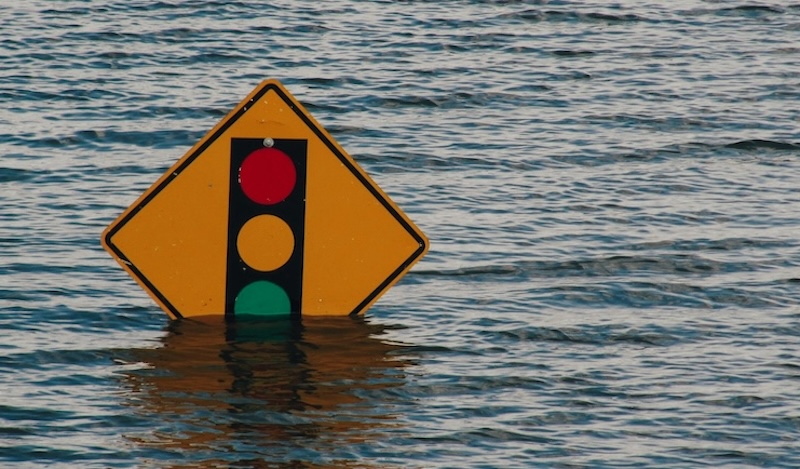
Kelly Sikkema/Unsplash
Illustrative.
Several years after that trip, I had the good fortune of meeting David Suzuki, a Canadian environmental broadcaster, biologist and personal hero. I volunteered for his fledgling environmental organization, of which I continue to be a proud board member after over 30 years.
It was also around that time that I joined my father’s foundation and learned about venture philanthropy, dad being one of the first in Canada to apply business models to the charitable world. In my early 30s, after a successful commercial exit, I took part of the proceeds and began building my own foundation. I followed dad’s progressive vision, turning my ideas into innovative programs and then recruiting new partners to help me scale them. Two of my guiding (and unwavering) priorities were to strengthen the Jewish world and to protect the natural world. I’ve remained dedicated to advancing both my entire adult life.
And so to my founding of the Jewish Climate Trust — a straightforward but ambitious project to improve the performance of the Jewish People on the issue of climate change.
Climate change is no longer a distant or abstract concern. It is the defining challenge of our generation. We see it in homes destroyed by extreme weather events across the Americas and in floods that have taken lives in Israel; in heat waves, fires and storms that are growing in frequency and intensity. The world is heating up. The risks are rising. And if we are honest with ourselves, the Jewish world has not yet responded at the scale this moment demands.
That is why we have just published the Jewish Guide to Climate Philanthropy.
This guide is both a call to action and a practical resource. It offers a clear, strategic roadmap for funders, foundations, federations and individual philanthropists who want to align their resources with their values. It explicates climate mitigation and adaptation. It explains where philanthropic dollars can be catalytic, from climate innovation and blended finance, to education, advocacy and community resilience. It identifies opportunities in Israel and the Diaspora, in technology and in culture, in policy and in Jewish learning.
Importantly, the guide does not assume that there is only one “right” way to give. Instead, it helps readers understand the range of approaches available: supporting cutting-edge climate-tech; investing in climate security for vulnerable communities; advancing Jewish environmental education; engaging interfaith partners; or strengthening the climate capacity of Jewish institutions themselves. It explores how philanthropy can work in tandem with investment capital, recognizing that solving climate change requires both moral clarity and financial scale.
The Jewish community has significant assets: intellectual capital, entrepreneurial energy, global networks and a deep ethical tradition. We are a small people in number with an outsized capacity to shape ideas and institutions.
And so at its core, this guide is about alignment. Alignment between what we say we value and where we allocate resources. Alignment between concern for our children and the systems we build today. Alignment between our Jewish commitments and our responsibilities as global citizens.
In a strange way, this most recent war with Iran is a further reminder of the nature of contemporary life and of philanthropy. As with the COVID-19 pandemic and the Oct. 7 attacks, we don’t have the luxury of choosing our battles, and we need to address both chronic and acute challenges as a community.
I want to end with a genuine invitation. If you are reading this and wrestling with how to respond — if you have questions, ideas or doubts — please be in touch. If you are a funder looking to explore climate in a way that feels authentic to your Jewish identity, we are here to help. If you are already active in this space and want to deepen or scale your impact, we want to learn from you as well.
This is not about perfection. It is about progress. It is about raising our game, together.
The future our children inherit will reflect the choices we make now. Let us ensure that those choices reflect the very best of who we are.
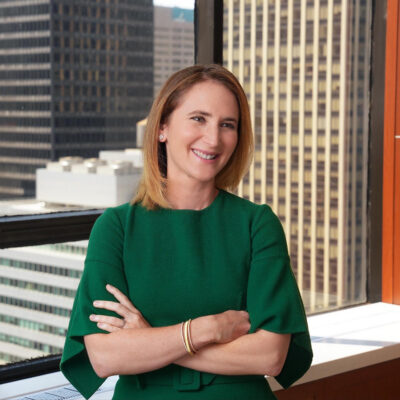
Stephen Bronfman is the founder and co-chair of Jewish Climate Trust. He co-chairs the Claudine and Stephen Bronfman Family Foundation in Montréal, is the executive chairman of Claridge Inc. and is the longest-serving board member of the David Suzuki Foundation. In his business and philanthropic endeavors, Stephen seeks opportunities for achieving exceptional results in the economic, social and environmental spheres.