Q&A
Keshet expands DAF assets, offers new services as holders make big payouts amid compounding crises
Last year saw a major rise in the number of stock-based donations to the donor-advised fund and overall, Keshet CEO Maya Natan says
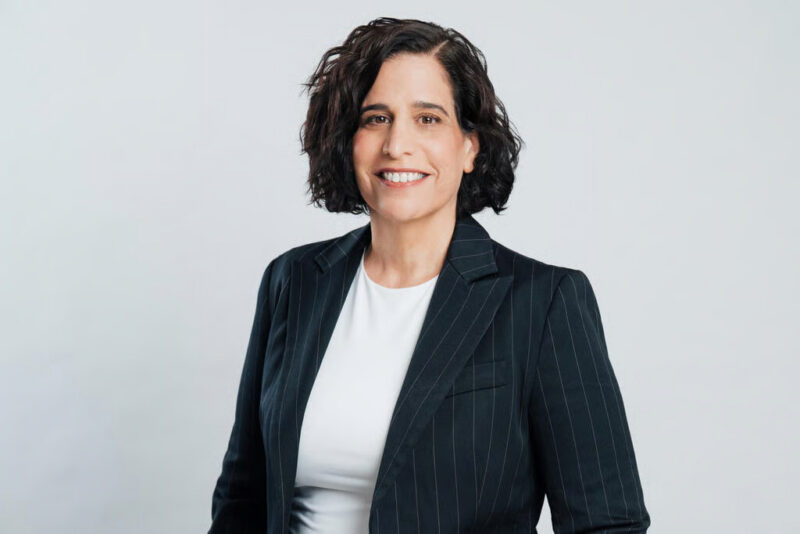
Courtesy/Keshet
Maya Natan




 Add EJP on Google
Domestic Israeli philanthropy is still a relatively new phenomenon. After decades with a struggling economy, coupled with a socialist belief in the need for the government, not private donors, to provide for the country’s citizens, it is only relatively recently that Israelis consider it their responsibility to give back not only of themselves through service, but financially as well.
This shift can be seen in the emergence of alternative charitable giving options in Israel, such as donor-advised funds, which only became available in 2020. Keshet, which pioneered the practice in Israel, recently released its 2025 year in review report, showing a major expansion, with NIS 420 million ($132.7 million) deposited last year for a total of NIS 1.3 billion ($410.7 million) since the fund launched. Last year also saw a major increase in the amount of stock-based donations to Keshet.
In addition to the growth in the amount of DAF assets over the past year, Keshet also expanded its offerings for clients in 2025, creating new ways for Israeli funders to pool resources and create endowments and for foreign donors to send funds to Israeli nonprofits — an indication of both the growing sophistication of the philanthropic field in Israel and the need for Keshet to find additional sources of income while its DAF holdings grow, according to the organization’s CEO, Maya Natan.
eJewishPhilanthropy spoke recently with Natan, a former director of the Israel office of the Jewish Funders Network, about her organization’s work in 2025 and how the field of Israeli philanthropy is developing.
The interview has been lightly edited for clarity.
Judah Ari Gross: I was looking over Keshet’s 2025 year in review, and this is coming out as there is growing talk in Israel about philanthropy, following the $32 billion sale of the cybersecurity firm Wiz and the decision by its owners, notably CEO Assaf Rappaport, to donate 1% of the company’s stock to charity. Donor-advised funds are a massive industry in the U.S., but they are still getting their footing here in Israel. So, broadly speaking, what have you seen in the past year, and where do things seem to be going?
Maya Natan: First, I would say that donor-advised funds become massive as an outcome of returns, which means that the longer they exist, the bigger they become. And so the reason that donor-advised funds in Israel are not yet massive is that the first one, which is Keshet, was established only six years ago, unlike donor-advised funds in the U.S., where some of them are a hundred years old.
Even those that belong to the Jewish community, for example, which are just 30 or 40 years old — they still have 30 or 40 years of compounded interest. So of course they are massive, and regulation seems to favor them more and more. Whereas in Israel, we have to work within the boundaries of what is out there, without a lot of favoritism from the administration, in terms of tax advantages or tax breaks or things that would incentivize Israelis to give more. So I think this is why we still have a way to go.
But [since the creation of donor-advised funds], the donation of shares has finally become a thing. I’ve been doing this for six years in Israel, and I’ve been preaching about it on every single stage that would have me. And I try to explain why this is the best asset to donate. We have a tagline that we say: “Between the term sheet and the closing.” It has to be understood that this is the right time to give, not after you’ve already “exited,” when you’ve already sold everything.
The more people do it, the more Israelis choose to do it. And I think that the Wiz choice came as a result of that many years of practice that showed that it really is the right timing. This is how big it becomes when you do it at the right time. And it has to be a part of a conversation, during a deal, any deal. Whether it’s a “secondary,” whether it’s an exit, whether it’s an IPO — there always has to be a component that talks about philanthropy, not as a nice thing to do, but as the right thing to do.
People who understand the math on this really understand why this is the right choice. So I’m really happy that there was so much talk about Assaf Rappaport [who has been an outspoken critic of the current Israeli government and recently announced his intention to purchase one of the country’s main television channels]. Whether it’s controversial or not, I don’t care necessarily. I just like the fact that he is the best amplifier for what we’re trying to do. And he didn’t contribute the shares to Keshet, which I’m totally fine with. I don’t think Keshet is the kind of organization that could have executed what he wanted to do with the money [the purchase of Channel 13 through a public-benefit corporation]. So this is not about where it went. It’s about the fact that he chose — they all four of [Wiz’s owners] — chose to do it. Because it is amplifying what we’ve been preaching for the last five years on a very broad stage. And it’s good. It’s good for Israel, it’s good for philanthropy. And hopefully, this will be translated into good things for civic society as well.
JAG: The focus of Keshet seems to primarily be on Israel’s startup scene. Is that just a reflection of who is interested in these kinds of donor-advised funds or is it primarily a function of where the money is in the Israeli economy?
MN: Our clients, only 50% of them are coming from the tech industry. We also have a lot of different donors who aren’t necessarily from the tech industry. So it’s not just about that. We are not necessarily targeting just the high-tech sector, but really anyone who manages wealth from anywhere. So whether they are in venture capital or if they are a private investor or real estate.
But the thing about the tech community is both the scale and the speed of how fast you become wealthy and how many decisions you have to make during that year, one year [before paying taxes]. And there’s the fact that a lot of those guys were not wealthy before.
So a donor-advised fund is a decision to make about wanting to do philanthropy, whether it’s in the future or even just the next couple of years, but when you don’t yet necessarily know what it is that you want to do. That mechanism of separation between the actual giving year and the actual granting years is really crucial in high-speed or high-volume liquidity events. And the high-tech sector has a lot of them in comparison to other sectors.
So we are focusing on them, but we are not excluding everyone else. We’re trying to reach out to all the different sectors, whether it’s real estate, finance or even automotive.
JAG: Can you describe what the average DAF holder looks like?
MN: On the tech side, the average age is somewhere around 35-40. In the other 50%, it’s very diverse, including people who are 80-plus.
I can say that our early adopters were Anglos who live in Israel because obviously they were familiar with the model. So we have quite a lot of people from Ranana and Jerusalem who are English-speaking, and we love them. And that’s why we also do everything in both languages [Hebrew and English] to accommodate. But now we have a majority of sabras, people who were born in Israel.
We don’t do small [amounts of] money at all. In order to become a Keshet client, you need to give NIS 50,000 ($15,800), but almost all of our donors give NIS 100,000 ($31,600) and above. Most of our 200 families have at least NIS 1 million ($315,600) in their accounts.
We also have a very high rate of payout, about 52% percent. I think it’s natural that we are like that because it was set up during COVID, then we had a year of protests, and then we had almost three years of war. So there wasn’t even a single moment of downtime. And accumulating money in the bank or in the market while the country is fighting is a bit odd. So it’s natural that we are experiencing a revolving door of money, even if it’s not good for our business model.
JAG: That was going to be my next question. There’s some criticism of DAFs in the states that people get a tax write-off, but the money just sits there. But you said your payout rate is about 52%?
MN: Yeah, we don’t have that problem. I tend to think that donors in Israel are a bit different than the ones in the United States since they are living with the everyday pressure in Israeli society. Maybe pressure is not the right word, but we understand the needs of the population better because we are part of it, and there’s no difference. Even if you live in [the tony central Israeli community of ] Savyon or if you live in Tel Aviv, you still understand the needs of the general population. So people respond. They respond to their neighbors. They respond to the needs of the army. They respond to the needs of the community.
And it’s the right thing to do. It’s the strength and the resilience of our nation. A part of it is how we give back, how we take care of each other, how we are there to help and how we never wait for the government to respond. We mobilize people, we mobilize ideas, we mobilize money. The third sector in Israel has learned to deliver under any condition.
That is why I’m very proud of Keshet, and I’m very proud of the donors that choose to work with us, because they are so responsive and I never have to call them to tell them, ‘We’re not giving out enough.’ I think that the donors in Israel are doing a phenomenal job.
We’ve actually decided to offer other services in order to be sustainable because we didn’t want to ask donors to give less. We thought about different products that we can offer the philanthropy sector in order to balance our business model.
JAG: What are they?
MN: We do three different things: One is that we help foundations, mostly in America but also in Europe, do their grant making in Israel, when they need to give to organizations that don’t have a 501(c)3 or an equivalent. We do the grants, we do the due diligence, we do all of that back office help. It’s a good service because it helps both the nonprofits to receive the funds faster and the foundations have less technical issues when they give in Israel. So that’s one.
The second is that we are serving as a platform for funders’ collaboratives. So when there’s anywhere up to 15-20 donors who have decided to give together, instead of setting up another NGO, they use it as an infrastructure. That way they can give together, they can build their strategy, and we do the grants for them, which is also helpful.
One of the biggest collaborations is one that we wrote about in our 2025 report. It’s a really amazing partnership between seven very large foundations and Keshet to help the South and the North recover.
JAG: Is that Oganim?
MN: Yes, Oganim. We basically decided that we want to do long-term giving. We wanted to stay and help the North and the South recover after everything is said and done, which means at least seven to 10 years. And we knew that none of the foundations could do it themselves. So we built this partnership, and we’ve decided on our governance structure, and Keshet is really a partner in it and also a facilitator for the fund’s logistics.
And the third is that we realized that we need to tackle the world of endowments in Israel. There aren’t many public endowments in Israel, and it’s a very… I will call it an archaic field because it never really evolved into the 21st century. The law is very complex when it comes to endowments in Israel, and we wanted to simplify it and we also wanted to bring it into conversation.
Many organizations in the United States have endowments. It’s a very, very important factor within their sustainability model, and we felt that it’s not well established in Israel. So we’ve started a whole new company this year, it’s called Compass Trusts, that deals with endowments and that allows us to be trustees in endowments, for private people who decide to do it, both in their lifetime and after their death. And also we want to help organizations. We want to help them both in thinking about the structure of it, the financial model of it, but also how to factor this into their ongoing operations. So it doesn’t hurt their day-to-day, but it also builds something for the future that will be there forever as an income for the organization.
I can give you an example of an organization that has it: the Weizmann Institute. They built an endowment that — after their buildings were hit by a missile [during the previous war with Iran] — they were able to maintain their operations and also start rebuilding quickly because they could use their endowment to do so. It’s really a strong force for any organization to have such a tool. It doesn’t necessarily fit every organization, but there are enough in Israel.
JAG: Normally, it’s for institutions like universities and hospitals.
MN: Yes. But there are many organizations in Israel that should have one, and they don’t.
I think that between these three things, we believe that we can maintain our operations forever. Because I didn’t want to raise money or ask for donations for Keshet’s operations. I want to be able to be self-sufficient, and because of the high rate of grants, I needed to balance it with more quote-unquote products.
JAG: When you were building these different products, did you look to the United States and to Jewish and general DAF providers for inspiration?
MN: Yes, definitely. In 2022 and 2023, my CFO and myself, we went on a tour of donor-advised funds in the United States, mostly on the East Coast. We visited Boston’s Combined Jewish Philanthropies, private banks, Morgan Stanley, a whole variety.
We told them that we came to hear about their sustainability journey. And we learned a lot from all of them because even if the spending rate is not as high as ours, it took them a while to break even.
We asked them what kept them floating [until they became break-even], and there were different models. For example, for the Jewish Communal Fund, UJA-Federation of New York kept them floating in the first couple of years. With Fidelity, the family who owns the bank kept them going. For some of the private banks, this is not a source of income. They just include it in the service because they think they should.
The Boston federation and JCF in New York, they said, ‘You have to learn about endowments.’ And the Boston federation taught us about collaborative funds. That was a turning point in our thinking about our model and saying, “We need to implement some of this here. Let’s see what resonates with the field. And where are the gaps, where are the needs?”
Related News

MAGICAL EXPERIENCE
Shefa launches psychedelics retreat for Jewish professionals suffering burnout
EXIT INTERVIEW
Elizabeth Sokolsky, longtime EVP of Birthright Israel, to retire next year
CLOSING WORDS
In AZM address, Cosgrove links communal ‘orthodoxy’ on Israel to rising anti-Zionism among young Jews
HIGHER EDUCATION
As Jewish donors reconsider academia, Jan Koum doubles down, endowing Israel studies at Stanford
ADVANCING A VISION
N.Y. federation donates $1M toward building shared-society center named for peace activist killed on 10/7