Opinion
GOOD MEDICINE
Keep healing spaces safe through philanthropic partnerships




 Add EJP on Google
Healthcare has long been one of the few spaces we assume is insulated from bias. Patients come first. Professional standards prevail. Identity and ideology are meant to take a back seat to care.
Yet today, that assumption no longer holds, and the consequences extend far beyond any one community or faith group.

Adobe Stock
As CEO of the American Jewish Medical Association, a national network of Jewish healthcare professionals, I am hearing from physicians, trainees and allied health professionals across the country facing challenges at an unprecedented scale. Physicians are being reported to their institutions or publicly targeted for expressing support for Israel. Lectures addressing clinical aspects of antisemitism are being canceled as “too political.” Medical trainees report exclusion from group work and social environments or choosing to hide their Jewish or Zionist identity out of concern for professional and social repercussions. In academic and research spaces, bias is influencing which voices are elevated and which are sidelined. While visiting a community out west, I learned over lunch about a patient whose care was halted mid-procedure when the provider learned she was Israeli. She did not feel safe speaking up. What began as a conversation over lunch quickly became a catalyst to build a local network to support both patients and practitioners. It shouldn’t take a moment like that to mobilize action.
This shift is not only professional, but also deeply personal, raising questions many believed were behind us: whether it is safe to speak openly, whether identity must be minimized and whether our institutions will stand behind us.
And focusing only on individual cases misses the larger point: What we are seeing is not an isolated strain, but antisemitism functioning like a cancer within the healthcare ecosystem. In training environments, Jewish students are often hiding or downplaying their identity to blend in and avoid risk. Within institutions, policies intended to ensure professional conduct. are not being applied consistently. In academic spaces, narratives are shaping not only discourse but professional opportunities as well.
Having spent years in healthcare administration, I understand how systems are designed to function and how effective they are when they work as intended. What we are seeing now is a breakdown, where identity is no longer neutral and institutions are struggling to respond with consistency and clarity. This is not a series of isolated incidents, but a structural gap in how healthcare recognizes and addresses antisemitism and bias within its own system.
And three months into my role leading the AJMA, one thing has become clear: Until recently, many of us did not even recognize this gap existed. There was no national organization dedicated to supporting Jewish healthcare professionals before now — not because it wasn’t needed, but because we assumed the system itself was sufficient — and it was only after the events of Oct. 7, 2023, that this assumption was tested and the need became undeniable.
For philanthropists committed to strengthening both healthcare systems and Jewish communal life, this moment presents a unique opportunity to advance both, together, by helping build what is currently missing.
Healthcare is a trust-based system. When trust erodes, between colleagues, within institutions, or between providers and patients, the consequences extend beyond any one group. They affect communication, teamwork and ultimately the quality of care itself. These are distractions that can be life or death.
Part of the solution lies within the healthcare model itself. Healthcare has long understood how to respond to systemic risk. When gaps emerge, we do not rely on awareness alone. We build infrastructure. We invest in electronic health records to create transparency and coordination. We fund research to better understand disease and improve outcomes. We develop grand rounds and training models to ensure knowledge is shared consistently. We build institutes that connect systems across hospitals rather than leaving them siloed. We track quality metrics and patient satisfaction because what gets measured gets improved.
This moment calls for that same discipline.
The challenge we are facing is not a lack of concern or expertise. We know how to do healthcare well, and we know how to build strong Jewish institutions. We have done it before. What we lack is the infrastructure to connect those strengths at a national scale. There are few mechanisms to track these patterns, educate institutions consistently, support professionals in real time or ensure accountability when standards are not upheld.
This is where Jewish philanthropic leadership becomes essential.
Philanthropic investment enables the development of incident tracking systems, clinician education programs, institutional guidance and real-time support networks for professionals and patients navigating these challenges. Without it, this infrastructure does not get built. There is no parallel system waiting to step in.
Organizations like the AJMA are beginning to build this foundation — grounded specifically in healthcare — by connecting professionals, developing educational programming.
This work is not about politics. It is about preserving the ethical foundations of healthcare. And it is about ensuring we keep our healing spaces safe.
The system is already shifting. The real question is whether we can build the infrastructure quickly enough to keep pace. For funders, the conversation has moved beyond whether this issue exists to whether we are prepared to build what is required to address it — thoughtfully, collectively and at scale.
Ensuring that healthcare remains a place of trust, integrity and safety is not only a communal concern; it is a collective responsibility and an investment in the kind of system we want future generations to inherit.
Philanthropy has always strengthened both healthcare systems and Jewish communal life. This is a moment where those responsibilities intersect and where leadership will be defined not by recognition of the problem, but by a willingness to build what comes next — because healthcare is one of the few systems that touches every one of us, and the infrastructure we build today will define how it serves us tomorrow as patients, providers and caregivers.
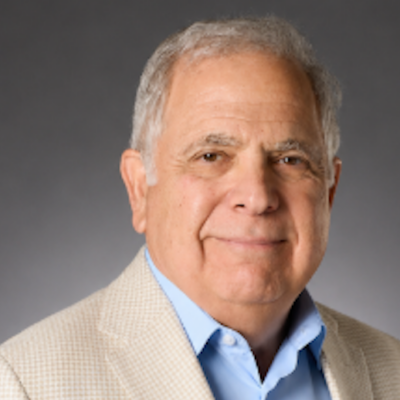
Eveline Shekhman, a former healthcare executive, is the chief executive officer of the American Jewish Medical Association, a national network of Jewish healthcare professionals.