Opinion
JUSTICE SHALL YOU PURSUE
Jewish philanthropy’s missing front




 Add EJP on Google
Two years after the Oct. 7, 2023 attacks, we are waging a three-front war — physical security, information and narrative, and legal accountability — with a two-front response. While billions of dollars have been allocated to meeting Israel’s security and advocacy needs, we have left the judicial battlefield, where the legal foundations of Jewish survival will be decided, dangerously underfunded.
The Oct. 7 massacre was not just terrorism: from the standpoint of international law, it was crimes against humanity and war crimes, and arguably a massacre driven by genocidal intent. The murder of over 1,200 people, the kidnapping of 251, the internal displacement of 330,000, and the systematic extermination, sexual violence, and torture revealing a coordinated pattern across 28 different crime bases —these atrocities meet the Nuremberg standard of “shocking the conscience of humanity.”
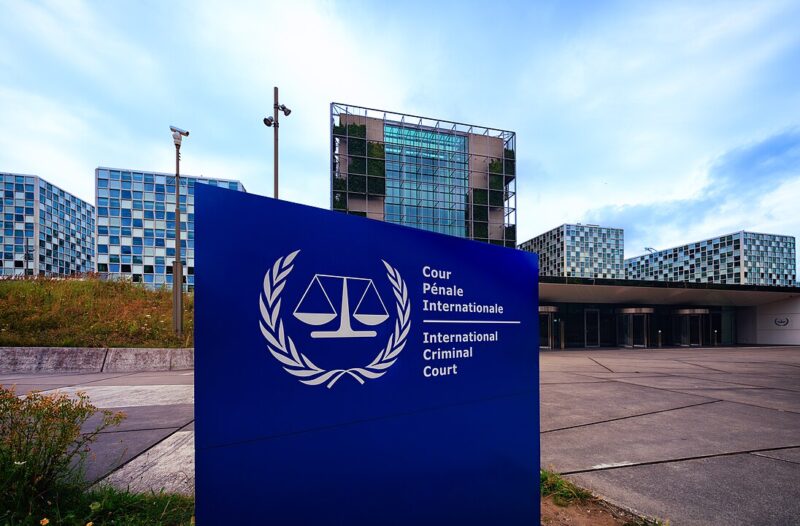
Tony Webster/Wikimedia Commons
The International Criminal Court at The Hague, Netherlands, on July 23, 2024.
Yet we now face the unthinkable: proving that the atrocities committed during the Oct. 7 attacks happened at all, in rule-based democracies worldwide and before institutions built to defend human rights but weaponized against us.
While Jewish philanthropy directed tremendous resources toward physical security and advocacy, our adversaries waged strategic lawfare. A united axis of evil led by Iran and the Muslim Brotherhood, directly or by proxies, adopted human rights terminology and invaded social media and campuses to win the hearts and minds of America’s and Europe’s youth; and while we funded conferences and reports, they built sophisticated legal networks that captured courts and public opinion.
The missing pillar in our strategy is a comprehensive legal front. Most legal funding today goes to defend against antisemitism. While essential, this approach misses the direct link between antisemitic efforts systematically delegitimizing Israel’s right to exist, and the critical need to establish criminal, civil, corporate and state accountability for perpetrators and accessories worldwide. Hamas’s Oct. 7 assault against Israel exposed the need for expertise in international criminal law to address international crimes committed on and since that day. Domestic criminal justice systems built for isolated crimes proved insufficient, the same as in any other atrocity situation committed from Ukraine to Sudan.
Today, no criminal trials are actively underway against those most responsible for the mass atrocity crimes committed in Israel that day. This failure to act signals that sufficient brutality can overwhelm legal systems, emboldening those who seek to harm Jewish communities and democracies worldwide, whether in Washington DC, Amsterdam or Manchester.
Every day without legal consequence sets a dangerous precedent.
These compounding failures can only be overcome through the comprehensive legal response that the Oct. 7 massacre demands.
The war we must win
History proves what justice achieves when pursued strategically. After the Holocaust, Jewish leaders transformed existing global institutions and helped architect a new rule-based international order founded on shared values — combating atrocities and protecting fundamental human rights binding on all states and individuals. The Nuremberg trials didn’t just punish Nazi war criminals — they established the legal frameworks for addressing industrial-scale genocide. The tribunals for former Yugoslavia and Rwanda proved such accountability was possible, paving the way for justice in Uganda, Sudan, DRC Congo, Ukraine, Syria, and now Israel. Nations agree that justice is needed to transition from war to peace.
As Justice Robert Jackson stated in his opening at Nuremberg in November 1945:
“The wrongs which we seek to condemn and punish have been so calculated, so malignant, and so devastating, that civilization cannot tolerate their being ignored, because it cannot survive their being repeated.”
This precedent guides our work today.
October 7 Justice Without Borders has pursued legal accountability from the first hours of the attack, providing pro bono representation to those affected through coordinated impact litigation, bringing hands-on experience in international criminal law on behalf of the victims. Our core approach is a multifaceted legal offensive that leaves no stone unturned — we show up wherever victims have the right to justice, whether with the German Federal Prosecutor for War Crimes, the French Antiterrorism Prosecutors in Paris, or at the service of the US, UK and Israel’s investigative efforts. We act in the name of our shared humanity and in accordance with existing international law.
Our work rests on four pillars. The first pillar is victim representation and outreach. The second is legal action: Strategic, hybrid and global, this spans criminal accountability, civil/corporate liability and state responsibility for torture, sexual violence, enforced disappearance, and protection of vulnerable groups.
The third pillar is evidence-building, assembling the evidentiary backbone of a case — forensic requests, testimonies, digital evidence, expert partnerships — under strict chain-of-custody for international prosecution.
Finally, the fourth pillar is policy and legislative reform. Geared toward long-term impact, this pillar transforms lessons from Oct. 7, 2023, into durable legal and institutional change.
At the center of these efforts are the survivors’ rights to truth, justice, reparations and non-recurrence. As one survivor told our team: “When I stand before the court, I am no longer just a victim. I am reclaiming my story and my power. This is how I heal.”
Justice is not a luxury for the survivors of the Oct. 7 attacks — it is survival infrastructure for rebuilding shattered lives, collective resilience and preventing future atrocities.
‘The Day After’ begins now
Oct 9, 2025, marks the first day of renewed hope but we did not wait for that day to come. We brought it about through action on behalf of the victims- they are our moral compass navigating us through these darkest of times. As Galit Dan, Oct. 7 survivor and bereaved mother and daughter, stated only a few days ago from the stage of a memorial service marking the second year since her and the nation’s ordeal: “What we need is not revenge; what we need is tikkun” — rectification.
Your philanthropic choices will determine whether Jewish communities shape the legal precedents governing our survival — or surrender them to our enemies. Every day of institutional hesitation on the lawfare front allows adverse precedents to calcify. Without urgent investment in legal infrastructure, we cede the courtroom to our adversaries and risk leaving the Oct. 7 atrocities unpunished and justice denied.
International law is built on our values. Let’s reclaim it. Those who absent themselves from this legal war forfeit justice itself.
Michalya Schonwald Moss is the chief advancement officer of October 7 Justice Without Borders (O7J), a Tel Aviv–based public-interest law firm providing pro bono representation and leading the “October 7 Trials” to counter judicial warfare. She has 15-plus years of experience in Jewish philanthropic strategy and served two terms on the board of the Jewish Funders Network.
Yael Vias Gvirsman is the founder of O7J. An international law attorney on the International Criminal Court List of Counsel and the first Israeli woman to litigate at The Hague, she is a leading expert in international criminal law and directs multi-jurisdictional criminal and civil actions at the ICC, in Germany, France and beyond.