Israel-diaspora relations
Israeli foreign minister meets U.S. Jewish leaders ahead of U.N. speech on hostages’ plight
The Israeli politician discussed the war in Gaza and other top geopolitical issues and took questions from the American leaders
courtesy
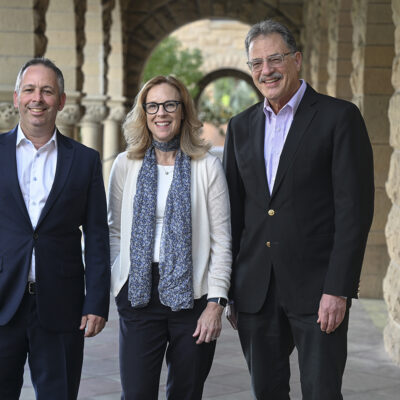
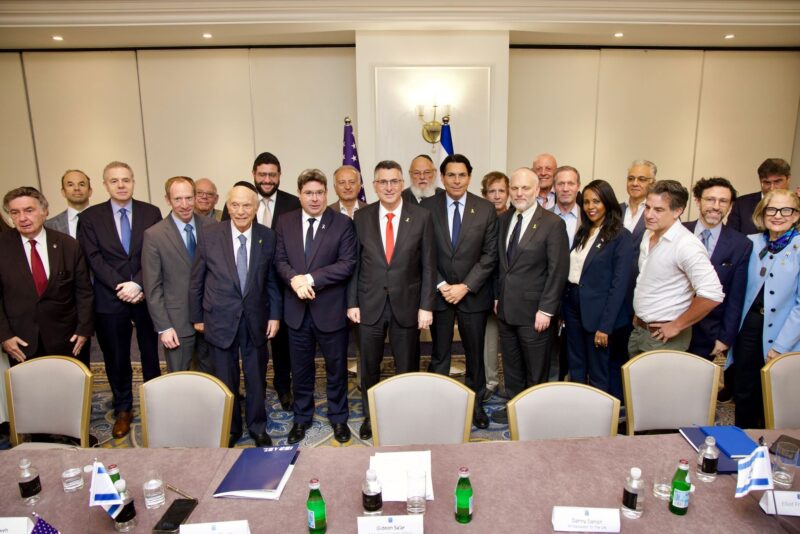
Some two dozen American Jewish leaders meet with Israeli Foreign Minister Gideon Saar (center), New York Consul General Ofir Akunis (center-left) and Israeli Ambassador to the United Nations Dani Danon (center-right) in New York City on Aug. 5, 2025.




 Add EJP on Google
Israeli Foreign Minister Gideon Sa’ar met with some two dozen American Jewish leaders in New York City on Tuesday, briefing them on developments in Israel and hearing their concerns, ahead of a speech in the United Nations about the plight of Israeli hostages being held in Gaza, participants told eJewishPhilanthropy.
Sa’ar’s meeting came as American Jews are increasingly voicing their concerns about the humanitarian situation in Gaza and as the Israeli government is threatening to expand Israel’s military campaign in the enclave, potentially including a full occupation of the Strip.
“It was not just a briefing, but a serious and constructive exchange with a broad cross-section of American Jewish leaders. There was thoughtful dialogue and real engagement around the complex challenges and opportunities facing Israel and the Jewish people,” William Daroff, CEO of the Conference of Presidents of Major American Jewish Organizations, told eJP.
“In light of Minister Sa’ar’s upcoming address to the United Nations Security Council, we also noted the importance of keeping the plight of the hostages visible to the international community,” Daroff said.
Sa’ar spoke to the U.N. Security Council on Tuesday about the hostages still being held in the Gaza Strip in light of the release of videos showing the emaciated conditions of two Israeli captives, Rom Braslavski and Evyatar David. In his speech, Sa’ar decried the international body’s silence on the issue and criticized the countries that have announced plans to recognize a Palestinian state in September.
The meeting with Sa’ar came three weeks after Israeli Prime Minister Benjamin Netanyahu visited the United States without meeting American Jewish leaders — his third time in a row forgoing a sitdown with them during a U.S. trip.
“That the minister set aside significant time for this meeting, during a 15-hour visit to the United States, reflects his interest in engaging directly with our community,” Daroff said.
Other participants, who spoke to eJP on condition of anonymity as the meeting was held off the record, said that the topics focused on the burning geopolitical issues of the day, including the war in Gaza, the conflict with Iran in June, Israel’s relationship with the Trump administration and Israel’s public diplomacy efforts.
The U.S. participants included representatives from a wide array of American Jewish organizations, including Hadassah, the Anti-Defamation League and the Jewish federation system, as well as the Conservative movement, American Sephardi Federation and World Jewish Congress.
There were few representatives from American Jewish groups representing more progressive communities, though some of that is a function of the last-minute nature of the meeting, which was only organized the day before it happened. The Reform movement, for instance, was invited but did not send a representative due to scheduling issues. Many of the organizations that were invited also had representatives meet with Sa’ar and other Israeli leaders last month during the Conference of Presidents’ solidarity mission to Israel.
In addition to Sa’ar, Israel’s New York Consul General Ofir Akunis and Ambassador to the United Nations Danny Danon attended and spoke at the meeting.
Related News
PRESIDENTIAL REBUKE
Israel’s Herzog: Mamdani ‘makes no effort’ to hide disdain for Israel, Jews must fight back
CLOSING WORDS
In AZM address, Cosgrove links communal ‘orthodoxy’ on Israel to rising anti-Zionism among young Jews
Detroit-based philanthropists Nancy, James Grosfeld donate $8M to renovate JDC’s Israel campus
EXIT INTERVIEW
Elizabeth Sokolsky, longtime EVP of Birthright Israel, to retire next year

MAJOR GIFTS
Center for Jewish History celebrates 25 years with a $25M matching grant