Opinion
HATERS GONNA HATE
The Bret Stephens temptation




 Add EJP on Google
In his Feb. 1 “State of World Jewry” address, New York Times columnist Bret Stephens stated that the fight against antisemitism has been a “well-meaning but mostly wasted effort.” We make a mistake, Stephens argued, when we think antisemitism stems from “missing or inaccurate information” about Jews or Israel when it’s actually the product of a “psychological reflex” and a form of “neurosis.” Since there’s nothing we can teach the antisemites that will change them, we’d be wise to ignore them and focus on building our Jewish institutions.
There is something deeply tempting about Stephens’ suggestion. Pushing back against the lies and lunacy of the current debate is difficult and often discouraging work. How good it would feel to drop the burden and raise a middle finger to the haters and everyone who’s stupid enough to listen to them. But not every temptation should be gratified. What may feel like proud defiance is actually its opposite: a cowardly retreat from a contested field of battle. Were we to follow Stephens’ advice, no one would rejoice more than Qatar, Tucker Carlson and everyone else investing so much time and money spreading “inaccurate information” about us. No one would lose more than Israel and the Jewish People.

Maccabee Task Force
Participants in an Israel trip for University of Colorado at Boulder students visit the Kotel in the Old City of Jerusalem.
The central flaw in Stephens’ argument is his failure to recognize the true target of our advocacy. To oversimplify, the anti-Israel/anti-Jewish world can be divided into two. There is a hard core of haters who will oppose us no matter what we do. And there is a larger layer of critics who don’t define themselves by their hatred, but who’ve been persuaded to varying extents by the false narratives that dominate their campus, social or social media circles.
No serious Jewish leader has ever focused on persuading the haters. Stephens is absolutely right about this group. It was not facts or logic that led them to loathe us, and facts and logic are therefore powerless to change their hearts. Any time or money spent trying to reach them is not “mostly” wasted — it’s completely wasted.
That’s exactly why Jewish and Israel advocacy efforts have always focused on the second group: the vast middle who are neither confirmed enemy nor committed friend. To the extent this group is critical of Israel or Jews, it almost always stems from “missing or inaccurate information.” When you educate them, you can and do change them. This is true for the student encampment leaders we’ve turned into friends of Israel. And this is true for the online influencers we’ve equipped to challenge the lies that dominate their respective ecosystems. Critics who were persuaded by what they read about Israel in Stephens’ New York Times or in Carlson’s newsletter are not nearly as incorrigible — or beyond our reach — as that hateful hard core driving the narrative.
Pro-Israel activists are not the only ones who understand that a significant percentage of the population is up for grabs. Qatar, Al Jazeera and their fellow travelers know this too. This is exactly why they spend so much time and money spreading lies about Israel. They are investing heavily in the notion that “inaccurate information” is a powerful tool that can change minds and win allies for their cause. And their investments are clearly paying off.
Of course, Stephens himself doesn’t seem to buy his argument: He spends his days writing opinion pieces for the Times, devoting a significant percentage of his articles to defending Israel and the Jewish people from the progressive attacks that so many Times readers believe. Somewhere, deep down, Stephens knows we dare not remain silent in the face of such slanders.
We are in the midst of a battle for the heart and soul of America. Those Jews who do not want to pack their bags and move to Israel must stand our ground and fight. It is certainly painful to see Tucker Carlson, Nick Fuentes and their kind profit from peddling antisemitism. The only thing worse would be if they did so without pushback or penalty.
The pushback may well be working. In recent weeks, many keen observers of the online right have come to the same conclusion: The tide seems to be turning. Antisemitism is no longer the edgy vice signal it was just a few short months ago. It’s slowly becoming passe, even boring. It’s certainly too soon to declare victory. But there could be no worse time to abandon the fight.
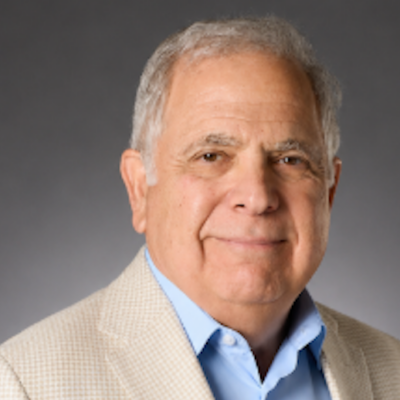
David Brog is the executive director of Maccabee Task Force, an organization that combats antisemitism on college campuses and online. He previously served as the founding executive director of Christians United for Israel. He is the author of Reclaiming Israel’s History: Roots, Rights and the Struggle for Peace (Regnery, 2017).