Opinion
MEETING NEXT-GEN NEEDS
From disaster to revival: Israel’s Academic Kibbutz and the rebirth of a generation




 Add EJP on Google
Since Oct. 7, 2023, many in Israel have spoken about broken paradigms — left and right, security and deterrence — but the one I’m most glad to see shattered is the myth of a lost generation.
For 15 years, I’ve worked in youth development and informal education. Over and over, I’ve heard professors and pundits bemoan the supposed apathy and selfishness of today’s youth, the “selfie generation” supposedly plagued by anxiety and disconnectedness.
COURTESY
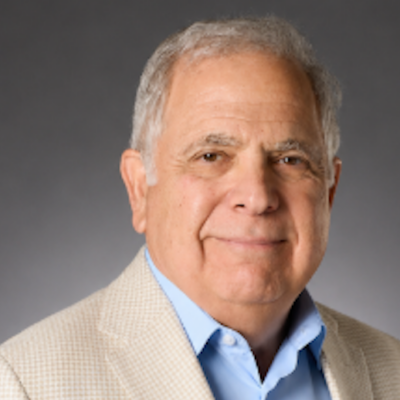
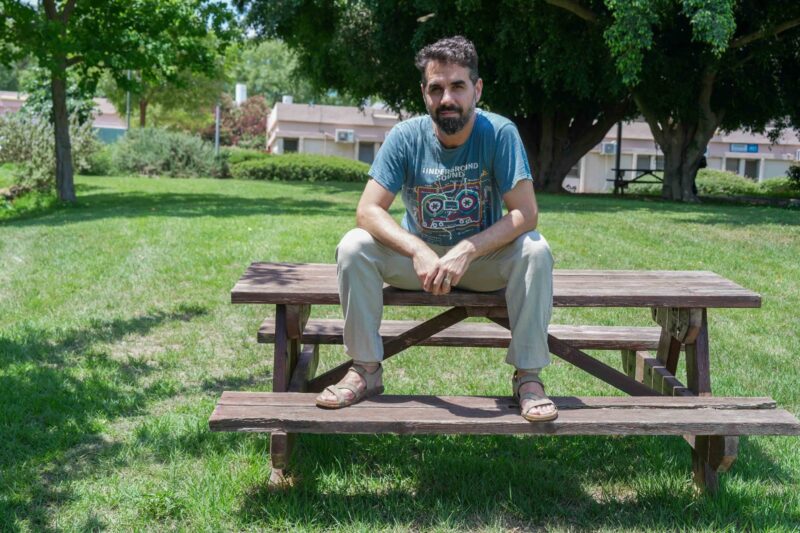
Chen Shamir.
I never subscribed to that view, because I’ve been on the ground with these young people. I began my career as a youth educator, growing alongside them. In 2011, I saw firsthand the economic and social pressures they faced and helped build new frameworks to meet those challenges. Anyone who engaged with this generation up close knew they weren’t lost.
But even I didn’t anticipate the past two years.
Let me tell you about my reserve commander, Nir Shamai. Our longtime commander had to step away at the beginning of the war. After two weeks without leadership, Nir arrived, a 22-year-old “kid” from Tel Aviv (for context, I am 40). We laughed about the age difference at first; then he told us he’d been on the summit of Annapurna in Nepal when he heard the news about the Oct. 7 attacks. He and his friend descended immediately and joined a convoy of taxis full of young Israelis racing home to serve.
Nir turned out to be the best commander I’ve had in 20 years. Charismatic, capable, humble. He is not an outlier. He represents a generation that answered the call.
From the female soldiers taken hostage to survivors of the Nova festival, this generation defies the data. They’ve come of age amid disaster, war, pandemic and social fracture. By all accounts, they could be a “lost generation” — but they’re showing us they may be the generation that rebuilds.
To do that, they need tools, ones our traditional systems are not built to provide. They don’t need our pity. They need a mission.
The missing life stage
Who counts as “young” today? Ages 18–35, sometimes even up to 40. That encompasses Millennials (born 1981–1997) and Gen Z (1997–2015). In Israel, this cohort makes up 24% of the population, over 2.4 million people.
American psychologist Jeffrey Arnett coined the term “emerging adulthood” to describe this life stage, defined by identity exploration, instability, self-focus and optimism. Just as the Industrial Revolution created adolescence, the digital age has created a new life stage. Yet, we’ve built no frameworks to support it.
The result? A whole generation stuck between the past and the possible, without institutions to reflect their needs or aspirations. We must create those frameworks, what I call a pedagogy of youth.
A new educational vision
When I searched for educational models tailored to this stage, I found none — not in Israel, not globally. There are studies on youth psychology and economics, but few educational approaches that meet young people where they are.
So I turned to giants. Martin Buber’s dialogical philosophy fosters deep human connection. Paulo Freire’s critical pedagogy equips students for social change. Nikolaj Grundtvig’s folk high schools created communal learning spaces for adults in Denmark.
But perhaps the most powerful inspiration comes from Israel’s own youth movements, which for decades have nurtured leadership, meaning and collective purpose. It’s time to adapt their spirit for today’s young adults.
This is why I’m launching the Academic Kibbutz, in partnership with Ruach Alumim and Beit Berl Academic College, and with the support of Habaita (Homeward). It’s a living-learning community that will train the next generation of educational leaders not in theory, but in practice.
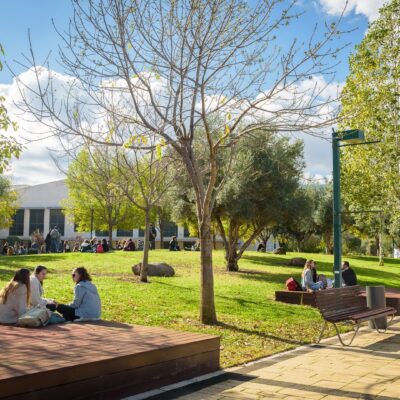
In Year 1, participants will live communally on the Beit Berl campus while earning degrees in education and building a shared vision. In Year 2, they’ll move together to Israel’s north or south, integrating into local communities through educational work helping to rebuild our social fabric.
They won’t just study community, or leadership or interpersonal dynamics. They’ll live them. The Academic Kibbutz will be a space of discovery beyond the classroom, where accumulated knowledge is shared, not siloed, and where young adults move from participants to creators.
We’ll build rituals. Shabbat dinners, holidays, community traditions. We’ll build mutual responsibility, creativity and active hope. Above all, we’ll empower these young people to dream together about what life in Israel could be, and to build it.
This isn’t just about one project. It’s about creating a replicable model for youth-centered learning across academic institutions, youth centers and professional training tracks. We’re at a historic crossroads; and this generation, dealing with one of the greatest crises in Jewish history, is searching for identity, belonging and meaning. Let’s meet them with frameworks worthy of their drive.
From mourning to mission
Sociologist Zygmunt Bauman once wrote:
“We must create new institutions, on the ground, offer new ways of daily life, societies of mutual responsibility, cooperatives. And this takes years. A Twitter invitation to come to the square is not enough. You will need patience, to dedicate yourselves, to sacrifice of yourselves, to develop resistance against all the pressures of the market, the pressures of politics, the pressures of the media.”
The young people who rushed back from Annapurna and music festivals to defend their homeland deserve more than our admiration. They deserve the infrastructure to lead us forward.
The Academic Kibbutz isn’t just an educational experiment. It’s a declaration that the so-called selfie generation might just be the ones to rebuild us.
The way forward is by ensuring that they are not the generation of ason, the disaster, but the generation of tkuma — of revival.
Chen Shamir is an educational entrepreneur and the founder and CEO of Alumim.