Bret Stephens: Fight against antisemitism is a ‘mostly wasted effort’
Screenshot
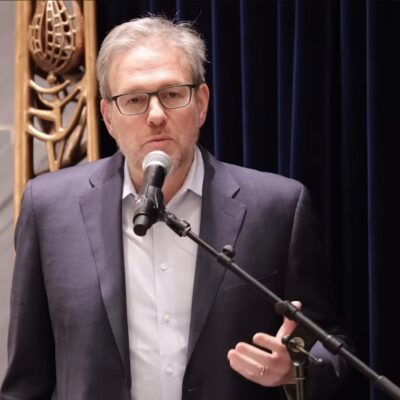
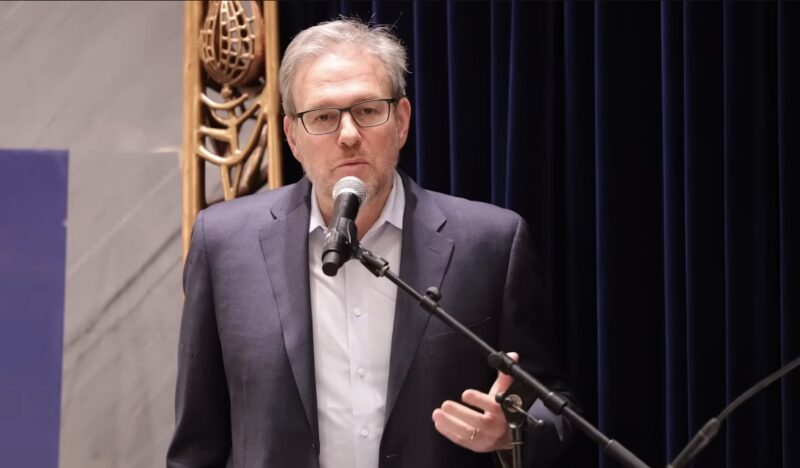
File. Bret Stephens speaks at the Miryam Institute on Dec. 23, 2025.




 Add EJP on Google
The now-widely referenced term “Oct. 8 Jew” was coined by journalist Bret Stephens one month after the Oct. 7 attacks in Israel, referring to Jews “who woke up to discover who our friends are not.”
“What I should have said was that the Oct. 8 Jew was the one who woke up trying to remember who he or she truly is,” Stephens, editor-in-chief of Sapir and a columnist for The New York Times, said on Sunday night as he delivered the 46th annual State of World Jewry address at the 92NY in Manhattan.
This year’s address comes at an inflection point for American Jews. For more than two years, Jewish communities around the country demonstrated a historic united effort to bring home the hostages kidnapped by Hamas on Oct. 7. With the release of the remaining hostages and a ceasefire in the Israel-Hamas war, Jewish leaders are questioning what the new consensus issues are.
While antisemitism remains a prominent threat, Stephens argued that resources are being spent recklessly by leading Jewish organizations.
“The fight against antisemitism, which consumes tens of millions of dollars every year in Jewish philanthropy, is a well-meaning but mostly wasted effort,” he said. “We should spend the money and focus our energy elsewhere. The same goes for efforts to improve pro-Israel advocacy.”
Stephens said that if it were up to him, he would “dismantle” American Jewish institutions such as the Anti-Defamation League and the Jewish Federations of North America.
“We have vast resources, but we have limited resources, and since Oct. 7, tens of millions of dollars are going to the subject of ‘What are we going to do about antisemitism?’ That’s not how Jewish money should be spent.”
Efforts such as ensuring Holocaust education is part of every private school curriculum or universalizing the International Holocaust Remembrance Alliance definition of antisemitism are “not working” in the fight against antisemitism, Stephens said. He provided several examples such as, “Tucker Carlson’s influence and popularity [soaring]” and the statistic that “in New York State, one in five Millennials and Gen Zs believe the Jews caused the Holocaust.”
Instead, Stephens suggested that resources should go toward building more Jewish day schools across the country, among other Jewish identity-strengthening causes. His suggestion echoed one made by podcast host Dan Senor, who delivered last year’s State of World Jewry address, saying that the key to thriving American Jewry is “a recalibration in favor of our community’s needs,” with Jewish day schools and summer camps being some of the strongest contributors of a solid Jewish identity.
“The proper defense against Jew hatred is not to prove the haters wrong by outdoing ourselves in feats of altruism, benevolence and achievement,” said Stephens. “It is to lean into our Jewishness as far as each of us can, irrespective of what anyone else thinks of it.”
He also called on American Jews to “be proud” of Israel. “This perpetual apology machine, which is the American Jew trying to stand up for the state of Israel, needs to end. We need to be proud.”
Related News
HIGHER EDUCATION
As Jewish donors reconsider academia, Jan Koum doubles down, endowing Israel studies at Stanford

ADVANCING A VISION
N.Y. federation donates $1M toward building shared-society center named for peace activist killed on 10/7
PRESIDENTIAL REBUKE
Israel’s Herzog: Mamdani ‘makes no effort’ to hide disdain for Israel, Jews must fight back

MAGICAL EXPERIENCE
Shefa launches psychedelics retreat for Jewish professionals suffering burnout
CLOSING WORDS
In AZM address, Cosgrove links communal ‘orthodoxy’ on Israel to rising anti-Zionism among young Jews