AN INTERWOVEN HISTORY
New PBS docuseries highlights role philanthropy, activism played in Black-Jewish ties
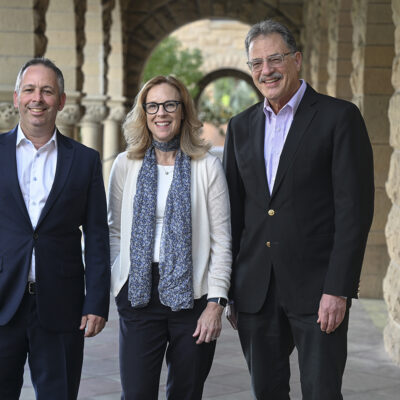
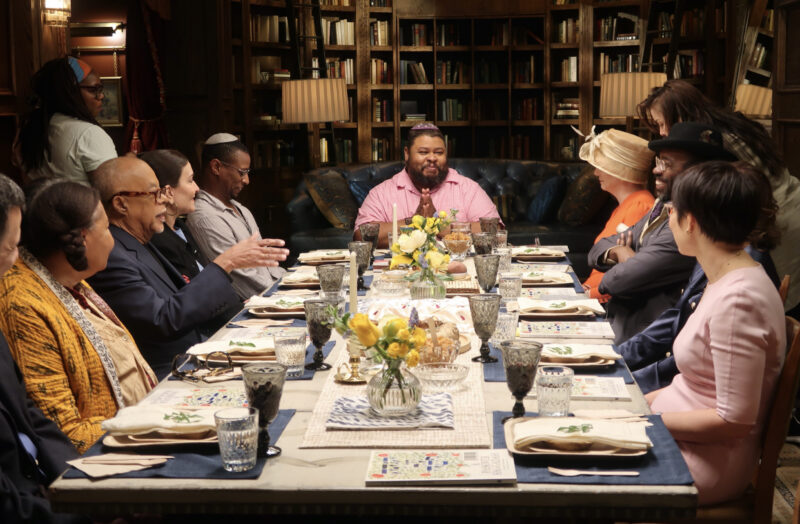
The four-part docuseries, created by Harvard professor Henry Louis Gates Jr. (second from left), examines the connections between Black and Jewish people from before America's founding through today. Pictured center is Black Jewish writer, culinary historian and educator Michael W. Twitty.
COURTESY
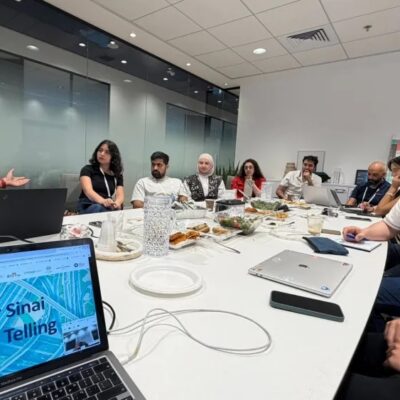
Jews of color eat a mock Passover seder with Harvard historian Henry Louis Gates Jr. as part of a new documentary series on Black-Jewish relations in America.




 Add EJP on Google
When people talk about the history of Blacks and Jews, many look to the Civil Rights Movement, glorifying bonds created from a shared history of oppression. At the same time, others focus on divisions between the communities, zeroing in on antisemitism in Black communities, examples of bigotry in Jewish communities, or the tension surging around Israel and the war in Gaza.
A new four-part PBS docuseries, “Black and Jewish America: An Interwoven History,” the latest documentary from Harvard professor and “Finding Your Roots” creator Henry Louis Gates Jr., prepares to tackle every angle of a complex history spanning back to before America’s birth. Premiering on Tuesday, Feb. 3, on PBS, the docuseries is not only funded by Black and Jewish philanthropists but is a lesson on the impact of philanthropy on American history.
“A lot of previous conversations about [Black and Jewish relations] really just look at that golden era or just look at the divisions that have come in the last decades, but we’re trying to take a holistic view about how race and cast [were] established in America,” Sara Wolitzky, co-executive producer/director of the docuseries, told eJewishPhilanthropy.
African Americans and Jews have been talking about each other, but not to each other, Phil Bertelsen, co-executive producer/director of the docuseries, told eJP. “We haven’t been having [conversations about our history] together, and we haven’t taken the time to interweave the narrative. Communities in this country have often been self-centered, kind of looking inward, and there hasn’t been a whole lot of looking out and seeing the intersection, commonality, the differences, the pushes, the pulls, bonds forged and broken.”
The first episode, titled “Let My People Go,” opens on the image of a Passover seder attended by Gates and several Jews of color, including Nate Looney, the Jewish Federations of North America’s director of community safety and belonging; Central Synagogue in New York’s Rabbi Angela Buchdahl; author Jamaica Kincaid; and chef Michael W. Twitty, who cooked the meal with all recipes coming from his book, Koshersoul: The Faith and Food Journey of an African American Jew, including Matzo Meal Soul Spice Schnitzel and Sweet Potato and White potato Kugel.
The story of Blacks and Jews in America stretches back to 1492, with the expulsion of Jews from Spain and Columbus’ voyage to America, which was quickly followed by the introduction of the transatlantic slave trade.
Both Jews and Blacks entered America with vastly different experiences. Africans entered unwillingly on slave ships, while Jews came seeking refuge and economic opportunity, first arriving in significant numbers in the mid-17th century, with immigration peaking during the late-19th and early-20th century, as Jews fled Eastern European pogroms and crushing poverty at the same time that African Americans were suffering from their own persecution: lynchings and Jim Crow laws.
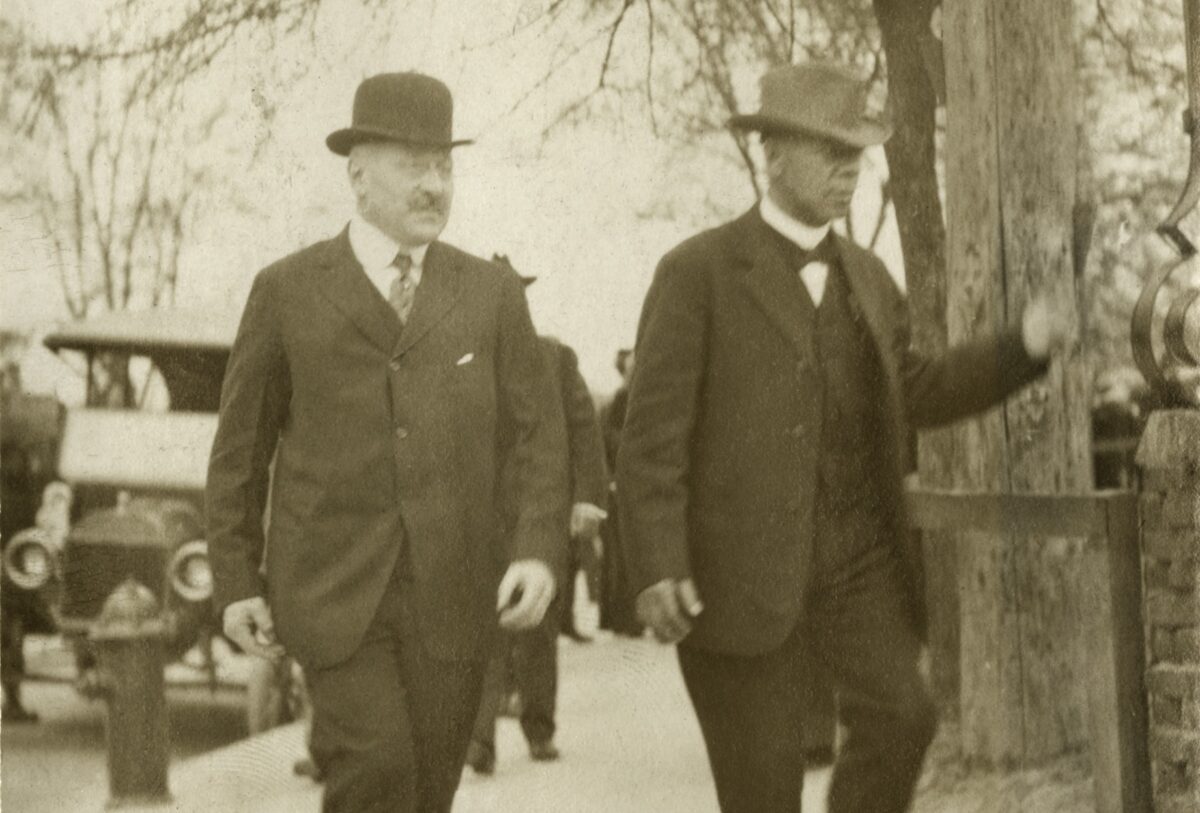
The new documentary series shows that the the story of Black-Jewish relations in America is, in many ways, a story of philanthropy, with the first episode focusing on the friendships between two Black and two Jewish leaders: W.E.B. Du Bois, the Black scholar, writer and civil rights pioneer, who co-founded the National Association for the Advancement of Colored People, and Jewish activist Joel Spingarn, who served as an early chair of the NAACP and helped expand its activities by bringing in additional Jewish supporters; Booker T. Washington, founder of the Tuskegee Institute, and philanthropist Julius Rosenwald, an owner of Sears, Roebuck and Co., who together built thousands of schools for Black children in the rural South, called Rosenwald Schools.
“The best versions of [these partnerships] were never top-down,” Wolitzky said, “but a sense that, ‘You guys are still going to be the leaders in this. The allyship is doing what we can to assist you.’”
In recent years, additional efforts have been made to preserve the legacy of the Rosenwald Schools, which have been credited with educating a generation of Black children and helping lay the groundwork for the Civil Rights movement, even as the buildings have fallen into disrepair or been demolished. The NAACP, meanwhile, remains one of the most active lobbying groups for Black Americans and runs community programs throughout the country. (Indeed, this reporter met his wife through an NAACP mentoring program teaching children to read.)
Jews played a disproportionate role in the Civil Rights Movement, supporting organizations financially, offering pro-bono law services and volunteering. “One of the key differences between [Blacks and Jews] is the access that Jews have had to whiteness in this country and the economic doors that that’s opened,” Wolitzky said. For Jews who felt more secure in America, there was an opportunity to help other minority groups.
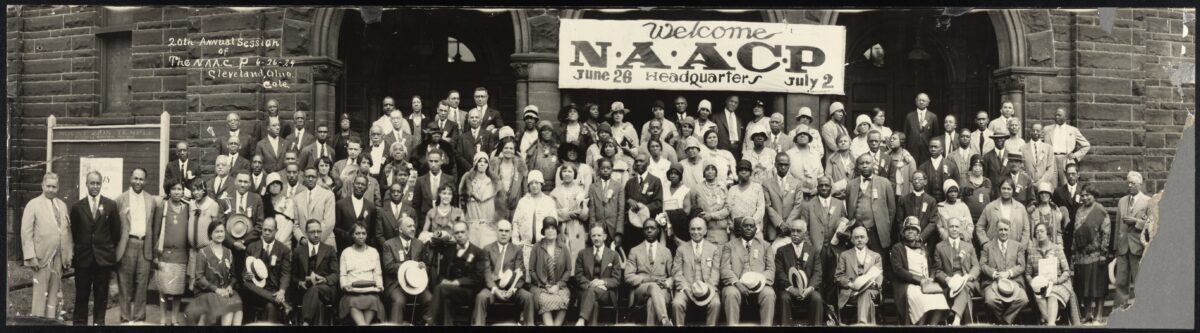
“It was very important for Dr. Gates and Dyllan McGee, the executive producers, to be getting both Black and Jewish funding for this,” Wolitzky said. Supporters of the docuseries included Robert F. Kraft through his Blue Square Alliance, formerly known as the Foundation to Combat Antisemitism, as well as The Righteous Persons Foundation, political commentator Van Jones and businessman Robert F. Smith, among several others.
Laura Lauder, a Bay Area-based philanthropist who also supported the docuseries along with her husband, Gary, told eJP that the story of Black-Jewish relations is “more important than ever in this moment of deep division over Israel and resulting cases of antisemitism… It’s critical that we face our more recent history of hurting each other, now more than ever. Unless we confront, head-on, our painful experiences and respond by asking for forgiveness, we cannot do teshuva [repentance] and return to wholeness.”
When the documentary was announced, Twitty said he saw people, including the 2024 vice presidential nominee for the Green Party, denouncing it on social media and connecting the history of Black-Jewish relations in America to Israel’s war against Hamas in Gaza.
This type of reaction is “the ongoing attempt to destroy Black-Jewish relations,” Twitty told eJP. He wouldn’t have participated in the series if it was a one-sided view on Black and Jewish relations. “Even the title is very pointed and very specific. It’s not telling you, ‘Hey, everything is great, Everything’s bad.’ It’s a conversation about how these communities relate.”
Often, African Americans and Jews are portrayed as polar opposites, especially for laughs, Twitty, who refers to himself as part of the “chocolate chosen,” which is why it was important the docuseries brought in new voices, especially those of Black Jews.
“It’s so incredibly important that folks don’t talk about the interaction of Black and Jewish communities as if we’re talking about Black Christians and white Jews,” Debora Gordon, rabbi at Troy, N.Y.’s Congregation Berith Sholom, who is speaking on a panel about the docuseries on Monday at the New York State Museum in Albany, told eJP. “Black people are way more diverse than that, and Jews are way more diverse than that.”
Twitty hopes the docuseries will offer local communities opportunities to come together, similar to the event Gordon is appearing at, to “have real people talk about this in real time, and not just in the comments.”
The series includes commentary by Billy Crystal, Tony Kushner, Al Sharpton and the children of Civil Rights Movement figures Rev. Ralph Abernathy and Rabbi Abraham Joshua Heschel, who famously “prayed with his legs” during the 1965 Selma to Montgomery March. Later episodes delve into Black and Jewish collaborations in music and movies, how the “Grand Alliance” of the Civil Rights Movement crumbled and grapple with antisemitic Black figures like Louis Farrakhan and events, such as the 1991 Crown Heights riots, in which Black residents of the Brooklyn neighborhood attacked Jews, killing one person, and chanted antisemitic slogans following the accidental killing of a Black child by a Jewish driver who ran a red light as he was part of a motorcade carrying the Lubavitcher Rebbe. The riots, which some still describe as a “pogrom,” erupted after years of grievances by the local Black community, which felt that its Jewish neighbors were receiving preferential treatment from local authorities, as seen by the Lubavitcher Rebbe’s motorcade.
Today, many people aren’t educated on the full history of Black-Jewish ties, both the positive parts and the more fraught ones, Twitty said. “They’re told a certain line by people online who never lived it, who never saw it,” he said. “There are people around today who are grown adults who know nothing about what happened in Crown Heights.”
The series also examines the 2017 Unite the Right rally in Charlottesville, Va., where white supremacists shouted “Jews will not replace us,” and the 2018 Tree of Life synagogue shooting, as well as recent Black-Jewish tensions over the past two years.
“Everyone was nervous about the last 10 minutes of the series, which is post-Oct 7,” Bertelsen said. “We were producing this right in the immediate aftermath, so it was top of mind. The tensions were real, and the conversations that we were having with scholars and eyewitnesses to history and participants was, in a way, rather therapeutic. It gave people an opportunity to openly dialogue and understand… that we have to have difficult conversations.”
The documentary will make some viewers uncomfortable, Wolitzky said. “There’s no way to make everyone happy, because… these communities are not monoliths.”
Nearly a year after the Seder was filmed, as the series premiere nears, Twitty is “optimistic about what we could have and what we could be,” he said. “I know for a fact that Black-Jewish relations, in its most ideal form, is the greatest enemy of white supremacy.”
Related News
ADVANCING A VISION
N.Y. federation donates $1M toward building shared-society center named for peace activist killed on 10/7
CLOSING WORDS
In AZM address, Cosgrove links communal ‘orthodoxy’ on Israel to rising anti-Zionism among young Jews
PRESIDENTIAL REBUKE
Israel’s Herzog: Mamdani ‘makes no effort’ to hide disdain for Israel, Jews must fight back

EXCLUSIVE
Detroit-based philanthropists Nancy, James Grosfeld donate $8M to renovate JDC’s Israel campus

MAJOR GIFTS
Center for Jewish History celebrates 25 years with a $25M matching grant