SCOOP
Ohel agrees to halt purchase of Camp Lavi, allowing sale to operator who will keep it as is
Tentative agreement, scheduled to be legally recognized on Monday, follows parent-led campaign that could have impacted the mental health nonprofit’s donor base
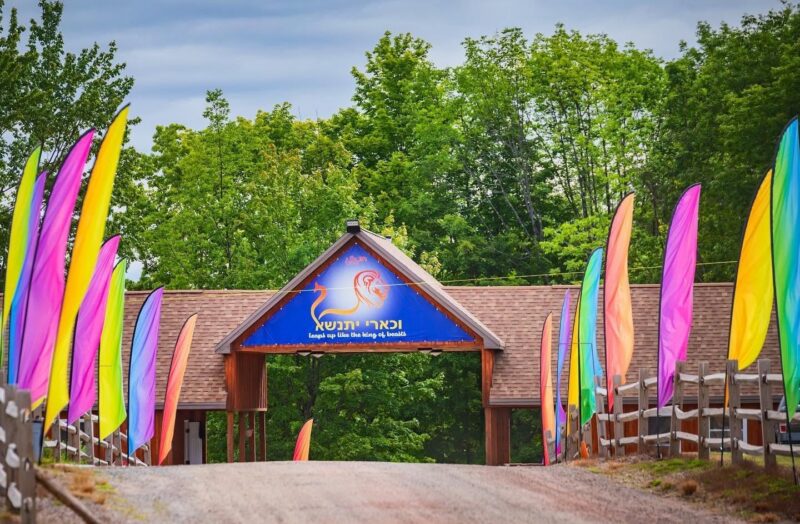
courtesy/Camp Lavi/Facebook
Camp Lavi




 Add EJP on Google
After a week of turmoil in the East Coast Jewish summer camp world, a parent-led campaign persuaded Ohel Children’s Home and Family Services, Inc. to hand its winning bid for Camp Lavi in Pennsylvania to the second-place bidder, ensuring that the Modern Orthodox camp will continue operating in its current format, eJewishPhilanthropy has learned.
A final decision on the matter is scheduled to be made by Christine M. Gravelle, chief judge of the United States Bankruptcy Court for the District of New Jersey, at 11 a.m. on Monday.
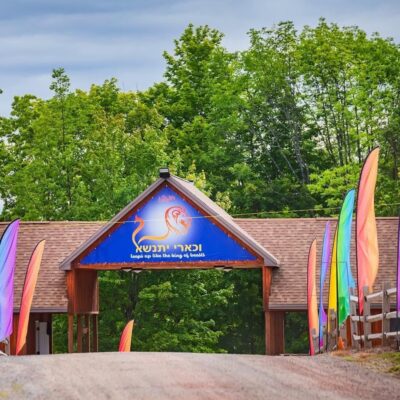
Camp Lavi in Lakewood, Pa., was one of more than two dozen summer camps — several of them Jewish — that went up for auction after their owners, the New York-based Shabsels brothers, declared bankruptcy in June.
Initial reports of the sale of the camp to Ohel, a mental health nonprofit that primarily caters to the Orthodox community, drew concern and condemnation from the parents, alumni, staff and other stakeholders of Camp Lavi, which also primarily serves the Orthodox community. A group of parents also filed a legal objection to the sale.
Under the emerging agreement, Ohel, which had planned to use the site to run its own programming, will drop its winning bid, allowing the camp to be sold to the runner-up, American Youth Camping, which will keep the camp as is. Neither Ohel nor American Youth Camping responded to a request for comment.
A source involved in the proceedings, who spoke to eJP on condition of anonymity ahead of the court filing, described the deal as a win-win for all parties. It allows Camp Lavi to function as it always has and ensures that Ohel maintains a positive reputation within the Jewish community. If the sale had gone through, Ohel, which had not anticipated a public outcry, would have faced opposition and disappointment from thousands of campers, staff, alumni and parents. Instead, Ohel plans to look for another campsite to purchase outside the Shabsels’ portfolio, the source said. The Camp Lavi committee of parents plans to withdraw its objection to the sale.
Following an auction that ended on Aug. 3, the court announced the winning bidders of 23 of the 30 campuses owned by the Shabsels and their firm, Simad Holdings, along with the sale of four more properties through private bids. Yet the status of Camp Lavi was left up in the air. Ohel appeared poised to purchase the campus, but the court filing noted that debtors were “still analyzing the Qualified Bids” for Camp Lavi.
Ohel had been first in line to purchase a different Shabsels’ property, Camp Echo, in Burlingham, N.Y. This triggered concern among Camp Echo families as Ohel indicated that it did not intend to operate the camp in its current form. At the last minute, American Youth Camping, Inc., which is closely connected to the Camp Echo families, agreed to purchase the campgrounds for $17 million — $5 million more than what Ohel had planned to pay.
After losing out on Camp Echo, Ohel pivoted and made the winning bid for Camp Lavi with an $8.75 million offer, well above the $6 million starting bid.
Within hours of the news emerging of the sale of Camp Lavi to Ohel, parents, alumni and community supporters launched a change[dot]org petition, calling for the sale to be halted.
“A proposed sale could result in Camp Lavi being closed and replaced, permanently taking away a one-of-a-kind Jewish camp that has given generations of children lifelong friendships, confidence, belonging, and unforgettable memories,” the petition said. “We cannot let this happen.”
As of Monday morning, the petition had over 4,280 signatures.
In a blog post, Jane Komsky, a former Camp Lavi camper, presented the view of many of those opposed to Ohel’s purchase of the camp — they were not opposed to Ohel, she wrote, but just wanted to keep Camp Lavi the same.
“Ohel is a well-regarded operator in the area…” she wrote on Friday. “It’s not so much a referendum against the way they operate camps as much as it might be different, and the concern is it would forever change the spirit and culture of a beloved community.”
Camp Lavi families hired a lawyer and created The Committee of Concerned Parents of Camp, which sent over a hundred letters to the judge and, on Thursday, filed an objection to the sale, asking the judge to reopen bidding and stating that the committee had pulled together $10 million for the camp grounds.
According to the source involved in the proceedings, after parents flooded Ohel board members’ and CEO David Mandel’s voicemails, asking the organization to back down, Ohel tried to negotiate with the families, offering to possibly share the camp in some way, with it running for Ohel clients some weeks of the summer and running for Camp Lavi families other weeks.
Ohel already runs a camp, Camp Kaylie, in Sullivan County, N.Y. A large portion of its donor base comes from the Modern Orthodox community, the same community that attends Camp Lavi, a coed camp that touts itself as “Pocono Mountain’s Premiere Modern Orthodox Camp.” This past week, debates raged through Modern Orthodox congregations and on social media about who was right: the families who attend Camp Lavi to Camp Lavi or Ohel.
On Sunday night, Ohel made the decision to pull out of the sale, agreeing to give it to the next highest bidder, American Youth Camping, Inc., the same bidder who purchased Camp Echo, the source familiar with the matter told eJP.
American Youth Camping also purchased four other camps in the auction, spending a total of $41.5 million for the five properties. In addition to Echo, which is in upstate New York, American Youth Camping purchased four Maine properties: Indian Acres Camp for Boys & Forest Acres Camp for Girls in Fryeburg; Camp Med-O-Lark in Washington; Camp North Star in Poland; and Camp Wekeela in Hartford. The Camp Lavi families did not bid in the first auction because they had expected AYC to win the auction and supported it running the camp grounds, according to the source.
American Youth Camping is backed by Shlomo Drazin, the owner of Montreal-based real estate company Rester Management.
Even though the camp families offered $10 million in their court filings, because they had not been bidders in the auction, it is understood that the camp grounds would go to Drazin, who had the runner-up bid.
Ohel has agreed to hand it off to Drazin, but is still negotiating with Drazin about the price, as they want him to match Ohel’s bid of $8.75 million, but he is trying to purchase it for less, the source said.
Related News
HIGHER EDUCATION
As Jewish donors reconsider academia, Jan Koum doubles down, endowing Israel studies at Stanford
ADVANCING A VISION
N.Y. federation donates $1M toward building shared-society center named for peace activist killed on 10/7

PRESIDENTIAL REBUKE
Israel’s Herzog: Mamdani ‘makes no effort’ to hide disdain for Israel, Jews must fight back

MAJOR GIFTS
Center for Jewish History celebrates 25 years with a $25M matching grant
EXCLUSIVE
Detroit-based philanthropists Nancy, James Grosfeld donate $8M to renovate JDC’s Israel campus