Opinion
WELLNESS CHECK
Engaging men and boys in Jewish life: What we know, what we don’t know and what we can do




 Add EJP on Google
In Short
Whether accidental or intentional, the spottiness of reliable data on gender participation in Jewish communal life displays a lack of concern that is very concerning.
Over the past decade, a growing body of data has forced Americans to confront an uncomfortable truth: On many of the measures that matter most for a flourishing life, men are falling behind. Boys are less likely than girls to succeed in school and college. Men report higher rates of loneliness and social isolation, and they are less likely to feel relevant or meaningfully part of a community. Alongside those trends, a troubling number of men are finding meaning through harmful leaders, networks and behaviors.
While this burgeoning field is still heavy on data and light on solutions, what began as rumblings in certain corners of academia and public policy think tanks has grown into a national discussion. Concerns about men and boys now appear in outlets across the ideological spectrum, from The New York Times to The Wall Street Journal and Vox to National Review. Thought leaders and scholars such as Richard Reeves, Niobe Way and Scott Galloway have helped move the discussion beyond caricature and grievance, grounding it instead in sociological, psychological and biological research about education, identity and belonging.

Maskot/Getty Images
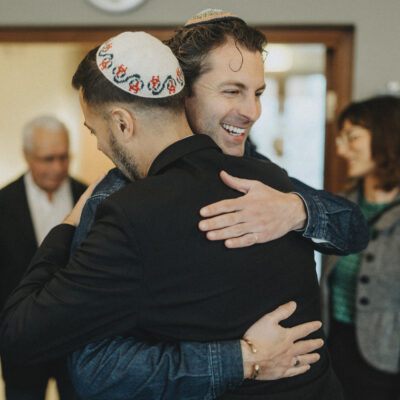
Illustrative. Two men greet each other with an embrace in a synagogue.
Yet even as this conversation continues to mature nationally, the American Jewish community has largely remained quiet about how men are faring within it.
A familiar story, with a twist
For years, many in the Jewish community have rightly worked to address gaps in women’s participation and leadership, transforming Jewish life for the better. To take just one example, while men remain overrepresented in executive leadership positions at the largest Jewish organizations, the share of women CEOs at Jewish nonprofits has steadily grown. In 2017, 31% of the 68 responding organizations to Leading Edge’s survey of Jewish communal organizations had a female CEO; by 2025, 49% of the 224 responding organizations had a female CEO. Although those who opt into the Leading Edge surveys may not be fully representative of the North American Jewish landscape, this shift in leadership is still notable.
While the percentage of women in executive leadership roles may have reached parity, the general Jewish communal workforce numbers show underrepresentation of men. The same 2025 Leading Edge report estimated that only 21% of the Jewish nonprofit workforce was male, a percentage that has remained relatively constant since 2018. This is a lower percentage than in the U.S. nonprofit workforce as a whole (a good, if imperfect analogue to the Jewish communal sector), which the most recent Bureau of Labor Statistics report estimated to be 34% male. The gender disparity in the American rabbinate has only widened in recent years. ATRA’s recent report “From Calling to Career: Mapping the Current State and Future of Rabbinic Leadership,” a study of the North American non-haredi rabbinate, notes that while there was relative gender parity among rabbis ordained by liberal-Orthodox and egalitarian rabbinical schools between 1995 and 2014, men now represent only about 30% of rabbis ordained (and projected to be ordained) by those institutions in 2025.
There is also evidence that Jewish women are, on average, more involved in religious and communal life than Jewish men, which accords with broader American trends. Two studies over the past 20 years — “Matrilineal Ascent/Patrilineal Descent” (2008) and “Gender Dynamics and Engagement in Jewish Life” (2025), which was supported by Maimonides Fund — document this pattern in Jewish spaces.
While important, these studies aren’t perfect. The 2025 piece is more focused on Jewish engagement at the household level than on the individual. Moreover, both studies tend to privilege beliefs and certain forms of participation, especially ritual observance, synagogue attendance and charitable giving, while missing others that are increasingly central to contemporary Jewish life, including cultural programming, social action, social connection and informal learning.
To quickly fill our gap in understanding, we at Maimonides Fund asked some of our educational, religious and service-based organizational partners, both national and local, about their staff, participants and audiences. What we heard was surprising.
While most of these organizations collected extensive demographic data, some had an incomplete picture of gender participation and a few collected no data on gender at all.
Why? It is hard to know, but any potential explanation falls into one of two categories: oversight or intention. If it were due to oversight, the fact that men and women are equally represented in positions of institutional leadership may have led to the conception that no gender gap exists in Jewish spaces. If an organization intentionally eschewed collecting gender data, it was likely to avoid wading into contested political waters about gender identity.
Whether accidental or intentional, the spottiness of reliable data on gender participation in Jewish communal life is an indication that this measure is not widely valued by our communities. It displays a lack of concern at a level that is very concerning. Complexity and conflict are not reasons to stop measuring something; they are reasons to measure it more thoughtfully. If we want Jewish spaces to be welcoming to all, we need to know who is showing up, who is not, why, and how those patterns are changing over time.
When we choose not to engage
There are excellent Jewish organizations, leaders and educators who platform issues relevant to both boys and men (see, for example, Adam Teitelbaum’s recent piece in the journal Sapir). But few of these issues have garnered sustained attention from the larger Jewish world.
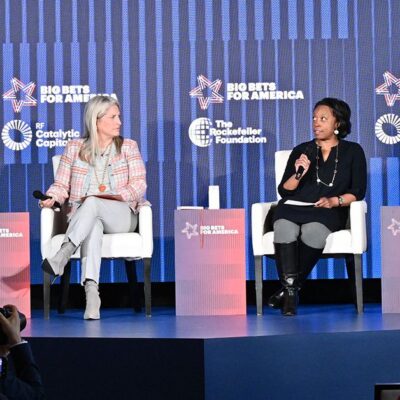
The changes we’ve seen – and continue to see – at the highest ranks of Jewish organizations are the result of years of people openly advocating for and taking concrete steps towards women’s leadership. Those efforts were, and continue to be, essential. But if we’re more concerned about the gender balance on the panel than in the audience, we’re missing most of the story. It’s time to formulate the same wide-scale response to issues of male representation and participation in Jewish spaces.
Some leaders have taken steps to more actively attract and include boys and men in their own right – whether by developing gender-differentiated programming, empowering male role models or updating recruiting materials to resonate more fully with boys and men. But few leaders have spoken publicly about the issue, even as many have noticed it in private.
Why this matters for Jewish communities and beyond
At a time when large numbers of men report feeling disconnected from purpose and community, Jewish spaces can and should be places that draw them in — where individuals can find meaning and connection. We don’t purport to have all the answers for how to do that, but we need to start thinking and working towards crafting solutions with that goal in mind.
To begin, we need to pay more attention to boys and men within our own ecosystems and work to address unintended gender disparities within our own organizations and programming. Even if the problem is accidental, the solution must be intentional. There may be some interventions that are meant to attract one gender over another, which can be beneficial. But if an activity, community or fellowship is supposed to cater to everyone but routinely attracts very few men, we should ask ourselves why this imbalance persists and whether we can do anything about it. That may be both obvious and easier said than done.
The organizations we spoke with offered two different ways that they have successfully reached more men: by changing how men view something and by changing how men experience something. For example, a grantee noted that while big changes may be necessary, small, thoughtful adjustments can also be impactful. At one point, this organization had no men on its program team and attracted few qualified male applicants to open positions. The grantee wanted more promising male candidates, and rewrote its job descriptions with this goal in mind, including more action-oriented language (e.g., “building,” “creating impact,” “driving results,” etc.) as part of this process. These small changes led to more men interested in program positions and ultimately, to a more balanced program team. Notably, the organization did not have to change anything about its culture or business model, which remains egalitarian, inclusive and strong.
Another grantee observed that in its network, young men were not as attracted to programs focused on belonging, engagement and relationship-building. Instead, they preferred programming that was task-oriented, role-based and outcome-driven. Here, young men were drawn in not because they belonged, but because their participation mattered. After noticing this trend, the grantee reworked some of its programming to be more active and goal-focused, which ultimately led to more robust male participation.
Of course, neither of these examples will work for all men or all organizations. But they demonstrate small ways our partners have thought through how to invite more men into Jewish life.
Even if we ask the right questions and make changes where we can, we still may not be able to develop effective solutions to these complex problems. As with most social change efforts, there is no silver bullet. But in leveraging the rich fabric of Jewish life, we may cultivate more Jewish boys and men with strong senses of self, strong ties to one another and strong bonds to the Jewish people. We may, in turn, build communities where fewer people fall through the cracks; communities where Judaism, in all its forms, feels relevant, compelling and worth showing up for.
Zack Wainer is the director of special initiatives at Maimonides Fund, where he works to develop and operationalize new ideas to strengthen Jews and Jewish communities. Before coming home to work in the Jewish world, he spent time in academia and management consulting.
Isaac Kurtz is a program officer at Maimonides Fund.
Doron Kenter is the director of North American grantmaking at Maimonides Fund. He is a past recipient of the Jewish Funders Network’s JJ Greenberg Memorial Award for extraordinary leadership in Jewish philanthropy and an assistant coach of the White Plains Little League 11U Rail Riders.