Opinion
GROUND RULES
Zionism and the future of liberal Jewish education: Love, not litmus tests




 Add EJP on Google
This is a critical moment for liberal Jewish education. Antisemitism is growing, anti-Israel sentiment is at an all-time high, democracy is fragile and institutions devoted to honest inquiry are under siege. For Jewish communities, the sense of abandonment by many of our progressive partners in the wake of Oct. 7, 2023, has been shattering, and the isolation that followed is real. In such moments, the instinct to preserve what we cherish by closing ranks and guarding the borders of our encampment is a human response to genuine danger.
This anxiety has led some to call for requiring students at the Hebrew Union College to formally attest that they are Zionists. Given our longstanding Zionist commitments and presence in Israel, we understand the motivation behind this call. As alumni and rabbis who currently serve on the school’s Board of Governors, however, we disagree. Litmus tests betray the values of liberal Jewish education and are less effective in advancing our goals. We believe that the best way to cultivate love for the Jewish People and for the land and state of Israel is to foster deep learning, thick experience and open inquiry.
Courtesy/HUC
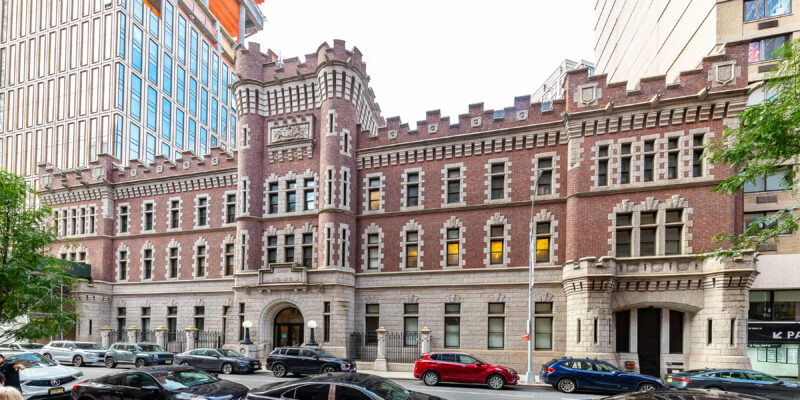
Hebrew Union College's new building on Manhattan's Upper West Side.
We are not unbiased in our evaluation. We were ordained at Hebrew Union College, which is itself a strongly Zionist institution. We sat in its classrooms where we wrestled with our sacred texts, and were formed by the very kind of education the college continues to embrace.
We have also seen Hebrew Union College students and recent ordinees in action. We have worked alongside them, learned from them and watched them lead — witnessing their commitment to the Jewish people and Israel, the judgment they bring to their pulpits, the moral seriousness they carry into their communities and the capacity for nuance and navigating difference that they sustain in the most difficult moments.
That is not incidental. It is the direct product of a particular kind of education: one built on open inquiry rather than indoctrination.
In 1875, Hebrew Union College was established as the first modern rabbinical seminary in North America. The founders of Reform Judaism embraced a new and, in the Jewish world, untested, academic model: rabbis formed through rigorous scholarship and open, disciplined inquiry, grounded in the conviction that reason — though imperfect — is the most reliable means through which God’s universe is revealed to human understanding.
That commitment required courage. It meant submitting our most sacred texts, assumptions and traditions to questioning — not to weaken Judaism, but to strengthen it through honesty and depth. Over time, that model expanded to include spiritual formation: the nurturing of awe and wonder and the development of empathy, moral sensitivity and care.
Reform Judaism has never been static. In its earliest formulations, it did not embrace Zionism. Visionary figures like Rabbi Stephen S. Wise led the movement to recenter Jewish peoplehood, including its national aspirations. He also insisted that rabbis need to be able to speak their conscience.
Zionism means different things to different people. The Zionism we promote rests on clear commitments: the Jewish people’s right to self-determination in the land of our origin; our claim to sovereignty as a means of security and flourishing; and the moral vision articulated in Israel’s Declaration of Independence: a democratic state protecting the human rights and dignity of all who dwell within.
That commitment remains for each of us and is integral to the Hebrew Union College that we are proud to govern. A serious and sustained engagement with Israel — with the Jewish People, our history, our culture, our land and the state — is essential to the formation of Jewish leadership today.
For more than 50 years, often in the face of political, bureaucratic and social pressure, Hebrew Union College has insisted on remaining present and engaged in Israel. All U.S. seminary students spend a year there, an experience each of us knows to be formative. The Israel Rabbinical Program, with its 142 ordained rabbis, has helped to build the Israeli Movement of Progressive Judaism. Our campus in Jerusalem serves as a vital center of liberal Jewish life. Israeli rabbinical students and alumni serve as fellows in North American communities, strengthening bonds of peoplehood and mutual responsibility.
Our faculty and staff regularly evaluate how best to cultivate enduring commitment to Israel and Zionism in the next generation of rabbis. There are positions that have no place in an institution committed to the flourishing of the Jewish People. Anyone who advocates for the destruction of the state of Israel, or for the removal of the Jewish People from their homeland, has no place at Hebrew Union College. Anyone who promotes the displacement of any people from their historic land has no place here. Anyone who calls for the destruction of a people — any people — has no place here.
These are not litmus tests. They are standards of moral and intellectual integrity, conditions necessary for any serious academic or religious community. One cannot pursue honest learning about Jewish peoplehood in an environment that tolerates the denial of Jewish existence.
Those who feel the boundaries must be drawn more narrowly do so from a deep commitment to ahavat Yisrael. Because we share that love, we ask that they pursue public discourse that is respectful, not divisive, and that strengthens our institutions in the spirit of collaboration and solidarity. Diversity of thought within the Reform movement is not a weakness; it is a strength.
An environment of open inquiry allows for divergence. It produces disagreement. There will be students whose views press the boundaries. We live with that reality every day, in communities across the country, alongside colleagues whose views differ from our own — and who remain our colleagues nonetheless. This is not evidence of failure. It is the expected result of forming leaders rather than followers.
The future of Reform Judaism depends on leaders capable of sustaining commitment to God, Torah and Israel while engaging honestly with the most difficult questions before us. Liberal Jewish education is our strongest instrument to achieve these goals and our deepest obligation.
We stand with our administration’s defense of these values as central to the identity of Hebrew Union College.
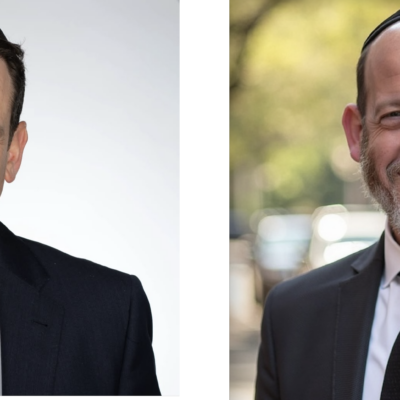
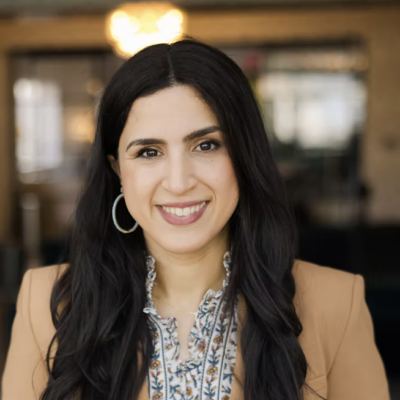
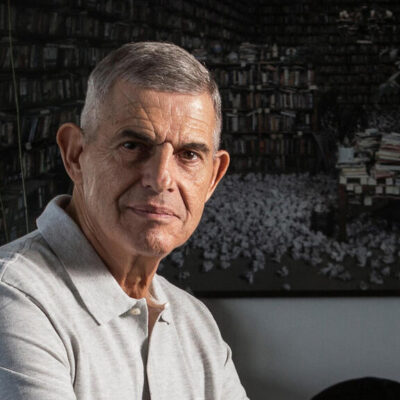
Rabbi David E. Stern is the senior rabbi of Temple Emanu-El in Dallas and a member of Hebrew Union College’s Board of Governors.
Rabbi Rachel S. Mikva is the Herman Schaalman Professor in Jewish studies, senior faculty fellow at the InterReligious Institute at Chicago Theological Seminary and a member of the Hebrew Union College Board of Governors.
Rabbi Peter S. Berg is the senior rabbi of The Temple in Atlanta and a member of the Hebrew Union College Board of Governors.
Rabbi Daniel Kirzane is the rabbi of KAM Isaiah Israel in Chicago and a member of the Hebrew Union College Board of Governors.
Rabbi Daniel A. Weiner is the senior rabbi of Temple De Hirsch Sinai in Seattle and a member of the Hebrew Union College Board of Governors.