Your Daily Phil: Pears Foundation backs Israeli NGO’s push to prevent blindness in Ethiopia




 Add EJP on Google
Good Wednesday morning!
In today’s edition of Your Daily Phil, we report on a $2.3 million initiative by the U.K.-based Pears Foundation and the Israeli NALA Foundation to prevent blindness in Ethiopia; on the rise in interest of Diaspora Jews to participate in Israeli pre-army programs; and on a new report examining Qatari donations to the American educational system. We feature an opinion piece by Scott McGrath about the necessity of organizational transformation alongside — not after — fundraising, and a piece by Shalom Goodman that calls for scaling solutions to help households locked in ongoing cycles of debt. Also in this issue: Jeremy D. Popkin, Gerald Shreiber and David A. Sachs and Karen Richards Sachs.
Today’s Your Daily Phil was curated by eJP Managing Editor Judah Ari Gross, Opinion Editor Rachel Kohn and Israel Editor Justin Hayet. Have a tip? Email us here.
What We’re Watching
The Stephen Wise Free Synagogue in Manhattan is kicking off its third Re-Charging Reform Judaism conference, which runs today and tomorrow, bringing together more than 300 Reform rabbis, professionals, lay leaders and Jewish thought leaders from across North America. If you’re there, say hi to eJP’s Nira Dayanim!
What You Should Know
The U.K.-based Pears Foundation is donating $2.3 million over the next five years for an effort to protect more than 1.5 million people in Ethiopia from a resurging contagious infection that can lead to blindness. The initiative is being administered through its longtime grantee, the NALA Foundation, an Israeli organization that works to combat so-called “neglected tropical diseases,” reports eJewishPhilanthropy’s Judah Ari Gross.
The British grantmaker said this week that it was supporting the effort to combat trachoma in response to the Trump administration’s slashing of the USAID budget, which previously included funding for a program to prevent the eye disease.
The effort joins a host of other philanthropy-backed ventures aimed at offsetting the gutting of far greater state-backed funding for aid and development programs. While experts have hailed these charitable efforts, they warn that private philanthropy is no replacement for public funding, which can be orders of magnitude larger. For many Jewish aid and development nonprofits, in addition to the drop in USAID funding, private donors have also scaled back their support in light of post-Oct. 7 shifts in Jewish communal priorities.
Dina Gidron, the Pears Foundation’s representative in Israel, told eJP that the matter arose several months ago as large nongovernmental organizations in Ethiopia decided, in the wake of the USAID cuts, that they would be putting their focus on addressing trachoma, which affects millions of Ethiopians annually, in areas with high infection rates. The Ethiopian Ministry of Health, therefore, approached NALA, which already operates in the country, about developing an initiative to combat trachoma in areas that had already seen incidents of the disease decline but remained vulnerable to a resurgence.
NALA’s CEO, Michal Bruck, raised the issue during a regular check-in call, Gidron recalled: “She asked, ‘Do you think it could be something?’” Gidron, who has been with the foundation for many years, believed that it could. “When I started working with the Pears Foundation, [Executive Chairman] Sir Trevor [Pears] — though he wasn’t sir yet — said to me… ‘Wouldn’t it be amazing if the Jewish people got together to really solve a wicked world problem, like preventable blindness?’” she said. “So I told Michal, ‘Listen, it sounds to me like what you’ve been asked to do is exactly in line with our values and the things that Sir Trevor has always wanted to be a part of.”
BASIC TRAINING
Israeli pre-army academies see growing interest from Diaspora Jewish teens
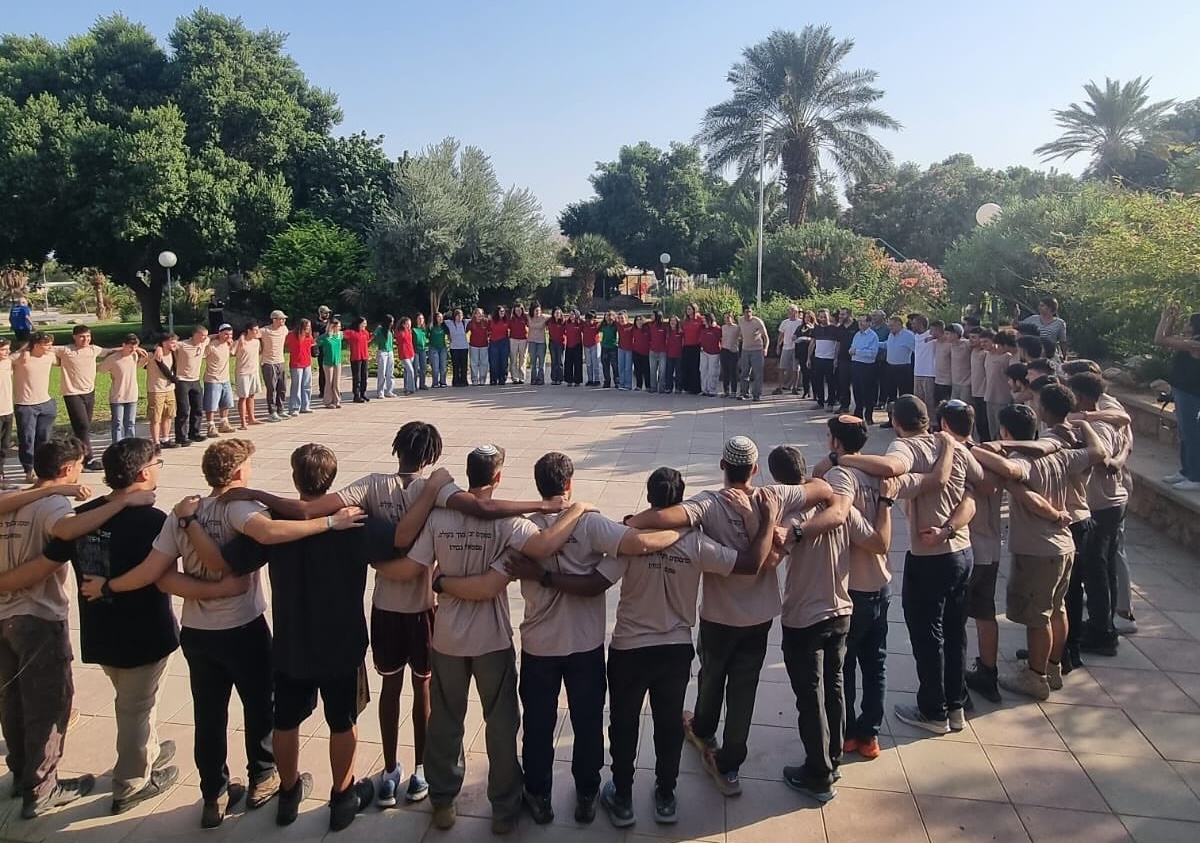
In the year between the end of high school and the start of mandatory national service, a growing segment of Israeli teens attend mechinot — gap-year programs where they prepare for military service, explore civic leadership and discuss questions of identity, religious values and Israeli society. Despite years of war and political upheaval, these traditional pre-army gap-year programs have also been drawing a growing number of young Diaspora Jews, leaders from the field told eJewishPhilanthropy’s Nira Dayanim.
Unexpected rise: “We were worried about what would happen after Oct. 7 — whether chanichim [students] from abroad would still want to come to Israel,” Matan Hoffman, director of the Ayanot branch of Mechinat Aderet, told eJP. “But to our surprise and happiness, there was actually a rise in chanichim who wanted to come.”



EXCLUSIVE
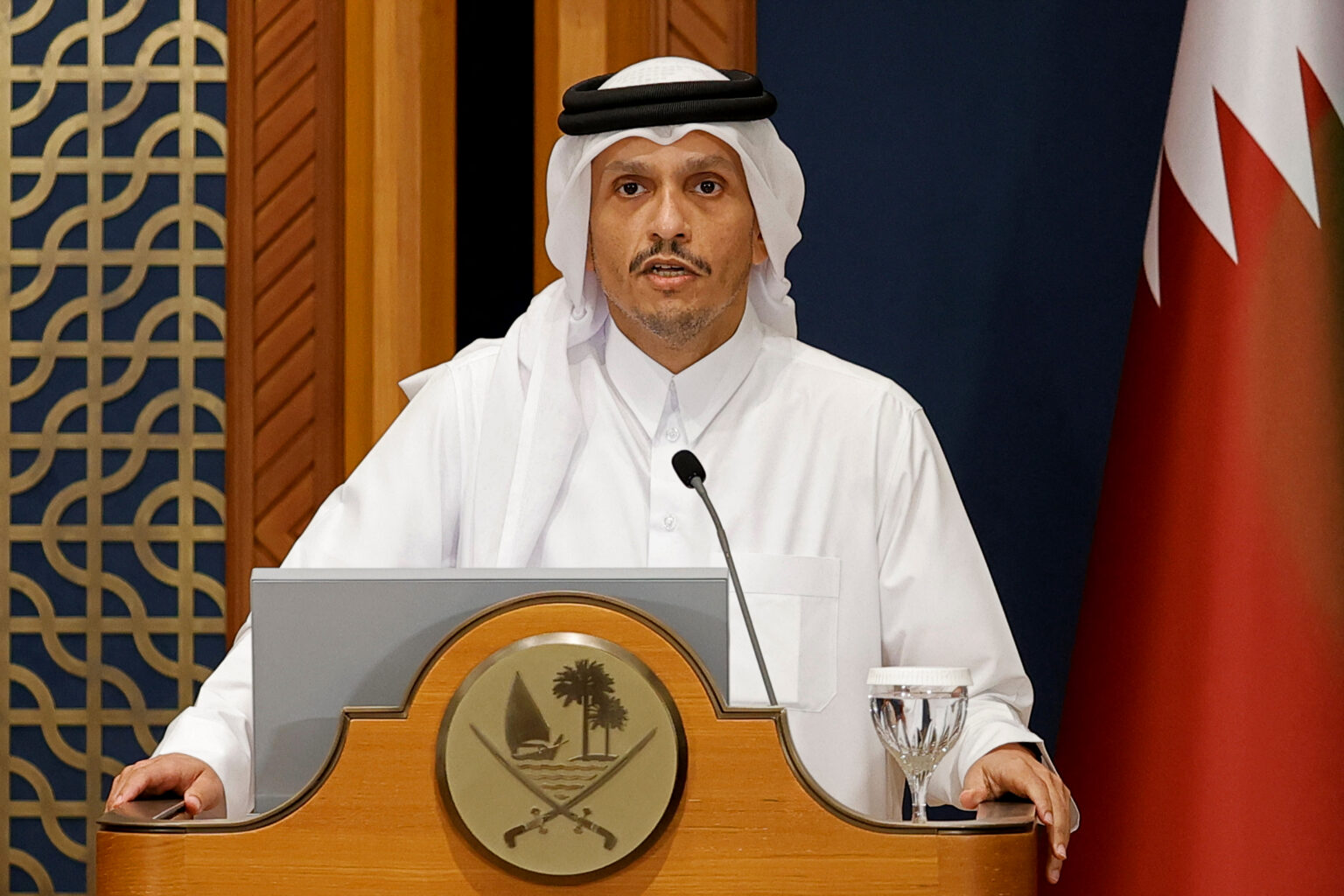
New report documents $65 million Qatari campaign to influence U.S. education at all levels
“In both Canada and the United States, 1 in 4 adults provides care to a family member, friend or neighbor,” write Shelley Rood Wernick, associate vice president of the Center on Aging, Trauma and Holocaust Survivor Care at the Jewish Federations of North America, and Liv Mendelsohn, executive director of the Canadian Centre for Caregiving Excellence, a program of the Azrieli Foundation, in an opinion piece for eJewishPhilanthropy. “[C]aregivers are holding families and communities together while facing serious financial, emotional and health pressures.”
Falling short: “Care is essential to Jewish communal infrastructure. That fact was front and center at the Network of Jewish Human Service Agencies PowerNET conference May 4-7 in Toronto. … But that belief has to inform institutional practice. … And Jewish philanthropy must continue to be a core partner by calling for better care policies in workplaces and by funding what public systems often overlook.”
BEHIND THE SCENES
Beyond the big gift: Why sustainable fundraising growth requires organizational transformation

“Nearly two years ago, our foundations embarked on Reimagining Israel Education, an ambitious initiative to reshape how the Jewish community delivers Israel education and meets this challenging moment for young Jews. The need was clear: Despite real progress over the past two decades, the last five years — especially after Oct. 7, 2023 — showed that many Jewish learners need a more holistic, realistic and relevant approach to Israel education, woven across Jewish learning at every age and setting,” write Lisa Eisen, co-president of Schusterman Family Philanthropies, and Dawne Bear Novicoff, executive vice president of the Jim Joseph Foundation, in an opinion piece for eJewishPhilanthropy.
From insights to action: “Last month, we released this framework and its 10 core principles for more authentic Israel education. It builds on the field’s strengths, while also calling on us to center learners and to invest in educators, leaders and high-quality content so that Israel education can be deeper, stronger and more impactful and enduring. … [I]t is urgent that the field put this work into practice now, responding strategically and at scale, by equipping educators to deliver. Here are some of the areas we believe require immediate investment.”
UNDER PRESSURE
Jewish institutions aren’t built for the national debt crisis hitting our communities

“I have spent my career inside the Jewish community — as a professional, a leader and someone deeply invested in its future — and it is hard to remember a moment that feels quite this unsettled,” writes Audra Berg, CEO of the Jewish Federation of Broward County (Fla.), in an opinion piece for eJewishPhilanthropy. “The headlines are relentless: war on and off in Israel, rising antisemitism, deepening political divides and a growing sense that the institutions we once trusted are no longer steady. There are days when it feels as if things are spinning beyond anyone’s control.”
And yet: “When I look at the world, it is easy to feel discouraged, but when I look at how people are responding — reaching toward one another rather than turning away — the horizon feels hopeful. Jewish life feels both fragile and fiercely alive. In Broward, we have seen that when we lean into the kind of connection that builds trust, our community responds. What follows are four lessons about deepening and growing community, shaped in partnership through an initiative we call Ignite Broward.”
Worthy Reads
Epistolary Impression: In the Jewish Review of Books, historian Jeremy D. Popkin examines correspondence between American Jewish philanthropist Rebecca Gratz and the family of her brother, Benjamin. “The Rebecca Gratz I have come to know from her family letters was certainly an intelligent and deeply resourceful woman and certainly, like the heroine of Ivanhoe, a committed Jew, but I now see her also as very much a nineteenth-century American. Her charitable work may have reflected Jewish traditions of tzedaka, but it also exemplifies the quality Alexis de Tocqueville famously admired when he visited America: the willingness of Americans to form voluntary associations to take on tasks that were usually performed by governments and churches in Europe.” [JRB]
Beating Burnout: In his Substack “The Deep End,” Rabbi Joshua Lesser reflects on what he’s noticed about his synagogue since stepping down as its senior rabbi. “[With] that distance, I began noticing something uncomfortable. I had spent years overfunctioning. Not theatrically. Not resentfully. Often quite lovingly. I folded tables, stacked chairs, solved problems, filled gaps before anyone noticed they existed. … The problem is that too many congregations unintentionally create cultures of participation that are chaotic, guilt-driven, structurally unsupported, or overly dependent on a shrinking circle of overcommitted people.” [DeepEnd]
Own Worst Enemy?: In Vox, reporters Benji Jones and Sara Herschander spotlight the tension between philanthropists who support environmental causes while making the money to do so through industries that contribute to the problems. “What our conversation highlighted is a bigger problem with environmental philanthropy. For every dollar spent to protect nature, the UN recently reported, more than $30 goes toward destroying it, largely from private industries like energy, agriculture, and mining. The giving, as generous as it sometimes seems, isn’t close to enough on its own. And the people writing the checks are often the same people making business decisions across industries that cause environmental harm in the first place — whether they acknowledge that fact or not.” [Vox]
Word on the Street
The Jewish Telegraphic Agency examines how the strengthening shekel is making life more difficult for American transplants to Israel as their savings in dollars are now worth less…
The Israeli financial newspaper Calcalist looks at how the strengthening shekel is affecting the Israeli tech industry, as local engineers are becoming increasingly expensive employees for international companies…
A new survey by Stanford University’s Rapid California Voices finds that nearly half of the families in the state with young children are experiencing food insecurity…
Pennsylvania Gov. Josh Shapiro warned of the dangers of efforts within the Democratic Party to single out AIPAC, telling Politico in a new interview that painting the pro-Israel group as “toxic” could be seen as silencing Jewish voices in the American political system, Jewish Insider’s Gabby Deutch reports…
The Soroka Medical Center in Beersheva, Israel, has received planning permission for a new fortified tower that is part of the hospital’s reconstruction and expansion efforts after it was hit by an Iranian missile during last summer’s war with Iran. Read eJP’s coverage about the project here…
The Justice Department filed a third lawsuit against the University of California, Los Angeles, alleging that the school violated Jewish students’ civil rights by being “deliberately indifferent” to antisemitism in the months after the Oct. 7, 2023, Hamas terror attacks, including the creation in spring 2024 of an anti-Israel encampment on the campus…
Brooklyn’s Park Slope Co-op voted by a 2-to-1 margin in favor of boycotting Israeli products, capping off a yearslong endeavor by activists to end the institution’s sales of Israeli-made items including olive oil, hair products and some brands of tahini…
The final version of the New York state “buffer zone” legislation passed by the state Legislature on Tuesday makes it a Class B misdemeanor — one of the lowest levels of criminal offense — to “knowingly” infringe on the right of access or egress to a religious institution, or to cause those entering or exiting to fear for their safety from a distance of less than 50 feet, Jewish Insider’s Will Bredderman reports…
Gerald Shreiber, who turned a small Philadelphia soft pretzel factory into an international food powerhouse and supported a wide array of Jewish and Israeli causes, as well as those related to animal welfare, died earlier this month at 84…
Newspaper mogul Donald Newhouse, who headed Advance Publications’ newspaper division, died at 96…
Tova Vickar, a Manitoba, Canada-based philanthropist who gave to an array of local, Jewish and Israeli causes, died this week…
Major Gifts
David A. and Karen Richards Sachs donated $25 million to Brandeis University — the largest gift in the school’s history — for a number of student life-related infrastructure and programming projects on the campus…
Adam Wexler, the founder of the fantasy sports app PrizePicks, donated $10 million to the University of Georgia Athletic Association in its largest-ever gift…
Transitions
The Network of Jewish Human Service Agencies appointed Roselle Ungar as the new chair of the organization’s board of directors, and Andrea Ballard, Marsha Greenfield, Richard Cohen and Ruth Ruskin are joining as board members…
Loews Corp Chairman James Tisch was elected as the new co-chair of the Council for a Secure America…
Cornell University elected five new trustees for four-year terms, including Harold Grinspoon Foundation President Winnie Sandler Grinspoon, as well as Jason Brauth, Angela Hwang, John H. Josephson and Karin Bain Kukral…
Pic of the Day

Representatives from the Jewish Federations of North America visit Bondi Beach in Sydney yesterday, as part of a “Federation Leadership Solidarity Mission” to Australia as it marks six months since the deadly terror attack that killed 15 people at a Hanukkah candlelighting event.
“The visit carries additional significance given the participation of leaders tied to Tree of Life, the Pittsburgh synagogue that suffered the deadliest antisemitic attack in American history,” JFNA said in a statement. “The mission reflects the growing cooperation among Jewish communities worldwide as they confront rising threats and share lessons around security, trauma recovery, and communal resilience.”
Birthdays

CEO of British real estate firm Heron International, he was knighted in 2024, Sir Gerald Ronson turns 87…
Professor emeritus at Northwestern University’s Kellogg School of Management, he is the author of over 80 books, Philip Kotler turns 95… Founder of Val d’Or Apparel and Cannon County Knitting Mills, Martin “Marty” Granoff turns 90… Senior U.S. district judge for the Central District of California, Christina A. Snyder turns 79… Retired in 2014 as school rabbi and director of Jewish studies at The Rashi School, a K-8 Reform Jewish school in Dedham, Mass., Ellen Weinstein Pildis… Partner in the D.C. office of ArentFox Schiff, he wrote a book about the struggle for Jewish civil rights during the French Revolution, Gerard Leval turns 76… Analytical psychotherapist, author, and Jewish Renewal rabbi, Tirzah Firestone turns 72… Former MLB pitcher who played for the White Sox and Pirates, he is now a financial advisor at RBC Wealth Management, Ross Baumgarten turns 71… Emmy Award-winning actor, comedian and director, Richard Schiff turns 71… Owner of a 900-acre plant nursery in Kansas, he is a former MLB pitcher and was an MLB All-Star in 1979 and 1982, Mark Clear turns 70… Marriage counselor, therapist and author, Sherry Amatenstein… U.S. ambassador to Argentina during the Biden administration, he served for six years as chairman of the National Jewish Democratic Council, Marc R. Stanley turns 69… Beverly Hills-based immigration attorney, founder and chairman of the Los Angeles Sephardic Jewish Film Festival, Neil J. Sheff… Executive vice president of talent and technology at Phibro Animal Health, Jonathan Bendheim… Chicago-based reporter at The New York Times, he was a Rhodes Scholar and then a longtime senior editor for The New Republic, Noam Scheiber… Director of development at the Livingston, N.J.-based Joseph Kushner Hebrew Academy, Grant Silverstein… Stage, film and television actor and producer, Ben Feldman turns 46… Science of Success columnist for The Wall Street Journal, Benjamin Zachary Cohen… Director of legislative affairs and policy at General Atomics, Katherina “Katya” Dimenstein… Assistant district attorney for Dallas County, Joshua A. Fitterman… Reporter for the Philadelphia Inquirer since 2012, Andrew Seidman… Emily Cohen…