Your Daily Phil: Maryland capital gets a Jewish federation of its own




 Add EJP on Google
Good Monday morning!
In today’s edition of Your Daily Phil, we consider the lessons that Jewish organizations can draw from recent controversies in The Sierra Club. We report on the launch of a new Jewish federation in Annapolis, Md., and examine the struggles facing Israeli LGBTQ nonprofits. We feature an opinion piece by Claudia Stein and Debra Barton Grant about the need to invest in awareness training to complement security infrastructure. Also in this issue: former German Chancellor Angela Merkel, Emmanuel Nahshon and Lt. Hadar Goldin.
What We’re Watching
The Jewish Student Union’s three-day Presidents Conference kicked off in Stamford, Conn., yesterday, bringing together hundreds of Jewish students from across North America.
Israel’s Weizmann Institute of Science is presenting honorary degrees this evening to Karen W. Davidson, Maurice Lévy, Eugene V. Koonin, Ilana Ronat-Mantoux, Yehudit Bronicki, Patrick Cramer and former German Chancellor Angela Merkel, who will give the keynote address.
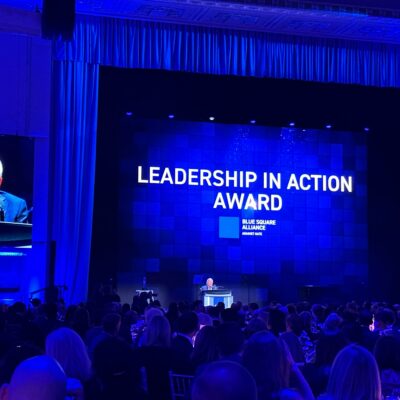
The Anti-Defamation League’s annual Concert Against Hate is taking place this evening and will honor Marion Ein Lewin, Holocaust survivor, health policy leader, advocate and educator; Michael Lomax, president and CEO of the United Negro College Fund; Wesley Seidner, a senior at Oakton High School in Fairfax County, Va.; and Oklahoma City Mayor David Holt.
What You Should Know
A QUICK WORD WITH EJP’S JUDAH ARI GROSS
Call it mission creep, call it intersectionality run amok, call it loss of focus. Call it what you like, The New York Times’ latest deep dive into The Sierra Club provides yet another example of what happens to a nonprofit that expands beyond its raison d’etre only to find that its funders and supporters no longer identify with the broader focus of the organization.
The article examines how, like many other nonprofits, the storied environmental organization began incorporating social justice into its core mission in the wake of the 2020 George Floyd protests. Issuing statements on reparations and police funding, the organization embraced what it believed to be a more holistic approach to environmental work, but which former employees and supporters described as utterly detached from the cause. One former employee recalled a conversation about a lobbying effort on behalf of an endangered wolf population, in which she was asked, “But what do wolves have to do with equity, justice and inclusion?”
The Times article credits this mission expansion with raising costs, decreasing revenue and alienating donors. The number of dues-paying members dropped by more than a quarter, and the number of volunteers fell by 60% from 2019. In 2022, the organization said it was cutting its trips to Israel in 2022 as a sign of solidarity with Palestinians, but later walked back the plan, a move that rankled people on both sides of the issue, reportedly including philanthropist Michael Bloomberg, who had previously donated $120 million to the organization.
The Sierra Club is far from alone in this. In the wake of the Oct. 7 attacks, the D.C. Abortion Fund issued fervent statements against Israel and its war against Hamas, alienating several Jewish donors, who pulled their support for the organization.
A growing number of universities have started adopting “institutional neutrality” to curb this issue, preventing themselves from issuing statements on matters outside their direct focus: education and research.
Though in a markedly different way, the risk of mission expansion is also increasingly present for Jewish organizations today. In the wake of the Oct. 7 attacks, donors and communal institutions have increasingly begun focusing on combating antisemitism and support for Israel. While these may be worthy causes, the cases of The Sierra Club, the D.C. Abortion Fund and others demonstrate the potential blowback from donors and staff that can come from adopting seemingly popular positions on issues outside the organization’s focus.
JOINING THE SYSTEM
Maryland capital launches own Jewish federation, uniting a ‘splintered’ community

On Friday, local synagogues, representatives from the Annapolis, Md., chapter of Hadassah, the Uriah Levy Post 380 of the Jewish War Veterans and the Tradition Chapter of Jewish Women International collectively launched the Jewish Federation of Annapolis and the Chesapeake, a volunteer-run federation bringing the community together as a force for advocacy. The federation has already started organizing events and created a BBYO chapter, reports eJewishPhilanthropy’s Jay Deitcher.
Communal catalyst: After years of considering the creation of a local Jewish federation, the Annapolis Jewish community decided to go ahead with it after a library in the Maryland capital hosted screenings of an anti-Israel documentary. “It reminded us, given what’s going on in the world, no place can be complacent,” Jennifer Laszlo Mizrahi, co-founder and secretary of the federation, told eJP. “Every place needs to be sure people are well-educated.”



PRIDE OF THE COUNTRY
Israeli LGBTQ groups see budgets slashed as community faces growing challenges

In the immediate aftermath of the Oct. 7 attacks, Israel’s LGBTQ community won a symbolic victory with the passage of an amendment granting official recognition by the military to same-sex partners. But since that initial success, Israel’s LGBTQ community has seen its state funding slashed and the minister charged with representing it, Minister for Social Equality May Golan, distance herself from the cause, activists told Judith Sudilovsky for eJewishPhilanthropy.
First to be cut: The Aguda, Israel’s umbrella organization for the LGBTQ community, said the budget cuts have severely impacted LGBTQ programs in Israel, with funding for crucial initiatives slashed by as much as 75%. State funding for LGBTQ initiatives dropped from $28.4 million before the war to $12.4 million last year, and with Golan’s latest cuts, it’s down to $7.4 million, said Omer Ohana, an activist whose fiancé was killed in the Oct. 7 attacks. Mental health issues have surged, particularly among marginalized groups, with a 40% increase in helpline calls and a rise in addiction-related cases, according to Aguda CEO Yael Sinay Biblash. The community’s resilience programs, essential during such crises, have been among the first to be cut, leaving many in need without crucial support. “During such times, strengthening community resilience is crucial, unfortunately, these very programs have been the first to be cut,” she said.
PROTECTING OUR COMMUNITIES
Awareness training needs to be Jewish philanthropy’s next frontier in safety

“Antisemitism is not receding; it’s evolving. The question before us as Jewish leaders, professionals and funders is: How can we evolve in response? Awareness training is an answer that deserves far more attention, funding and communal will,” write Arya CEO Claudia Stein and senior strategic advisor Debra Barton Grant in an opinion piece for eJewishPhilanthropy.
Empowering communities: “In the Manchester attack [on Yom Kippur], it was a synagogue member who recognized the attacker’s suspicious behavior and followed safety procedures exactly as he had been trained. Because of his actions, the attacker never entered the synagogue, saving many lives. Security infrastructure must be paired with training our people and creating a culture of awareness that empowers every member of our community to be an active participant in preventative security. Awareness training teaches individuals how to observe, interpret and respond to potential threats before they escalate. It transforms congregants, parents, students and Jewish communal professionals into an extension of our community’s security network. Awareness is not about fear — it’s about empowerment.”
Worthy Reads
Schools Out: In The New York Times, Elisabeth Bumiller examines the growing boycotts of Israeli academia over the past years. “No one expects the boycotts to end anytime soon. ‘They may subside, they may be of a lesser amplitude, but they will continue to subsist one way or another,’ said Emmanuel Nahshon, the head of a task force fighting against the boycotts for Israel’s eight universities. The agenda, he said, ‘is really to delegitimize Israel.’ … Israeli academics said they were worried about other measures beyond boycotts. There are demands from some countries to remove Israel from Horizon Europe, the European Union’s major research funding program, which over the past decade has sent billions of euros to Israel.” [NYTimes]
Who’s in Your Data?: Out of 850 nonprofits included in Namaste Data’s AI Equity Project 2025 survey, 80% reported familiarity with AI and 58% reported familiarity with data equity, but only 36% of respondents were implementing equity practices, writes Namaste Data founder and CEO Meena Das in a post for Candid. “AI equity refers to the ethical development, deployment, and use of artificial intelligence — ensuring AI systems prioritize fairness, inclusivity, and justice for historically marginalized communities. It’s rooted in data equity, which focuses on how data is collected, interpreted, and governed; whose stories are amplified and whose are erased.” [Candid]
Under Pressure: In the Stanford Social Innovation Review, Hildy Gottlieb explores the neuroscience of good decision-making. “Some decisions are operational: Should we hire for a recently vacated position or limp along and save money? Some are about fundraising: Should our board members be required to donate to the organization or not? Some are programmatic: Should we step into advocacy work to take on the bigger systems that affect our community? Whatever type they are, the least effective time to make decisions is when the decision makers are afraid. And yet, nonprofit leaders, whose organizations depend on outside funding, are afraid so much of the time. Recent economic and political circumstances have only exacerbated that fear. So how do leaders make decisions when the options all feel scary?” [SSIR]
Word on the Street
As the government shutdown drags on, the Trump administration has ordered states to reverse plans to dispense SNAP benefits this month…
Yesterday, Israel received the remains of Lt. Hadar Goldin, a soldier killed and taken hostage by Hamas during the 2014 Gaza war…
Concluding months of federal scrutiny over accusations of antisemitism, Cornell University has agreed to pay a $60 million settlement and the White House will release federal research funding…
Tim Davie, the director-general of the BBC, and Deborah Turness, head of BBC News, resigned on the heels of the publication of an internal report accusing the British national broadcaster of bias, including in its coverage of the war in Gaza and the way it edited a speech by President Donald Trump…
Iran has sentenced an Iranian Jewish man from New York to prison for traveling to Israel for his son’s bar mitzvah over a decade prior…
The head of Germany’s Jewish community has warned about potential risks to the Jewish community due to rising support for the far-right party Alternative for Germany in the country’s eastern states…
Brown University celebrated 130 years of Jewish life at the university over the weekend…
President Donald Trump has tapped Benjamin Landa, a Long Island businessman and philanthropist to serve as U.S. ambassador to Hungary…
The New York Times traces the path of a solid gold toilet sculpture previously owned by financier and New York Mets owner Steve Cohen…
Masha Pearl, executive director of The Blue Card, got engaged to Jeff Leb, managing partner of Capitol Consulting and treasurer of New Yorkers for a Better Future…
Mark Kruger, the executive director of the Jewish Federation of St. Joseph Valley (Ind.) died unexpectedly last week at 69…
Pic of the Day
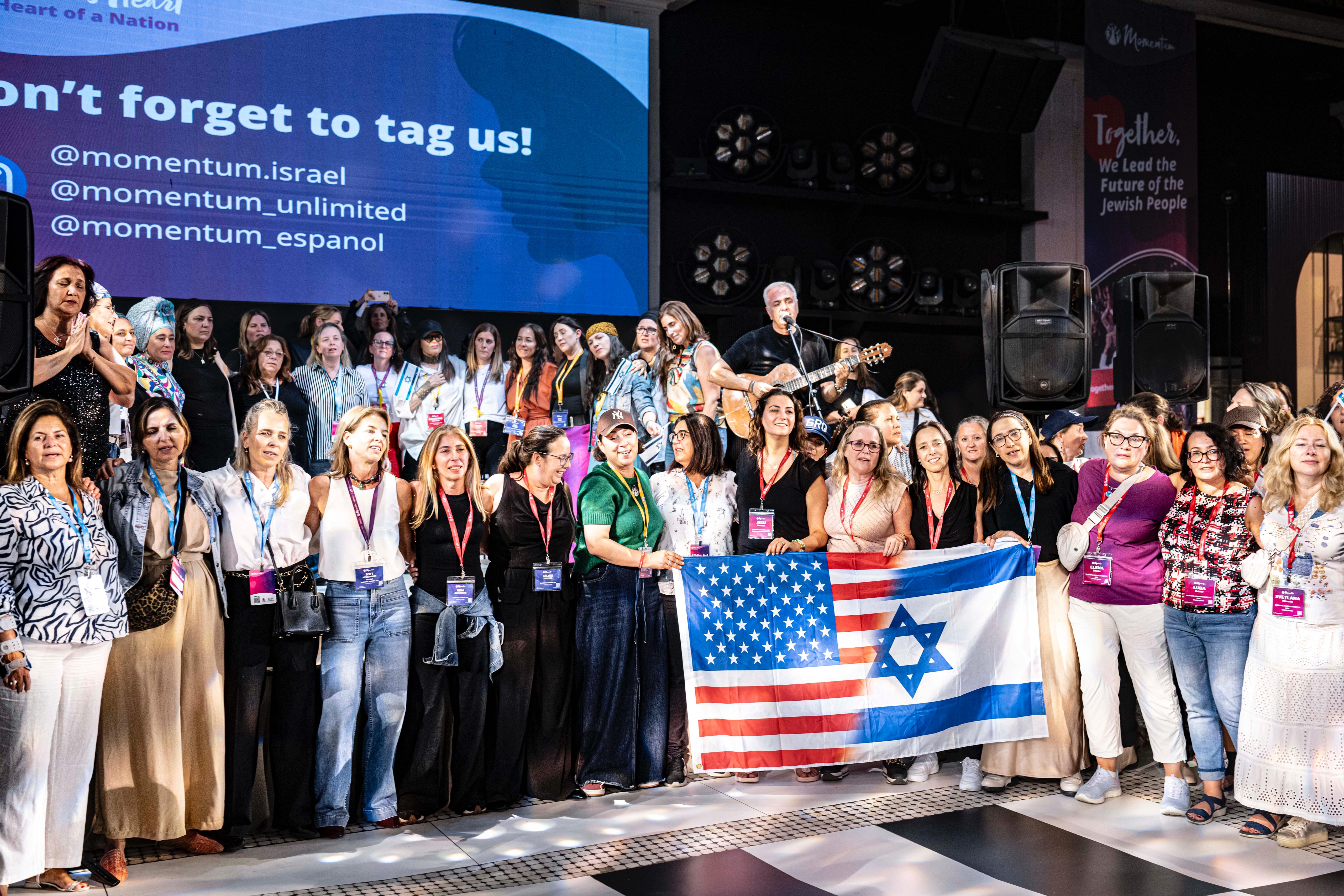
Hundreds of women from Israel and around the world gather yesterday outside Jerusalem as part of an event organized by the nonprofit Momentum focused on “hope, faith and unity.” During the event, the organization honored the mothers of several Israeli hostages.
Birthdays
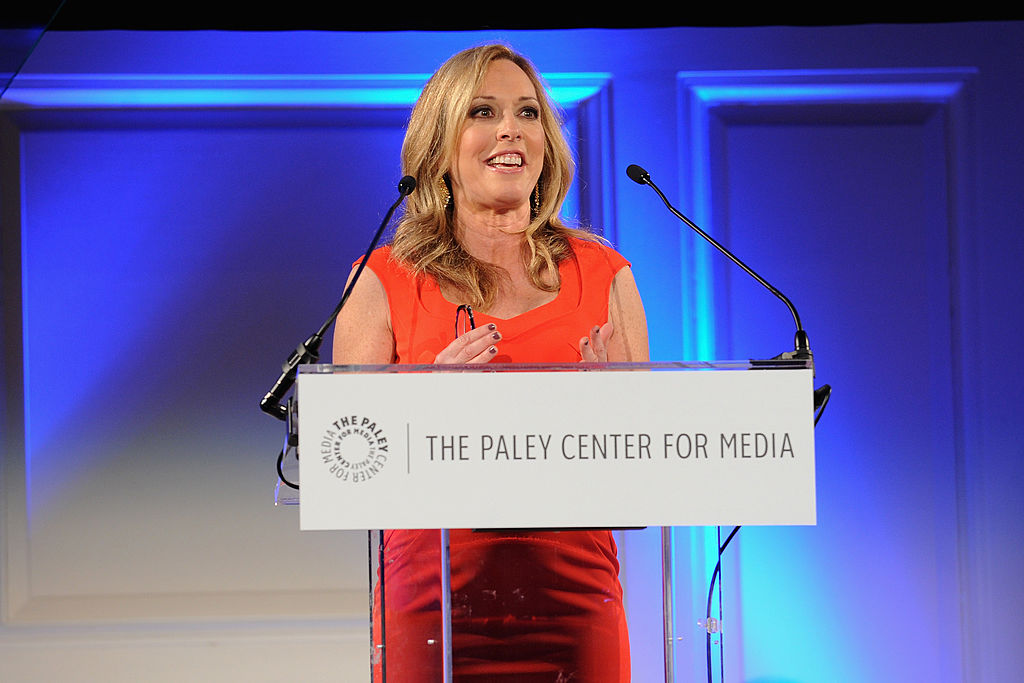
ESPN’s longest-tenured “SportsCenter” anchor, Linda Cohn turns 66…
Manager of the Decatur, Ga.-based Connect Hearing, Murray Kurtzberg… One of the four deans of Beth Medrash Govoha in Lakewood, N.J., Rabbi Yerucham Olshin turns 82… Professor emeritus at the University of Nebraska at Omaha, he is a co-founder of Nebraska Jewish Historical Society, Oliver B. Pollak, Ph.D., turns 82… Former executive director of the Pat Brown Institute for Public Affairs at California State University, Los Angeles, now the executive director of the John Randolph Haynes and Dora Haynes Foundation, Raphael J. Sonenshein, Ph.D. turns 76… Israeli journalist, Elli Wohlgelernter turns 72… Chief administrative officer at the Legacy Heritage Fund, Elaine Weitzman… Rabbi at Temple Beth Kodesh in Boynton Beach, Fla., Michael C. Simon… Professor at Bar-Ilan University, Adam Ferziger turns 61… Senior rabbi of Leo Baeck Temple in Los Angeles, Ken Chasen turns 60… Former MLB right-fielder for 14 seasons, he founded Greenfly, a software firm for sports and entertainment organizations, Shawn Green turns 53… National security editor at The Washington Post, Benjamin Pauker… President of Democratic Majority for Israel, Brian Paul Romick turns 49… Co-founder in 2004 of Yelp, where he remains the CEO, Jeremy Stoppelman turns 48… Executive director of the Ruderman Family Foundation, Shira Menashe Ruderman… Chief investigative reporter at ABC News, Josh Margolin turns 46… Senior advisor on the public health team at Bloomberg Philanthropies, Jean B. Weinberg… YouTube personality, he came to fame as a child actor on Nickelodeon, Josh Peck turns 39… Actress and producer, Zoey Francis Chaya Thompson Deutch turns 31…