Your Daily Phil: How to make Diaspora Jews’ voices heard in Jerusalem?




 Add EJP on Google
Good Monday morning!
In today’s edition of Your Daily Phil, we consider the significance for philanthropy of this year’s irregular Rosh Hashanah, which began on Shabbat so the shofar was not blown on the first day in many communities. We report on the International Fellowship of Christians and Jews‘ NIS 24 million ($7.9 million) allocation for Israel’s needy during the High Holy Days, and examine a new Progressive Policy Institute report tying America’s civics-education crisis to rising antisemitism and slipping support for Israel. We feature an opinion piece by Dan Lahav calling for Diaspora Jewry to have a formal avenue for making its voice heard in Israeli politics, and a piece by David Zalik addressing Jewish day school holdouts. Also in this issue: Jacqueline Novogratz, Stanley C. Middleman and Paul J. Reichenbach.
Today’s Your Daily Phil was curated by eJP Managing Editor Judah Ari Gross, Opinion Editor Rachel Kohn and Israel Editor Justin Hayet. Have a tip? Email us here.
What We’re Watching
Today is Tzom Gedaliah, a minor fast day marking the assassination of the eponymous governor of the Kingdom of Judah, which led to the end of Jewish sovereignty after the destruction of the First Temple.
What You Should Know
A QUICK WORD FROM eJP’S JUDAH ARI GROSS
Every few years, we have an irregular Rosh Hashanah like we had this year, one that begins on Shabbat. For many communities, particularly Orthodox ones, this overlap slightly alters the holiday, both logistically and liturgically. But perhaps the most significant difference is that on the first day of the holiday, the shofar is not blown, and in the prayers, the day is not referred to as the “day of the blowing [of the shofar]” but as the “day of remembrance of the blowing [of the shofar].”
In a dvar Torah for Rosh Hashanah, Rabbi David Stav, chair of the Tzohar rabbinical movement, reflects on the significance of a Rosh Hashanah missing half of one of its most significant features, offering a key lesson for Jewish philanthropy: The blast of a shofar is like a cry of pain, waking us up to the needs of others. When Rosh Hashanah falls on Shabbat, we have a more difficult task of remembering those cries without hearing them.
In philanthropy, many of the issues that funders and organizations are looking to address are like a shofar blast — overt, explicit and shocking. Security threats, disaffiliation, ignorance, alienation, extremism, polarization, poverty, etc. And yet alongside these obvious — even if difficult to solve — problems, there are many more rumbling beneath the surface, challenging us to hear them. For the organizations and individuals looking to improve society, this year’s irregular Shabbat-Rosh Hashanah overlap instructs us not to forget these silent cries as well.
Read the rest of ‘What You Should Know’ here.
News
SEASONS GREETINGS
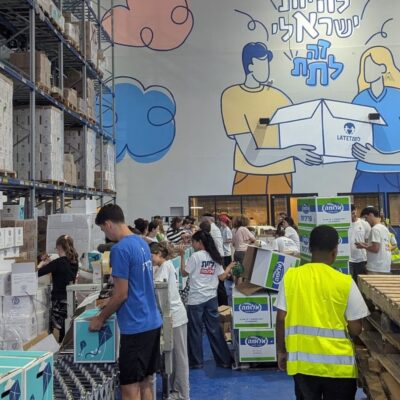
IFCJ allocates NIS 24 million to provide food, clothing to 150,000 Israelis for High Holy Days
The International Fellowship of Christians and Jews is allocating more than NIS 24 million ($7.9 million) to provide food and clothing to some 150,000 people in Israel for the High Holy Days season, reports eJewishPhilanthropy’s Judah Ari Gross.
Price of war: IFCJ, which receives the bulk of its funding from American Christian supporters, said that its annual holiday assistance programs have grown increasingly critical as the past three years of war have exacerbated poverty issues in Israel. “Three years of war have changed the landscape of those who need help in Israel and deepened the struggles of many families who have already been in dire financial situations,” Yael Eckstein, president of the IFCJ, said in a statement.



DEMOCRACY DEFICIT
New report warns civics education crisis is fueling antisemitism, eroding support for Israel
Nearly 4 in 5 American eighth graders score below proficient in civics, the federal government spends roughly 100 times less per student on the subject than on STEM and about one-third of Americans under 30 say democracy is no longer a viable system of government. A new report from the Progressive Policy Institute (PPI) argues those trends are connected — and warns they pose a particular threat to Jews and to support for Israel, reports Matthew Shea in eJewishPhilanthropy’s sister publication Jewish Insider.
Teaching values: “If young people don’t appreciate the value and importance of liberal democratic values, then there’s much less reason for non-Jews to value Israel,” Richard Kahlenberg, director of PPI’s American Identity Project, said. In that case, conflicts in the region are reduced to “fights between different groups, and therefore America wouldn’t have any particular reason to support the one society that subscribes to Western liberal democratic views.”
Read the full report and sign up for Jewish Insider’s Daily Kickoff here.
Opinion
CALL TO ACTION
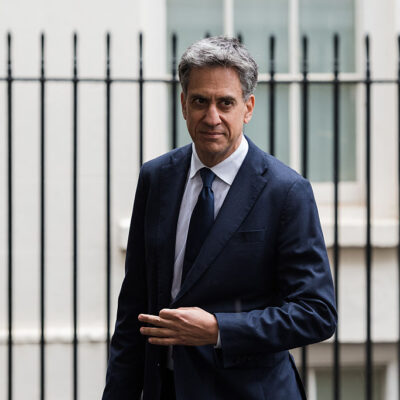
Diaspora Jews need an effective lobby in Israel
In an opinion piece for eJewishPhilanthropy, Dan Lahav, a former deputy director-general of the Israeli Prime Minister’s Office, argues that Diaspora Jews need to create the lobbying infrastructure to effectively influence Israeli politics.
“The exclusion of non?resident Jews from voting in Israeli elections has a clear justification: In a country where political decisions can determine matters of life and death, voting rights should be reserved for those who live under those consequences. However, the absence of Diaspora perspectives from Israel’s political discourse has no justification.”
DAY SCHOOL DISCUSSION
Jewish day schools are a bubble, and that is the point
In an opinion piece for eJewishPhilanthropy, David Zalik, co-founder of the Zalik Foundation, challenges the argument that Jewish day schools somehow offer a lesser or limiting experience compared to what children get at secular institutions.
“They picture a greenhouse, warm and protected and a little artificial, and worry their children won’t be ready for the real world. Secular school feels like the braver, more open choice. But the fear rests on the assumption that the way you prepare a child for a world full of difference is to immerse them in it as early as possible.”
Worthy Reads
Reach Over Riches: In the Stanford Social Innovation Review, Jacqueline Novogratz, former CEO of the global poverty-fighting organization Acumen, argues that impact investing has wrongly adopted Silicon Valley’s “unicorn” benchmark and instead proposes a “butterfly” model that measures success by reach, depth, durability and system change rather than billion-dollar valuations. “If valuation is the wrong measure, what’s the right one? I’d start with a single question: Is the world meaningfully different because this organization exists?”
Corner-Office Optimism: In The Chronicle of Philanthropy, senior editor Ben Gose breaks down a new survey by the nonprofit network NTEN and the consulting firm Bridgespan on how nonprofits are using artificial intelligence. “‘There really were some significant differences, and I think that’s a point of reflection for us as a sector,’ said Amy Sample Ward, NTEN’s CEO. ‘The closer you are to your community — whether you’re a program staff person or doing direct service — the more likely you are to say, “I will never use generative AI tools.” And the further you are from the community impact — the executives — the more likely you are to say, “Oh yeah, I use them and they’re great.”’”
Sidelined Cinema: In The Hollywood Reporter, European bureau chief Scott Roxborough examines how Israeli and Palestinian films reach foreign markets and spotlights Shooq, a new platform pairing Jewish creators with investors and philanthropists. “What is taking shape on both sides of the political divide is a distribution system that runs parallel to the mainstream rather than through it.”
Major Gifts
Freedom Mortgage founder and Phillies co-owner Stanley C. Middleman donated $50 million to the University of Pennsylvania‘s Penn Medicine to fund early-stage research into cancer as well as autoimmune and infectious diseases…
Transitions
Word on the Street
Philanthropist Stuart Zimmer, who with his wife in 2018 had pledged $100 million to Harvard University but froze the gift in response to the school’s handling of campus anti-Israel activity in the wake of the Oct. 7 terror attacks while their daughter studied at the school, quietly resumed funding; the gift will help expand kosher dining options on campus and will include the renaming of the school’s Science Center to honor Zimmer’s father…
The J50, a forum of Diaspora Jewish organizations from around the world, issued a declaration signed by 59 organizations representing 40 countries that states anti-Zionism, “as manifested today through efforts to deny the Jewish people their right to self-determination, or demand that Jews renounce Zionism as the price of acceptance in political, academic, professional, or cultural life,” is antisemitic, and reaffirms the principles of the International Holocaust Remembrance Alliance’s working definition of antisemitism…
“NAZA,” a documentary by Israeli directors Yuval Abraham and Rachel Szor that alleges that Israel used AI-powered targeting systems to kill Gaza civilians, won the Special Jury Prize at the Venice Film Festival, prompting Israel’s Culture Minister Miki Zohar to call the film “vile” and vowing to revoke the directors’ citizenship…
The New York Post examines William D. Cohan‘s new book Money to Burn, which digs into Apollo Global Management founder Leon Black‘s ties to Jeffrey Epstein, including the $158 million Black paid Epstein and the harassment allegations that ended his run at the firm he founded…
The Chronicle of Philanthropy reports on the first major grantmaking overhaul at the Ford Foundation under President Heather Gerken: in January, staff will split into three units — one building the new strategy, one sustaining current grants and one winding down grantees being cut — with the full overhaul due by January 2028…
Former U.S. antisemitism envoy Deborah Lipstadt established the Emory Policy Institute on Countering Antisemitism…
World ORT has added the Colegio Moral y Luces “Herzl-Bialik” school in Caracas, Venezuela, to its global network — its first new member school in four years…
The San Francisco Standard reports on Mayor Daniel Lurie‘s sharp turn toward labor and renters as the business-friendly mayor strikes an early union deal and declares a rental emergency…
A 214-page German indictment alleges that Hamas plotted coordinated attacks in Berlin and Vienna around the second anniversary of the Oct. 7 terror attacks, seeking to target Israeli and Jewish sites. Seven men were charged, and a weapons cache was seized…
Anthropic CEO Dario Amodei published an essay on Saturday, calling on the AI industry to slow down and was met with agreement by OpenAI CEO Sam Altman…
Inside Philanthropy profiles Knight Foundation President Maribel Pérez Wadsworth, who in her first two years has accelerated $300 million in journalism grants, relaunched the Knight Cities Challenge and publicly criticized the Trump administration’s First Amendment record…
Israeli planetary scientist Adi Ninio Greenberg died at 50… Luthier Jonathan Cooper, who designed a quartet of string instruments to honor slain Wall Street Journal reporter Daniel Pearl, died at 76… Paul J. Reichenbach, who spent 44 years with the Union for Reform Judaism shaping its camping and Israel programs and as co-director of URJ Kutz Camp, died yesterday following a battle with ALS…
Rachel Rabin Yaakov, the sister of slain Israeli Prime Minister Yitzhak Rabin, died at 101… Yehuda Widawski, the oldest Holocaust survivor living in Israel and a Lodz Ghetto and Auschwitz survivor who later spent decades restoring destroyed Jewish graves in Poland, died at 107…hed a Jewish man in Surfside, Fla., cursed the victim and his wife and threatened to kill them…
Pic of the Day

Worshipers perform the traditional Tashlich service yesterday on the beach in Tel Aviv, ceremonially tossing their sins from the past year into the waters of the Mediterranean Sea ahead of Yom Kippur.
Birthdays
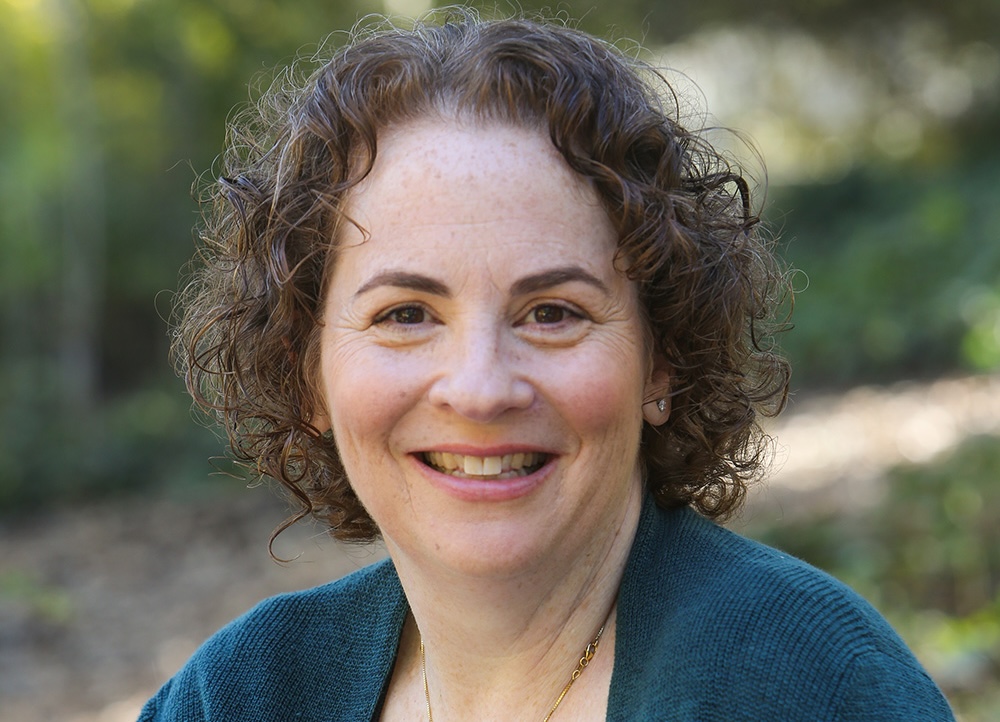
Dana Sheanin, CEO of San Francisco-based Jewish LearningWorks
Walter Koenig, actor, writer and director, first known for his role as Chekov in the original “Star Trek” television series, turns 90
Lawrence Harvey “Larry” Brown, the only basketball head coach to have won both an NCAA national championship and an NBA championship, turns 86
Larry A. Mizel, executive chairman of MDC Holdings (parent company to Richmond American Homes) until last December, and the primary supporter of the Museum of Tolerance Jerusalem, turns 84
Frederick A. Schenk, San Diego-based attorney, a specialist in mass torts, turns 73
Daniella Levine Cava, mayor of Miami-Dade County, turns 71
Pope Leo XIV, born in Chicago as Robert Francis Prevost, turns 71
Dr. Terry Dubrow, plastic surgeon and television personality, turns 68
Thomas Scott Kaplan, chairman and chief investment officer of The Electrum Group, he is the world’s largest private collector of Rembrandt’s works, turns 64
Amy Kauffman, founder of Mindchat Research
Paul Budnitz, founder of Vermont-based Kidrobot, a retailer of art toys, apparel and accessories, and Ello, an ad-free social network, turns 59
Sir Grant Shapps, British secretary of state for defence until 2024 and knighted earlier this year, he was a national president of BBYO, turns 58
Richard Strauss, president of Strauss Media Strategies, during the Clinton administration he became the first-ever White House radio director, turns 57
Mark A. Semer, managing director at Gasthalter & Co., he is a past president of the Young Israel of New Rochelle
Elon Gold, comedian, television actor, writer and producer, turns 56
Elliot S. Berke, managing partner of Berke Farah LLP, his clients include SCOTUS Justice Clarence Thomas
Jennifer Jacobs, senior White House reporter for CBS News
Courtney Cohen Flantzer, senior booking producer at CNN‘s “Inside Politics with Dana Bash”
Hani Furstenberg, Israeli American actor, turns 47
Marisa Scheinfeld, artist, photographer and educator, turns 46
Russell Berman, staff writer at The Atlantic since 2014
Leah Greenberg, co-founder and co-executive director of the progressive Indivisible movement
Roxana Pourshalimi, Los Angeles-based attorney working as a contracts supervisor at MarketCast
Matt Flegenheimer, New York Times reporter since 2011, now focused on in-depth profiles
Jeremy Moskowitz, EVP at Voyager Global Mobility
Elan Kramer, associate vice president of community and Jewish life at Jewish Federations of North America
Arkadiy Abramovich, founder and owner of ARA Capital, a British firm with holdings in e-commerce and energy, he is the son of Roman Abramovich, turns 33
Julia Savel, MSW graduate this past May at Yeshiva University
Lihie Raz, artistic gymnast, she represented Israel at the 2020 (Tokyo) and 2024 (Paris) Summer Olympics, turns 23