Your Daily Phil: Craigslist founder Craig Newmark: ‘Good philanthropy never goes out of style’




 Add EJP on Google
Good Thursday morning!
In today’s edition of Your Daily Phil, we sit down with Craig Newmark of Craigslist fame, spotlight the approach of the expanding Moshal Program to supporting Israeli university students from disadvantaged families and interview Gov. Josh Shapiro’s amid increasing pressure to end military aid to Israel. We feature an opinion piece by Lara Knuettel in honor of World Book Day, one by Aya Shechter exploring the difference between access and influence and one by Sami Jinich about working toward a shared society for Jews and non-Jews in Israel. Also in this issue: Rabbi Elazar Symon, Sivan Kobi and Chaim Galbut.
Today’s Your Daily Phil was curated by eJP Opinion Editor Rachel Kohn and Israel Editor Justin Hayet. Have a tip? Email us here.
What We’re Watching
The Jewish Community Center of the North Shore (Mass.) kicks off its International Jewish Film Festival this evening…
What You Should Know
An approachable philanthropist who is passionate about supporting military families, fighting cyberattacks and rescuing pigeons, Craig Newmark largely fell into his wealth: His company Craigslist started out as an email list for friends, became a bare-bones website and took off unexpectedly. He finds people’s interest in him both “surreal” and “funny,” he said, admitting “there’s a lot of stuff I don’t get.”
Newmark spoke recently with eJewishPhilanthropy’s Jay Deitcher about what makes his philanthropy Jewish, when to give to specifically Jewish organizations and his criticism of the Giving Pledge.
Jay Deitcher: You’ve given to a number of Jewish initiatives. Often in the philanthropic world, we talk about balancing focusing on the particular, which is initiatives based around the Jewish people, and the universal, or obligations to the entire world. How do you weigh that in your own philanthropy?
Craig Newmark: I just do what makes most sense. I have some small bias towards specifically Jewish initiatives. As you noticed with the ADL, they do good work in threat intelligence gathering regarding threats to the Jewish community in the U.S.
I also support other groups that support traditional Jewish values, like I support 92NY. I think it’s Jon Stewart [who] said [it’s] a tie for the second holiest place in Judaism, along with Zabar’s, although I kind of prefer Russ & Daughters. I support the Jewish Community Relations Council in New York, and the [Secure Community] Network in Chicago. They’re doing good work. I don’t talk about them a lot because anyone doing threat intelligence gathering that protects us is at serious risk, and I don’t want to get them targeted.
JD: The ADL has come under fire a lot the last two years from both sides of the political spectrum. Why is ADL still an important initiative to support?
CN: Right now, they’re getting a lot of crap from different people. I’m not qualified to address that because being smart about it requires social skills. I try to avoid areas where I’m largely ignorant.
But I can see they do good counter-extremism work. They do it quietly, and I’m very aware whenever you’re dealing with anything involving intelligence gathering or law enforcement… they appreciate it when I keep my mouth shut. Sometimes it is really good when a tech success story guy keeps his mouth shut.
WRAPAROUND SUPPORT
Expanding Moshal Program gives a critical boost to promising students from disadvantaged backgrounds

Over two years of war have turned the normal Israeli army-to-university pipeline into chaos, with students cycling in and out of reserve duty and unable to build academic momentum. Limore Dishon-Loewy, a senior clinical psychologist and supervisor at Tel Aviv University, described the additional challenges facing students from Israel’s social and geographical periphery, who are watching their families struggle while other sectors seem to keep moving forward. “The war has created castes between people who have a foothold and people who don’t,” she told Rachel Gutman for eJewishPhilanthropy.
Here to help: The brainchild of South African philanthropist Martin Moshal and Israeli businesswoman Yael Lavie, the Moshal Program annually supports 300 first-generation university students from below Israel’s poverty line pursuing degrees in engineering, computer science, medicine, economics and law. The program provides full tuition, a living stipend, one-on-one support from social workers and career coordinators, English-language training, soft skills workshops, and access to a powerful alumni network. The program just completed a major post-Oct. 7 expansion at Sami Shamoon College in southern Israel, bringing in 80 additional students in a single year in partnership with Israeli-Canadian philanthropist Mark Scheinberg; it is now planning a similar initiative for the North, targeting students from Kiryat Shmona, Shlomi, Ma’alot and the Golan Heights.



SHAPIRO SPOTLIGHT
Josh Shapiro supports U.S. aid to Israel, but calls to use it as leverage
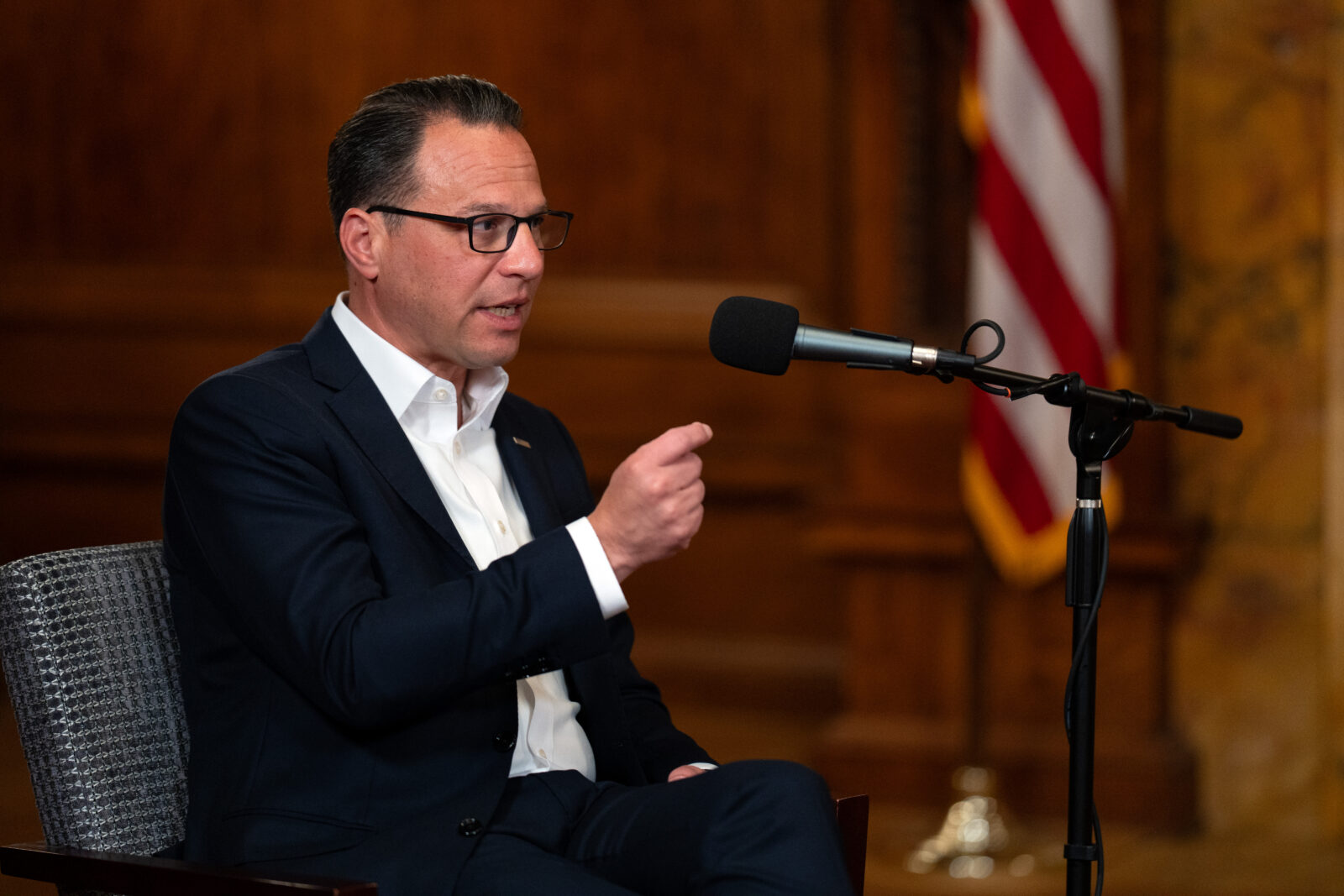
On the eve of the NFL draft on Wednesday, Pittsburgh, the host city, was in full spectacle mode. Israel, 6,000 miles away, was abuzz for a very different reason: the country was marking 78 years of independence. As he jumped between draft events, Pennsylvania Gov. Josh Shapiro shared his thoughts about both. “I think we’re here to celebrate an iconic event in sports and sports in general. Sports has the power to bring people together, and we need more of that in our society,” Shapiro told Gabby Deutch for eJewishPhilanthropy’s sister publication Jewish Insider following a “unity dinner” in Pittsburgh that brought together 100 Black and Jewish students from local universities. .
Question of values: Asked about Yom HaAtzmaut, Israel’s Independence Day, Shapiro expressed affection for Israel. He also called for America to do more to rein in its government. “I’ve always been really clear that I have a love for Israel, even while I have real concern about the leadership of Israel,” said Shapiro. “Every day I do, of course, get asked about Israel and the Middle East, and I think it’s important to just speak truthfully about how I feel. I think it’s important to be true to who you are, to not put your finger in the wind and just sort of follow which way it’s blowing.”
Read the full interview here and sign up for Jewish Insider’s Daily Kickoff here.
REPRESENTATION MATTERS
It’s on all of us to share the stories of the Jewish People

“Today, on April 23, PJ Library recognizes World Book Day, a global celebration of books and their power to connect people across generations and cultures. The day also marks PJ Library’s annual day of giving — a 24-hour call to support sharing the stories and histories of the Jewish people with families raising Jewish children in New York and around the globe,” writes Lara Knuettel, chief philanthropy officer for PJ Library, in an opinion piece for eJewishPhilanthropy.
A teaching opportunity: “On World Book Day, let’s celebrate the power of stories and help our children develop a love of reading, finding connections to those who came before them and those who look like them today. But let’s also look inward and explore our unique roots to reclaim the histories that have shaped us. … We might not all be writers, but our unique stories and collective memories are just as important. Not every Jewish story follows the same path, or looks the same, and when those stories go untold, we risk leaving people behind. When we share them, we expand what it means to belong.”
STRATEGIC INFRASTRUCTURE
Presence without power changes nothing
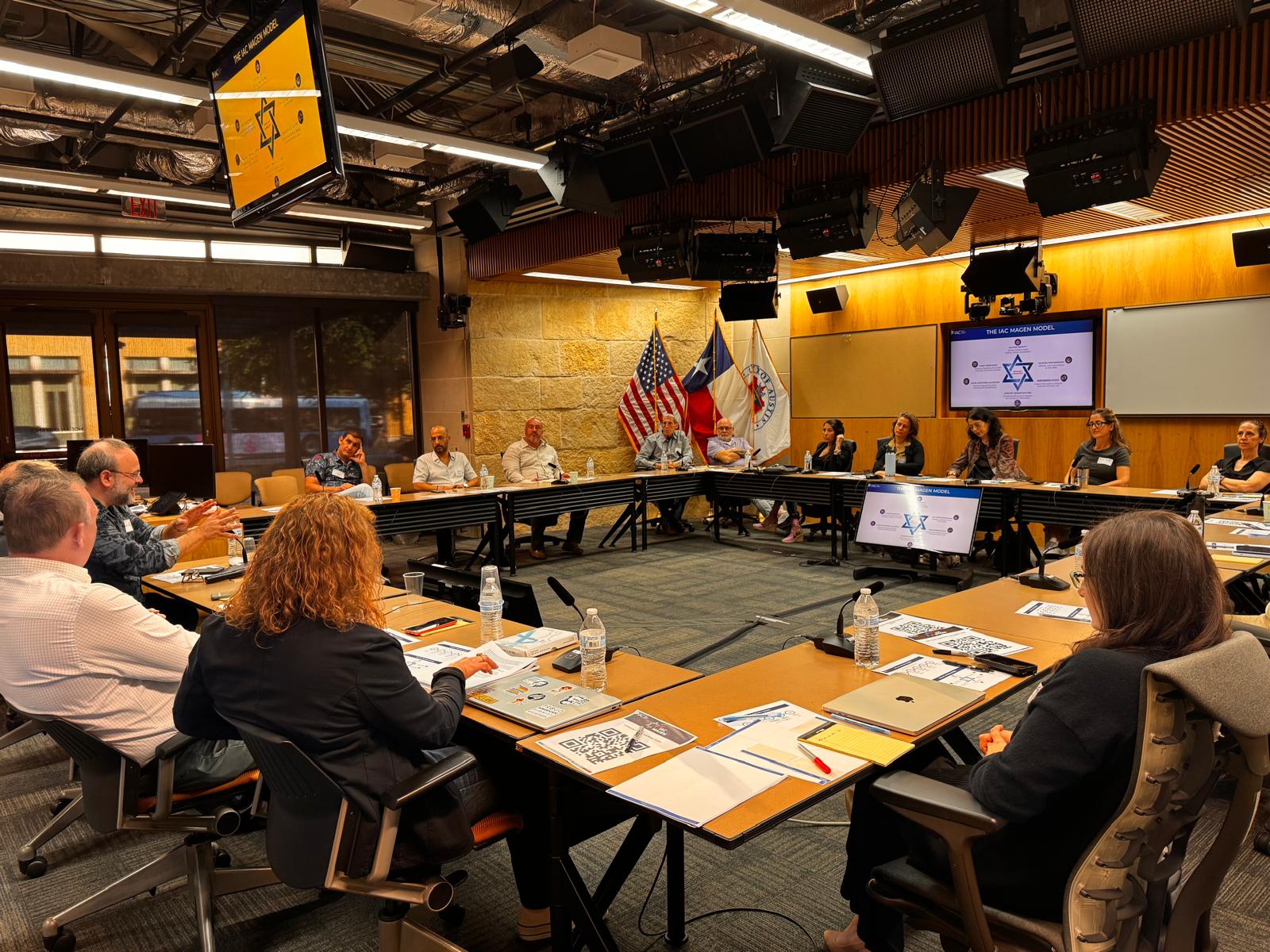
“American public support for Israel is dwindling to historic lows, yet our community is looking to the same old strategies to respond to this crisis,” writes Aya Shechter, chief programming officer of the Israeli-American Council, in an opinion piece for eJewishPhilanthropy. “The instinct in moments like this is to look for a messaging fix. Better hasbara. More outreach. Stronger relationships. More meetings with the right people. But our problem is not a lack of access. It is that access and influence are not the same thing.”
Don’t get me wrong: “Meetings matter. Relationships matter. Access matters — it opens doors. But doors are not the same as leverage, and visibility is not the same as power. What matters now is not gaining entry to more rooms; it is building the local leadership, civic fluency and durable structures that shape what happens inside them. That requires a different kind of investment: in civic training, local leadership pipelines and coordinated long-term strategy that treats influence as infrastructure rather than an event. It requires funders willing to measure success over years, not grant cycles. And it requires organizations willing to share accountability for outcomes, not just credit for activity.”
BE THE CHANGE
Why I came to Israel to work for shared society
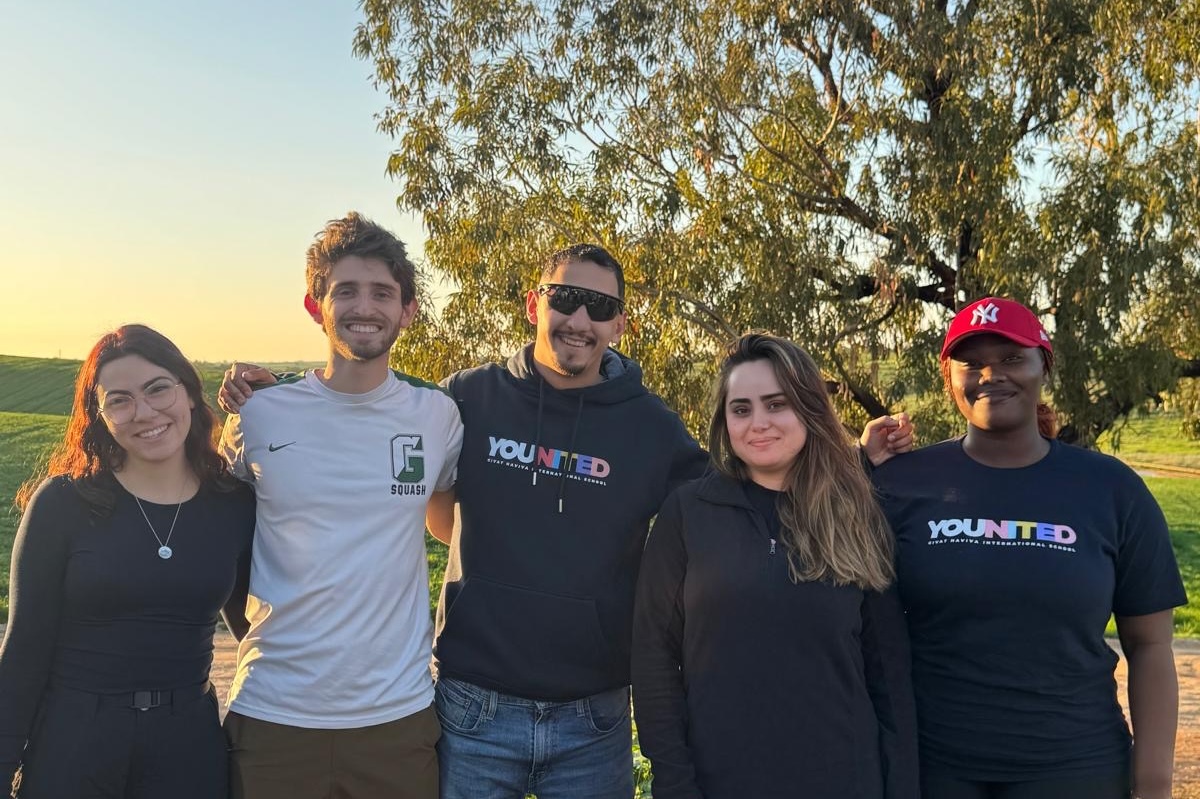
“For American Jews who believe in and benefit from liberal democracy, the work of shared society organizations in Israel should feel both intuitive and imperative,” writes Sami Jinich, a community educator at the Younited International School in Wadi Ara in northern Israel and assistant to the director of strategy at Givat Haviva, in an opinion piece for eJewishPhilanthropy.
The ties that bind: “I’ve met students from Jewish and Arab schools who met for the first time through Givat Haviva’s programs, learning the dreams and struggles of their neighbors who live nearby but feel a world apart. What struck me most was how naturally conversations among students left divisive politics aside and entered the personal — what it was like to live on the border with Gaza on Oct. 7, or how difficult it is to start college in Israel without speaking Hebrew fluently. Shared society is not built through policy debates. It is strengthened when people learn to carry each other’s stories alongside their own. In this way, Israeli identity starts to belong to and reflect all of its citizens alike.”
Worthy Reads
Greedy Gatekeepers: In the Nonprofit Quarterly, Lauren Girardin spotlights how the lack of regulatory oversight for for-profit fundraising platforms has allowed companies to exploit nonprofits through unauthorized solicitations and the mismanagement of donated funds. “The problem is as much structural as it is regulatory. Small nonprofits typically lack the technical staff and legal expertise to evaluate the practices of the platforms they rely on, let alone hold anyone accountable when something goes wrong. They hand over donor data and payment processing, and trust that the platform will do the right thing and send the money. This creates a stark power imbalance. For-profit companies now control the donor data, payment infrastructure, and timing of transferring money. As federal funding cuts shrink government support, nonprofits are more dependent on individual donors giving online, which means they are also more dependent on the commercial platforms that are gatekeepers of those transactions.” [NonprofitQuarterly]
The Sower’s Gamble: Reflecting on Israel’s 78th Independence Day in an opinion piece for the Jewish Telegraphic Agency, Rabbi Elazar Symon explores the theological and existential tensions between human initiative and divine providence within the Zionist project. “This awareness creates a double responsibility. On the one hand, we must continue sowing the seeds of the great dream of return. On the other hand, we must continually examine ourselves, ensuring that we leave room for God to join us in building this house, cultivate patience and strive to be morally worthy of the project. In Israel, not only seeds are planted in the earth. Sons and daughters, mothers and fathers are buried as well, lowered into the ground with tears by loving hands and hearts full of doubt, struggling to believe that their loss will not be in vain. Our partnership in building this house means that we also bear the terrible cost of its construction.” [JTA]
Starving the Mission: In Alliance, Holly Witherington unpacks how a rigid 15% “indirect cost” standard forces nonprofits into crippling cycles of layoffs and organizational stagnation. “Well-intentioned funders often get hyper-focused on metrics and forget about the foundations — hiring, compensation equity, and burnout prevention — which are baseline necessities and not something you can simply add-on down the road. This creates a vicious cycle. By restricting spending on ‘People Ops,’ funders ensure that two-thirds of organizations remain unable to attract or retain qualified staff, leaving a progressively smaller, more exhausted workforce to handle rapid response work. To break this cycle, funders must shift from line-item scrutiny to strategic investment, boosting infrastructure allocations to at least 30% and providing the flexible, multi-year support required to build lasting internal structures.” [Alliance]
Word on the Street
The U.K.’s Jewish News reports that after scheduling competing London rallies for May 10, the Board of Deputies, Jewish Leadership Council and Campaign Against Antisemitism are now merging events to present a unified front against antisemitism…
Jewish Insider highlights a delegation of Jewish leaders — all from American communities targeted in violent antisemitic attacks — who met with congressional leadership to advocate for an increase in Nonprofit Security Grant Program funding…
The New York Times spotlights India’s B’nei Menashe community, one of the “lost tribes” of Israel, as the remaining 5,800 members of the Jewish community prepare to move to Israel, with 250 making the journey today…
CNN breaks down the Justice Department’s landmark indictment of the Southern Poverty Law Center amid growing allegations that the case is politically motivated…
The New York Post highlights the popularity of “Infused Shabbat” dinners among 420-friendly Jewish New Yorkers seeking inclusive community spaces to alleviate social isolation since the Oct. 7 attacks…
In The Daily Wire, Mark Goldfeder and Alan Scheiner of the National Jewish Advocacy Center argue that New York City Mayor Zohran Mamdani’s “selective indifference” toward addressing antisemitic crime opens the city to legal problems…
Manhattan Borough President Brad Hoylman-Sigal was booed at a 92NY panel for making positive comments onstage about Mamdani…
A 17-year-old pleaded guilty to his involvement in a recent arson attack on Kenton United Synagogue in suburban London but claimed he did not know the building was a synagogue…
Chaim Galbut, a 6-foot-7 Orthodox Jewish basketball standout at Miami Country Day School known for his viral dunks, has committed to play for Duquesne University starting in the fall…
Rep. David Scott (D-GA), a 12-term lawmaker known for his strong pro-Israel support, died at 80…
Major Gifts
The Jewish Federation of Palm Beach County (Fla.) announced a $4 million gift from Ken Endelson that will establish the Endelson Sports Complex…
Transitions
Rafi Rone joined the Executive Office of the Governor of Maryland as a senior fellow…
Rabbi Cheryl Peretz will be the interim dean of the Ziegler School of Rabbinic Studies, effective July 1…
Ariel Krok was hired as the regional development director for Brazil at the Weizmann Institute of Science…
Pic of the Day

Elad Strohmeyer, consul general of Israel to the Midwest, leads students in lively song and dance at a Yom HaAtzmaut celebration yesterday at Bernard Zell Anshe Emet Day School in Chicago.
Birthdays

Israeli singer-songwriter, now based in Seville, Spain, known for Ladino music of the exiled Jews of Portugal and Spain, Mor Karbasi turns 40…
Retired stage, television and film actor, Alan Oppenheimer turns 96… Owner of Council Bluffs, Iowa-based Ganeeden Metals, a multi-generational scrap metal recycling firm, Harold Edelman… Retired real estate brokerage executive, he held leadership positions at Merrill Lynch Realty, Prudential California Realty and Fox & Carskadon, Terry Pullan… Retail industry analyst and portfolio manager at Berman Capital, he is the former president of JCPenney Credit Services and VP of credit at Macy’s, Steve Kernkraut… Chair emeritus of Israel Policy Forum, he serves as chairman of Trenton Biogas, an organics recycling-to-energy business in Trenton, N.J., Peter A. Joseph… Health services researcher focused on smoking cessation programs for women, maternal health and child health, Judith Katzburg, PhD, MPH, RN… Deputy director of NCSEJ, the National Coalition Supporting Eurasian Jewry, Lesley L. Weiss… Principal of Philadelphia-based Ceisler Media & Issue Advocacy, Larry Ceisler turns 70… Gary R. Pickholz… Retail sales manager at Chrissy’s Collection, Janni Jaffe… Co-founder of Gryphon Software, he is the author of a book on the history of antisemitism, Gabriel Wilensky turns 62… CEO of Hermitage Capital Management, he is the primary proponent world-wide of the Magnitsky Act, Bill Browder turns 62… DC-based executive director of the Orthodox Union’s Advocacy Center, Nathan J. Diament… Heiress and businesswoman, daughter of Ronald Lauder, style and image director for the Estée Lauder Companies, Aerin Lauder Zinterhofer turns 56… CEO of Aish HaTorah, Rabbi Steven Burg turns 54… Former president and CEO at Americans For Peace Now, now president and CEO at New Jewish Narrative, Hadar Susskind… Founding member of the rock band the National, he was a collaborator on several of Taylor Swift’s studio albums, Aaron Brooking Dessner turns 50… and his twin brother, also a member of the National, Bryce David Dessner turns 50… Jewelry designer, Jennifer “Jen” Meyer turns 49… Director of policy initiatives at Maimonides Fund, Ariella Saperstein… Founder and CEO at 90 West, a Boston-based strategic communications firm, Alexander Goldstein… Co-founder of Edgeline Films, he co-directed and co-produced “Weiner,” a documentary about Anthony Weiner’s campaign for mayor of NYC in 2013, Joshua Kriegman… Vertical lead at Red Banyan, he was the communications director at the Republican Jewish Coalition, Neil Boylan Strauss… Deputy director of the Mid-Atlantic and Florida for J Street, Adi Adamit-Gorstein… Senior editor at Axios, Alexis Kleinman… Former University of Michigan quarterback, now a fund manager in NYC, Alex Swieca… American Jewish Committee ACCESS New York board member, Sam Sorkin… Director of the Jewish Renewal Administration, Elisheva Mazya… Executive editor and strategist at ILTV News, Maayan Jaffe-Hoffman…