Opinion
We cannot forget the fallen




 Add EJP on Google
The images of hostages returning home, embracing their families after months of captivity, have moved us all to tears of relief and joy. We should celebrate these reunions. We must feel this happiness. But even as we rejoice, we cannot declare victory. We cannot move on.
Sixteen hostages remain in Gaza, and they are not coming home to embrace their families — they are coming home to be buried.
Sixteen hostages still held captive equal 16 families denied even the most basic dignity of laying their loved ones to rest. And as the world’s attention begins to drift, as some rush to claim success and turn the page, these families sit in an impossible purgatory, their grief compounded by the cruelest denial: they cannot fulfill their most sacred obligation to their dead.
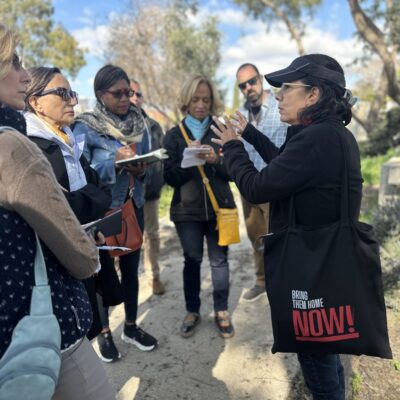
Along with my colleagues at the Jewish Community Relations Council of New York, on Friday I met with Leah Goldin, whose son Hadar has been held in Gaza since he was killed in combat in 2014. She has spent 11 years fighting for the world to fight for her son. When she speaks of Hadar, she uses a particular phrase: “the fallen hostages.” Not missing. Not lost. Fallen. It is both an acknowledgment of devastating reality and a sacred designation. Hadar fell defending his country, and for 11 years, his mother has been fighting a different kind of battle — to bring him home for burial.
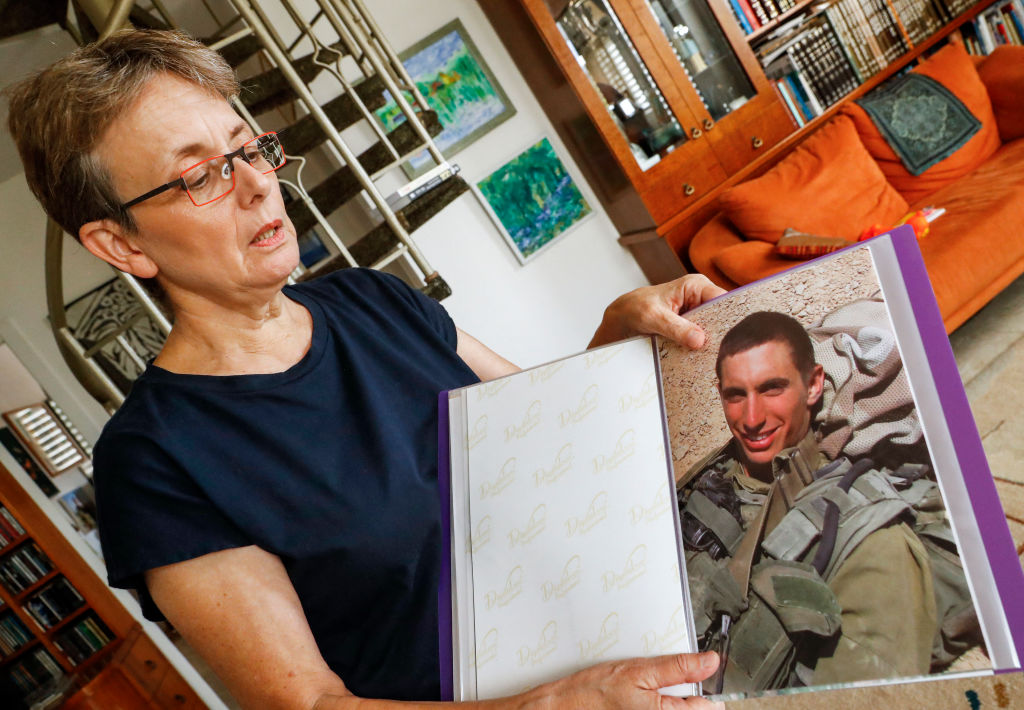
“People don’t understand,” Leah told me, her voice carrying the weight of a decade of advocacy. “They think this is about closure. It’s bigger than that. It’s about chesed shel emet.”
Chesed shel emet. The ultimate act of loving-kindness that can never be repaid. In Jewish tradition, caring for the dead and ensuring proper burial stands above almost all other commandments because the deceased cannot thank you. There is no expectation of reciprocity, no possibility of reward. It is kindness in its purest form.
In one week, we will mark seven years since the deadliest antisemitic attack in American history, when 11 Jews were murdered while at prayer in the Tree of Life synagogue in Pittsburgh. As we commemorate this anniversary, the heroism of the chevra kadisha, the Jewish burial society, during those dark October days in 2018 serves as a stark reminder of what remains to be done for the hostages in Gaza.
Members of the chevra kadisha worked alongside the FBI for days as the bodies of Joyce Fienberg, Richard Gottfried, Rose Mallinger, Jerry Rabinowitz, Cecil Rosenthal, David Rosenthal, Bernice Simon, Sylvan Simon, Daniel Stein, Melvin Wax and Irving Younger lay in that desecrated sanctuary in Pittsburgh. While investigators documented the crime scene, these volunteers performed tahara, the ritual washing and preparation of bodies, with extraordinary care and reverence, even as they confronted unimaginable trauma.
The chevra kadisha members couldn’t simply do their sacred work and leave. They had to wait for each piece of evidence to be collected, photographed, catalogued. They had to work around investigators and forensic teams. And they did it all while ensuring that each of the 11 individuals was treated with the dignity and respect Jewish law demands. Some of these volunteers knew the victims personally. They washed the bodies of their neighbors, their friends, their fellow congregants.
This is what chesed shel emet looks like in practice.
The tradition of Jews going to extraordinary lengths to fulfill this mitzvah stretches back through our history. During the Holocaust, Jews risked their lives to bury the dead according to Jewish law, even when such acts could mean their own deaths. In the wake of terrorist attacks in Israel over the decades, ZAKA volunteers have gathered every fragment of human remains, sometimes using tweezers and toothbrushes, working for days to ensure that every Jewish victim could be buried whole, fulfilling the injunction in Deuteronomy (21:23) “you shall surely bury him.” After the Sbarro pizzeria bombing in Jerusalem in 2001, for example, chevra kadisha members worked for days, combing through the rubble of the destroyed restaurant to recover every trace of the fifteen victims, including seven children. They understood what the families needed: not just to bury their loved ones, but to know that every piece of them had been treated with reverence and returned home.
This is the sacred work being denied to the families of the 16 fallen hostages still in Gaza.
Phase 1 of the ceasefire was supposed to include the return of all hostages, living and deceased. The living have come home, thank God, but Phase 1 is not complete. The agreement has not been fulfilled, and yet already the pressure to move forward, to close this chapter, to claim victory and shake hands, is mounting.
We cannot allow this to happen.
Leah Goldin has spent 11 years fighting for what should be unquestionable. Eleven years of meetings with officials who offer sympathy but no action. Eleven years of watching other crises take precedence. Eleven years of other people’s fatigue with her son’s story. At JCRC-NY, we commit to standing with Leah and supporting her until her son comes home.
The families of the 16 deserve better. They deserve what the families of the Tree of Life victims received: the ability to perform chesed shel emet for their loved ones. To stand at gravesides and recite Kaddish. To have a place to visit, to mourn, to remember.
Yes, we should be thrilled about the return of the living hostages. We should celebrate every reunion, every embrace, every family made whole again. But our joy cannot come at the cost of forgetting those who cannot embrace their families, who cannot speak for themselves, whose only hope lies in us refusing to move on until they too come home.
Hadar Goldin has been waiting since 2014. Fifteen more since the Oct. 7 attacks. Their families have been fighting alone for too long. It is time for all of us to fight alongside them — not tomorrow, not after other priorities are addressed, but now. Because chesed shel emet, the truest kindness, demands nothing less.
Sara Fredman Aeder is the vice president of Israel and Jewish Affairs for the Jewish Community Relations Council of New York.