Opinion
WINDS OF CHANGE
The shifting religious landscape and its implications for American liberal Judaism




 Add EJP on Google
In Short
Several factors shape the state of liberal Jewish space today, in many ways echoing shifts in America’s larger religious landscape and in others reflecting concerns and variables unique to the Jewish community.
To fully appreciate what is unfolding in the Jewish religious market space, it is essential to capture what is happening more broadly in the world of American religion. Liberal religious seminaries and umbrella organizations for liberal movements are experiencing significant membership decline, financial challenges, theological evolution and a pivot toward social justice activism over traditional congregational engagement. These institutions are navigating an “existential crisis” marked by shrinking enrollment, mergers and a struggle to remain relevant in a more secularized culture.
One 2025 report indicated that 15,000 mainline Protestant churches may no longer be able to afford full-time clergy, with another 15,000 shrinking to the point of closure. According to the Pew Research Center, mainline Protestants, who comprise slightly over 10% of the American population today, have been in a 70-year decline, losing half their members since 1950 and experiencing almost a 10% decline in affiliation in the past 15 years alone. And the Presbyterian Church (USA), the largest Presbyterian denomination in the United States, is reportedly projected to drop below 1 million members this year.
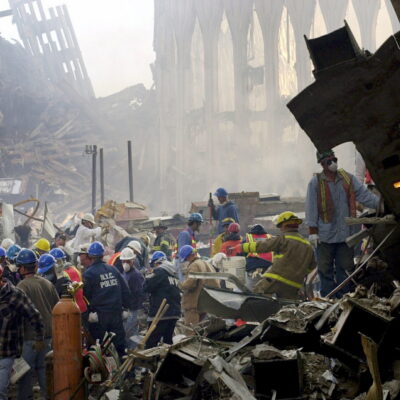
Pacha M Vector/Getty Images
Meanwhile, liberal seminaries are facing a corresponding institutional crisis, with decreasing enrollment and movement to online, hybrid and non-traditional learning “focusing on equipping leaders for diverse, non-traditional roles.” In addition to reporting a shift in the demographic and gender composition of their students, there is also a curricular shift toward what is being described as “progressive activism” prioritizing social justice, inclusion, environmental protection, immigration rights and anti-racism. This focus on equity has also changed the theological discourse.
Finally, as mainline denominations decline, non-denominational Protestantism has grown dramatically. Digital faith platforms are reaching and serving millions of adherents online, and large numbers of Americans report finding spiritual fulfillment outside of formal religious structures and movements altogether.
These trends — lower membership numbers, projected closures, the transformation of liberal seminaries, the rise of digital ministries and movement toward nondenominationalism and anti-institutionalism — are reflected within liberal American Jewry as well. The U.S. rabbinate is becoming significantly more diverse in gender, sexual orientation and other background variables, particularly in Reform, Conservative and new nondenominational movements. Institutions are working to adapt to changing expectations around inclusivity, leadership styles and community needs, leading to debates about tradition versus innovation. In some cases, one finds a growing disconnect between members and leaders.
Americans overall are rethinking religious identity, which shapes how Jewish Americans view their own religion’s place in society. Disagreements about how to balance support for Israel with social justice commitments are increasingly visible in synagogues and Jewish organizations. Much of this can be seen as generational, but some of these policy divisions are linked to political affiliation. Yet despite the internal diversity of political views among American Jews, many continue to feel a strong connection to Israel, and events in the Middle East influence identity and engagement. Support for or critique of Israel often becomes a focal point in communal conversation and programming.
Surveys also show American Jews altering behavior due to fear — avoiding public displays of Jewish identity or rethinking where and how they participate in communal life — as many Jewish Americans report that antisemitism has become part of daily life. Jewish organizations and congregations are investing more in security training, making safety and visibility central parts of communal planning.
Significantly, a 2025 Pew Research Center study found that nearly 1 in 4 adults raised Jewish in the U.S. no longer identify as religiously Jewish today, with a significant share describing themselves as unaffiliated. Many Jews now also identify as “Jewish no religion”: culturally and/or ethnically Jewish without formal affiliation. Many Americans who consider themselves Jewish today lean more toward cultural, ethnic or secular Jewish identity rather than formal religious participation.
Yet even as some Jewish Americans engage less with synagogue life, surveys indicate many feel “deeply connected” to their Jewish heritage and value Jewish identity, participating in cultural events, holidays and Israel-centered activities. Anecdotal reports and surveys indicate that outreach-oriented, low-barrier communities (e.g., Chabad centers) have seen notable increases in participation, especially during times of communal stress.
Meanwhile, participation in other forms of Jewish engagement — social justice groups, cultural festivals, study circles and interfaith efforts — has grown, reflecting broader patterns of people seeking meaning outside traditional or formal institutional structures. (There also appears to be a counter-response as debate continues around moving away from universalism in favor of strengthening and supporting Jewish education, identity and affiliation as a way to best ensure the Jewish future.)
Looking ahead
Within our religious networks, liberal American Judaism is undergoing a significant retrenchment, as seen in the closure and merger of congregations and in the downsizing of our seminaries. We have yet to fully engage with the world of American Jewish Orthodoxy, nor do we fully appreciate the demographic and religious shifts taking place within our own community, with only a minimal understanding of the growing presence and impact of the multiple alternative forms of Jewish religious and spiritual expression.
Over the past 40 years, we have also seen a fundamental repositioning of the Jewish communal space. The rise of institutional competition is undermining and weakening collaborative and integrative initiatives designed to help respond to core threats and to manage communal priorities. The emergence of a new funding class of donors and foundations is also transforming the Jewish philanthropic world and contributing to the financial restructuring of the Jewish communal system. Even as many new social platforms and organizational startups have entered the Jewish market space, fewer Jews today are donors to our federations and many are totally removed from the network of religious and communal offerings.
Several factors shape the state of liberal Jewish space today, in many ways echoing shifts in America’s larger religious landscape and in others reflecting concerns and variables unique to the Jewish community. As I have written elsewhere, in this moment we are living “in the betweens”: those times when societies must determine their future pathways or directions.
Steven Windmueller is an emeritus professor of Jewish communal studies at the Jack H. Skirball Campus of Hebrew Union College – Jewish Institute of Religion in Los Angeles