Opinion
A JEWISH PARADOX
The compass, not the crossroads, defines us




 Add EJP on Google
The Jewish Federations of North America General Assembly is gathering in Washington, D.C. at a prescient moment. “This is a defining moment,” the agenda for the opening plenary notes. “Two years after October 7, our community stands at a crossroads.”
Stands at a crossroads. I wonder if that’s the right analogy.
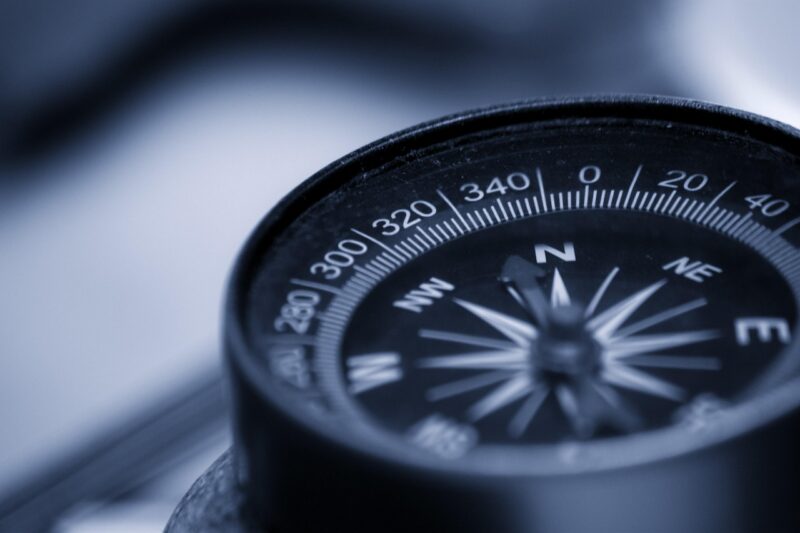
Pixabay
Illustrative.
A crossroads demands a choice in the short term: left or right, this path or that. But the real question isn’t which direction to turn; it’s what is our North Star? What is the compass that guides us?
Two years ago, we were lurched beyond post-Holocaust memory, beyond the afterglow of Israel’s independence; we now live in the post-Oct. 7 Jewish world, in which Jews perceive a greater threat while being depicted as the threat. Jews simultaneously need to defend themselves but are portrayed as aggressors.
It is true that we have entered a new phase. Today, the few remaining hostages number in low single digits. Trump has declared peace, though it remains to be seen if that will materialize. Two years of soul-shattering pain and uncertainty have brought us to this “defining moment.”
We cannot unlearn what the last two years have taught us. We now know our enemies will play a long game over generations. We have learned that fighting back with kinetic force, lawfare and PR campaigns are sometimes necessary but never enough. We have seen that being united is more important than ever, but the forces that divide us are ever stronger.
The crossroads is about what road to take into an uncertain future. From our current vantage point, we have no idea what world our grandchildren will inhabit, but we are building it for them now.
Jews have weathered tumult before. We have emerged disoriented and uncertain and found our way, not because we necessarily knew where we were going but because we understood where we came from.
In recent months, I have taken shelter from the storm of current events in collecting the stories and insights of ordinary Jewish people: young and old; of many backgrounds, religious persuasions and practices; Israelis and Jews in the Diaspora. In people’s homes, in the National Library of Israel in Jerusalem, in federation buildings and synagogues, I simply listened.
And this is what I heard: Quiet confidence. Resilience. Humility. Pride. Dignity. Hardly anyone brought up the war as defining their Jewish identity. I did not hear anger or rage. The overarching sentiment was hopeful, even when tinged sadness or fear. What I heard is that we know at a fundamental level who we are.
Here’s the paradox: Jews move forward by knowing what is behind them. Our continuity comes not from where we are going but from where we have come from. Our North Star isn’t a future destination — it’s the accumulated wisdom, stories, traditions and bonds that have guided every previous generation who endured far worse and yet ultimately flourished. We each also have our own stories, which when heard together represents the essence of Am Israel, the People of Israel. It’s our collective story that grounds us, gives us identity and purpose.
In every interview I conducted, when people shared their stories — of family, of tradition, of struggle and celebration, of ordinary moments made sacred — they revealed in their own way what it means to be Jewish. Our stories connect us to something larger than ourselves, to generations past and future, to a narrative that has sustained us through every storm.
I was intrigued to find that every person I interviewed — Orthodox and secular, old and young, leaders and students, of all genders — had a different answer to the question, What makes you feel Jewish? The remarkable thing that unites us is that we all feel Jewish in different ways. Because our roots are deep, they allow us each to grow and thrive in our own unique way.
We are not defined by our enemies, nor by our trauma. We are defined by our traditions, our bonds to one another and our unbreakable connection to something larger than ourselves.
Maybe this is a crossroads; but, whatever way we decide to turn, what’s next for the Jewish world is what it has always been — following our compass, wherever that leads us next.
Stephen D. Smith is the executive director emeritus of the USC Shoah Foundation and CEO of Our Jewish Story.