Opinion
CRITICAL CARE
The care crisis reshaping Jewish life




 Add EJP on Google
In Short
Caregiving is Jewish communal infrastructure. It is holy work, and it is time to lead accordingly.
A fall. A new diagnosis. A hospitalization. A child’s changing needs. A parent who can no longer manage alone. Any one of these can move care from the edge of our lives to the center. At some point, every family will give care, need care, or both.
Caregiving to family or friends can be rewarding and empowering, but it can also be all-consuming, impacting finances, mental health and physical well-being for millions of North Americans. Families need supports such as workplace policies, social service accessibility, support groups and respite in order to both provide care and maintain the capacity to engage in Jewish communal life.
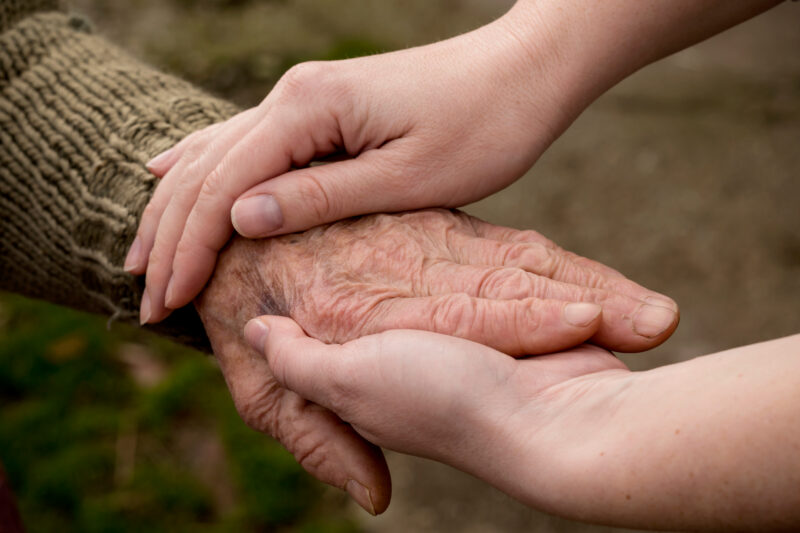
Adobe Stock
Illustrative.
Demographic, economic and policy shifts are turning these realities into a full-blown crisis — one that our community organizations are working to address through philanthropy and government partnerships. More people are living longer, often with more complex needs, while workforce shortages and rising costs put families under pressure and strain resources, reshaping Jewish communal life in Canada and the United States.
Care is essential to Jewish communal infrastructure. That fact was front and center at the Network of Jewish Human Service Agencies PowerNET conference May 4-7 in Toronto. In session after session, the conversations made clear that caregiving is not a side issue. It is part of what makes communal life possible.
We work on different sides of the border, one at the Azrieli Foundation in Canada and one at Jewish Federations of North America in the United States. Our partnership began as Mandel Executive Fellows, in a cohort of Jewish leaders asked to look beyond our own institutions and think honestly about what this moment requires.
In those conversations, we kept finding our way back to care. Across different systems, the pressures were strikingly familiar: aging communities, serious workforce shortages, rising costs and families doing more than any system should assume they can absorb. Our work, which enables us to have these crucial discussions, would not be possible without philanthropy. Philanthropy can also help ease the care crisis by stepping in where public systems fall short.
In both Canada and the United States, 1 in 4 adults provides care to a family member, friend or neighbor. Different systems, same reality: caregivers are holding families and communities together while facing serious financial, emotional and health pressures. In both countries, nearly half of caregivers report financial strain or negative financial impacts from caregiving.
These impacts reverberate beyond caregivers. When caregivers are struggling, the people they support are at greater risk, too. Caring in Canada 2026 found that when caregivers are unsupported, health outcomes for care recipients can be more than 60% worse. Caregiver well-being is not separate from communal resilience. It is one of its clearest measures.
The paid care workforce is also under intense pressure. Across North America, Jewish communities are seeing these pressures arrive at their doors. This reality is also precarious. Many of today’s older caregivers will soon need care themselves. Caregivers are essential to the stability of our communities, but too often their own well-being is untracked and unsupported.
That makes the lessons of Jewish human services even more urgent.
Through decades of supporting Holocaust survivors, the field has learned profound lessons about care, dignity and trauma. We have learned that trauma does not simply disappear with time. It can re-emerge in older age through illness, loss of independence, cognitive decline or the need for intimate personal care. We have learned that care can heal; we have also learned that care can unintentionally retraumatize. A locked door, a rushed shower, a confusing form, a staff person who does not explain what is happening — these moments may seem small inside a system, but they can feel enormous to someone whose life has been shaped by fear, displacement, loss or control by others.
Jewish Federations have applied these lessons more broadly by spreading the use of person-centered, trauma-informed (PCTI) care, which trains agencies to design services that feel safe, transparent and humane. It helps us offer people a voice and a choice. In practice, that means staff trained to recognize trauma, intake processes that do not overwhelm people and systems that include caregivers as integral members of the team.
It also means tracking caregiver wellness over time. Too often, caregivers become visible only when they are already in crisis. Jewish human service agencies can help change that by assessing caregiver well-being, noticing when people are becoming isolated or depleted and offering support before families reach a breaking point.
This approach also matters for the workforce. The PCTI approach is not only a model for client care; it is a way to build healthier workplaces and create the conditions for people to provide care without being harmed by the systems around them.
Jewish tradition should already move us in this direction. Caregiving is not only an ethical obligation. It is holy work. It is one way we sustain life, protect dignity and honor the sacredness of each person’s journey. But that belief has to inform institutional practice. It has to show up in budgets, benefits, staff training, service design, grantmaking and advocacy. It must determine whether caregivers are seen early and supported meaningfully and whether direct care workers are treated as essential to the dignity of those receiving care.
And Jewish philanthropy must continue to be a core partner by calling for better care policies in workplaces and by funding what public systems often overlook. Families need help with system navigation, respite, mental health support and peer connection. Agencies need training, evaluation and room to test new models. The field needs advocacy strong enough to move caregiving from a private family struggle to a shared communal priority.
Jewish philanthropy knows how to build across borders. We have done it in education, emergency response and fighting antisemitism. Caregiving should be part of that same equation. We need shared learning, common language and stronger relationships between Jewish human service agencies, federations, foundations, researchers and advocates. No single institution has to invent this alone.
This is a moment for Jewish leadership to act with the scale the issue requires. If Jewish philanthropy and Jewish human services are serious about strengthening communal life, care has to be central to that work.
Liv Mendelsohn is the executive director of the Canadian Centre for Caregiving Excellence, a program of the Azrieli Foundation.
Shelley Rood Wernick is the associate vice president of the Center on Aging, Trauma and Holocaust Survivor Care at Jewish Federations of North America.