END OF AN ERA
Schusterman Family Philanthropies shutters ROI program to focus on grants
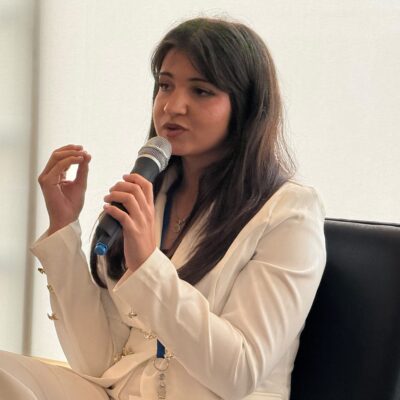
'We are planning in the next coming month[s to] give them the most tools, the playbooks, to help people to commune,' Beri Rozenberg, co-director of the ROI Community, tells eJP

Courtesy/Snir Kazir
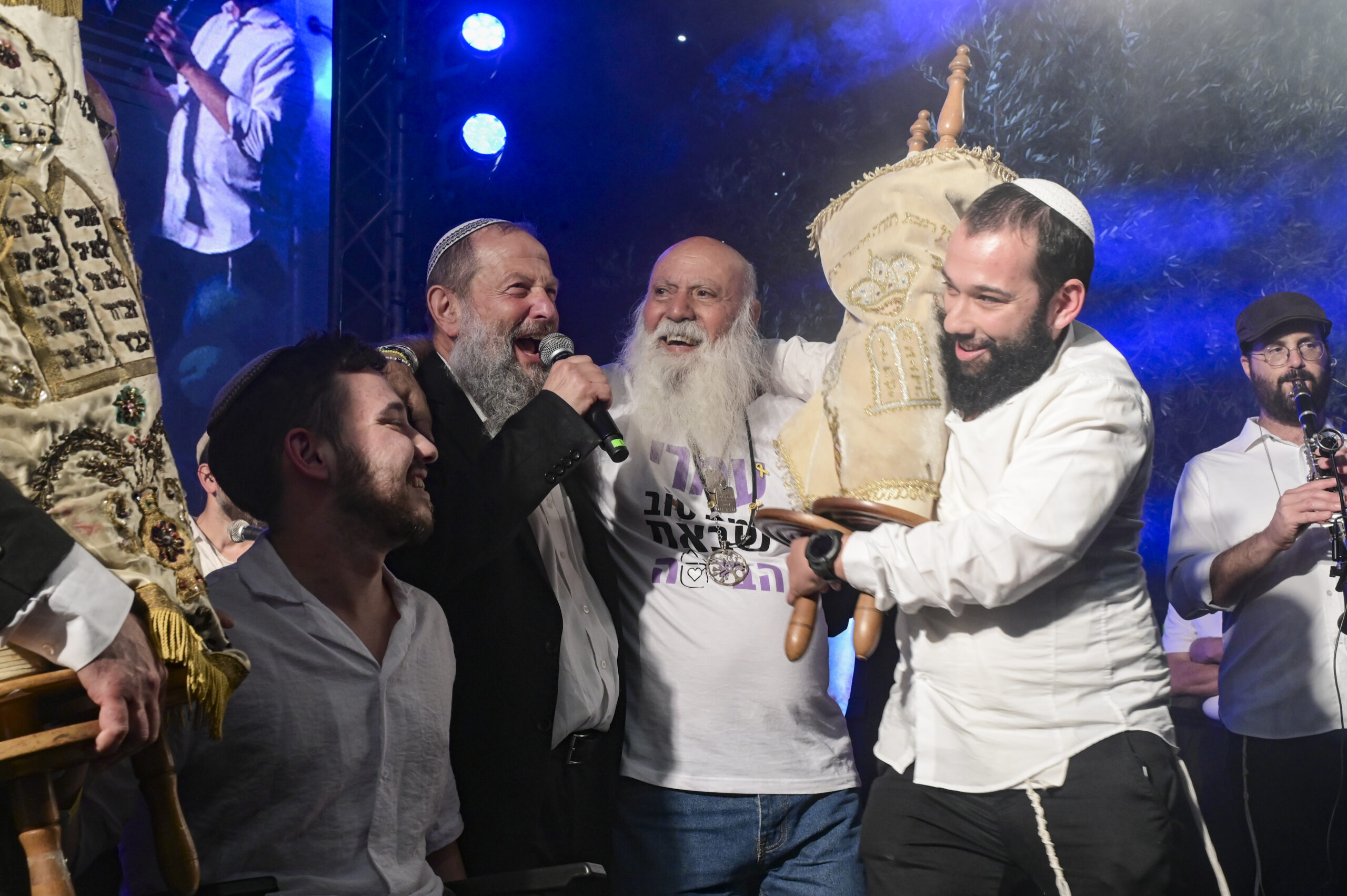
A discussion during the 2024 ROI Summit in September 2024 in Jerusalem.




 Add EJP on Google
For nearly 20 years, Charles and Lynn Schusterman Family Philanthropies has invested in young Jewish “change-makers” — namely activists, social entrepreneurs and other early-career Jewish professionals — who gathered for yearly summits to swap ideas about the needs of the Jewish community. Through the conferences and the microgrants to fund the participants’ projects, the foundation hoped for a substantial “return on investment,” or ROI, giving the initiative its name. Today, the ROI program can boast of substantial dividends as those participants now serve as leaders in nearly every Jewish organization, big and small, and in other areas of business and public service.
Despite its nearly two decades of successes, on Monday, Schusterman Family Philanthropies announced that its ROI program would shutter on July 1, 2026, after one final summit next spring.
“There’s something very natural and very healthy in programs evolving and programs closing,” Tamar Gil Menachem, co-director of the ROI Community, told eJewishPhilanthropy on Monday. “The fact that Schusterman, after 20 years, is willing to rethink the way that it drives social change is commendable.”
The path to ROI closure began last March when the foundation began focusing its resources primarily toward grantmaking in the U.S. and Israel, first by cutting its “Reality” trips to Israel for emerging leaders and leadership fellowship and scaling back its ROI program, focusing the program’s resources on Israeli initiatives and combating antisemitism and anti-Zionism. “Reality” is now run by Schusterman grantee iTrek, and they are the main funder.
“Twenty years is as good a time as any to celebrate what we’ve accomplished, the amazing community, the amazing people we’ve invested in, and they are all really ready to drive it themselves,” Lisa Eisen, co-president of Schusterman Family Philanthropies, told eJP. “Given the challenges our people are facing and Israel’s facing, given the opportunities in this moment, we want to invest in the organizations in the fields where we feel like we can add the most value through our dollars.”
When Beri Rozenberg, co-director of the ROI Community, began planning the final summit, he wrote four words on the top of the whiteboard in his office: Hope and New Beginning.
These words are the goal of the summit and relevant to this moment in Jewish history, he said. “With the hostages coming back and hopes for peace, this also resonates to the general feeling that… people are feeling, so it’s not only our story of the community, but also a broader story that we are all hoping for.”
The penultimate summit, held in Israel in September 2024, focused on several issues: Israeli society and democracy, resilience and war-related trauma, fighting antisemitism and building bridges between different communities in Israel. Even though attendees didn’t realize it would be one of the last times they’d meet as a community with Schusterman organizing, the event was emotional due to the state of the world in the wake of the Oct. 7 terror attacks.
“People in the last community forum were really crying because they felt together,” Rozenberg said. “They felt that they have a shared destiny, but also shared work to be done.”
Rozenberg began working at Schusterman five years ago. He couldn’t foresee the path he and the ROI community were about to embark on.
“The world changed so much,” he said. “We really tried to adapt this incredible community, that when I joined was 15 years [old], to the new challenges of our time. We worked hard to adapt our programs and to mobilize this unique group of talent, of change makers, of leaders to address the real challenges of Israel and of the Jewish people.”
Most of the ROI program employees will be terminated once the initiative wraps up next year, though “a couple of ROI team members will shift over to our grantmaking team,” a Schusterman spokesperson said. “Ensuring our team members are cared for and supported throughout this process is our priority.”
The network will continue, but without support from Schusterman. There are no plans to find another home for the ROI network, Eisen said.
Still, ROIers have organized themselves, Gil Menachem said. They’ve launched programs together. They talk daily in WhatsApp groups. “The whole idea is to build [from the] bottom up. The way that you do it is only if the people feel that the community is their own. So after 20 years of investing in a community and leading it and managing it… The fact that they feel that it’s their own, the fact that they want to influence it, that they want to continue it is, for me, the most important thing that really makes it a community and not a project because it will have a future.”
The initiative is ending with a bang, Rozenberg said, with leaders from tech, politics, journalism, education, arts and culture pooling their best ideas. “In the past two years, we’re in a huge momentum of activity, a very focused one, we are not ending this chapter on a low energy. Quite the opposite, a very high energy.”
ROI programs will wind down over the next nine months with microgrants ending in December. Organizers plan to hold group gatherings around the world to cultivate connection.
“This network is really built for this kind of changes in continuation,” Rozenberg said. “We are planning in the next coming month[s to] give them the most tools, the playbooks, to help people to commune.”
Schusterman also plans to share what they learned from the initiative with other organizations and grantees so they can build their own communities of change makers.
“In the 20 years that we’ve run ROI, many of the groundbreaking, innovative methodologies that [ROI] introduced have been adopted by our grantees, by other communities, by other organizations in the field,” Eisen said. “Micro grants, negotiation training, leadership training, some of these are things that have been adopted by communities and organizations, and that’s part of why we feel confident that, at 20 years, this community, in a lot of ways, is self-driving.”
Schusterman expects that some ROIers will remain connected, just in a new capacity, receiving grants.
“ROI showed the way to ignite the creativity, the excitement, the connection and the learning of young change makers all across the Jewish world,” Eisen said. “The legacy, I believe and I hope, will be that those people will be leading their communities, leading the Jewish people, leading Israel into a vibrant and strong and creative future because of that.”
There is no date set for the final summit. While the final gathering will celebrate 20 years of ROI, it won’t simply be a big party. They will focus on a new set of issues to brainstorm ways to solve, Rozenberg said. “When you bring together such incredible people who are resources of knowledge, of ability, of connections, we want to get them to work.”
Related News
EXIT INTERVIEW
Elizabeth Sokolsky, longtime EVP of Birthright Israel, to retire next year
CLOSING WORDS
In AZM address, Cosgrove links communal ‘orthodoxy’ on Israel to rising anti-Zionism among young Jews
ADVANCING A VISION
N.Y. federation donates $1M toward building shared-society center named for peace activist killed on 10/7

MAJOR GIFTS
Center for Jewish History celebrates 25 years with a $25M matching grant
HIGHER EDUCATION
As Jewish donors reconsider academia, Jan Koum doubles down, endowing Israel studies at Stanford