WHAT YOU SHOULD KNOW
New Israeli venture builder Lakoom launches to help rehab projects rise
COURTESY
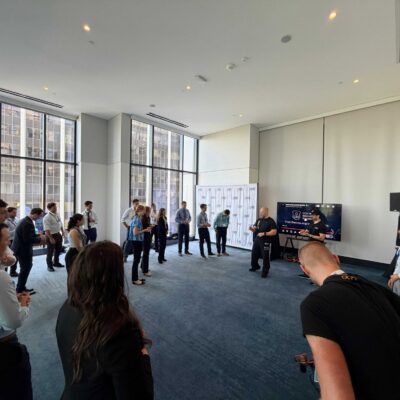
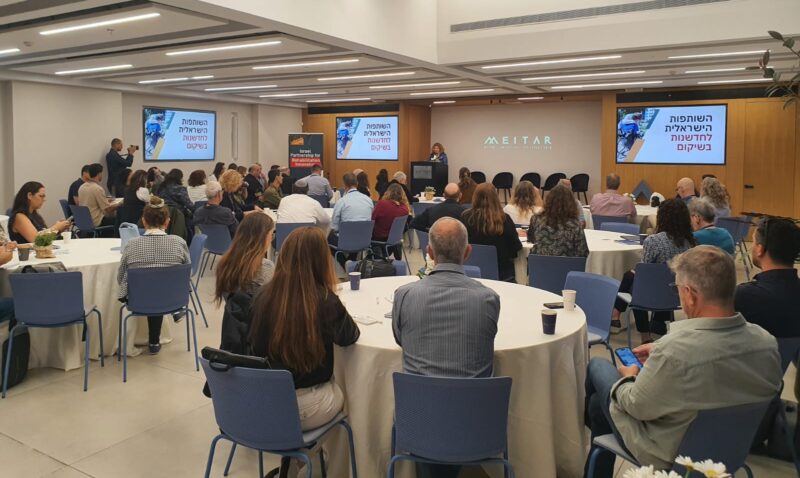
Rehabilitation-focused venture initiative Lakoom holds its launch event at the offices of the Meitar law firm in Ramat Gan, Israel, on Nov. 26, 2025.




 Add EJP on Google
More than 20,000 people in Israel, mainly soldiers, have been injured since the Oct. 7 terror attacks and in the wars that followed them, according to Israel’s Defense Ministry. They have lost limbs and eyes, suffered burns and psychological traumas. Some have already healed, many will require years of rehabilitation and others will forever deal with physical and mental impairments.
A new “venture builder,” Lakoom (Hebrew for “to rise”), is launching today in Ramat Gan, outside Tel Aviv, to both enable better rehabilitation for the country’s war-wounded and to turn that rehabilitative effort into an engine for growth, one of its founding board members, Ariel Beery, told eJewishPhilanthropy.
“We’re working… to build a public-private partnership to strengthen rehabilitation innovation in Israel and in order to turn Israel into ‘Rehabilitation Nation,’” he said, riffing on the description of Israel as a “Start-up Nation.”
Lakoom is being led by four venture capital and innovation veterans. Calanit Valfer, a managing partner of the Elah Fund VC firm, is serving as chair of the organization. Beery and Michal Kabatznik, the vice president of business development of SFI Group, are founding board members. And Yifat Shorr, who has worked for 20 years helping turn Israeli academic research into marketable products at a number of universities and hospitals, has been brought on as managing director.
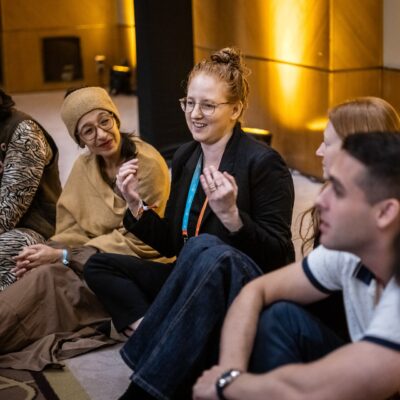
According to Beery, the initiative is meant to bring together government offices, rehabilitation hospitals, nonprofits and for-profit firms to energize the field of rehabilitative medicine. This is being done through three main efforts. One is networking gatherings, like the launch event today, which was held in the offices of the Meitar law firm, for organizations in the field. The second is through creating philanthropy-backed “living labs” at rehabilitation centers, where new products and services, like prosthetics and other technological solutions, can be tested with patients. And the third is through so-called “venture building,” through which Lakoom can help an organization develop a product and guide it through the often expensive and bureaucracy-heavy process of getting it approved for the market.
Speaking shortly after giving a talk at the launch event, Beery told eJP that, unlike traditional venture capital firms, a “venture builder” like Lakoom provides not only funds but the staff and the frameworks for bringing a product to market. He added that the kinds of products and organizations that the fund will be working with are not firms with massive money-making potential. This is not a “100x or billion-dollar company,” Beery said. “These are going to be small- to medium-sized products and services.” While there is an expectation for profitability, the ultimate goal is to enable the creation of products and services that will allow people who were injured in the war to heal and to live better lives.
As an example, Beery offered a nonprofit like Tikkun Olam Makers (TOM), which develops open-source plans for products to assist people with disabilities, such as schematics for a 3D-printed prosthetic, which costs a fraction of what one normally would. (TOM’s founder and president, Gidi Grinstein, and its Israel director, Roy Goldenberg, both spoke at the Lakoom launch event.)
“The problem is that in order to get that into a hospital so that a hospital can adopt it and deploy it and use it, you need to go through clinical trials. You need regulatory approval… And then you need to have aftermarket support,” he said, listing just a few of the requirements. “And all of those aspects, all those very operational, logistical aspects, are things that aren’t available when it’s just a file you download to 3D print. Now, the 3D printing aspect is incredible. The open source aspect of it is amazing. But without the logistics, it’s very difficult for that to get to all of the people who need it.”
Lakoom is closely connected to Israel’s Loewenstein Hospital, which specializes in rehabilitation; Valfer serves on the board of the hospital’s “friends of” organization. The venture has also partnered with The Orenstein Project, Impact Nation, Restart, TOM and Beit Halochem.
Beery, who noted that he is still in rehabilitation from an injury he sustained in the military 25 years ago, said the rehabilitation field was “hungry” for this kind of collaboration. After waiting for the government to bring these groups together, Lakoom’s founders decided to do it themselves, he said.