Opinion
THE 501(C) SUITE
Jewish literacy offers the key to holding more than one truth




 Add EJP on Google
In eJewishPhilanthropy’s exclusive opinion column “The 501(C) Suite,” leading foundation executives share what they are working on and thinking about with the wider philanthropic field.
The human mind craves certainty. We like clean lines and simple choices: right lane or left, dessert or restraint, I agree with you or I don’t. Jewish life has never been that tidy. We are a people who study arguments for sport, who treasure texts filled with contradictions and who inherited a tradition that insists we can hold competing truths without losing our heads or our hearts.
The Torah makes this clear from the start. Take, for instance, the verse “Justice, justice shall you pursue” (Deuteronomy 16:20). Why does the word “justice” appear twice, the rabbis ask? Because real justice demands more than one path and never erases the dignity of those who disagree. Truth in Judaism rarely arrives in a single package.
Rambam (Maimonides) understood this well. He championed reason as a divine gift, but at the same time he believed God’s essence exceeds human grasp. He also warned that “the truth is not always apparent and requires careful investigation” (The Guide to the Perplexed). Anyone insisting there is only one way to understand the world should make us suspicious. That was true in the 12th century, and it is just as true now.
Yet over the last several years, as social media presses in upon us every minute of every day, holding more than one truth is almost impossible. We are constantly presented with the false premise of binary choices — not a good thing for our society.
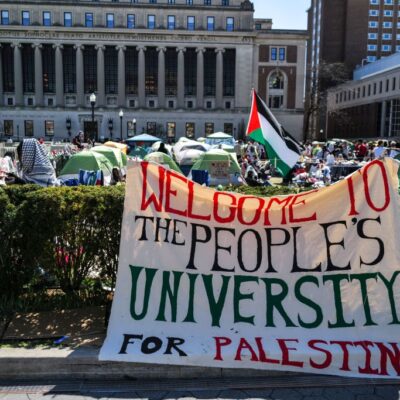
The narrative that quickly consumed the horrors of Oct. 7, 2023, filled with polarizing accusations and protests about Israel’s response, only highlighted the challenge of holding multiple truths. Nevertheless, many of us stood firmly behind Israel’s right to defend itself while also grieving for innocent lives caught in a war. These feelings didn’t undermine each other. They deepened each other. Jewish ethics call us to hold moral clarity and compassion at the same time. If we can only feel one pain at a time, we are shrinking our own humanity.
The same applies to Zionism. The creation of Israel is one of history’s great achievements; at the same time, some Jews today feel anger or sorrow about decisions made by the current Israeli government. Staying committed to the dream of Jewish self-determination while demanding the country live up to its highest ideals is not betrayal. It is loyalty in its most evolved form. Often, the criticism that matters most in life comes from those who want us to thrive.
In a world sprinting toward quick answers, Judaism offers a harder path: hold the full picture, stay in the questions, honor multiple truths and refuse to flatten complexity. Wrestling with ideas isn’t a glitch in our tradition. It is the soul of it.
Moreover, in today’s atmosphere of all-or-nothing polarization, Jewish learning is one of the few antidotes. Spend time in our texts and you internalize that contradiction isn’t a crisis, it’s the starting point. The Talmud trains you to ask what the other view might be, not to fear it. You slow down, you get curious, and certainty stops feeling like a virtue. That same learning also softens the sharp edges of disappointment with Israel. When you see the modern state against the sweep of Jewish history, when you know our tradition’s debates about power, justice and leadership, frustration fits inside a larger story instead of eclipsing it. You inherit a model of love that can hold critique, like the prophets did, and you deepen understanding. In a moment built on outrage, Jewish learning keeps you grounded enough to hold more than one truth at a time.
All of this should compel us to build a foundation of real Jewish learning and literacy. Whatever path one seeks as Jewish expression has meaning only when rooted in knowledge, not slogans. Otherwise, it risks becoming performative, like a post begging for likes. Literacy gives depth to rituals and seriousness to activism. It helps us distinguish inherited wisdom from internet noise. It anchors our values in something older than this week’s topic of choice and more enduring than algorithm-driven outrage. A Judaism without learning becomes fragile, sentimental and easy to knock over. A Judaism built on text, tradition and curiosity becomes confident and generous, capable of facing hard questions without panic or defensiveness.
We must teach our next generation that discomfort isn’t danger, nuance isn’t weakness and curiosity and learning beats certainty every time. We need to raise young people who can argue with humility and who can notice when someone else holds part of the truth they have missed. If we want our future to be as strong as our past, we must teach our children to carry tension with courage and open hearts. That may be one of the greatest gifts we can pass down.
Barry Finestone is the president and CEO of the Jim Joseph Foundation.