WRAPAROUND SUPPORT
Expanding Moshal Program gives a critical boost to promising students from disadvantaged backgrounds
Founders Martin Moshal and Yael Lavie understand that for first-generation university students from poor households to succeed, financial aid is only part of the picture
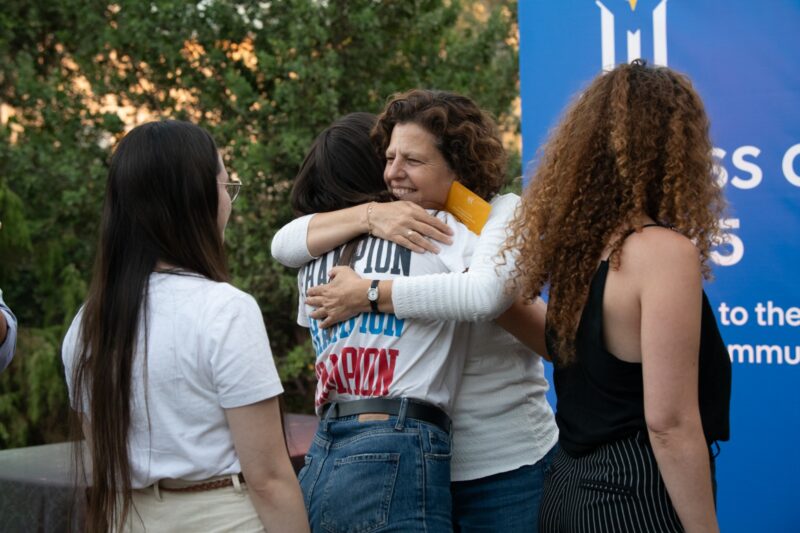
Charles Jacob Photography
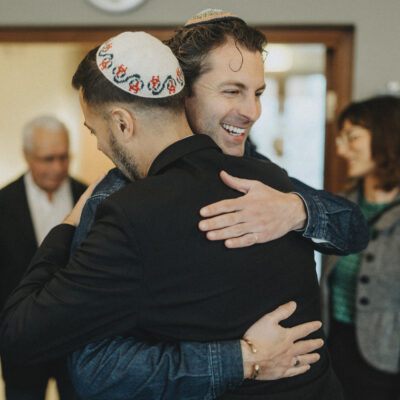
Moshal Program president Yael Lavie embraces a graduate of the program at a 2025 ceremony.




 Add EJP on Google
In the six years since the outbreak of the COVID-19 pandemic, Israeli students have missed at least 108 days of in-person schooling, which is roughly half a standard school year. That figure, calculated by Taub Center senior researcher Sarit Silverman, counts only full national closures: three COVID lockdowns and three military operations, including the period following the Oct. 7 terror attacks and the two wars with Iran. Factor in regional closures in the North and South of the country, partial schooling in the center of the country after Oct. 7, the hybrid learning and COVID-related isolation, and the total approaches a full school year, according to Silverman.
But this doesn’t even tell the whole picture.
“These situations deepen the gaps between the center [of Israel] and periphery,” Limore Dishon-Loewy, a senior clinical psychologist and supervisor at Tel Aviv University, told eJewishPhilanthropy. “Every time we’re pushed back home, the students who were already in a race to catch up fall further behind.”
At the university level, the three years of war and military campaigns have made a bad situation worse. Reserve duty has turned the normal Israeli army-to-university pipeline into chaos, with students cycling in and out of combat, missing half a semester, unable to build academic momentum. Students from the North and South, whose families have been evacuated due to war, are left without a home to return to on weekends and without the basic sense of continuity that learning requires.
“There’s a complete rupture of the continuum,” said Dishon-Loewy, who works with students from disadvantaged backgrounds. “Army, studies, army, studies — it’s one big salad. And the students who came from the periphery are carrying their families’ financial stress on top of all of it.” She described a process of learned helplessness setting in, particularly among students from Israel’s social and geographical periphery who watch their families struggle while other sectors seem to keep moving forward. “The war has created castes between people who have a foothold and people who don’t,” she said.
But for university students who show exceptional promise, there is help.
Established in 2009, the Moshal Program supports first-generation university students from below Israel’s poverty line pursuing degrees in engineering, computer science, medicine, economics and law. The program provides full tuition, a living stipend, one-on-one support from social workers and career coordinators, English-language training, soft skills workshops, and access to a powerful alumni network — with the goal of ensuring graduates enter Israel’s knowledge economy on equal footing with their more privileged peers.
With over 850 active students, nearly 1,000 alumni and a growing network of employer partners — over 300 organizations, including Apple, Google, Intel, Microsoft, Amazon, Nvidia and most of Israel’s major hospitals — the program just completed a major post-Oct. 7 expansion at Sami Shimon College in the South, bringing in 80 additional students in a single year in partnership with Israeli-Canadian philanthropist, Mark Scheinberg. It is now planning a similar initiative for the North, targeting students from Kiryat Shmona, Shlomi, Ma’alot and the Golan Heights.
The program is the brainchild of South African philanthropist Martin Moshal and Israeli businesswoman Yael Lavie. Moshal managed major property deals and financial investments. Lavie spent 17 years in banking, including senior roles at Bank Hapoalim across northern Israel and six years as deputy general manager of the bank’s Switzerland branch in Zurich, before running a family office in London.
“A woman in a totally male world,” Lavie said with a laugh. “I just continued until I sat at the front of the table.”
According to Lavie, the idea for the Moshal program came to be after Mr. Moshal attended a seminar on higher education. He learned that when young people from extreme poverty pursue degrees that could lead to lucrative careers, they can then transform their lives as well as those of future generations and their entire surroundings. Lavie said she went home and couldn’t stop thinking about it. She returned the next day with two pages of strategy.
“Let’s take our business tools,” she remembered telling him, “and use them to make a real impact — looking at return on investment, looking at how you actually invest the money so that you reach your goals.”
In their case, the return would be measured in graduates employed in their field, earning as much as their second-generation peers.
The model Lavie and Moshal built is what she calls “It Takes a Village”: a holistic wraparound program that begins the moment a student is accepted into university and doesn’t end until they’re employed. Financial support covers full tuition and a living stipend with one nonnegotiable condition: first-year students are not allowed to work.
“When you come to the Technion, and you need to compete with students who come from very robust backgrounds, you cannot be working nights and then expect to be able to focus during the day on your studies,” Lavie said. “It doesn’t work.”
The program’s wraparound support provides a social worker for every 100 students whose job is to make sure no one drops out. Two career coordinators begin working with students in their second year, helping with LinkedIn profiles, mock interviews, workplace preparation and storytelling workshops. There is intensive English-language training. There is a structured community: Shabbat dinners, holiday gatherings and second-year students paired with first-years. “They know from day one that we are with them until they finish their degree,” Lavie said. “Even if it takes an extra year. Do you know how much peace of mind that gives them?”
Dishon-Loewy, who sees the psychological toll of the past six years up close in her clinical work at Tel Aviv University, understands why that certainty matters.
In her work with students from the periphery, she sees what she describes as a dissociative rupture — a deep split between the emotional and cognitive self that makes sustained learning nearly impossible. “Trauma means that you are working so hard to protect yourself that you end up in emotional numbness, disconnected,” she said. “And the whole idea of learning is to become a more thinking, more learned person who meets the world. These students are simply not available for that.”
This is the reality Moshal’s wraparound model is built to address. When the Gaza war began, that support extended into the field. They sent money for food to students called up for reserve duty. They bought military equipment for soldier-students who didn’t have what they needed.
“We care,” Lavie said. “They’re fantastic people.”
The results support the strategy: Moshal’s graduation rate is 95% — compared to a national STEM dropout rate of around 25%. Some 90% of alumni are employed in their professional field after graduation. Alumni earn, on average, three times their family income on their first salary: roughly $6,500 per month, against a national family average of $1,971.
The economic case is compelling. The average Moshal investment per student is $53,574. In their first year of work alone, alumni earn over $75,000, exceeding the entire investment. Over a lifetime, the average Moshal alumnus will earn $3 million and pay $1.3 million in taxes. Across all 1,850 students and alumni to date, projected lifetime tax contributions reach close to $3 billion — against a total program investment of $70 million. “I don’t know any higher ROI for the economy, the individual, and the society,” Lavie said.
In April 2025, Victor Lavy of Hebrew University’s Department of Labor Economics published an independent study on the program. His findings confirmed what Moshal’s internal data had suggested: Alumni perform at the level of second-generation higher education graduates, earn 20% more than comparable STEM graduates and 86% have reached the highest income deciles, even while 60% of their parents were in the lowest. “‘Your alumni behave like second-generation higher education,’” Lavie recalled Lavy telling her. “That’s what we’re here to do.”
Beyond its 850 active students, the program has nearly 1,000 alumni (3,000 including their program in South Africa) and a growing network of employer partners: over 300 organizations, including Apple, Google, Intel, Microsoft, Amazon, Nvidia and most of Israel’s major hospitals. It has just completed a major post-Oct. 7 expansion at Sami Shamoon College of Engineering in southern Israel, bringing in 80 additional students in a single year in partnership with the Scheinberg Foundation. It is now planning a similar initiative for the North, targeting students from Kiryat Shmona, Shlomi, Ma’alot and the Golan Heights.
The alumni community is itself part of the model. Over 1,000 Moshal graduates are now paying it forward — returning to their schools, army units, national service-year programs and Haredi yeshivot to tell the next generation: we were exactly where you are. The program has a particularly strong presence in the Haredi sector, where word of mouth has proven especially powerful. According to the Israeli Bureau of Statistics only around 4% of Haredim are employed in STEM-related careers.
“Among Israelis born to college-educated parents, 1 in 5 pursue STEM degrees that lead to high-paying knowledge economy jobs. Among first-generation, below-poverty-line youth, that ratio is 1 in 33. Talent is spread evenly,” Lavie says. “Opportunities aren’t.”
Universities subsidize roughly half of each student’s tuition, but there is no systematic national investment in the wraparound model that makes Moshal work. Lavie has a vision for what that could look like: a “pay for success” arrangement in which the government contributes once graduates are gainfully employed and paying taxes. She insists that spending on humans needs to be top of mind: “Why are roads more important than people?” she asked. “This is human infrastructure.”
Moshal officials estimate that the maximum addressable market of first-generation, below-poverty-line students with the potential to pursue STEM degrees is approximately 2,400 students per year. The program currently reaches 8% of that pool. Lavie believes that if the program could grow to four times its current scale, it would hit a tipping point for Israeli society: enough role models, enough alumni, enough proof of concept circulating through the periphery of Israeli society to actively change the calculus for the next generation.
Related News

MAJOR GIFTS
Center for Jewish History celebrates 25 years with a $25M matching grant
CLOSING WORDS
In AZM address, Cosgrove links communal ‘orthodoxy’ on Israel to rising anti-Zionism among young Jews
ADVANCING A VISION
N.Y. federation donates $1M toward building shared-society center named for peace activist killed on 10/7
HIGHER EDUCATION
As Jewish donors reconsider academia, Jan Koum doubles down, endowing Israel studies at Stanford
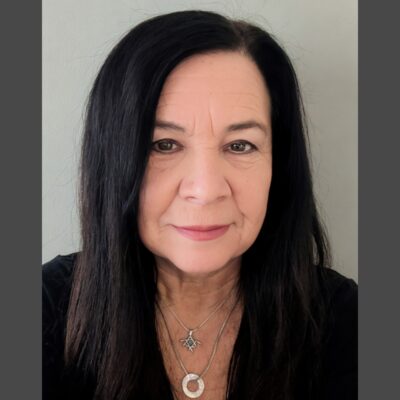
EXIT INTERVIEW
Elizabeth Sokolsky, longtime EVP of Birthright Israel, to retire next year