Opinion
RETURNING TO OUR ROOTS
The farmers of Israel’s North are not fighting for nostalgia. They’re fighting for our independence.




 Add EJP on Google
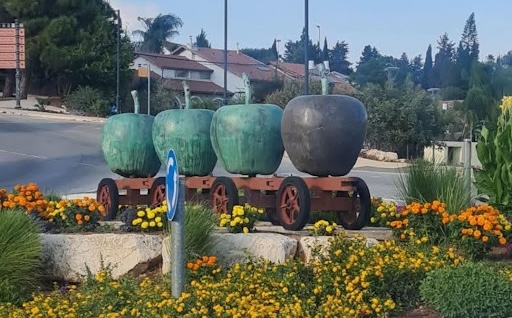
Drive into Metula, the northernmost community of Israel, and before you see a single house, you pass a roundabout. In the center, like so many Israeli towns, are the city’s chosen symbols: four large green apples.
Not a tank. Not a monument to war. Apples.
Courtesy
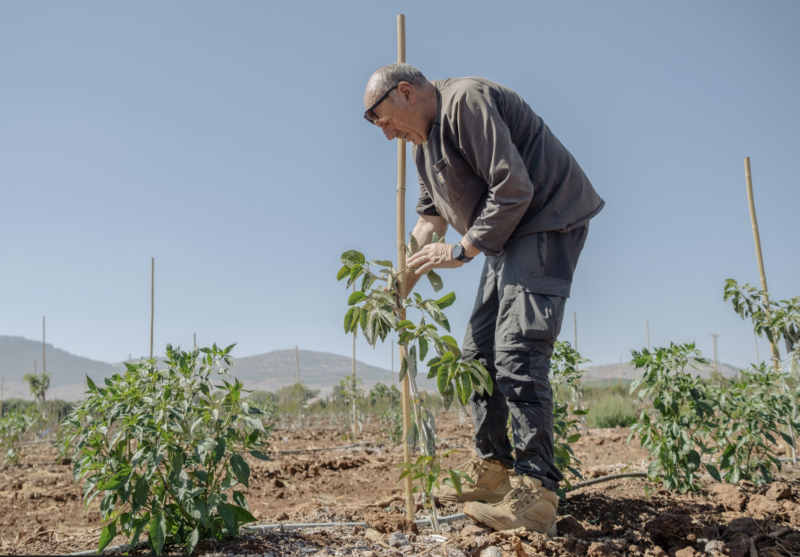
An Israeli farmer plants a tree in northern Israel, in an undated photograph.
Israel’s orchards and vineyards are not scenery; they are identity. They are the living, breathing expression of the Zionist dream, of a people returning to their land, putting their hands in the soil, and saying: We are home.
We are staying.
As we celebrate Israel’s Independence Day and what should be light, exuberant celebrations, there is again a heaviness. Our small and extraordinary country is tired. I hear voices questioning our future, and I understand why. The past two and a half years have held enough grief and trauma for a lifetime.
What motivates me in such moments is what I learned from our farmers; independence for our Jewish State is not a moment in time, it is a life’s work.
We often imagine independence as a moment captured in grainy photographs: David Ben-Gurion, a crowded hall, people dancing the hora in the streets of Tel Aviv.
But independence for the Jewish people was never meant to be a single day. If only it were that easy. In reality, it is a lifelong mission. A call to responsibility for every generation.
So what is the duty of our generation? How should we be cultivating independence?
This Yom HaAtzmaut, I am convinced we must return to our roots. Not only ideologically, to the bold Zionist spirit that built this country, but also physically, to the land itself. A land that has been worked by our hands, defended with our lives, and entrusted to us to sustain.
The bold Zionist spirit
Israel was not created by leaders who accepted reality, but by those who redefined what was possible.
In 1896, Herzl published The Jewish State, fully aware that his ideas might invite ridicule. He put forward a vision so radical it bordered on absurd, until it wasn’t.
Decades later, David Ben-Gurion championed an equally improbable idea: to make the desert bloom. He proposed to carry water hundreds of miles from the Sea of Galilee to the Negev. It was debated, called unrealistic, and then it was built.
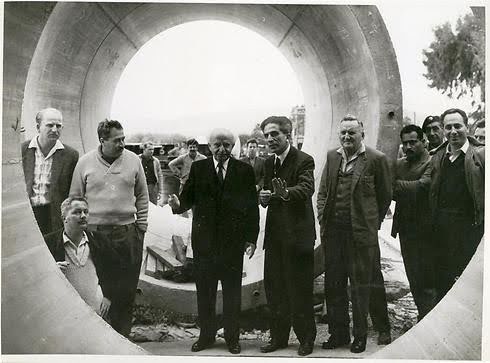
Today, so many of our conversations are focused on rebuilding. Where should we invest? What should we prioritize? How do we recover?
It is a moment of extraordinary possibility. Are we rebuilding with the same boldness of action that defined those who came before us? And do we understand that we must also apply this ambition to the land?
Israel’s farmers understand, and they never stopped working.
Returning to the Land
If you look to the North, you will discover something remarkable: The courageous pioneers who built this country, with a hoe in one hand and a rifle in the other, are not figments of our historical imagination. They are real and living on our border today.
When thousands of rockets fell on the North, the population was evacuated for their safety. Our farmers, however, refused to leave. They refused to abandon their land. At great personal risk, they became the front line. Hezbollah on one side and the IDF behind them. They stayed, farming under fire.
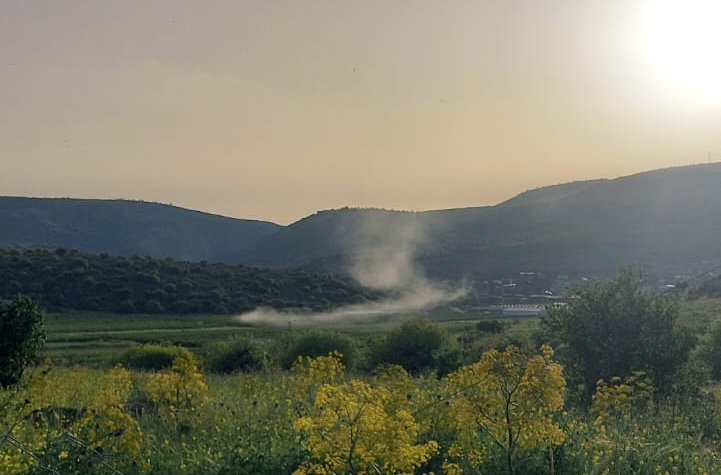
I asked them why. Their answer was simple: “This is our independence.” If we leave, the frontline moves with us.
Our farmers understood that our connection to this land is not simply symbolic. It is existential.
That independence is not only secured in moments of war, but sustained quietly, day after day, through presence, through cultivation, through the insistence on planting until the border.
From a distance, it is easy to think of these farmers as pursuing a simple livelihood, feeding their families. But they are sustaining the regional economy and feeding the country. The North alone produces 70% of Israel’s deciduous fruit and eggs. This is Israel’s food security, critical for independence, and it has been under deliberate, sustained attack.
Independence Is a Life’s Work
For years, philanthropic support of Israeli agriculture has felt like a gesture from an earlier Zionist chapter. Symbolic, admirable, but somehow separate from the urgent work of building the future.
The Oct. 7 attacks shattered that illusion.
When our borders were attacked, when entire communities were displaced, when farmers stood between Hezbollah and the homes behind them, when 1,250 acres of orchards and vineyards were decimated, it became impossible to pretend that agriculture is only about crops.
The farmers of the North are not fighting for nostalgia. They are fighting for our independence. And we are fighting with them.
Together with visionary partners, ReGrow Israel is standing alongside the farmers of the North.
The pioneers who built this country didn’t wait for permission. They planted in the desert, with everything against them, and they made it bloom.
The farmers of the North are asking us for that same act of faith. And that is once again the duty of our generation.
So let us not forget that even in the face of immense difficulty, taking practical steps to cultivate our land and independence is not a burden. It is the privilege of a lifetime.
Happy Independence Day, my beloved Israel. May this be the year we are blessed with peace.
This op-ed is in honor of Ofer Poshko Moscovitz z”l and Omer Weinstein z”l, courageous orchard farmers from the north, who embodied the Zionist spirit and planted for the next generation.
Danielle Abraham is the executive director of ReGrow Israel.