Opinion
LESSONS IN LEADERSHIP
Haftarat Parshat Balak: ‘I sent Miriam’




 Add EJP on Google
The connections between Parshat Balak and its haftarah, the prophecy of Micha, are layered and striking. Bilam’s oracles, delivered at Balak’s insistence, predict the flourishing and ultimate triumph of the Jewish people. Micha echoes that same vision and reminds us that it is not human power but God who determines Israel’s destiny. For those reading these words in the shadow of the current geopolitical moment, when Israel’s worldly alliances and maneuvering feel increasingly uncertain, this reminder carries particular weight.
But an equally resonant message in this haftarah can be gleaned from a single verse in which the prophet speaks in God’s voice directly to the people of Israel: “I redeemed you from the house of slavery; I sent Moshe, Aharon and Miriam” (Micah 6:4). Three names; three leaders, set side by side, without hierarchy.
Deror Avi/CC BY-SA 3.0/Wikimedia Commons
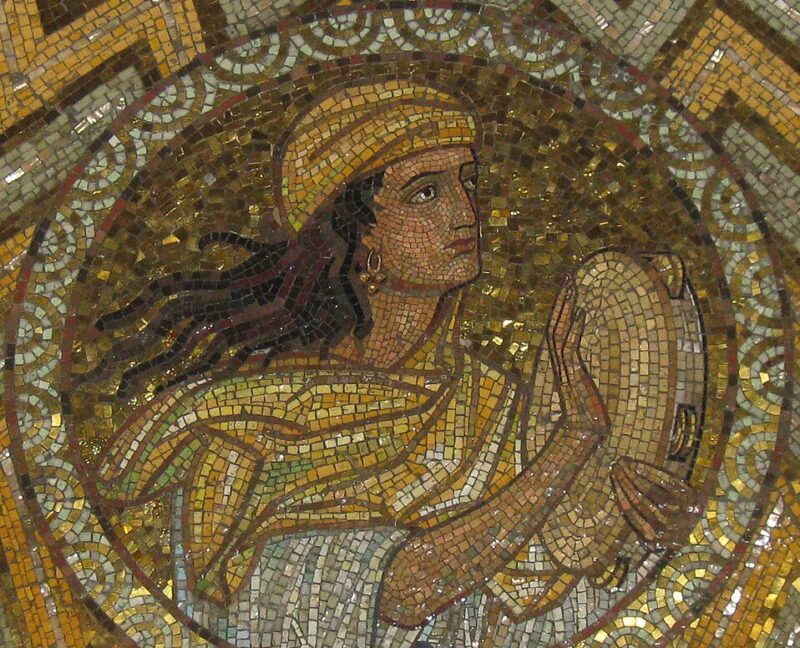
Photo of a depiction of Miriam in a mosaic at the Dormition Church on Mount Zion in Jerusalem.
This matters enormously, not only in its ancient context, but in ours. In nearly every generation, debates arise about the role of women in Jewish communal leadership, and those debates often carry the implication that authentic Jewish leadership is primarily, or essentially, male. Micha’s verse cuts through these arguments with prophetic directness. It does not distinguish between the leaders it names. God sent all three.
Miriam’s path to that standing was unlike her brothers’, and understanding it deepens the prophet’s claim.
The Talmud (Sotah 12a) teaches that Miriam was the first of the three siblings to show signs of leadership, and she demonstrated them as a child.
When her father, Amram, reeling from Pharaoh’s genocidal decrees, concluded that Israelite men should separate from their wives — better, he reasoned, not to bring children into a world of slavery and all male offspring to a fate of death — it was his young daughter who stood up to him. She recognized that her father’s despair, however understandable, was itself a form of surrender. By speaking out against it, she engineered the circumstances that made Moshe’s birth and rescue possible.
At the crossing of the Yam Suf, the Torah designates Miriam as “the prophetess, sister of Aharon” (Exodus 15:20), a title that our Sages understood as placing her prophetic gifts on par with Aharon’s own. But her leadership took a distinctive form. While Moshe spoke and legislated from the front, Miriam led from within the community. She organized the women in song and dance, creating a shared experience of divine encounter that was participatory rather than hierarchical, welling up from below rather than descending from above.
This quality is crystallized in the symbol most closely associated with her: the well. Our Sages (Rashi on Numbers 20:2) teach that throughout the years of wandering, a miraculous well accompanied Israel in the desert on Miriam’s merit, its waters sweet and unceasing for as long as she lived. The well is no accident as a symbol. Like Miriam herself, it does not announce itself with declarations or commands. It simply sustains, always present beneath the surface, quietly nourishing those who draw from it. Her very name encodes this quality: mar, bitterness, transformed into mayim, water and life.
In last week’s parsha, Chukat, Miriam dies and the water disappears. What follows is not only a crisis of thirst, but a crisis of leadership. Moshe, who had overcome his struggles with speech to wield his voice with power, suddenly falters; and he strikes the rock instead of speaking to it (Numbers 20:11).
It may not be coincidental that this failure comes so closely after Miriam’s death. While she lived, her constant, consistent, sustaining presence seems to have enabled something in Moshe himself, a capacity for connection and communication that he could not maintain alone. (I am grateful to my wife, Ruchie, for this insight.)
Micha understands this, and this is why he names all three leaders in one breath. Leadership in the Jewish world has never been, and must never become, the exclusive domain of one voice, one gender or one model. There are forms of wisdom and strength that emerge from the lived experience and spiritual gifts of Jewish women, capacities a community cannot afford to sideline. As we seek leaders in this critical moment in our people’s history, we must look at the full breadth of our people: men and women alike who carry the courage of Miriam, the vision of Moshe and the bridging spirit of Aharon.
This, in the end, is where Micha’s prophecy calls us. “What the Lord seeks from you: only to do justice, love goodness, and walk modestly with your God” (6:8). To walk toward that vision, we will need all the diversity of spiritual power that we can muster.
Rabbi Kenneth Brander is the president and rosh yeshiva of Ohr Torah Stone.