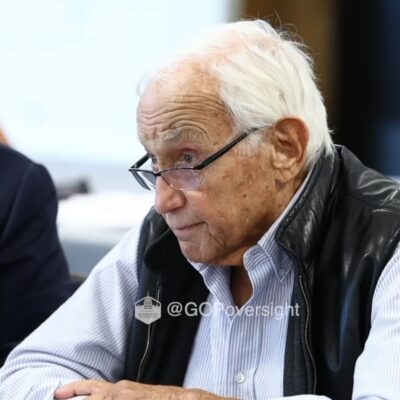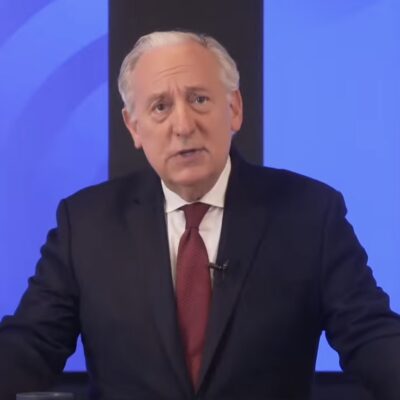
Your Daily Phil: Will Atlas shrug? Israeli economist warns of impending disaster




 Add EJP on Google
Good Monday morning!
In today’s edition of Your Daily Phil, we interview Israeli economist Dan Ben-David, who’s been touring the United States to warn of what he considers an existential threat to Israel’s economy and future. We examine the state of the daycare system for Israel’s migrant workers, and speak with the parents of slain Israeli Embassy employee Yaron Lischinsky as they visit the U.S. six months after their son was killed. We feature an opinion piece by Tali Rosenblatt-Cohen on the role of contemporary Jewish literature in our lives, and one by Rabbi Ariana Capptauber about maintaining resilient relationships with other faith leaders. Also in this issue: Fleur Hassan-Nahoum and Ruthie Rotenberg, Daniel Lubetzky and W. Michael Blumenthal.
What We’re Watching
The UJA-Federation of New York is hosting its 50th anniversary Wall Street Dinner this evening at the Marriott Marquis in Manhattan.
What You Should Know
For the past few weeks, Israeli economist Dan Ben-David has been touring the United States, armed with graphs and charts, spreading dire warnings of Israel’s imminent demise.
The president and co-founder of the Tel Aviv-based Shoresh Institution for Socioeconomic Research, Ben-David has for years been warning that Israel’s demographic and economic trajectory is unsustainable. Like a bowling ball balanced on a toothpick, the country’s economy is resting on the work of far too few Israelis, a situation that will get worse if something is not done to improve the education system and bring more people into the workforce. This focuses primarily, but not exclusively, on Israel’s Haredi community, whose schools generally do not teach the core curriculum of math and English, and whose male population enters the workforce far later than average.
For too long, Ben-David told eJewishPhilanthropy’s Judah Ari Gross last week, Israel has been “kicking the can down the road” on this issue and actions must be taken before the next elections, which are scheduled to take place within the next year. Believing that the Israeli public’s post-Oct. 7 openness to radical change is dwindling, Ben-David says that it is now or never.
JAG: I am generally familiar with the Shoresh Institution’s work, but tell me what you are looking at now.
DBD: The bottom line is that about half of the children today in Israel are receiving a third-world education. And they belong to the fastest growing parts of the population, which means that when these kids grow up, they won’t be able to support a first-world economy. That means that the economy will not be able to maintain first-world health care or welfare, but also not a first-world army, which we will need to defend ourselves like we have for the past 77 years.
JAG: The vast majority of eJewishPhilanthropy’s readership is not Israeli. Much of your focus is on the upcoming election and the political process in Israel. What role do you see Diaspora Jewry and specifically the Jewish philanthropic world playing in this issue?
DBD: I think we’re in money time now, not just for Israel, but for Jews abroad as well and for philanthropy specifically. These elections are going to be the most important ones we’ve ever had. They will determine if we will be or won’t be [around] 30, 40 years down the road… Jewish philanthropic organizations, who many of our politicians go to for support, they need to knock heads together and tell them to start working together and move past the right-wing/left-wing issues, religious-secular issues.
CHILD SAFETY
With funding expiring, daycare for Israel’s migrant children hangs in the balance
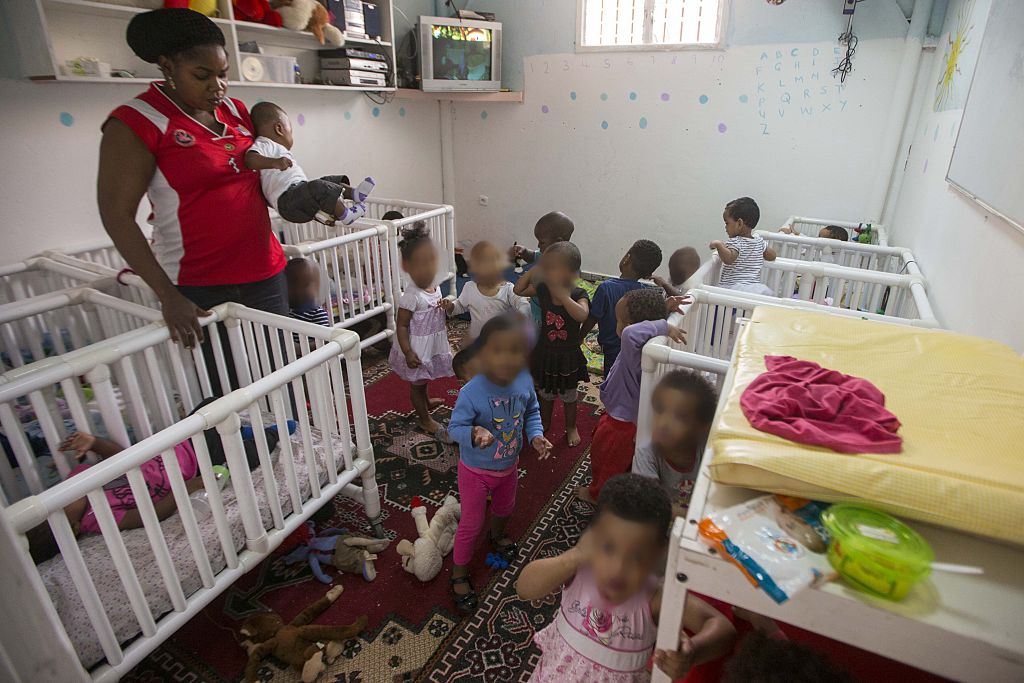
Five infant deaths within two months in Tel Aviv’s pirate daycare facilities, mainly serving the migrant community, caused enough of a public outcry in Israel in 2015 that it spurred a government decision to act. The deaths, which came after back-to-back reports by the Israeli State Comptroller in 2013 and 2014 warning that these facilities were endangering children’s lives, created mounting pressure on the government to act. The 2015 decision allocated $9.15 million over five years, split among government ministries and funneled through local municipalities to Unitaf, a nonprofit organization chosen to operate the facilities. This was renewed in 2021, but the funding is due to expire at the end of this month, plunging hundreds of children — and their parents — into uncertainty, reports Rachel Gutman for eJewishPhilanthropy.
Ethical responsibility: “Unlike in the U.S., Israel does not have birthright citizenship. Israel does not have a legal responsibility to serve their needs as babies, but there is plenty of data to suggest that play-based learning, early intervention and literacy will lead to better long-term outcomes and reduce the costs of education and healthcare to Israel,” Larry Tobin, director of the Shapiro Foundation, which has supported Unitaf since 2018, told eJP. “There’s a separate ethical question about what responsibility Israel has to children born in Israel to parents with legitimate asylum claims that have been pending for nearly two decades. The question is even more acute since Oct. 7[, 2023], as a majority have shown immense loyalty to Israel and the Jewish people of late.”



BLESSED ARE THE PEACEMAKERS
Six months after Yaron Lischinsky’s murder, his parents reflect on his life, legacy
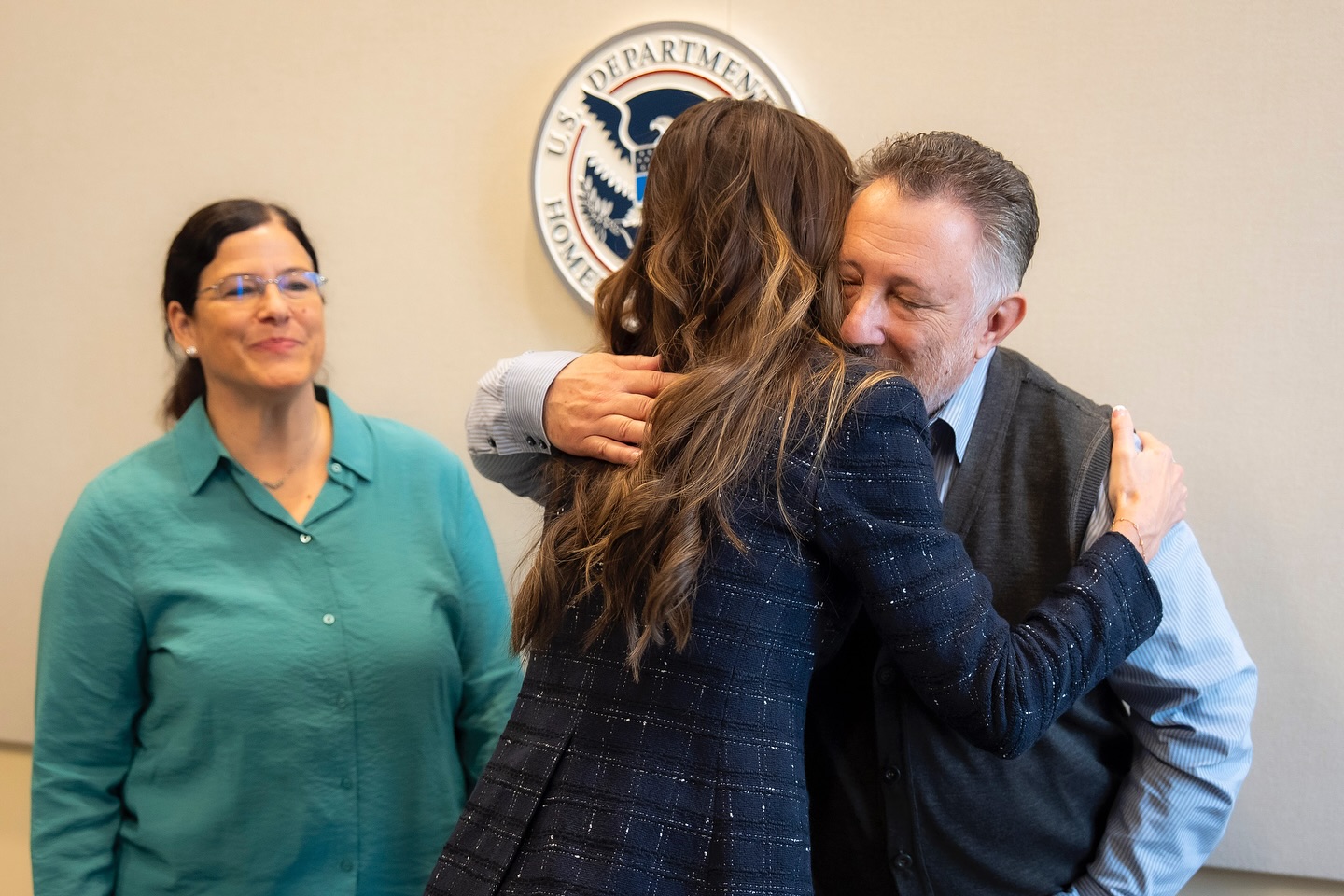
Six months after the death of their son, Yaron Lischinsky, and his girlfriend, Sarah Milgrim — both Israeli Embassy employees — in a shooting outside the Capital Jewish Museum, Daniel and Ruth Lischinsky visited Washington last week, meeting with senior administration officials and visiting the sites where their son lived, worked and, ultimately, died. Speaking to Marc Rod for eJewishPhilanthropy’s sister publication Jewish Insider during their time in the U.S. capital, the pair reflected on their son’s life and legacy.
A son’s legacy: “He was a peacemaker. He tried [to make] people understand one [another], talking with the other and not fighting. He was a big fan of the Abraham Accords and he was a peacemaker. He knew that through diplomacy he can reach and he can make achievements,” Daniel Lischinsky said. Ruth Lischinsky said she’s been struck by the number of people that knew her son in Washington.
Read the full interview here and sign up for Jewish Insider’s Daily Kickoff here.
LINES THAT BIND
5 things I’ve learned about the role Jewish books play in our lives

“This month marks the 100th anniversary of Jewish book month, a project of the Jewish Book Council, and I’ve been reflecting on what compels us to read (and write) Jewish literature,” writes Talia Rosenblatt-Cohen, host of the podcast “The Five Books” and chair of the Natan Fund’s Notable Books award committee, in an opinion piece for eJewishPhilanthropy.
In dialogue with ourselves: “I’ve come to think of Jewish reading as a form of dialogue — not just between author and reader, but among authors and across time. … Investing in programs that unite Jewish text study, creative writing and communal exploration nurtures the next generation of thinkers and storytellers. Awards like the Sami Rohr Prize not only celebrate individual authors but build a cohort of writers whose work invites broader participation in Jewish cultural life. These initiatives help ensure that Jewish creativity remains a living, evolving conversation — one that continues to shape the future of Jewish life.”
INTERFAITH COLLABORATION
‘Make a friend before you need a friend’
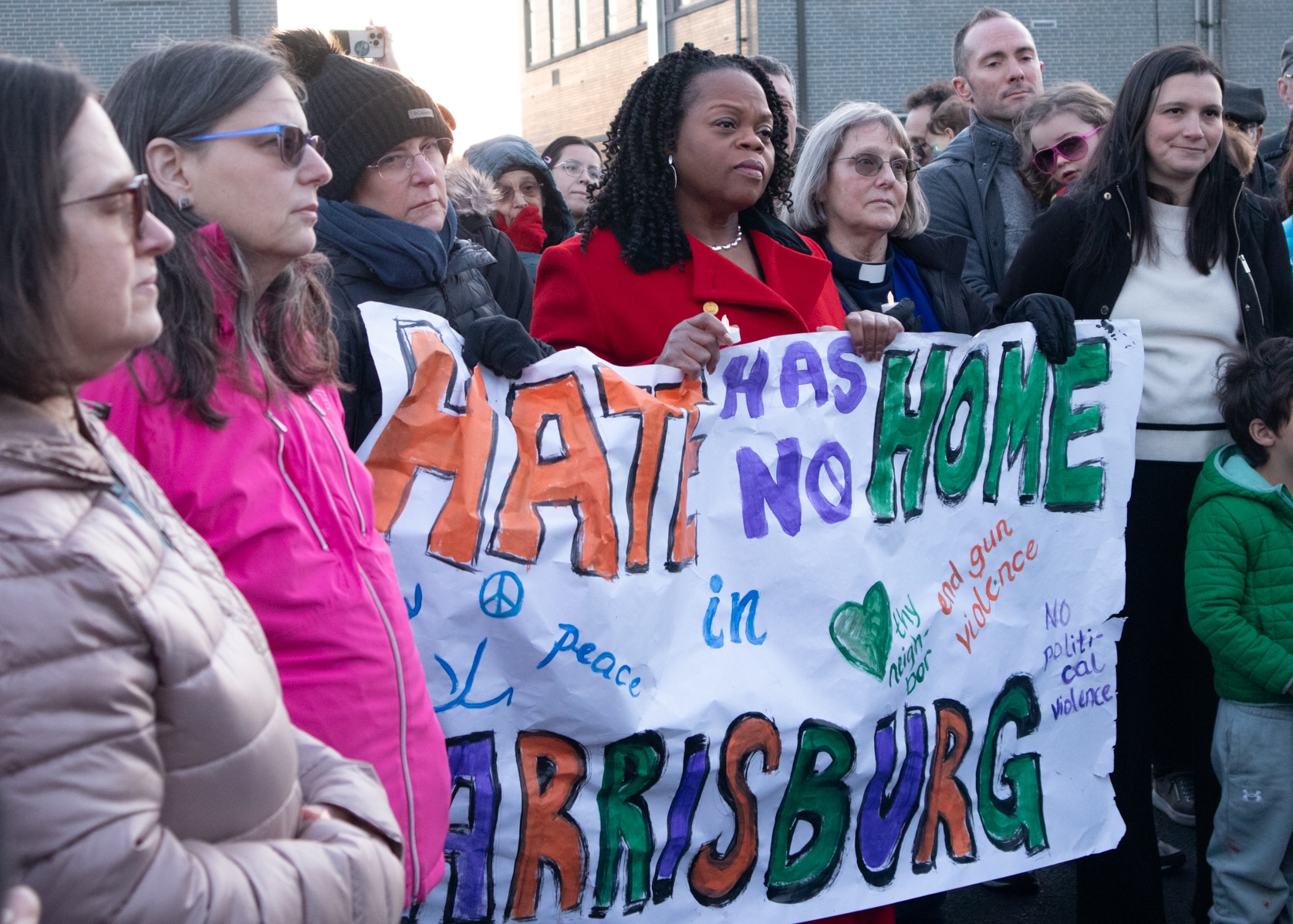
“My friend Rev. Earl Harris — a former Christian pastor and veteran of the Civil Rights Movement who comes to our Shabbat services almost weekly — taught me that when it comes to interreligious collaboration you need to ‘make a friend before you need a friend,’” writes Rabbi Ariana Capptauber of Beth El Temple in Harrisburg, Pa., in an opinion piece for eJewishPhilanthropy. “The truth of that teaching became clear after the firebombing attack on Pennsylvania Gov. Josh Shapiro’s residence on the first night of Passover this year.”
Built to last: “[One dear friend, an organizer in the Black community whom I met at a Black Lives Matter rally], told me that he could not participate in the rally as I described it because it so heavily centered on Gov. Shapiro over needy people who so often go unnoticed. … In the end, [the organizer] did attend the march. He told me later that he thought of all the times Jewish leaders had shown up to events when he needed us, and he wanted to show support for us in return. Moved by his commitment, I vowed to continue to raise awareness about gun violence in our community and to continue to show up when he needed me.”
Worthy Reads
Mind the Gap: In The Times of Israel, Stephen M. Flatow makes the case for increasing support for financial aid for students considering gap-year programs in Israel. “The ‘gap’ these programs fill is not the year between high school and college. It is the widening gap between Jewish ancestry and Jewish literacy; between saying ‘I’m Jewish’ and living as a Jew with confidence, purpose and knowledge. … We have data showing that immersive learning creates informed alumni who remain part of Jewish life long after their year in Israel ends. Yet not all families can afford this opportunity. That gap must be filled as well.” [TOI]
Where Your Mouth Is: In The Jerusalem Post, Fleur Hassan-Nahoum, Israel’s special envoy for trade and innovation, and Ruthie Rotenberg, co-founder of the Amplify Investor Summit, argue for Jewish organizations to have their investments align with their values. “In 2007, the Los Angeles Times uncovered a troubling contradiction that should haunt every institutional investor. The Gates Foundation was donating $218m. to prevent polio and measles in the Niger Delta, while its endowment held $423m. in oil companies poisoning the same children. This wasn’t malice. It was the unthinking default of institutional investing: maximize returns, ignore contradictions between mission and portfolio. Are Jewish institutions making the same mistake, fighting antisemitism while investing in the infrastructure that funds it?” [JPost]
Hungry for Dignity: In The Conversation, researchers Joslyn Brenton, Alyssa Tindall and Senbagam Virudachalam share insights of interest for nonprofits and funders focused on food insecurity. “We have witnessed firsthand how food assistance does help people meet their basic needs, but how it can also be stigmatizing and diminish their sense of dignity. We have also studied alternatives to typical charitable food programs that, despite good intentions, tend to induce shame. We have learned that it is possible to help people put food on the table while preserving their dignity.” [TheConversation]
Penny-Wise: In The Washington Post, philanthropist and Kind founder Daniel Lubetzky considers the overlap in Jewish and American values as he reflects on the rise in global antisemitism. “My maternal grandfather — who fled pogroms in Lithuania and landed on the shores of northern Mexico, where he became a successful cattle rancher — taught his grandchildren about humility and resourcefulness. He used to say, in Spanish, ‘A man who is too arrogant to pick up a penny is not worth a penny.’ The idea harbored by some that picking up a penny is beneath them, and is disgusting in others, isn’t just bad for Jews. Its manifestation today seems to reflect a cultural crisis marked by economic anxiety, frustration and a growing rejection of the very values that have long been the foundation of the American Dream. The crisis has been marked by the emergence of a victim-oppressor mindset; those who feel left behind often believe that they have no agency, and it is all too easy to deflect responsibility onto convenient scapegoats — including those perennial targets, the Jews.” [WashPost]
Word on the Street
Israeli Prime Minister Benjamin Netanyahu on Sunday asked President Isaac Herzog to pardon him, six years after Netanyahu was indicted for fraud, breach of trust and bribery and as his yearslong trial continues to play out in Israeli court…
Variety examines Qatar’s growing efforts to gain a foothold in Hollywood…
Congregation Shearith Israel on New York City’s Upper West Side is partnering with the nonprofit Masbia to launch a food pantry…
Jewish leaders with ties to Northwestern University are cautiously celebrating a $75 million settlement reached on Friday with the Trump administration to restore federal funding that was frozen earlier this year over allegations that administrators failed to address campus antisemitism, Jewish Insider’s Haley Cohen reports…
The Jewish News of Northern California interviews retired local Jewish leader Rita Semel as she turns 104…
Israeli police raided the 10th anniversary conference of the Israeli Jewish-Arab shared society group Standing Together, warning the organization not to be provocative…
A new study by the Indiana University Lilly Family School of Philanthropy’s Equitable Giving Lab found that donations to nonprofits that provide mental health services for active-duty military personnel, veterans and their families increased 178% from 2013-2023…
CNBC looks at how the Trump administration’s tax changes will affect charitable giving and if middle-class donors will be able to make up the expected drop in donations from wealthier funders…
The Rockefeller Foundation is partnering with 27-year-old social media influencer Jimmy Donaldson, better known as “MrBeast,” to encourage philanthropy among young people…
The New York Times interviews freed Israeli hostage Segev Kalfon about the more than two years he spent in Hamas captivity in Gaza…
Queens, N.Y., is getting its first Holocaust memorial after outgoing Mayor Eric Adams and Queens Borough President Donovan Richards agreed to contribute $4 million and the borough’s state lawmakers said they would request another $2 million in state funds…
A Nazi soldier photographed executing a Jewish man in the Ukrainian town of Vinnitsa was identified using artificial intelligence decades after the image, whose subjects were unknown, gained notoriety during the trial of Adolf Eichmann…
In The New York Times’ “Modern Love” column, Rabbi Brent Chaim Spodek reflects on his own marriage and the vows and promises made in his ketubah…
Town & Country magazine examines the possible ramifications of the divorce between art patron Mitchell Rales and his wife, Emily Wei Rales, who created the private Glenstone museum in suburban Washington…
Tony Award-winning playwright Tom Stoppard, whose “Leopoldstadt” reflected his own life as an assimilated Englishman who did not learn of his family ties to the Holocaust until adulthood, died at 88…
Israeli Maj. Gen. (res.) Dan Tolkowsky, who led the Israeli Air Force from 1953-1958 before going on to found the country’s first VC, died at 104…
Major Gifts
The Elaine and Eduardo Saverin Foundation awarded a $20 million grant to the Boston-based Dana-Farber Cancer Institute for research and treatment of metastatic breast cancer…
The Eli and Edythe Broad Foundation, Ballmer Group and Chuck Lorre Family Foundation have collectively committed more than $11 million to the Los Angeles Unified School District and its new LAUSD Education Foundation for programs that encourage “equity and innovation”…
Transitions
Former Knesset member Alex Kushnir has been named CEO of the Israel Strategic Futures Institute…
Rachel Andron was hired as the next executive director of Repair the World’s New York region…
Raphi Leon was elected the next president of the British Union of Jewish Students…
Pic of the Day
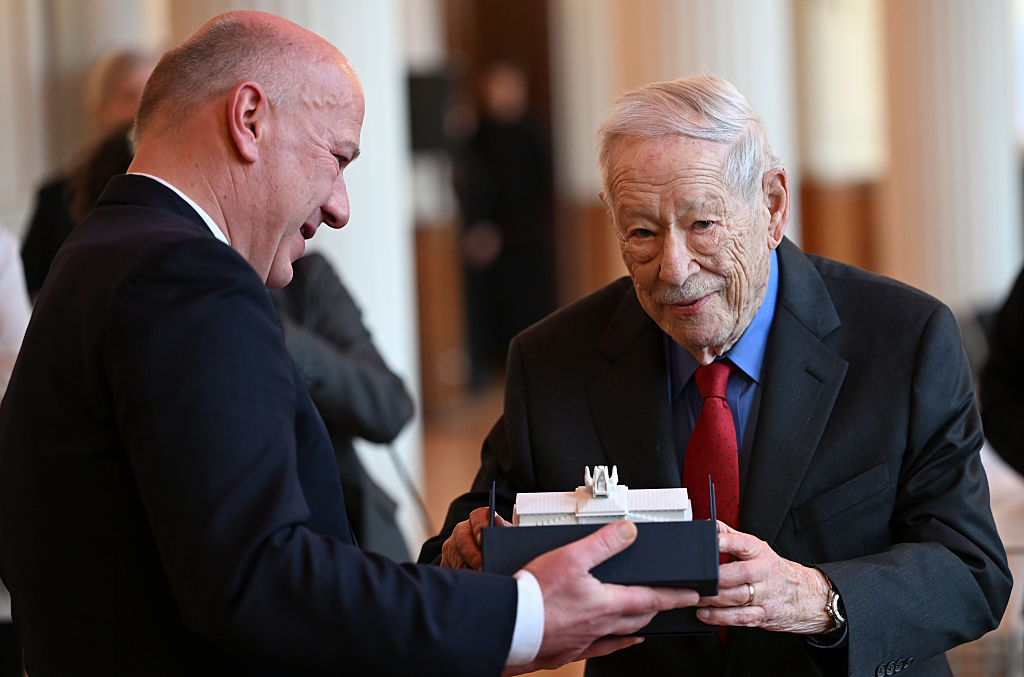
Kai Wegner, the governing mayor of Berlin, presents German-born economist and former U.S. Treasury Secretary W. Michael Blumenthal with a porcelain model of the city’s Brandenburg Gate today at a celebration ahead of his upcoming 100th birthday next month.
Blumenthal was the founding director of the Jewish Museum Berlin and only relinquished the post in 2014 at the age of 88.
Birthdays
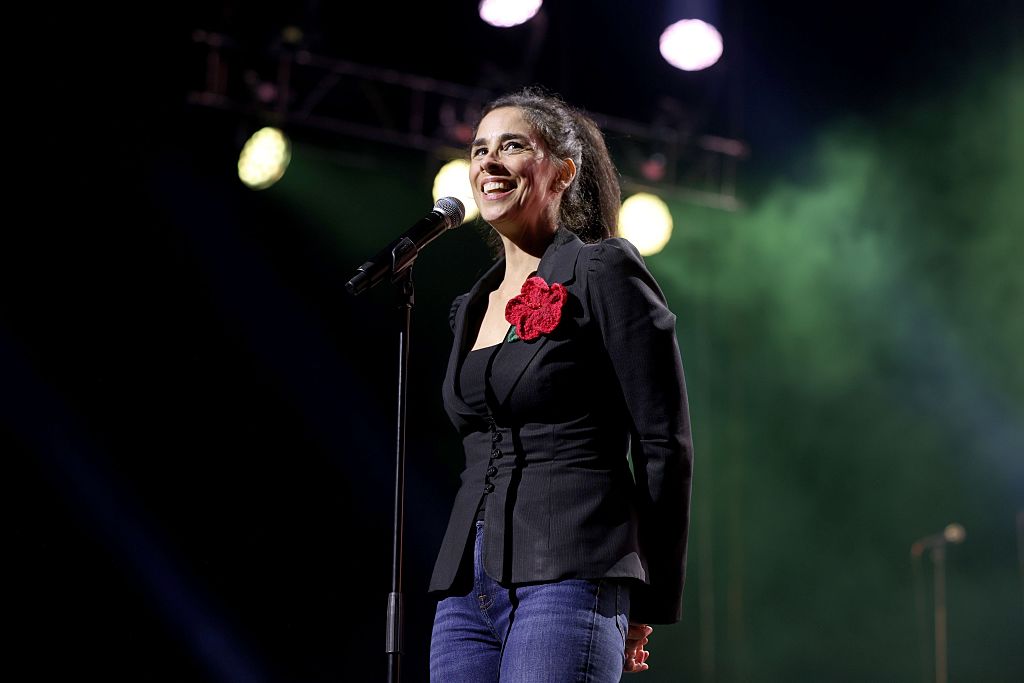
Emmy Award-winning stand-up comedian, actress, producer and writer, Sarah Silverman turns 55…
Former CEO of Marvel Comics and chairman until 2023 of Disney’s Marvel Entertainment, Isaac “Ike” Perlmutter turns 83… Former executive vice president of Stuart Weitzman, Jane Weitzman… New York City-based real estate mogul, he owned the New York Post, served as chair of NYC’s MTA and is a noted car collector, Peter Kalikow turns 83… Executive producer of over 200 shows with more than 15,000 hours of television over a lengthy career, David E. Salzman turns 82… Singer, actress, comedian and author, Bette Midler turns 80… Comedian, actor and voice actor best known for his starring role in the animated sitcom “Dr. Katz, Professional Therapist,” Jonathan Katz turns 79… Former director of Pardes Institute of Jewish Studies, he is now the director of Yashrut, Rabbi Daniel Landes turns 75… Former president of the American Jewish Committee and a board member at Israel Policy Forum, John M. Shapiro… British playwright, director and scriptwriter who has won many awards for his work on the stage, film and television, Stephen Poliakoff turns 73… Board member and director of strategic partnerships at the Jewish Federation of Howard County (Md.), Rabbi Gordon Fuller… Former chair of the board of the Greater Miami Jewish Federation, Isaac “Ike” Fisher turns 69… U.S. District Court judge in Oregon, Judge Michael H. Simon turns 69… CEO of Oracle Corporation until a few months ago, now vice chair of the board, she also joined the board of the recently merged Paramount Skydance, Safra A. Catz turns 64… Professor in the Department of Mathematics and Physics at the University of Cambridge, Raymond E. Goldstein turns 64… Pittsburgh-based entrepreneur, David Seldin… CEO at My Pest Pros in Fairfax County (Va.), Brett Lieberman… Rabbi of Shaarei Tefillah Congregation in Toronto, Rafi Lipner turns 52… Editorial lead in policy communications on the global affairs team at OpenAI, he is the author of a book on military suicides, Yochi J. Dreazen turns 49… Emmy and Peabody Award-winning director, comedian, producer, writer and actor, Akiva Schaffer turns 48… Marketing and communications executive, Natalie Ravitz… Editor-in-chief at Jewish Insider, Josh Kraushaar… Writer and television producer, including for NBC’s primetime series “Brooklyn Nine-Nine,” Evan Daniel Susser turns 40… English teacher at Jerusalem’s Inbar School, the first secular, girls-only middle-high school in Israel, Shira Sacks… Senior advisor to U.S. Ambassador to Israel Mike Huckabee, David Milstein… Mexican musician influenced by Sephardic brass and klezmer styles, known by his mononym “Sotelúm,” Jorge Sotelo turns 36… Becky Weissman…