Your Daily Phil: Why this round of fighting in Israel feels different




 Add EJP on Google
Good Thursday morning!
In today’s edition of Your Daily Phil, we examine how this round of fighting in Israel is different from previous ones. We report on the growing efforts to support wounded IDF soldiers, and cover last night’s Shalva gala in New York City. We feature an opinion piece by David Weisberg about philanthropy’s role in times of complex crises, and Rabbi Charles E. Savenor marks Civic Learning Week with advice for “reclaiming the soul of civic holidays” in advance of America’s Semiquincentennial; plus Barak Sella responds to recent research about American Jewry’s relationship with Zionism. Also in this issue: Ambassador Rabbi Yehuda Kaploun, Jeffrey Miller and Rabba Daphne Lazar Price.
What We’re Watching
Teach Coalition’s New York branch is in Albany today, trying to push lawmakers to support measures for Jewish day schools in the state.
The annual weeklong SXSW festival kicks off today in Austin, Texas.
What You Should Know
A QUICK WORD FROM EJP’S JUDAH ARI GROSS
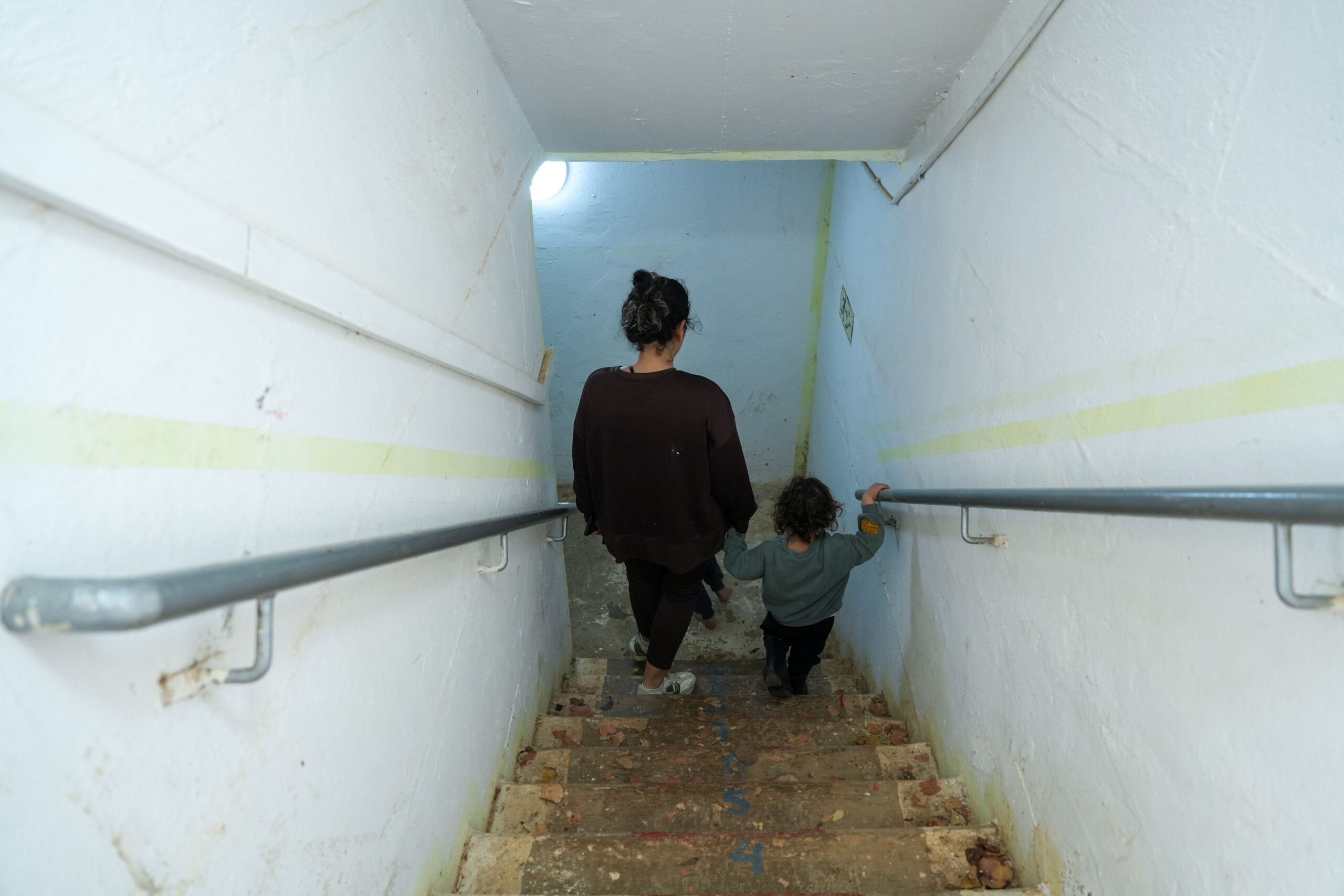
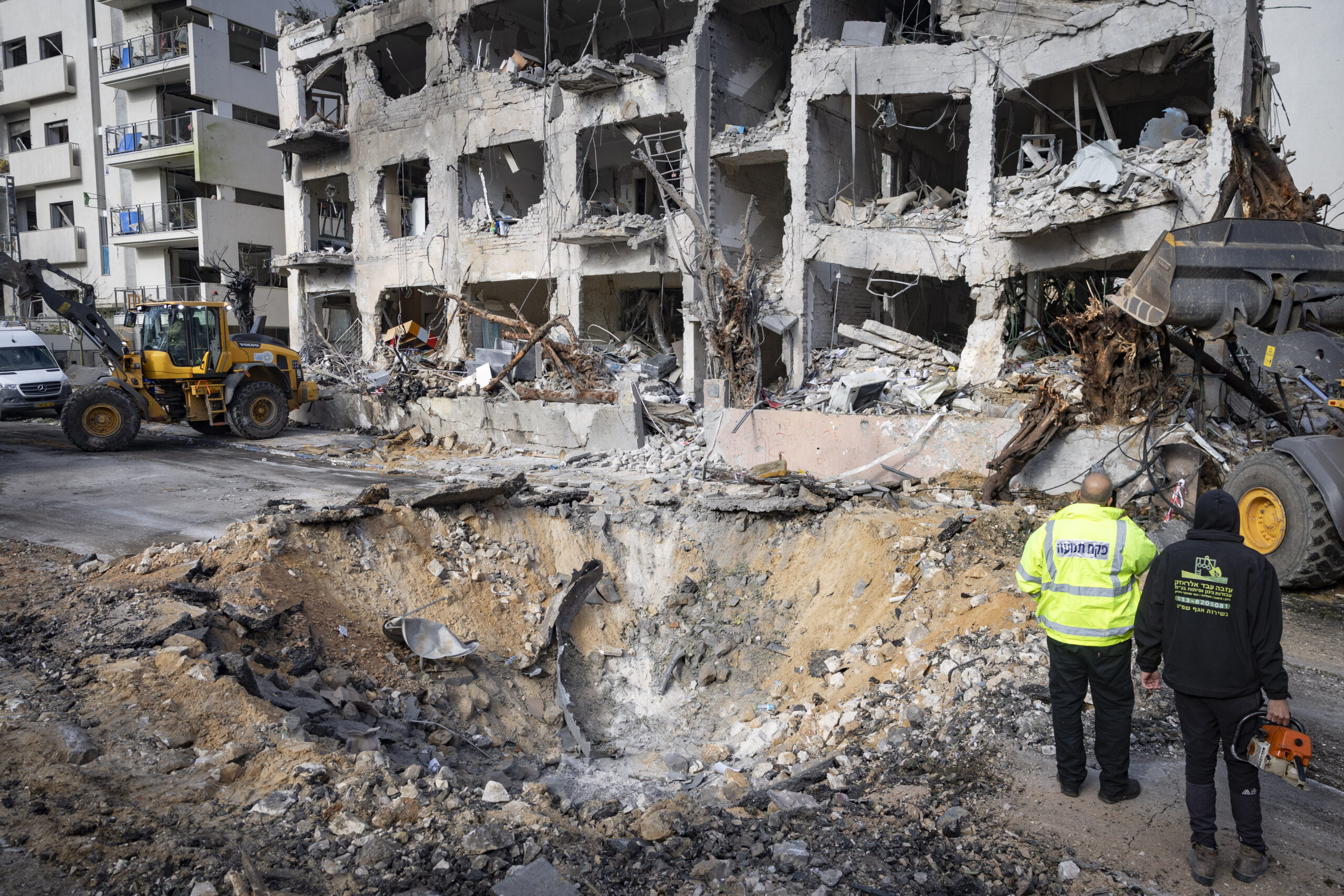
Is it burnout? Ambivalence? Exasperation? Whatever the cause, funders and nonprofit leaders in Israel are describing a marked drop in engagement from their Diaspora counterparts during this round of fighting against Iran and its proxies, compared to similar conflicts over the past two-plus years.
Donations are still being made to Israeli causes — federations across North America have allocated millions to the Jewish Agency’s newly launched fund to support victims of Iranian missile strikes, for instance. But conversations with Israeli civil society figures nevertheless indicate a significant shift compared to what was seen last June during the war with Iran, in September 2024’s military operation against Hezbollah in Lebanon and — far more understandably — in the wake of the Oct. 7, 2023, Hamas terror attacks. The shift comes even as the level of destruction and disruption in Israeli society and economy are largely on par with last summer.
It is seen most starkly in terms of public diplomacy and advocacy. Take, for instance, the public messaging from Jewish Federations of North America. Over the course of the 12-day war last summer, the organization posted seven times about the conflict on its website. In the 13 days since Israel and the United States launched airstrikes against Iranian regime targets, JFNA has posted twice on the matter (along with sharing a statement from Israeli President Isaac Herzog ahead of Purim). JFNA also has not launched an emergency campaign in response to this round of fighting, unlike the dedicated fundraising efforts that it launched last June.
This is, of course, an imprecise metric, and it in no way suggests that JFNA, individual federations or Jewish foundations are less supportive of Israel today than they were this summer. “Since the moment the war broke out, Jewish Federations across North America have been doing what they always do — supporting our brother and sisters in Israel and maintaining security at home. Over 14,000 leaders have participated in regular briefings; core funding to the Jewish Agency and JDC has enabled them to assist the victims of the missile attacks and meet other immediate emergency needs; dozens of Federations have sent over $10 million in new, additional emergency funds; and we are constantly evaluating new needs arising from Iranian attacks on Israelis,” Eric Fingerhut, JFNA president and CEO, told eJewishPhilanthropy.
This Israel-based reporter can also testify that virtually every communication with American Jewish figures begins with them asking how he and his family are doing. (We’ve been better; but we’re doing better than most.)
And yet there are clear indications of a shift within the Jewish community, with Israelis feeling that while they are routinely running for cover in bomb shelters, Jewish life abroad is continuing as normal. This can also seen numerically in a recent poll by the Jerusalem-based Jewish People Policy Institute, which conducted surveys of so-called “connected” American Jews both in July 2025 and earlier this month. While levels of support haven’t changed, opposition has doubled. Last summer, 13% of “connected” American Jews opposed the decision to conduct strikes on Iran’s nuclear and ballistic missile facilities, while 18% said they were not sure. This time around, opposition has doubled, with 26% opposing the war and 7% unsure. No self-identified centrists said they opposed the military operations last June, while 9% said that they do today.
Some of this may stem from the fact that the current conflict against Iran is a joint American-Israeli campaign — compared to this summer’s war, which was primarily an Israeli operation, with American support. This adds an American domestic political dimension, with the conflict serving as a litmus test for support of President Donald Trump. Even among Israelis, who are generally more supportive of the war than their American counterparts, there is also a degree of frustration with the current conflict. At the end of the June war, Israeli Prime Minister Benjamin Netanyahu declared that Israel and the United States “achieved a historic victory, which will stand for generations” — an amount of time that typically refers to decades and centuries, not nine months.
Though less likely to fully account for the change, it is also significant that the war came days after Israel’s coalition voted in favor of a contentious bill that was singularly aimed at preventing non-Orthodox prayer at the Western Wall, including in the area that currently permits egalitarian services. Far from shoring up support from Diaspora Jewry in the period leading up to a major conflict, the Israeli government instead actively and publicly (and likely pointlessly, as the bill is not expected to be passed into law) antagonized the overwhelming majority of American Jews — just before those same Jews would be called upon for political and financial support.
RECOVERY PROCESS
Israeli nonprofits scale up care for a growing wave of wounded soldiers
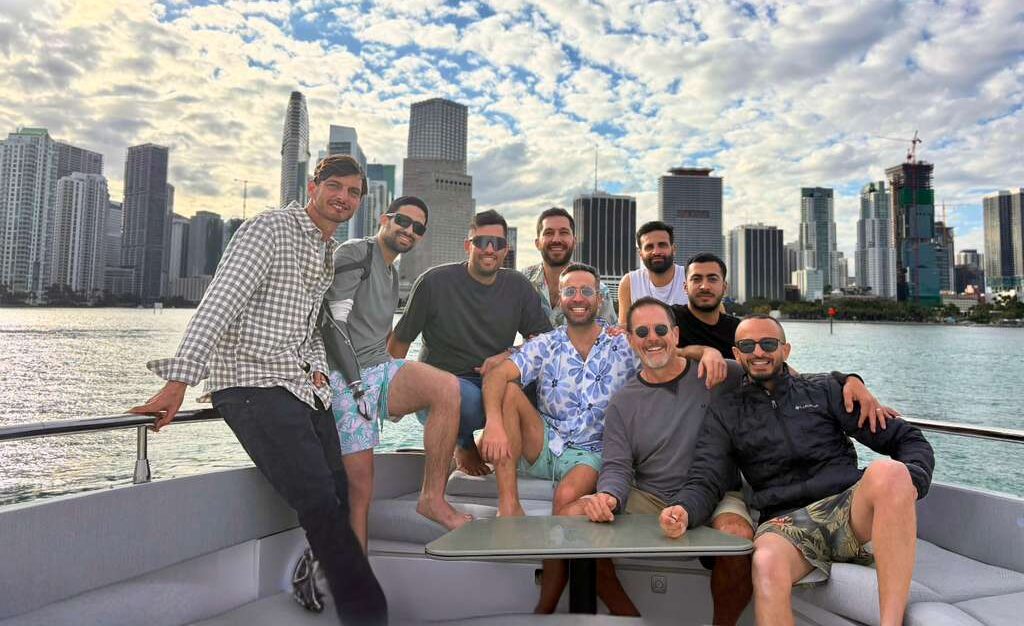
The first time Matan Fishman was hospitalized after a concrete wall collapsed on his leg while fighting in Gaza in November 2023, he was released within an hour. On the surface, it looked like there was nothing wrong, he said. But after a week of persistent pain, he learned a serious infection had festered beneath the surface. He was hospitalized again, this time for six months. “None of the antibiotics killed the infection,” he told eJewishPhilanthropy’s Nira Dayanim. “I could not walk for three months. Then I started again, slowly, slowly.” Fishman spoke with eJP last month — some two years after his injury — while taking part in a “healing trip” to Florida for wounded soldiers organized by Belev Echad. During the trip, Fishman and seven other wounded combat soldiers spent time driving sports cars, riding jet skis and sharing their experiences with each other and with local donors.
Stepping in, stepping up: When soldiers are injured during service, Israel’s Defense Ministry typically provides the first line of care, which private organizations then supplement with advanced treatments and emotional support. But with the number of wounded soldiers growing rapidly, public infrastructure and private philanthropy alike have been challenged to meet increased — and increasingly complex — care demands.



IN THEIR MEMORY
UJA-Federation of N.Y. pledges $1.3 million for new disability center named for slain Sharabis
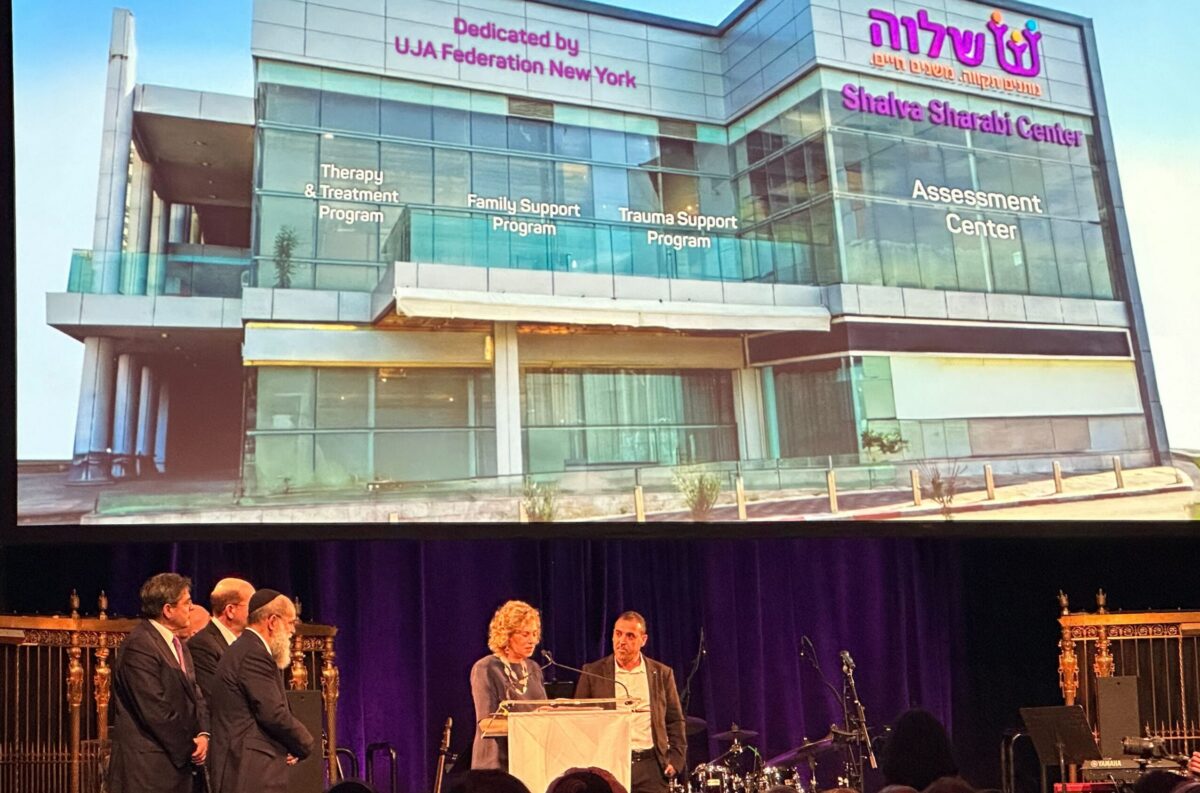
UJA-Federation of New York will commit $1.3 million to building the Shalva Sharabi Family Center in Ashkelon, in southern Israel, a new center dedicated in memory of the family of former hostage Eli Sharabi to support individuals with disabilities and trauma victims, the grantmaker announced on Wednesday night at Shalva’s 36th anniversary gala, held at Gotham Hall in Manhattan, Jewish Insider’s Haley Cohen reports for eJewishPhilanthropy from the event.
Nowhere else: The new center, which was recently announced, is the vision of Sharabi, a former resident of Kibbutz Bee’ri, who was kidnapped by Hamas during the Oct. 7 terrorist attacks and held captive in Gaza for 491 days. It will be dedicated to his wife, Lianne, and daughters Noiya and Yahel, all three of whom were murdered in the attacks. “When I came out of captivity, I told Shalva that there is one place where I would like to have my wife and daughters remembered, and that is the Shalva center,” Sharabi told attendees of the dinner, which exceeded its $3 million fundraising goal. Shalva’s mission was important to Sharabi’s daughters, who volunteered with children with disabilities, he said.
CHAZAK V’NITCHAZEK
From helplessness to impact: Opening gateways for change

“Over the past several days, as I’ve been preparing for the Jewish Funders Network International Conference in San Diego, I’ve found myself thinking about how overwhelming the world can feel right now,” writes David Weisberg, executive director of World Jewish Relief USA, in an opinion piece for eJewishPhilanthropy. “More and more, I hear similar reflections from people in my life — friends, family members and colleagues. Helpless in the face of crises that feel faceless and simply too large to comprehend, the sheer scale of tragedy leaves them feeling paralyzed.”
Seeds of change: “In a time when no one person can possibly comprehend every crisis unfolding around us — both those that dominate the headlines and those that never appear in them — that, indeed, is our job: To translate helplessness into opportunity. To turn paralysis into agency and impact. To be the stewards of generosity that guide others to realize their dreams and visions for making a difference in the lives of others. And when we do this — with compassion, care, commitment and love — we discover that even the smallest acts of care can help the seeds of change that were silent burst into bloom.”
WE NEED YOU!
Harnessing America’s 250th birthday to reimagine our civic culture

“Two hundred and fifty years ago, Paul Revere’s midnight ride helped ignite the American Revolution. Four months from now, our nation will face another historic moment: the Semiquincentennial, a once-in-a-generation opportunity to bring Americans together through our civic traditions,” writes Rabbi Charles E. Savenor, executive director of Civic Spirit, in an opinion piece for eJewishPhilanthropy.
Make the milestone matter: “By creating civic road maps, building intergenerational partnerships, investing in educators, empowering students and elevating rituals of belonging, schools, camps and communities can ensure that America’s 250th is not just a day of fireworks but a milestone of renewal for our democracy. Today, with divisions running deep and a rapid-fire news cycle across multiple platforms, American society often seems too distracted by the present moment to celebrate the past, let alone imagine the future. Yet the Semiquincentennial will arrive whether we are ready or not. To make Independence Day 2026 an experience remembered for years to come, educators, parents, clergy, funders and civic leaders must approach this milestone with creativity, thoughtfulness and the best of what technology can offer.”
CONSIDER THIS
Is it OK that only a third of American Jews are Zionists?

“For millennia, Jews longed for Zion, sustaining emotional, religious and historical ties to the Land of Israel. But identifying with Israel is not the same as choosing Zionism,” writes Barak Sella, a fellow at the Harvard Middle East Initiative and an Elson Israel Fellow at the Jewish Federation of Tulsa, Okla., in an opinion piece for eJewishPhilanthropy.
Identity versus action: “We have turned Zionism from action into identity, from something you do into something you’re expected to be. Must all Jews be Zionists? Perhaps that would be desirable, but it’s hardly realistic if we understand Zionism as what it has always been: demanding active realization, not just sentiment. The Zionist-socialist youth movements even coined a unique term for it: hagshama, the manifestation of values and actions in one’s life. Zionism cannot be inherited. It must be chosen. The Book of Proverbs (29:18) teaches, ‘Where there is no vision, the people perish.’ Yitzhak Ben-Aharon, one of the Israeli Labor movement’s great thinkers, added centuries later: ‘Where there is no realization, the vision perishes.’ So, what does the realization of Zionism look like for American Jews?”
Worthy Reads
Sign of the Times: In the Jewish Journal, Samuel J. Abrams sees the recent merger announcement by Perelman Jewish Day School and Jack M. Barrack Hebrew Academy, two major Philadelphia-area Jewish day schools, as a signal that day schools need communal recommitment. “[A]t precisely the moment when Jewish identity feels newly urgent, some of the institutions most capable of transmitting deep Jewish knowledge and confidence face consolidation rather than expansion. The contrast reveals a central tension of contemporary American Jewish life: feeling Jewish in moments of crisis and sustaining Jewish institutions across generations are profoundly different acts; one is emotional, the other structural.” [JewishJournal]
Man With a Plan: In Time, Rabbi Yehuda Kaploun shares his vision as the newest U.S. special envoy to monitor and combat antisemitism. “Antisemitism proliferates from an ever-multiplying list of sources: voices from all sides of the political spectrum spew antisemitic rhetoric; foreign terrorist organizations espouse violent antisemitic ideologies; and online radicalization increasingly incites real-world antisemitic attacks against Jewish individuals and institutions globally. To combat these sources, we must show the world what true Jewish community means — and what it means to be in community with Jews.” [Time]
Word on the Street
New York Giants owner Steve Tisch is planning to transfer control of the NFL team to his children, following new revelations about his relationship with disgraced financier Jeffrey Epstein…
The Canadian government has pledged $10 million in security funding for Jewish institutions, after shots were fired multiple times at Toronto-area synagogues in recent weeks…
Jewish News Syndicate reports that roughly one-third of the Massachusetts commonwealth funding for nonprofit security grants went to Jewish organizations…
Yeshiva University is establishing the first new dental school in Manhattan in more than a century, with plans to enroll 150 students in an accelerated three-year program on its Midtown Manhattan campus…
Google completed its $32 billion purchase of Israeli cybersecurity startup Wiz, started in 2020 by Unit 8200 veterans Assaf Rappaport, Yinon Costica, Ami Luttwak and Roy Reznik; the deal marks the largest purchase of an Israeli-founded company in nearly a decade…
Spain is permanently withdrawing its ambassador from Israel, months after Ambassador Ana Maria Salomon Perez was recalled to Madrid; the country’s embassy in Israel will instead be led by a charge d’affaires…
Anna Lee Rapport Langman, a prominent figure in the Charlotte, N.C., Jewish community, died on Monday at 86…
Angelika Saleh, the namesake of the Angelika Film Center in Manhattan, which she opened in 1989 with her then-husband, Joseph Saleh, died last month at 90…
Major Gifts
Israeli women have so far donated 46 liters (12 gallons) of breast milk through the Sussman Family Foundation Human Milk Bank for nursing mothers who have been called away for reserve duty or other war-related activities…
Transitions
President Donald Trump appointed Jeffrey Miller as chairman of the United States Holocaust Memorial Council, which controls the United States Holocaust Memorial Museum; Miller has served on the council since 2021…
Rabba Daphne Lazar Price is stepping down as executive director of the Jewish Orthodox Feminist Alliance; board Co-President Dr. Mindy Feldman Hecht will step into the role of interim executive director until a permanent successor is found…
Jeff Linkon, executive director of the Indiana University Hillel, will step down from his role at the end of June…
Pic of the Day

Jennifer Long (left), a co-founder of “I Believe Israeli Women” and chair of its Legal and Policy Taskforce, moderates a panel on Tuesday at the “I Believe Israeli Women Summit,” which was held on the sidelines of the United Nations’ Commission on the Status of Women convening this week. The panelists were: attorney and activist Elaaheh “LilyMoo” Jamali; attorney Paula Silva Rodríguez; Viviane Teitelbaum, member of the Belgian Senate; and Céline Bardet, international war crimes lawyer and founder of We Are NOT Weapons of War.
During the session, Silva Rodríguez accused international women’s groups of failing to adequately condemn the sexual violence that was perpetrated against Israelis during the Oct. 7 terror attacks. “Victims should never be recognized selectively. International law exists precisely to remind us that atrocities — wherever they occur — demand the same level of condemnation and accountability,” she said.
Birthdays

Chief Washington correspondent for CNN and co-host of the Sunday morning program “State of the Union,” Jacob Paul “Jake” Tapper turns 57…
Photographer, musician and author of 15 children’s books, Arlene Weiss Alda turns 93… Carol Margolis… Director, producer and screenwriter of movies and television including directing the first of “The Fast and the Furious” film franchise, Rob Cohen turns 77… British sculptor, he won the 2017 $1 million Genesis Prize for “commitment to Jewish values, the Jewish community and the State of Israel,” Sir Anish Kapoor turns 72… Pitching coach who has worked for the Yankees, Reds, Braves, Marlins, Cubs and Padres, Larry Rothschild turns 72… Past president of AIPAC, he is the founder and CEO of R.A. Cohen & Associates, Robert A. Cohen… Former member of the Knesset for the Likud party, he is from the Israeli Druze community, Ayoob Kara turns 71… Founder of hedge fund Lone Pine Capital, Stephen Mandel turns 70… Sales representative at Paychex, Lynne Blumenthal… Director of constituency engagement at the United States Holocaust Memorial Museum, Diane Saltzman… Senior attorney in the D.C. office of Squire Patton Boggs, Stacey Grundman… Sportscaster for ESPN and a host of “SportsCenter,” Steve Levy turns 61… Born in Haifa, he served as president of the Central Bank of Brazil and is now president of the Inter-American Development Bank, Ilan Goldfajn turns 60… Founder and CEO at Miller Strategies, Jeff Miller… Israeli film and television actor, Tzachi Halevy turns 51… Senior vice president of communications at the Alliance for Automotive Innovation, Brian T. Weiss… Founder and publisher of Fleishigs, a kosher food magazine, Shlomo Klein… Actor and comedian, Samm Levine turns 44… Writer, artist and social media personality, she is best known for her Daf Reactions series of videos explaining passages from the Talmud posted to TikTok, Miriam P. Anzovin… Senior public affairs specialist at the Association of American Medical Colleges, Talia Schmidt… Member of Congress (D-NY-15) since 2021, Ritchie Torres turns 38… Senior Middle East intelligence specialist at Vcheck, Aaron Magid… Founder and CEO of Serotonin and co-founder and president of Mojito, Amanda Gutterman Cassatt turns 35… CEO and co-founder of Wonder Media Network, Jennifer Manning Kaplan… Figure skater who won the 2016 World Junior championship, he competed for Israel at the 2018 Winter Olympics, Daniel Samohin turns 28… Israeli internet personality, model and singer, Anna Zak turns 25…