Your Daily Phil: Eyal Ostrinsky looks to get KKL-JNF back to basics: planting trees




 Add EJP on Google
Good Tuesday morning!
In today’s edition of Your Daily Phil, we interview Eyal Ostrinsky, the incoming chair of Keren Kayemeth LeIsrael-Jewish National Fund. We cover a conference in Tel Aviv last week offering religious support to people grappling with mental health issues. We speak with friends and colleagues of philanthropist and lay leader Sheila Lambert, who died last week at 79, and report on local Jewish leaders’ growing concerns about newly inaugurated New York City Mayor Zohran Mamdani. We feature an opinion piece by Dovid Bashevkin encouraging non-Orthodox Jewish leaders to consider the areas in which the Orthodox community has seen success, and another by Meredith Englander Polsky calling for all Jewish organizations to see disability inclusion as a priority. Also in this issue: Rose Horowitch, Judge Alvin Hellerstein and Shana Kantor.
What We’re Watching
The Academic Engagement Network kicked off a three-day conference yesterday in Miami Beach, Fla., for faculty and staff from 40 universities focused on providing professional tools for addressing campus antisemitism.
In Florida, former Israeli Strategic Affairs Minister Ron Dermer and “Call Me Back” host Dan Senor will speak in conversation this evening at an event hosted by Palm Beach Synagogue.
What You Should Know
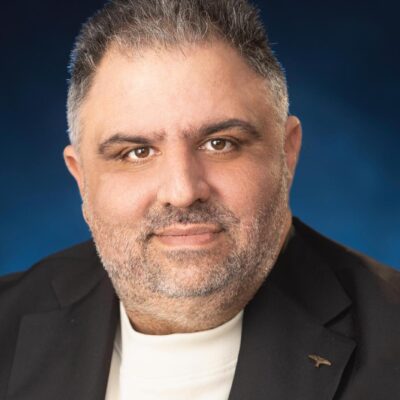
On his second day on the job, Eyal Ostrinsky — the newly named chair of Keren Kayemeth LeIsrael-Jewish National Fund — was on the road, heading to Kibbutz Nir Oz, one of the hardest-hit communities in the Oct. 7 terror attacks.
“KKL has invested heavily in the redevelopment projects in the kibbutz — NIS 75 million ($23.4 million). And I want to put that at the top of our list of priorities. So I am going there to see that we are implementing the plan and to hear from them, from the management, from the [residents], what else they want to do,” Ostrinsky told eJewishPhilanthropy’s Judah Ari Gross yesterday afternoon.
Ostrinsky was voted into his position last Thursday by the KKL-JNF board as part of a coalition agreement that was reached in November between the center-left and center-right factions of the World Zionist Congress. Ostrinsky, who until recently served as chief of staff to WZO Vice Chair Yizhar Hess, enters his new role at a pivotal time for KKL-JNF, which owns more than 10% of the land of Israel, making it one of the most influential organizations in the country as it relates to land development and real estate. The organization has, for decades, faced allegations of corruption and cronyism, as well as calls for its land holdings and substantial revenues to be nationalized.
As he enters his shortened term, Ostrinsky said that he is looking to get the organization “back on the right track” and improve its reputation, as well as its relationship with Diaspora Jewry, by focusing on the group’s core values and keeping domestic Israeli politics to a minimum. These key areas include reforestation, rebuilding the hard-hit communities of southern and northern Israel, agricultural infrastructure, funding educational programs and — to a lesser extent — supporting Jewish communities abroad. “If we do our best to stay focused on our core areas, we would limit the influence [of politics],” he said.
One of Ostrinsky’s most important tasks will be to appoint a new CEO for the organization, which has been without a permanent chief executive for the past 2 ½ years and without an interim CEO for the past two months.
But first, Ostrinsky will have to pass a budget. KKL-JNF entered 2026 without an annual budget. Until a new budget is passed, it will operate on a pro-rated month-to-month basis, relying on the previous year’s budget. “I told the board that we would pass a budget within 45-60 days,” Ostrinsky said.
The main focus of the budget will be on reforestation and land development. “We want to heavily invest in forestation,” he said. “Within the parts of the land that we designate for forestation, we want to plant as many trees as we possibly can. I want to implement this as a policy, as a target, because deforestation efforts are very, very important — first, as part of the battle against climate change, and second, as this is the identity of KKL. Planting trees is the identity of KKL to the Jewish public and the Israeli public.”
PASTORAL CARE
As psychotrauma rises in Israel, Maaglei Nefesh aims to fill religious gap in mental health

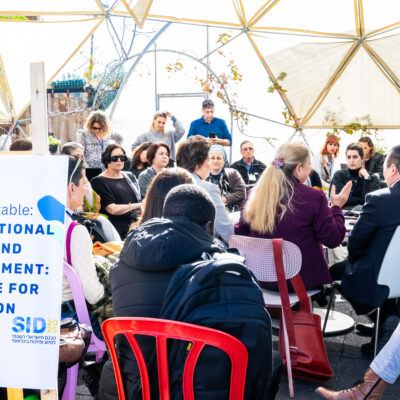
A few months ago, Rabbi Yoni Rosensweig, founder of the religious mental health nonprofit Maaglei Nefesh, received a phone call from a woman he’d been supporting since the Oct. 7 terror attacks. She was calling from a hospital bed following another suicide attempt, struggling with severe post-traumatic stress disorder, he recalled in a recent Facebook post. But she wasn’t asking for comfort or prayer. She had a halachic question: “Rabbi, do I need to say Hagomel for being saved?” The query — regarding a prayer traditionally recited after a life-threatening event — encapsulates what Rosensweig learned years ago when he began researching the intersection of Jewish law and mental health: that for many religious Jews, psychological crisis triggers spiritual crisis, and treating one without the other leaves patients caught between their faith and their healing, reports Rachel Gutman for eJewishPhilanthropy from Maaglei Nefesh’s conference in Tel Aviv last week.
A growing concern: More than two years after the Oct. 7 attacks, as Israel grapples with unprecedented levels of trauma across its population, Maaglei Nefesh represents a growing recognition that effective rehabilitation for religious communities requires addressing spiritual crises alongside psychological treatment. “The question troubling many of those struggling isn’t just ‘How do I cope?’ but ‘Am I still a religious person if my trauma prevents me from keeping Shabbat? Does God still love me?’” Rosensweig told eJP.



BARUCH DAYAN EMET
Sheila Lambert, ‘unstoppable’ philanthropist who created networks across the world, dies at 78
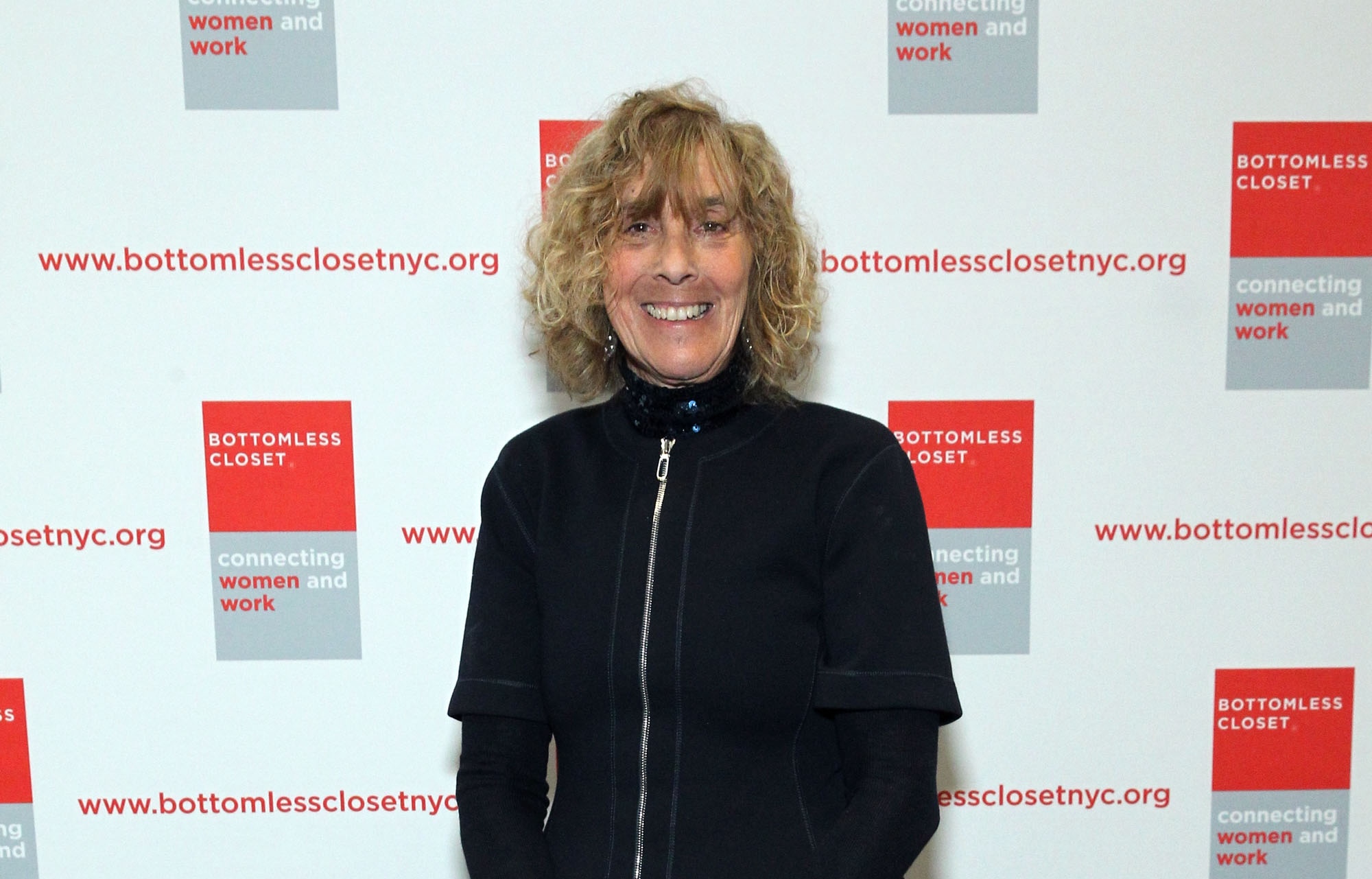
To those who knew her, Sheila Lambert — the Jewish philanthropist and lay leader who died last week at 79 after a battle with breast cancer — was a collector. That tendency was reflected outwardly in the vibrant artworks that covered the walls of her New York City home, as well as what her friends described as her impeccable sense of style. But those close to her say she was, above all, a collector of people. “Sheila had this impeccable taste, both in her art selections and her house, and also in the way that she presented herself in the world,” Mishy Harman, the CEO of Israel Story, told eJewishPhilanthropy’s Nira Dayanim. “And there’s a very, very lucky group of people around the world, from Project Kesher to Bottomless Closets to the Jerusalem Biennale and Israel Story and [New York City’s Marlene Meyerson] JCC, who became Sheila’s tribe and benefited tremendously, tremendously from her wisdom and her advice and her energy. Until the very end, Sheila was just unstoppable.”
A hands-on board member: Lambert built a long career in philanthropy, focused on art, education — Jewish and more general — and support for underserved communities, particularly women and children. Lambert founded and served on the boards of the Friends of Israel Story, the Jerusalem Biennale Circle of Friends and Bottomless Closet, a nonprofit that helps women living in poverty enter and succeed in the workforce, among many others. Lambert also acted as chair emerita and president of the Marlene Meyerson JCC Manhattan and as president of the board of JCC Global, an international network of Jewish community centers. “Sheila was not a ‘hands-off’ board member. She got to know people. She cared about them. She made sure they had Hanukkah presents. She asked about their children. She was engaged fully, particularly with the staffs of these institutions,” said Rabbi Joy Levitt, who first met Lambert 25 years ago while leading the Meyerson JCC and then brought her onto the board of the Jerusalem Foundation.
MAMDANI MOMENT
Jewish leaders question Mamdani’s antisemitism strategy
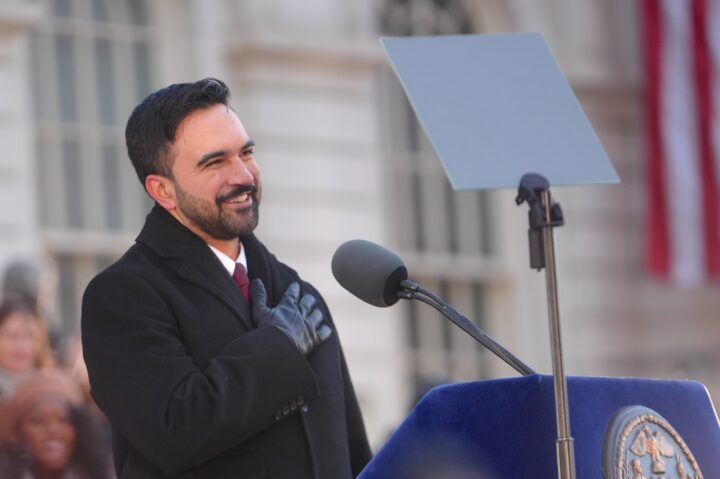
Days into Zohran Mamdani’s first week as mayor of New York City, some Jewish leaders are privately raising questions about whether his fledgling administration is prepared to implement a clear strategy to counter rising antisemitism, one of the key pledges of his campaign. Even as he swiftly moved to revoke two executive orders tied to Israel and antisemitism on his first day in office, Mamdani has yet to disclose how he and his team plan to substantively address what he has repeatedly called “the scourge of antisemitism” in remarks vowing to protect Jewish New Yorkers, reports Matthew Kassel for eJewishPhilanthropy’s sister publication Jewish Insider.
Wait and see: The mayor, a democratic socialist and outspoken critic of Israel, faced backlash from leading Jewish groups last week after he repealed executive orders issued by former Mayor Eric Adams, including ones that adopted a working definition of antisemitism used by the International Holocaust Remembrance Alliance and banned city agencies from engaging in boycotts targeting Israel. “He went from giving a speech about unity and collectivism to signing executive orders against the Jewish community,” one Jewish community leader said of Mamdani’s repeals. Rabbi Joe Potasnik, executive vice president of the New York Board of Rabbis who served on Mamdani’s transition committee for emergency response, said he was taking a wait-and-see approach to the first few weeks of the administration. “No further details have been released so there is nothing more to add at this time,” he told JI. “Let’s wait and see if there are changes.”
Read the full report here and sign up for Jewish Insider’s Daily Kickoff here.
Bonus: The New York Times examines the Israeli government’s harsh response to Mamdani’s revocation of the antisemitism-related executive orders.
HEAR ME OUT
What Orthodoxy has to offer non-Orthodox Jews — and no, it’s not kiruv

“The American Jewish community’s reawakening after the Oct. 7 terror attack has brought those who felt distant from Jewish life searching for meaning, ritual and community. The question troubling philanthropists and communal leaders since then is how to respond with long-lasting solutions for durable Jewish living, not fleeting gestures of identity,” writes Dovid Bashevkin, the founder and host of 18Forty, in an opinion piece for eJewishPhilanthropy. “[As] someone who was both raised and has lived within the Orthodox community, I think the relative successes of the Orthodox community should be more closely examined specifically by Jewish leadership in the non-Orthodox world.”
Something to offer: “To be clear, I am not talking about kiruv or the (not-so-subtle) push to make everyone Orthodox. I am talking about existing Jewish communities with working models of religiously infused, culturally rich communities that provide meaningful Jewish living alongside a modern life. These models are not perfect, and they are not replicable in full. But they contain systems, practices and communal habits that can inspire and inform the entire Jewish world — without necessarily requiring anyone to become Orthodox.”
SACRED WORK
Disability inclusion is ‘outside our scope’? Think again

“A few months ago, a colleague told me about a conversation with a major Jewish organization. When asked how they were addressing disability inclusion, the staff member replied: ‘Oh, we don’t really do disability.’ The comment wasn’t meant to be dismissive or unkind; it simply reflected a widespread misconception that disability is a specialized niche, separate from the ‘core’ work of Jewish life. Here’s the truth, though: if your mission involves education, social justice, poverty alleviation, community building or Jewish engagement, then you already do disability. You just may not realize it,” writes Meredith Englander Polsky, executive director of Matan, in an opinion piece for eJewishPhilanthropy.
Everyone wins: “[In] the end, inclusion isn’t about ‘them.’ It’s about ‘us.’ When a synagogue ensures that its services are accessible to people with diverse needs, everyone benefits from clearer communication, better design and a more thoughtful experience. When a school learns to support students with different learning profiles, every child benefits from teachers who understand how to engage learners in multi-modal ways. When a communal program considers physical, emotional and cognitive access from the start, it strengthens connection and participation across the board. Judaism teaches the principle of kavod habriyot, honoring the dignity of every human being. That means inclusion isn’t specialized work. It is sacred work.”
Worthy Reads
Don’t Believe the Hype: In The Atlantic, Rose Horowitch examines and rejects the growing public skepticism toward higher education. “Despite the reported skepticism of higher education, enrollment in four-year colleges and universities is growing. These institutions awarded 2 million bachelor’s degrees in 2023, compared with 1.6 million in 2010, and the fraction of 25-year-olds with a bachelor’s degree has steadily increased for the past 15 years. Even as Americans tell pollsters that college isn’t worth it, their behavior suggests that they still recognize the value of a degree for themselves and their children. And they’re correct to do so.” [TheAtlantic]
Word on the Street
The Corporation for Public Broadcasting, the nonprofit that funded NPR and PBS, voted to shut itself down and distribute its resources to the roughly 1,500 public radio and television stations around the country; the move comes after the Trump administration cut federal funding to the public broadcaster…
Rabbi Chezky Lifshitz, head of the Chabad of Nepal in Kathmandu, clarified that his Chabad house was not being evicted due to his landlord’s antisemitism, despite insinuations to that effect on social media…
Jewish Insider profiles Judge Alvin Hellerstein, the 92-year-old Orthodox federal judge who is presiding over the trial against Venezuelan President Nicolás Maduro…
Elliott Investment Management, which was founded by GOP donor and Jewish philanthropist Paul Singer, stands to make billions from Maduro’s ouster after purchasing Venezuelan refinery firm Citgo, should the United States follow through on President Donald Trump’s plans to take a degree of control of Venezuela’s oil industry…
Harvard President Alan Garber said in a recent interview with Shalom Hartman Institute President Yehuda Kurtzer that the Ivy League school had erred in allowing faculty members to share their personal views on politically charged issues, explaining that faculty activism had a chilling effect on campus climate…
The House and Senate’s negotiated 2026 funding package for the Department of Justice includes funding for state and local law enforcement specifically allocated for protecting religious institutions, Jewish Insider’s Marc Rod reports…
The Bank of Israel cut interest rates to 4%, the second straight time the bank has cut rates since Israel and Hamas reached a ceasefire in October 2025…
The Wall Street Journal examines the recovery efforts in Los Angeles a year after the city’s devastating wildfires…
The Ruderman Family Foundation is dropping a lawsuit against a media company that refused to work with it over its support for Israel…
The Washington Post spotlights a recent visit to Israel by 1,000 evangelical pastors as part of a broader effort within the Christian community to shore up support for Israel…
In one of his final acts in office, Virginia Attorney General Jason Miyares sent a letter on Monday reminding all K-12 superintendents and school boards in the state of their obligation to adopt the International Holocaust Remembrance Alliance’s working definition of antisemitism into their codes of conduct and discrimination policies, Jewish Insider’s Haley Cohen reports…
Oracle Chairman Larry Ellison sold his San Francisco home in the Pacific Heights neighborhood for $45 million, more than 10 times what he paid for the property in 1988…
Authorities in Germany are investigating a suspected arson attack targeting the home of the antisemitism commissioner of the state of Brandenburg…
David Rosen, the co-founder of Sega, died at 95…
Transitions
Shana Kantor was promoted to director of the William Davidson Foundation’s Jewish life program…
Emily Bromberg was hired as the next vice president of community security operations at Jewish Federations of North America…
Andria Kaplan Aylyarov has stepped down as vice president of donor experience at the Birthright Israel Foundation…
Alicia Richler has been appointed editorial director of The Canadian Jewish News…
Pic of the Day

A plane flying over the home of Talik and Itzik Gvili in the formation of a hostage ribbon. The Gvilis’ son, Ran, was killed during the Oct. 7, 2023, Hamas terror attacks. His body was taken to Gaza during the attacks and has remained in the enclave through successive rounds of hostage releases.
Birthdays

International businessman and philanthropist, Nathan “Natie” Kirsh (seen here at the opening of a new water station in South Africa) turns 94…
Retired EVP and senior counsel of the Trump Organization, George H. Ross turns 98… Canadian businessman, investor and author, seven Canadian universities have a school named for him, Seymour Schulich turns 86… Co-founder of private equity firm Kohlberg Kravis Roberts, Henry R. Kravis turns 82… Chairman, president and CEO of Phibro Animal Health Corporation, he is a past chair of the Israel Policy Forum, Jack C. Bendheim turns 79… Yiddish-language author, journalist, playwright and lyricist, Boris Sandler turns 76… Attorney general of Oregon from 2012 until 2024, Ellen Rosenblum turns 75… Film, theater, and television director, her debut novel was published in 2020, Jan Pringle Eliasberg turns 72… Academic official at Tennessee State University for ten years, he now serves as a consultant to the Tennessee Bureau of Investigation, Michael Harris turns 70… Retired television executive and political commentator, Mark E. Hyman turns 68… Founder and executive director of Healthcare Across Borders, Jodi Lynn Jacobson… Israeli celebrity chef, Eyal Shani turns 67… Member of the Ukrainian Parliament and president of the Ukrainian Jewish Committee, Oleksandr Feldman turns 66… English food writer and television cook, Nigella Lucy Lawson turns 66… Daniel G. Slatopolsky… Founder of Pure California Beverages, Sarah Beth Rena Conner… Member of the Knesset for the Religious Zionist Party, she chairs the Knesset’s Labor and Welfare Committee, Michal Miriam Waldiger turns 57… Actor, painter and fashion designer, Greg Lauren turns 56… Author of 13 spy fiction novels and four nonfiction books, Alex Berenson turns 53… President and CEO of United Wholesale Mortgage, he is the majority owner of the Phoenix Suns of the NBA and Phoenix Mercury of the WNBA, Mat Ishbia turns 46… Israeli news anchor and host of the “Jewish Crossroads: Jewish Identity in Times of Crisis” podcast, Tamar Ish-Shalom turns 45… Israeli actress, best known for her role in “The Zookeeper’s Wife,” Efrat Dor turns 43… Award-winning investigative reporter at WCCO/CBS in Minneapolis, Jonah P. Kaplan… Social media program director at the Committee for Accuracy in Middle East Reporting and Analysis (CAMERA), Aviva Slomich Rosenschein… Philanthropic advisor at the Community Foundation for a Greater Richmond, Sarah Arenstein Levy… Rabbinic fellow at NYC’s Park Avenue Synagogue, Aiden Pink… One of the youngest to ever sign a Major League Soccer contract at age 15, he is now a VP at Acacia Research, Zachary “Zach” Pfeffer turns 31… Rock climber for Team USA, he competed at the Paris Olympics in 2024, Jesse Grupper turns 29… Value accelerator lead at Goldman Sachs Growth, Anna Phillips…