Your Daily Phil: All ears: Wexner network wants to hear from alumni amid Epstein fallout




 Add EJP on Google
Good Tuesday morning!
In today’s edition of Your Daily Phil, we report on the Wexner Foundation launching a series of “listening” sessions with alumni following last week’s congressional deposition of its founder, Les Wexner. We interview Daniel Mariaschin, as he winds down his 37-year tenure as CEO of B’nai B’rith International. We feature opinion pieces by David Weisberg and Shawn Landres marking the fourth anniversary of Russia’s invasion of Ukraine, plus Rabbi Kenneth Brander explains why as an Orthodox rabbi he supports the existence of the egalitarian plaza at the Western Wall. Also in this issue: Michael Sacks, Jeffrey Herbst and Janet Huckabee.
What We’re Watching
Australia launched its royal commission into antisemitism today, in response to the deadly December 2025 terror attack targeting a Hanukkah party at Sydney’s Bondi Beach.
The AIPAC Congressional Summit concludes today in Washington.
Tomorrow morning, the Knesset’s Caucus for Israel-U.S. Relations, which was spearheaded by the Ruderman Family Foundation, will meet at the Israeli parliament in Jerusalem; U.S. Ambassador to Israel Mike Huckabee is slated to speak at the gathering.
What You Should Know
A QUICK WORD WITH EJP’S JUDAH ARI GROSS
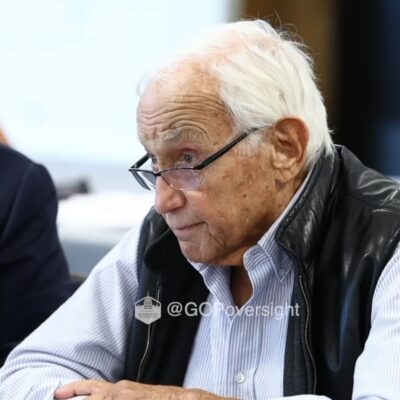
Since Jewish philanthropist and retail mogul Les Wexner’s congressional deposition last week regarding his relationship with disgraced financier Jeffrey Epstein, his eponymous foundation has started holding “only listening” Zoom calls with the past participants of its various fellowships, the president of the foundation, Rabbi Elka Abrahamson, told its alumni network yesterday, in a letter that was shared with eJewishPhilanthropy.
In the letter, which cited eJP’s reporting on the dearth of public debate about Wexner’s ties to Epstein, Abrahamson told the alumni that the organization was actively facilitating discussions about the issue, believing that the foundation needed to “place the responsibility for finding solutions onto the stakeholders — to empower a community.”
“We are refraining from issuing statements for now so we can listen more closely. While not public, we are engaging in a robust network-wide discussion, and we hope you will choose to be a part of it,” she wrote. “When our listening calls are completed, we will collect the information and, using outside advisors, consolidate key learnings and communicate back to you. We are sincere in this effort and want to include as many of you as possible in this process.” While the foundation shared its letter to alumni with eJP, it added that it would not be commenting further on the matter at this time.
While the connections between Wexner and Epstein have been known for decades, the release of millions of documents connected to Epstein — some of which mention Wexner, who employed him as a financial adviser — has renewed scrutiny of their relationship, including by some current and former Wexner fellows. Wexner has regularly denied knowledge of Epstein’s sex crimes, insisting that his relationship with him was purely professional and that he never participated in his financial adviser’s unsavory activities. Wexner did the same last week during his congressional deposition — a full five hours of which were released to the public, including a “hot mic” moment in which Wexner’s attorney forcefully told the nearly-nonagenarian client to keep his answers to less than five words.
For decades, the Wexner Foundation’s fellowships have been one of the most prominent and popular professional development programs available for Jewish nonprofit workers and lay leaders, as well as Israeli civil servants. In total, there are some 4,000 alumni of Wexner’s various fellowships. Several alumni have told eJP that they believe Wexner’s account and thus have no qualms with participating in his foundation’s programs. Others have expressed varying degrees of misgivings and concerns about the matter, believing that even if Wexner was unaware of Epstein’s activities, he nevertheless enabled them by employing Epstein. A smaller number are demanding a full, deep and no-holds-barred public reckoning on the matter, with an even smaller number cutting ties with the foundation and removing the fellowship from their resumés.
Abrahamson noted that the discussions so far are being opened to North American alumni, first from its professional programs and then its volunteer leaders. Its Israeli alumni — who are bracing for the possibility of another war with Iran — are, for now, otherwise occupied. “We will pursue further opportunities to hear from Israeli alumni once the understandable focus on grave and immediate security threats has passed. And we pray they remain safe and secure,” she said.
EXIT INTERVIEW
Outgoing B’nai B’rith CEO calls for caution in Israel critiques: ‘People look to Jews for cues’
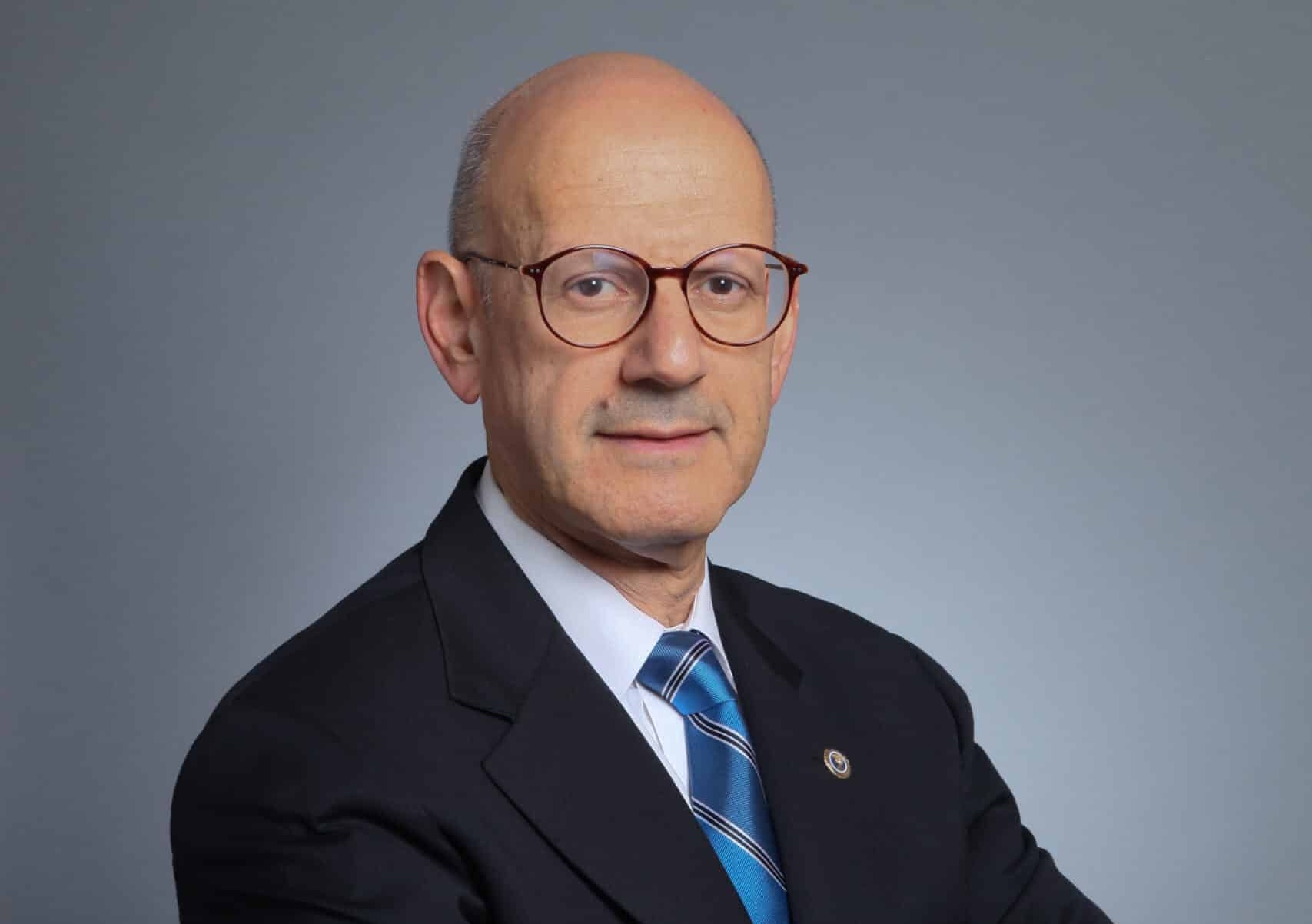
Founded on the Lower East Side of Manhattan by a dozen German Jewish immigrants in 1843, B’nai B’rith is the nation’s oldest Jewish aid organization, and Daniel Mariaschin has been a part of the organization for over one-fifth of its 18 decades, serving as CEO since 1999, but on June 30, he’s handing back the mantle, with no successor publicly announced. eJewishPhilanthropy’s Jay Deitcher spoke with Mariaschin about the importance of staying in the conversation across political lines, his plans post-retirement and why he feels American-Jewish organizations should never publicly criticize Israel’s government, even as many within the Jewish community debate the term Zionism.
JD: There’s been a lot of talk in Jewish spheres about whether not allowing more nuance into the conversation around Israel was a mistake, especially in the Jewish education world, where a lot of Jews who have come out and said that they felt that they were lied to about Israel. As this new generation pushes to be more critical of Israel, does the way you teach about Israel and talk about Israel as an organization need to shift along with the times?
DM: I don’t think the basics need to change. This is a lesson that I learned as a professional working in the community: What we say matters. How we say it matters. It matters to whom? It matters to the non-Jewish world, which is out there. I’ll just give you an example from early in my career… America had just gone through a big debate about the sale of advanced fighter aircraft to Saudi Arabia, and it was a very close vote in the Senate to approve the sale, and [Sen. Ernest Hollings (D-SC)] was asked the following question: “Senator, why did you choose to vote for the sale and not against it?” And [Hollings] said, “Because my good friend, [Jewish Sen. Abraham] Ribicoff, voted for it, and [so] I voted for it.”
The point is that many people do look to [Jews] for their cues about what to say and do about Israel, especially now. I’m not saying there shouldn’t be discussion, there shouldn’t be debate. We know that Israel itself is a is a fractious democracy that we love, but we’re here [in America], and we’re living in the Diaspora, and especially these days, on issues relating to arms sales, support for Israel, all the things that go into the relationship between the United States and Israel, we need to be careful about how we frame our views.



FOUR YEARS LATER
The only people entitled to ‘Ukraine fatigue’ are the Ukrainians

“A few weeks ago, I spent two days in Ukraine, visiting Kyiv in the heart of winter,” writes David Weisberg, executive director of World Jewish Relief USA, in an opinion piece for eJewishPhilanthropy. “Temperatures were well below zero. Electricity was rationed to just two or three hours a day after repeated attacks on power infrastructure left the electrical grid fragile. After nightfall, the city grew darker, not because life stopped, but because streetlights were turned off to conserve power and prevent total system failure. This darkness is not metaphorical. It shapes daily life. It affects how people move, how safe they feel and how long they remain outside. It deepens isolation and sharpens fear.”
Do not abandon them: “The war did not end when it slipped from the front page. Missiles did not stop falling because another emergency emerged, or because the world’s attention shifted, or because the story grew old. And yet Ukraine is increasingly spoken of as if prolonged suffering somehow diminishes with time, as though a crisis becomes less real once it is no longer new. This is what people mean when they speak of ‘Ukraine fatigue.’ They are not describing a change in the war. They are describing a change in themselves. … One day, this war will end. When it does, history will not be especially interested in who grew tired of paying attention. It will remember who remained engaged when attention no longer came easily, and who understood that solidarity is not measured by how loudly we speak at the beginning, but by how steadily we stay until the end.”
WAR-FORGED
What we built in Ukraine, and why it still matters

“Four years ago, I started sending messages. Russia had just launched its expanded invasion of Ukraine. Across multiple trusted networks, I knew people — in every bordering nation and well beyond — who knew people who could help,” writes strategy advisor Shawn Landes in an opinion piece for eJewishPhilanthropy. “Within days, those messages became a network. Within weeks, that network was moving people out of combat zones and supplies into them. It became something none of us planned: a grassroots humanitarian operation spanning 20 countries and linking nearly 400 volunteers who, in many cases, had never met face to face.”
Integration framework still needed: “This was not how most people understood crisis response. The conventional model assumes institutions lead and volunteers follow. What Ukraine revealed, as OLAM’s subsequent research confirmed, is that grassroots networks and large organizations are complements, not substitutes. … The real lesson is not that one model is better, but rather that no firm methodology exists connecting the grassroots networks that arrive first, the institutions that bring enduring capacity and the permanent local and regional agencies that administer over the long term. … Four years later, Jewish communal and broader humanitarian infrastructures still lack a deliberate framework for integrating them.”
STATUS QUO STANCE
Why I support the ‘Ezrat Yisrael’ egalitarian prayer space, separate from the Kotel

“I am not Reform or Conservative — I am an Orthodox rabbi, fully committed to halacha and Jewish tradition — yet I am deeply disturbed by proposed legislative actions in the Knesset to cancel the egalitarian prayer space separate from the Western Wall, or Kotel, in Jerusalem,” writes Rabbi Kenneth Brander, president and rosh yeshiva of Ohr Torah Stone, in an opinion piece for eJewishPhilanthropy.
From unity to exclusion: “Such antagonism toward other streams of Judaism, even when it presents itself as concern for Torah or the future of the Jewish People, does not strengthen Orthodoxy. It makes us look weak, and it undermines the unity of our people at a time when unity is needed more than ever. It risks jeopardizing Israel’s relationship with the Diaspora, where most Jews are not Orthodox. We cannot demand solidarity from world Jewry while denying them dignity in our holiest city, which is the birthplace of our common heritage. … Jews attacking other Jews in the name of God destroyed the Second Temple commonwealth. Over the past two years, we have sacrificed too much to let it happen again.”
Bonus: In a Jewish Telegraphic Agency opinion piece, Rabbis Jacob Blumenthal and Rick Jacobs, the heads of the Conservative and Reform movements, respectively, denounced the Knesset bill that would effectively ban egalitarian prayer at the Western Wall, which is slated to be put to an initial vote tomorrow, writing that doing so would serve as a declaration of war “against the Jewish people itself.”
Worthy Reads
Behind the Times: In The Conversation, Shelly Tygielski and Pamala Wiepking spotlight the fact that, despite the widespread use of crowdfunding platforms as a vehicle for charitable giving, the IRS often treats crowdfunded donations as taxable earned income. “We have analyzed Internal Revenue Service reporting rules, federal case law and community-based mutual aid practices to better understand how tax policies can affect people who get money directly from others, given to them as charity. … We’ve found that the tax code has not kept pace with the rapid growth of digitally mediated, peer-to-peer giving on a large scale. Crowdfunding platforms now facilitate billions of dollars in transfers each year, and peer-to-peer payment apps process hundreds of billions more in transactions. Unfortunately, reporting rules originally designed to detect business income are increasingly applied to individuals who receive crisis-related financial support.” [TheConversation]
Higher Standards: Brian Herman talks about heightening the screening of potential donors to academic institutions in an interview with The Chronicle of Philanthropy. “I expect that universities will enact more policies and procedures that guard against a situation like what we are seeing in the Epstein files. Universities may require more substantive checks on all donations independent of size and source. They are also likely to carry out more training of faculty, staff and administrators on how to secure individual donor support. … In some cases, researchers may have an idea that is not aligned strategically with how the university is raising philanthropic funds. They may go looking for their own money. This doesn’t happen a lot, but it does happen, and universities will have to become more vigilant about these types of situations.” [ChronicleofPhilanthropy]
Word on the Street
Michael Sacks, a prominent Jewish Chicago-area Democratic donor and philanthropist, lamented rising anti-Israel sentiment and antisemitism after a progressive Illinois congressional candidate, Union organizer Anthony Driver Jr., issued a public statement saying he would reject the donor’s contribution to his campaign due to his ties to AIPAC, Jewish Insider’s Marc Rod reports…
The Bank of Israel kept the country’s interest rates at 4% yesterday amid the looming threat of another war with Iran…
Bar-Ilan University is launching a new multidisciplinary research center focused on the “post-traumatic consequences of the Oct. 7 attacks and the Swords of Iron War”…
Two Israeli environmental groups, Green Course and Youth Climate Protest, have filed a petition with the High Court of Justice against the Israeli government, claiming that its climate policies fall short of the goals that it officially adopted as part of the so-called Paris Agreement…
A 500-year-old edition of Maimonides’ Guide for the Perplexed is going to be auctioned today at a starting price of $1 million by the Jerusalem-based Kedem Auction House…
Later this week, a 1938 letter signed by Revisionist Zionism founder Ze’ev Jabotinsky will go up for auction online; in the missive, Jabotinsky requests funding to help evacuate European Jews before the Holocaust…
British Prime Minister Keir Starmer made an unannounced trip to Poland with his Jewish wife, Victoria, and their two children to find the house where her grandparents lived before fleeing to England amid rising antisemitism before World War I…
Organizers of the Atlanta Jewish Film Festival issued an apology following an uproar over the inclusion of a film festival student judge with an extensive history of anti-Israel activity and of comparing the war against Hamas in Gaza to the Holocaust; the Israeli consulate in the Southeast, based in Atlanta, withdrew its support for the festival over the AJFF’s initial defense of the juror, who is the leader of the Morehouse Muslim Student Association…
An 18-year-old Jewish Australian wearing a kippah and wrapped in an Israeli flag told police that he was assaulted at a Scouts camp over the weekend by a young man who accused Israel of “murdering children”…
Transitions
Jeffrey Herbst, the past president of the American Jewish University, has been hired as the CEO of the antisemitism-focused Nagen Project, beginning next month, the organization exclusively told eJewishPhilanthropy; the nonprofit’s founder, Richard Gitlin, who has led the organization since its inception in 2019, will transition to chairman of the board of directors…
Hillel Newman has been named the next Israeli ambassador to Australia…
The American Jewish Joint Distribution Committee hired Evan Majzner, the chief growth officer at itrek, as the next executive director of its JDC Entwine humanitarian program…
Pic of the Day

Janet Huckabee (center), the wife of U.S. Ambassador to Israel Mike Huckabee, visits a make-your-own-teddy-bear studio last week at the Shalva National Center in Jerusalem, which provides therapy and support for people with disabilities.
Birthdays
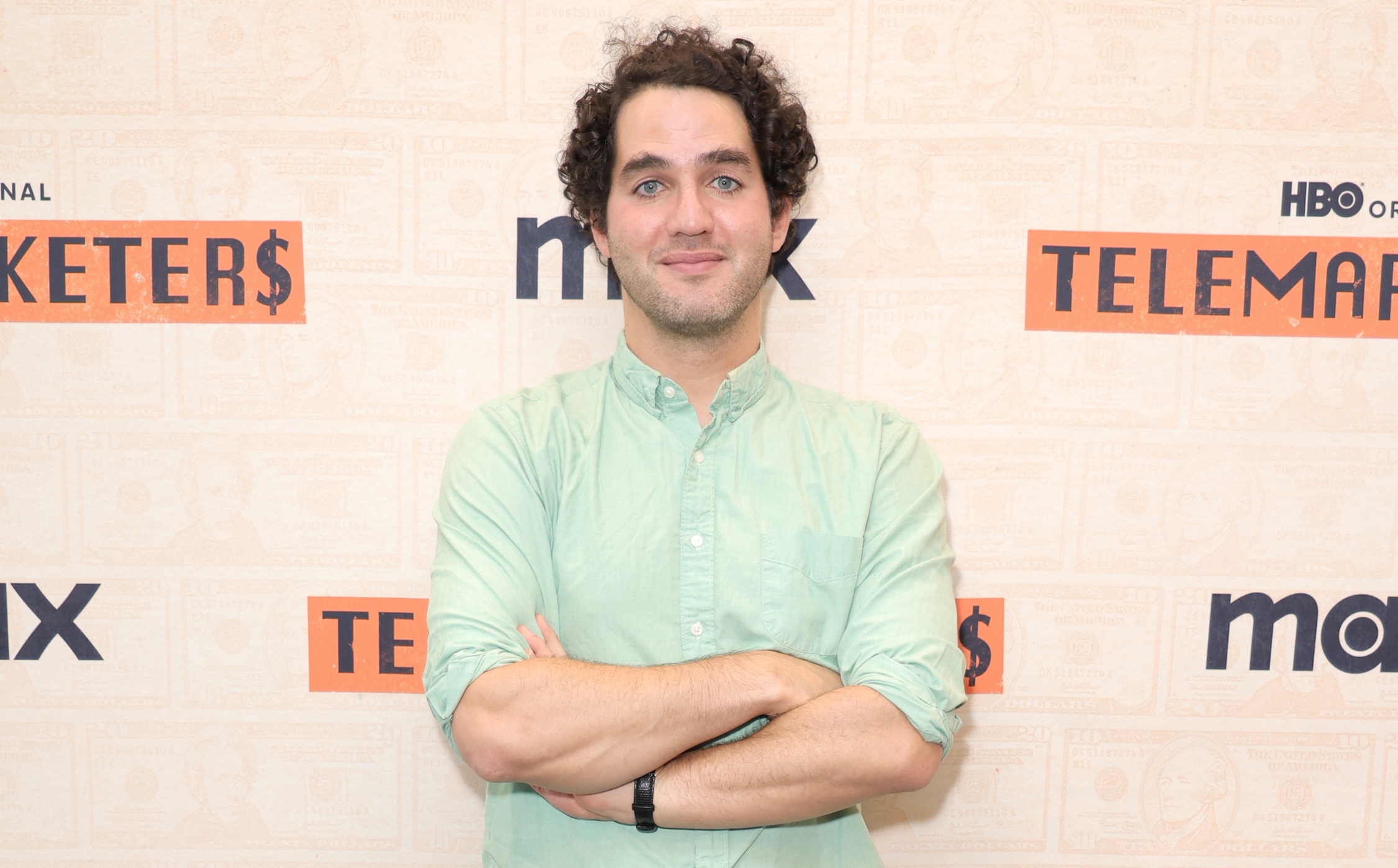
New York City-based independent filmmaker, who, together with his older brother Joshua, directed and wrote the 2019 film “Uncut Gems” starring Adam Sandler, Benjamin Safdie turns 40…
Chairman and CEO of Warner Bros until 2001, then chairman and CEO of Yahoo, Terence Steven “Terry” Semel turns 83… Moscow-born professor of mathematics at Yale University since 1991, Grigory Margulis turns 80… Encino, Calif., resident, Faye Gail Waldman… Rabbi and author of a book about chocolate and Judaism, she has held leadership positions in the national and regional Reform movement, Deborah R. Prinz turns 75… President of the Foundation for Defense of Democracies, Clifford D. May turns 75… Member of the New Jersey Senate (R-21) since 2022 following 18 years in the N.J. General Assembly, Jon M. Bramnick turns 73… Head basketball coach in a Puerto Rican league, he coached in the Israeli Premier League and has been on NBA and college basketball staffs in the U.S., Brad Greenberg turns 72… Film critic for Entertainment Weekly and then for Variety magazine, Owen Gleiberman turns 67… Founder of the Baltimore Center of Advanced Dentistry, Gary H. Bauman, DDS… Former member of the Knesset for the Likud party, Nurit Koren turns 66… Managing director at SKDKnickerbocker, Karen Olick… Former Israeli minister of health and leader of the Meretz party, Nitzan Horowitz turns 61… Professor of piano and artist-in-residence at the University of Alabama at Birmingham, Yakov Kasman turns 59… Author, survival expert, anthropologist and TV host, Josh Bernstein turns 55… Member of the Knesset for the Likud party, now serving as minister of science, technology and space, Gila Gamliel turns 52… Kyiv-born founder of WhatsApp in 2009, he sold the company to Facebook in 2014 for $19 billion, Jan Koum turns 50… Professor of history at the Hebrew University, his books have been translated into 65 languages and have sold over 45 million copies, Yuval Noah Harari turns 50… Partner at MizMaa Ventures Limited, Aaron Applbaum… Israeli actress and model, she has appeared in advertising campaigns for Urban Outfitters, Samsung and Sephora, Dar Zuzovsky turns 35… YouTube beauty guru known as RCLBeauty101 with 14.3 million subscribers, Rachel Claire Levin turns 31… Mitchell Brown…