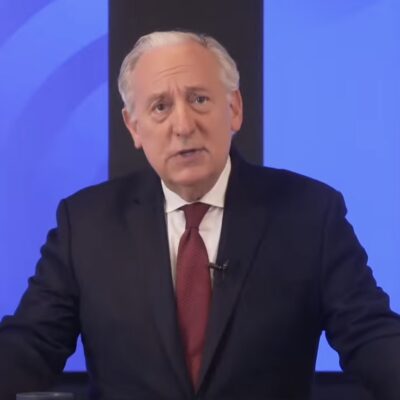
Your Daily Phil: AJC’s Ted Deutch calls for communal unity in wake of Bondi Beach attack




 Add EJP on Google
Good Monday morning and Hanukkah sameach!
In today’s edition of Your Daily Phil, we examine a new census of Jewish summer camps by the Foundation for Jewish Camp and interview American Jewish Committee CEO Ted Deutch about the steps he believes Jewish communal groups must take in the wake of the Bondi Beach terror attack. We feature an opinion piece by Doron Kenter on what’s missing from discussions about the Jewish talent pipeline, and one by Mijal Bitton about navigating the need for Jewish unity and clear red lines; plus, Rabbi Jay Stein on the role of sincere listening and spiritual reflection in developing deeper interfaith partnerships. Also in this issue: Adam S. Ferziger, David Mamet and Rabbi Levi Shemtov.
What We’re Watching
Tel Aviv’s Institute for National Security Studies, in collaboration with the Ruderman Family Foundation, is hosting a conference today examining the Israel-U.S. relationship, including the connection between Israel and American Jewry.
What You Should Know
A QUICK WORD WITH EJP’S JAY DEITCHER
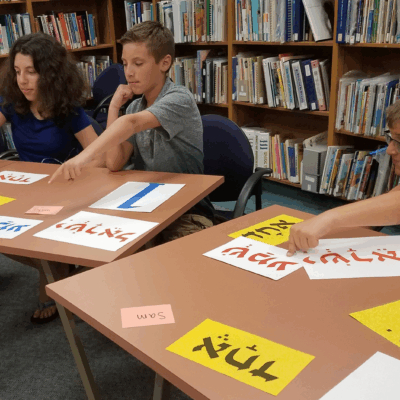
With the cost of living rising ever higher in America, so too is the price of summer camp. Despite this, a record number of children attended camp this year, according to a new census released by the Foundation for Jewish Camp. The study found that this was, in part, made possible by $47.2 million in financial aid, allowing tens of thousands of children to attend camp who otherwise would not have been able to.
“At a time of upheaval, when there’s a lot of unknown and a lot of fear, camps are building a better world, one community and one person at a time,” Jamie Simon, CEO of Foundation for Jewish Camp, told eJewishPhilanthropy. “Camp is promoting Jewish identity, Jewish leadership and Jewish community, and that is really what people are craving. It is a safe place to be prideful and joyful about your Jewish identity.”
The report, titled “2025 State of the Field Census Part I: The Business of Operating Jewish Camp,” shows that attendance at FJC’s network of 168 day camps and 161 overnight camps increased 5% since last year to nearly 200,000 children and staff, setting a new all-time record, 9% over the 2019 pre-pandemic rate. The census, which was released last Thursday, focused on the business aspects of Jewish camping, with the second part of the report due to be released in February, exploring demographics, enrollment patterns, camp capacity, seasonal staff compensation and the impact of camp on campers and staff.
Rising costs remain the top concern for both overnight and day camps, with this year’s expenses increasing 5% over last year’s. Everything has ratcheted in price, including staffing, security and food. “Things are expensive, and so running a camp is no exception,” Simon said, adding that camps “worked tirelessly to keep tuition relatively stable, even as the broader economy drives up operating costs.”
Partially because of these rising costs, families requested more than $58 million in financial aid, with camps distributing $47.2 million — $33.5 million for overnight camps and $13.7 million for day camps — a more than $7 million increase from the year before. The financial aid was provided by the camps themselves, local federations, philanthropic partners and FJC. Without the assistance, 37% of families said they could not have afforded camp, according to the census.
With a growing number of campers, camps need to increase their capacity — adding beds, staff housing and other infrastructure. Many of these projects were supported by the Gottesman Fund, which awarded $15 million last December to FJC — the largest grant it has ever received — to help the more than 300 Jewish summer camps expand their capacity and modernize their facilities. “Ensuring that these infrastructures are updated so they can exist for another 50, 100 years is really critical,” Simon said. “One camp told me that because of the Gottesman grant, [camps] are going to be able to serve 100 more kids this summer, and so in 10 years, that’s over 1,000 kids.”
Even with the increased costs of running camp and with investments in improving facilities, camp revenue increased 6% over last year. One way camps are generating revenue is through off-season programming, with 65% of overnight camps and 62% of day camps offering programming across the calendar and nearly half of overnight camps and over half of day camps hoping to expand their year-round programming. “When one kid goes to Jewish camp, they are going to live a Jewish life. When hundreds of thousands of young people are going to Jewish camp, they’re building the Jewish future, and our Jewish future is bright.”
DIFFERENCES ASIDE
AJC CEO calls for Jewish organizations to unify over communal security
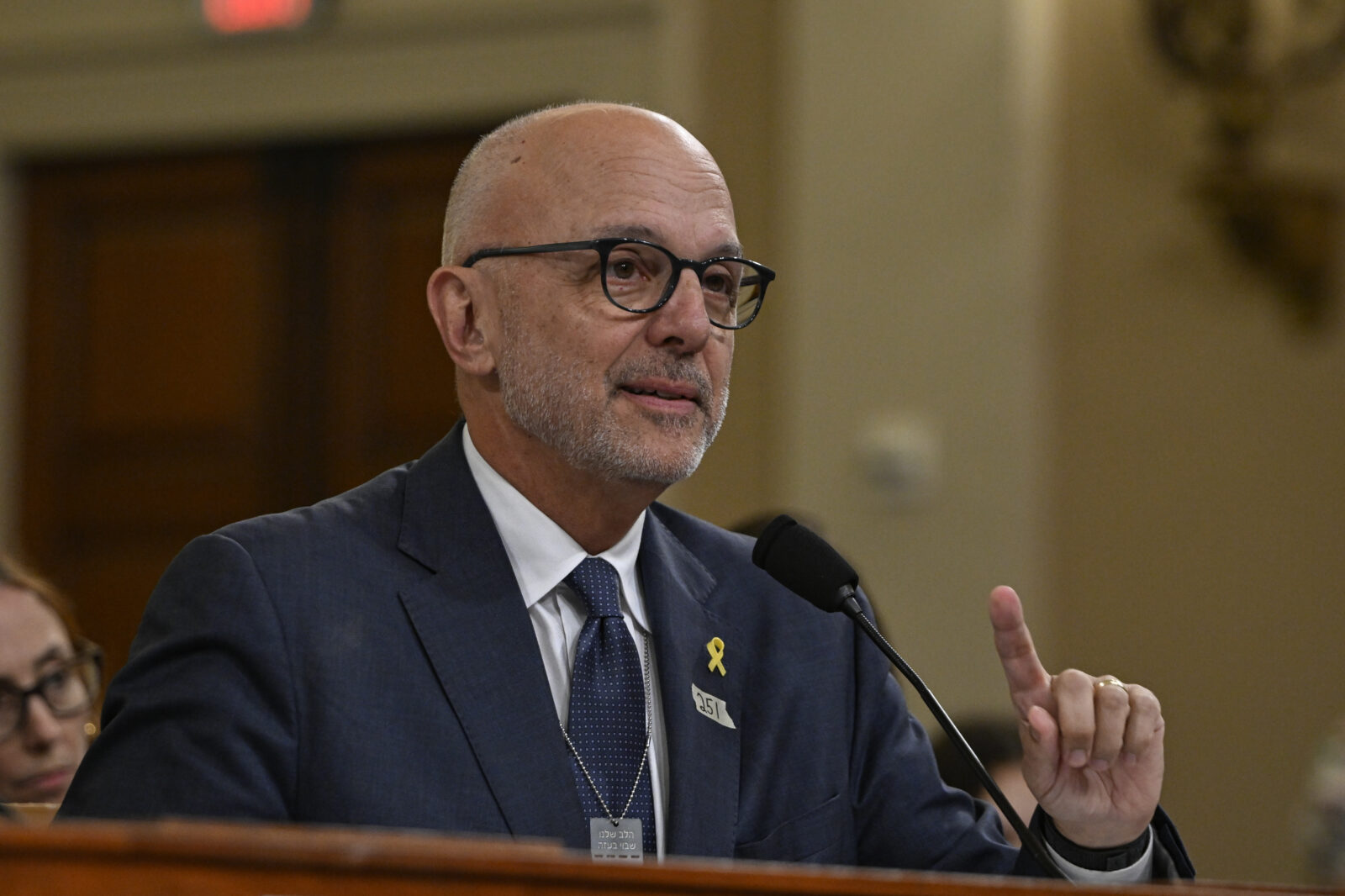
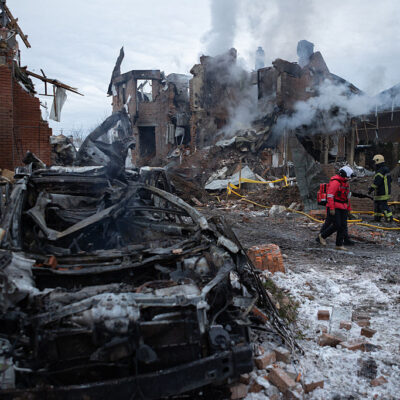
Following the shooting at a Sydney, Australia, Hanukkah event in which 15 people were killed, American Jewish Committee CEO Ted Deutch said that it’s critical for Jewish communal organizations to join together around a campaign to protect the Jewish community worldwide and win over allies in that fight, reports Marc Rod for eJewishPhilanthropy’s sister publication Jewish Insider.
Come together, right now: “The community organizations need to come together around an immediate effort to respond to Bondi Beach. This is urgent for us,” Deutch said. Even if various groups have different approaches to their work, “we’ve got to show the Jewish world” and the philanthropists who back them “that we can actually work together, all of us, in ways that will protect the Jewish community in response to what happened at Bondi Beach.” And he said that the Jewish community needs to stand its ground and be clear that it has the right and expectation to have its concerns and security “treated as seriously as other communities” and the “expectation that when we’re at risk, there will be action, rather than asking that everyone please consider our plight.”
Read the full interview here and sign up for Jewish Insider’s Daily Kickoff here.



MEETING COMMUNAL NEEDS
Don’t overlook the denominator in the Jewish talent pipeline crisis

If the conversation around the Jewish talent pipeline focuses solely on the number of professionals entering and staying in their roles without incorporating the human capital needs of the Jewish community, “we are leaving out half of the equation,” writes Doron Kenter, director of North American grantmaking at Maimonides Fund, in an opinion piece for eJewishPhilanthropy.
Let me be clear: “This is not a call for layoffs. Rather, it is an invitation to step back and to rethink how we structure our communal work so that talent is more highly valued, deployed to its highest and best use and goes further in meeting the aggregate and particular needs of the Jewish community. There are any number of ways of approaching this question. As an initial matter, though, I want to offer five possible paths to cultivate these efficiencies and to better meet our communal needs. … The future of Jewish communal life depends not only on how many professionals we recruit, but on how wisely we deploy them.”
STRIKING A BALANCE
Why I refuse to choose between Jewish Peoplehood and Jewish red lines this Hanukkah

“I am a Zionist who has spent years arguing for Jewish Peoplehood — insisting that Jews remain one people even when we disagree. I have also argued for boundaries: that not every position is compatible with Judaism or with the survival of the Jewish collective. Increasingly, those boundaries are about anti-Zionism,” writes Mijal Bitton, spiritual leader of the Downtown Minyan in New York City, in an opinion piece for eJewishPhilanthropy. “People sometimes treat this position as incoherent: How can you argue for Jewish unity while insisting on red lines? I don’t think this is a personal contradiction. I think it names a structural problem in Jewish life right now.”
Mixed messages: “Our arguments about Israel and Zionism are so combustible not because we lack moral commitments, but because we have inherited Jewish stories that make competing demands on us — some warning that internal division is fatal, others insisting that survival sometimes requires drawing hard boundaries. We are living inside that collision now, celebrating Hanukkah while reading Genesis. Each offers a different, and often contradictory, account of Jewish peoplehood, illustrating when unity is paramount and when boundaries are necessary.”
SACRED NARRATIVES
Listening, witnessing and sharing the light: An approach to interfaith partnership

“Three years ago, I agreed — reluctantly — to join a local interfaith clergy trip to Israel,” writes Rabbi Jay Stein of Greenburgh Hebrew Center in Dobbs Ferry, N.Y., in an opinion piece for eJewishPhilanthropy. “It was not, in any sense, good timing; yet the experience ended up reshaping my rabbinate and igniting a wave of interfaith work that continues to this day.”
Turning point: “Since that journey, our group’s partnership has expanded far beyond what any of us could have imagined. Together, we’ve created interfaith learning at the JCC. We have organized pulpit swaps, with pastors preaching in my synagogue and me speaking from their pulpits, and we have launched classes taught by us as a team at Mercy University. We have stood together at vigils for Ukraine since the Russian invasion and for Israel after the Oct. 7 attacks, and we have issued joint letters to elected officials on shared communal concerns. What began as a trip became a network — and eventually, a community. But the turning point came not during a tour or lecture, but at a hotel bar, late one night during the Israel trip, when I asked the group the question I once asked Father John Ashman, a friend from back home: Can you tell me your calling story?”
Worthy Reads
Particularism Rising: In The Times of Israel, Adam S. Ferziger observes a shift at the most recent annual conference of the Association for Jewish Studies, held in Washington, D.C. “Across three days and 11 time slots, new and urgent themes dominated. … These sessions were often heated, and opinions varied widely. But the underlying current was clear: many Jewish Studies professionals who came of age in an academic environment where Jews were fully accepted are now in a state of high tension. They are reevaluating the universalist assumptions that once defined their careers. … Particular Jewish identity is moving back to the center of the organization in a way that can still coexist with the benefits of universal scholarship. After decades of trying to be ‘just another academic field,’ Jewish Studies is reasserting its role as a vital, living conversation about a particular people.” [TOI]
‘Moral Paralysis’: In The Sydney Morning Herald, Chip Le Grand examines the growing rift between Australia’s Jewish community and the country’s Labor Party. “Labor has a Jewish problem. If this wasn’t clear before Bondi, it is now. It runs much wider than the prime minister’s office and deeper than the normal partisan divide which cleaves nearly every issue in Australian public life. Executive Council of Australian Jewry co-chief executive Peter Wertheim, asked to characterise the problem, is succinct: ‘It’s a moral paralysis.’ This is criticism from a friend. Sydney-based Wertheim, the son of an Auschwitz survivor, has an enduring relationship with [Prime Minister Anthony] Albanese. … [Philip Mendes, the director of the Social Inclusion and Social Policy Research Unit at Monash University] says Albanese and Foreign Minister Penny Wong, by contrast, appear to lack empathy for the Jewish community. ‘There is a perception they are just trying to manage an issue, that they don’t see the Jewish community as part of their network and constituency,’ he says.” [MorningHerald]
Why Wait: In The Chronicle of Philanthropy, M.J. Prest shares ways to leverage legacy-giving programs to increase giving in the present. “A bequest signals the depth of a donor’s trust in the way a charity carries out its mission … That means legacy donors make excellent prospects for major or unrestricted gifts in the present. Research from Russell James, professor of charitable financial planning at Texas Tech University, found that average annual gifts rose from $4,210 to $7,381 after donors pledged an estate gift — a 75% increase. … In her role as senior director of development at the ALS Association, ‘I point out the fact that, you know, we’re so grateful for what they’ve done [for] the future and I know they’re really committed to what’s happening right now,’ says [Meg] Roberts. ‘Would they like to see this start now so that they can really see what it does?’” [ChronicleofPhilanthropy]
Jewish Jokes: In The Wall Street Journal, David Mamet ruminates on Jewish humor and rising antisemitism. “French humor is set in the bedroom, German humor in the bathroom, and actual Jewish humor in the mind, both that of our oppressors — clueless — and our own — inverted, overanalytic and terminally self-referential. A terrorist gets on a plane and demands to know: ‘Who’s a Jew?’ A little old man in the back says, ‘That’s an interesting question.’ … For Jews, the stultifying fact to be faced is that antisemitism has nothing to do with Jews. … It is equivalent to child sacrifice: the offering to pagan gods of the lives of the unprotected. It emerges, historically, when a sufficient mass of the populace has become terrified into unreason and ceded control into the hands of the evil but assured. Pagan societies fearing the wrath of unknowable gods fed them innocent lives. The fearful of our age, unsettled by unassimilable change, seek security in mass thought and relief in violence. That’s all. How can we know that one thing is truer than another? If it is sadder. I conclude not with a joke but with a proverb at the essence of most Jewish jokes: What is as whole as a Jew with a broken heart?” [WSJ]
Word on the Street
Republicans in the Senate Appropriations Committee proposed a modest increase in funding for the Nonprofit Security Grant Program to $330 million, in a long-delayed Homeland Security funding bill released on Friday, Jewish Insider’s Marc Rod reports…
A Wider Bridge, which advocates for Israel in LGBTQ spaces, announced that it will shut down operations at the end of this month…
J. The Jewish News of Northern California examines poverty in the local Jewish community…
Mark Zuckerberg and Priscilla Chan’s philanthropic foundation, the Chan Zuckerberg Initiative, has cut ties with FWD[dot]us, the immigration and criminal justice advocacy group that Zuckerberg helped launch in 2013…
Bloomberg profiles Marc Rowan and his efforts to turn Apollo Global Management into something similar to, but not quite, a bank…
The Canadian Jewish News reports on local Jewish day schools’ calls for increased state security funding in the wake of the Sydney, Australia, terror attack…
The Mount Nebo Memorial Park and Cemetery in Aurora, Colo., which was opened in 1898 by the local Jewish community, was designated a national historic site earlier this month…
Jewish Insider spotlights Rabbi Levi Shemtov, the executive vice president of American Friends of Lubavitch (Chabad), who serves as Washington’s unofficial menorah-lighter-in-chief…
Rep. Elise Stefanik (R-NY) announced on Friday that she was ending her campaign for governor of New York, an abrupt and unexpected move that comes just over a month after the Republican congresswoman launched her bid to unseat Gov. Kathy Hochul, Jewish Insider’s Emily Jacobs reports…
Stock trader and art dealer Robert Mnuchin, the father of former Treasury Secretary Steve Mnuchin, died last Friday at 92…
Rabbi Emily Korzenik, who in 1985 — as one of the first female ordained rabbis — presided over the first bar mitzvah in Krakow, Poland, since the Holocaust, died on Dec. 15 at 96…
Major Gifts
The Pritzker Traubert Foundation is awarding its $10 million Chicago Prize to the Reclaiming Chicago initiative, which is aimed at making home ownership more affordable in the city…
Newly confirmed NASA Administrator Jared Isaacman announced that he will be donating his annual $221,900 salary to U.S. Space & Rocket Center’s Space Camp…
Pic of the Day
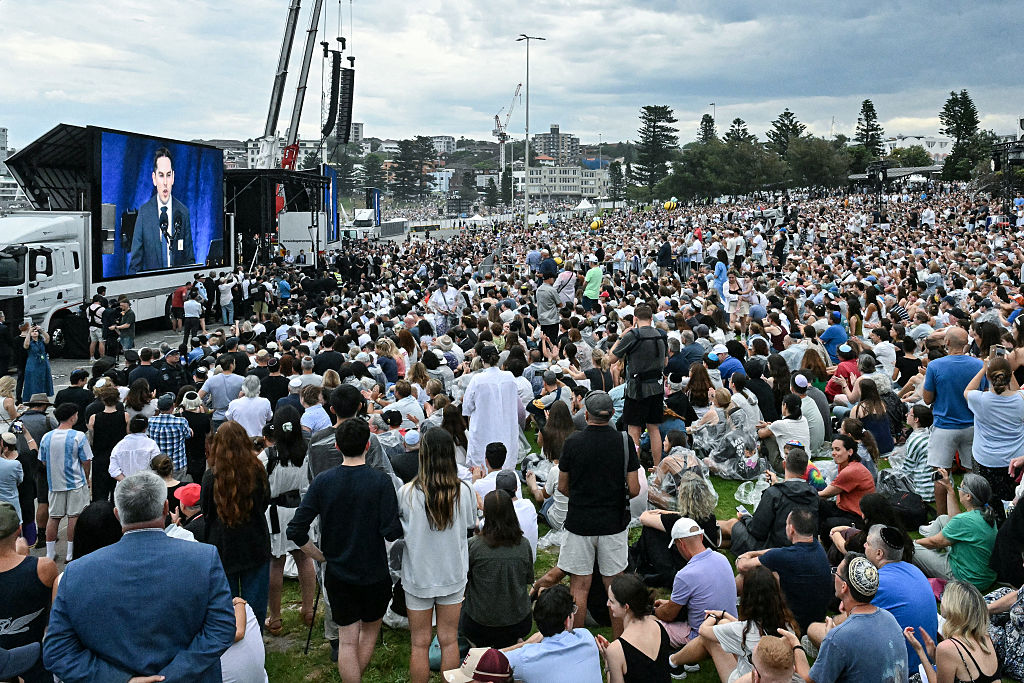
Thousands of people attend a memorial and Hanukkah candle-lighting event last night at Bondi Beach in Sydney, Australia, a week after terrorists killed 15 people and injured scores more in an antisemitic shooting attack.
Birthdays
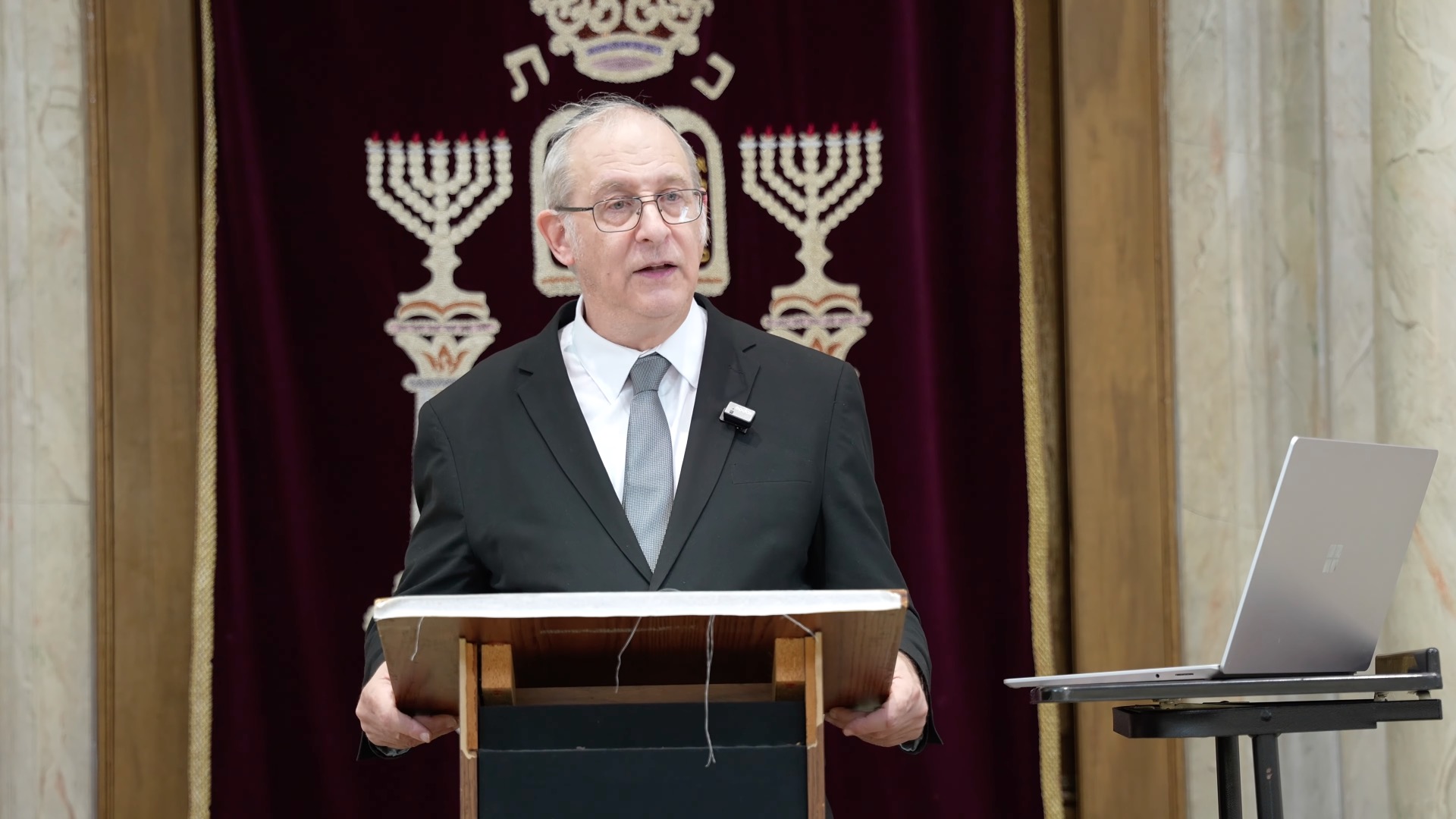
Rosh yeshiva at the Rabbi Isaac Elchanan Theological Seminary of Yeshiva University, Rabbi Michael Rosensweig turns 69…
Retired New York Supreme Court judge, Arthur J. Cooperman turns 92… Former president of the World Bank, U.S. ambassador to Indonesia, U.S. deputy secretary of defense and dean of Johns Hopkins University’s Nitze School of Advanced International Studies, Paul Wolfowitz turns 82… New York City-based political consultant, ordained as a Rabbi by Chabad in 2011, his early career included stints as a policeman, taxi driver and bounty hunter, Henry “Hank” Sheinkopf turns 76… Retired assistant principal from the Philadelphia school district, Elissa Siegel… Associate at Mersky, Jaffe & Associates, he was previously executive director of Big Tent Judaism and vice president of the Wexner Heritage Foundation, Rabbi Kerry Olitzky turns 71… Cardiologist and professor of medical engineering at MIT, Elazer R. Edelman turns 69… Retired Israeli brigadier general who previously served as the national CEO of the Friends of the IDF, Yehiel Gozal turns 68… Senior managing director in the D.C. office of Newmark, where she is responsible for investment sales and commercial leasing transactions, Lisa Benjamin… Former CFO of Enron Corporation, Andrew Fastow turns 64… Rabbi at Temple Sinai of Palm Desert, Calif., David Novak turns 63… Filmmaker, novelist, video game writer and comic book writer, David Samuel Goyer turns 60… NPR correspondent covering the State Department and Washington’s diplomatic corps, Michele Kelemen turns 58… Film and television actress, Dina Meyer turns 57… CEO of Next Titan Capital until four months ago, Michael Huttner… CEO of American Council of Young Political Leaders, Libby Rosenbaum… Columnist and best-selling author, James Kirchick turns 42… Writer and editor from New York City, Sofia Ergas Groopman… Business development representative at HiBob, Carly Korman Schlakman… Head of philanthropy and impact investment for EJF Philanthropies, Simone Friedman… Liberty Consultants’ Lisa Brazie…