ENTRANCE INTERVIEW
‘You find your people at camp’: New FJC Chair Jeffrey M. Solomon dreams of doubling enrollment
The vice chair of TD Bank U.S. steps into the role of Foundation for Jewish Camp chair after 10 years on the board, succeeding Jim Heeger
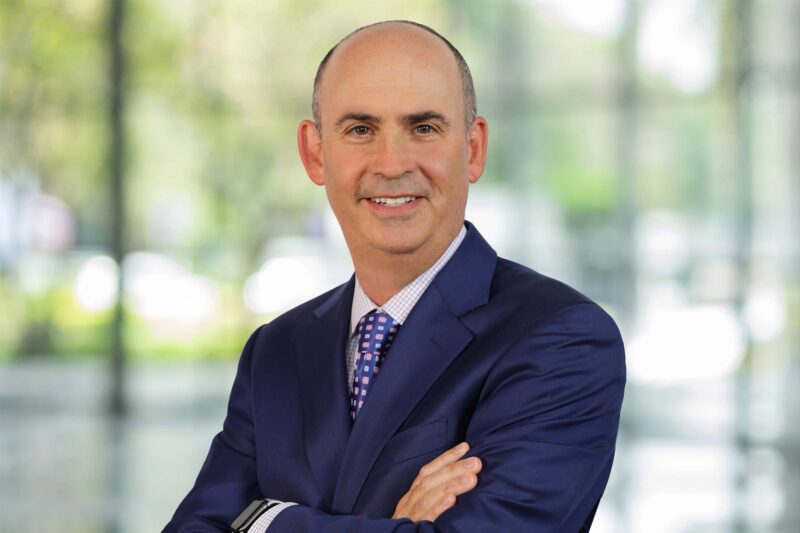
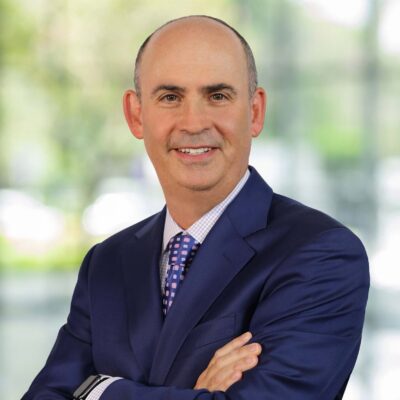
Courtesy/TD Bank
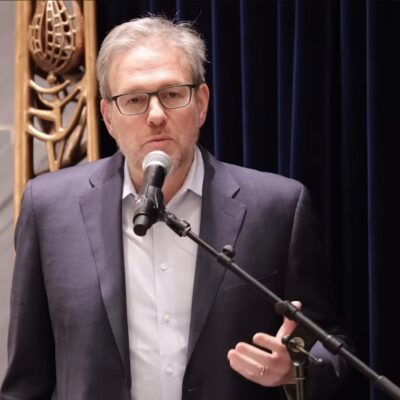
Jeffrey M. Solomon




 Add EJP on Google
There is a direct connection between Jeffrey M. Solomon, who recently became board chair of Foundation for Jewish Camp, and Central Perk, the iconic coffee shop from the TV show “Friends.” And that link was forged at Jewish summer camp.
The scene opens in Morgantown, W.Va., in the summer of 1976, when a 10-year-old Solomon basked in the magic emanating from the scenery in the Emma Kaufmann overnight camp’s production of “Alice in Wonderland.” The set was created by Burton Morris, a fellow camper who would soon become one of Solomon’s camp friends.
Like many camp friendships, Solomon and Morris’ relationship bloomed beyond the perimeters of the campgrounds: the pals went from competing in color wars to watching each other launch careers — in Morris’ case as a pop artist and in Soloman’s in finance, as the former chair and CEO of the investment bank Cowen and today as special advisor and vice chair of TD Bank U.S.. They stayed in touch as they each got married — for Solomon, to his bashert, whom he also met at camp.
At some point, actor David Schwimmer, who portrayed Ross Geller in “Friends,” also fell in love with Morris’ artwork, leading to his paintings being displayed throughout Central Perk. Morris also drew the fake cafe’ iconic logo, featuring a cup of coffee with a spiral of steam coming out the top. Morris’ Lady Liberty and King Kong pieces were featured in over 100 episodes, forever connecting the long-running sitcom to one of Solomon’s earliest camp memories and favorite friends.
The connection between Solomon, camp and Judaism is forever, too. After attending Emma Kaufmann, he became a counselor and program director, later serving leadership positions in the UJA-Federation of New York, Tree of Life Inc. and Lost Tribe, the Jewish teen social media platform. In 2016, he joined the board of the Foundation for Jewish Camp and became board chair in January, a term that runs through 2029.
At a time when the Jewish world yearns for “Jewish joy,” this is “the moment” to turn to camp, Solomon (not to be confused with Andrea and Charles Bronfman Philanthropies’ Jeffrey R. Solomon) told eJewishPhilanthropy.
“You find your people at camp,” he said, sitting in front of a painting of a coffee cup by his camp friend Morris that hangs in his home office in Boca Raton, Fla.
Last summer, the Foundation of Jewish Camp set a record high of nearly 200,000 children and staff in attendance at its 168 affiliated day camps and 161 overnight camps, surpassing pre-pandemic levels. Solomon spoke with eJP about how camping has changed since the 1970s, cultivating Jewish community when everyone disagrees and pondering a world where the pandemic destroyed camp.
The interview has been edited for length and clarity.
Jay Deitcher: How has camp changed since you went as a child?
Jeffrey M. Solomon: First of all, the world is a lot more connected than it used to be, and so where do you go to find refuge from that connectivity? How do you build human interaction in an intense environment when most human interaction happens digitally? Camp is one of those things we need as individuals to really establish the foundation for human interaction.
There are a lot of great values that get espoused at Jewish camp, like tikkun olam and empathy, foundational Jewish human values, and camp allows young people to experience that outside of the digital experiences they’re having.
There are just many more challenges associated with adjusting in the world as a youngster than there were when I was a teenager. There [are] many more mental health issues that camps are having to deal with because of the way the world has evolved. It just wasn’t a thing that we ever talked about [when I went to camp]. But now we do, and we have programs at Foundation for Jewish Camp that allow for camp professionals and the seasonal staff we hire to recognize and manage and help with mental health issues.
JD: There were people for whom camp just didn’t click with in the past, possibly for reasons based around mental health. I wonder if some of the growth that we’ve seen in recent years has to do with the greater awareness of mental health.
SM: We talk about things now in our world, like inclusion, that we didn’t talk about. We always wanted camp to be a place where everybody could be their authentic selves, but we didn’t have the words for that when I was in camp 50 years ago.
What we’re doing to camp is reacting to the reality that we share things in common, but we’re all different individuals, and how do we intentionally blend our individuality into a collective so that we have a shared experience, but we maintain our individual identities?
You’re different than your bunk mates, but you all have to learn how to live together, and you’re going to do it 24 hours a day, seven days a week, for extended periods of time. And it’s fun. It’s not that there aren’t disagreements in cabins and there aren’t challenges, but camp is where you learn how to work that out.
When I started camp, I was a very homesick camper. I cried, and then when I got adjusted and figured out how to have fun, I forgot about the fact that I missed home. I’m still not good with transitions, but I inherently know that after a couple of days, I’m gonna be fine. [Without camp,] I would never have had the courage to leave Pittsburgh, where I grew up, and move to New York and make a life.
JD: What are you excited about as you start your term?
SM: When I first joined the board 10 years ago, we were still finding our way. We did a lot around affordability. We had a big program called “One Happy Camper,” which we still have, that provides scholarship money so that every Jewish child who wants to go to camp can go to camp. But over the last 10 years, with great leadership from our previous chairs and our previous CEO, we’ve moved beyond that.
After the post-Oct. 7 “Surge” of Jewish identity and revival, families are looking for ways to ensure that their children are having positive Jewish experiences, that there are safe spaces for them to be authentically Jewish without recrimination or without people questioning it. What I’m most excited about is extending that and making it available to more children. Every summer, we have about 200,000 campers and staff members between day camps and overnight camps. What would need to be true for that to be 400,000 or 500,000?
We’ve got this brand-new five-year plan that we spent a year working on. How can we help camps to run more efficiently, so that they can be more affordable? How do we build capacity? If we had 200,000 people show up tomorrow and say they want to be at camp, we don’t have places for them, so how do we think about capacity building that enables every Jewish child who wants to go to Jewish camp [to] be able to go to Jewish camp?
JD: Say you do end up with 400,000 people wanting to attend camp next year. How do you logistically manage that without getting overwhelmed?
SM: There were some very specific conversations that we’re having with funders about programs that we can be doing to build capacity and help make camp more affordable. If you think about the philanthropic dollars that go specifically towards camping, it’s still small relative to a lot of other initiatives that we have.
Foundation for Jewish Camp is filled with data sets that allow funders to see how their dollars are going to work towards outcomes. [FJC was founded in 1998, and] that’s something that you can only have when you’re 25 years old. Here’s an example. Ninety-seven percent of parents said that their camp fostered a sense of safety and belonging as a Jewish individual last summer. Ninety-eight percent of parents reported that their camp did a great job of creating an inclusive and protective space, free from antisemitism. I’ve been around data sets for a long time, when we think about how we attract philanthropic dollars, I just don’t think there are very many things where you can say with absolute certainty, if you invest here, these are your outcomes.
JD: Post-Oct. 7, there was a feeling that Jews needed to be united, but then, as we moved away from Oct. 7 and the war in Gaza raged on, I think there’s been some division within our community. Zionism began being defined differently by different people, so did antisemitism. While you’re trying to create this Jewish identity at camp, how do you open yourself to people who might define these terms differently and see being Jewish in different ways?
SM: I’ll share with you something I shared in my first board meeting with our board members. I did a dvar Torah, [about] parshat Shemot. In parshat Shemot, Moses tells God [five] times that he doesn’t want to be the leader of the Israelites, and some of [the reasons] were personal, because he didn’t speak well, he didn’t think he was qualified to be a leader. But some of them were like, these people, they argue and don’t get along with each other.
This is the narrative of our people in our oldest scripture, so here we are, the same people that we were. Our job as Jews is to foster a sense of inclusion and belonging, regardless of how you feel on the issues that face us in this moment. We need institutions that have an open-tent policy. It doesn’t mean we all have to agree, but we do believe, at the end of the day, that we have a right to exist as Jews and practice our religion as we want. Camp is a place where that happens.
By the way, if you don’t like what happens at [one] Jewish camp, find another Jewish camp. There are hundreds of them. We’re not telling the camps how they should be Jewish. We do have some things around whether you recognize Israel’s right to exist. That is not something we’re going to debate. But other than that, how she exists, what she does, we can argue about it as long as you want. But while we’re having these immersive experiences Jewishly, we’re also having fun, enjoying each other, learning how to function as a people.
JD: No longer are camps simply confined to summer camp. Camps are coming up with new ways to get revenue. They have parents’ weekends where parents go and take advantage of the campsites. How far can a camp stretch?
SM: If you could have camp in your life 365 days a year, who wouldn’t vote for that? When we get down to the business of Jewish camp, if you can generate business revenue in the off-season, then it makes your camp more sustainable and probably more affordable. The more revenue you can generate away from the eight weeks in the summer where you’re doing your primary job, the more you can offer scholarship dollars, the more you can defray your fixed costs associated with things, so it is important as part of the business of camp to be trying to think of other ways to generate revenue that isn’t camping revenue.
How far can it go? I don’t know. A big function that we perform at Foundation for Jewish Camp is [sharing ideas] that’s [working at one camp with other camps]. A couple of decades ago, people weren’t thinking about winterizing camps. Not every camp will do that, but a bunch of them could do that because it will enhance their sustainability. People go to cold places all the time for retreats that aren’t camp. Well, how could we be thinking about that?
JD: Anything else you want to add?
SM: It’s a team sport. My ascension to this role only happened because of the great leadership of people like [past chair] Julie Platt and [immediate past chair] Jim Heeger. These are legendary Jewish leaders, and I feel a sense of meaningful responsibility to ensure that I am carrying forward their legacy.
[Without FJC founders] Rob and Elisa Bildner, there wouldn’t be a Foundation for Jewish Camp. They had the vision 25 years ago that this was an unmet need. What if they hadn’t done that? I said this to them the other day, ‘If you hadn’t done that in the year 2000, when 2020 came around, and there was a pandemic, there wouldn’t be camp.’ I keep coming back to that, what does a world look like where there’s no Jewish camp? I don’t know what we would have done.
Related News
CLOSING WORDS
In AZM address, Cosgrove links communal ‘orthodoxy’ on Israel to rising anti-Zionism among young Jews

MAGICAL EXPERIENCE
Shefa launches psychedelics retreat for Jewish professionals suffering burnout
HIGHER EDUCATION
As Jewish donors reconsider academia, Jan Koum doubles down, endowing Israel studies at Stanford
ADVANCING A VISION
N.Y. federation donates $1M toward building shared-society center named for peace activist killed on 10/7
PRESIDENTIAL REBUKE
Israel’s Herzog: Mamdani ‘makes no effort’ to hide disdain for Israel, Jews must fight back