WHAT YOU SHOULD KNOW
What sets this year’s Yom HaZikaron apart
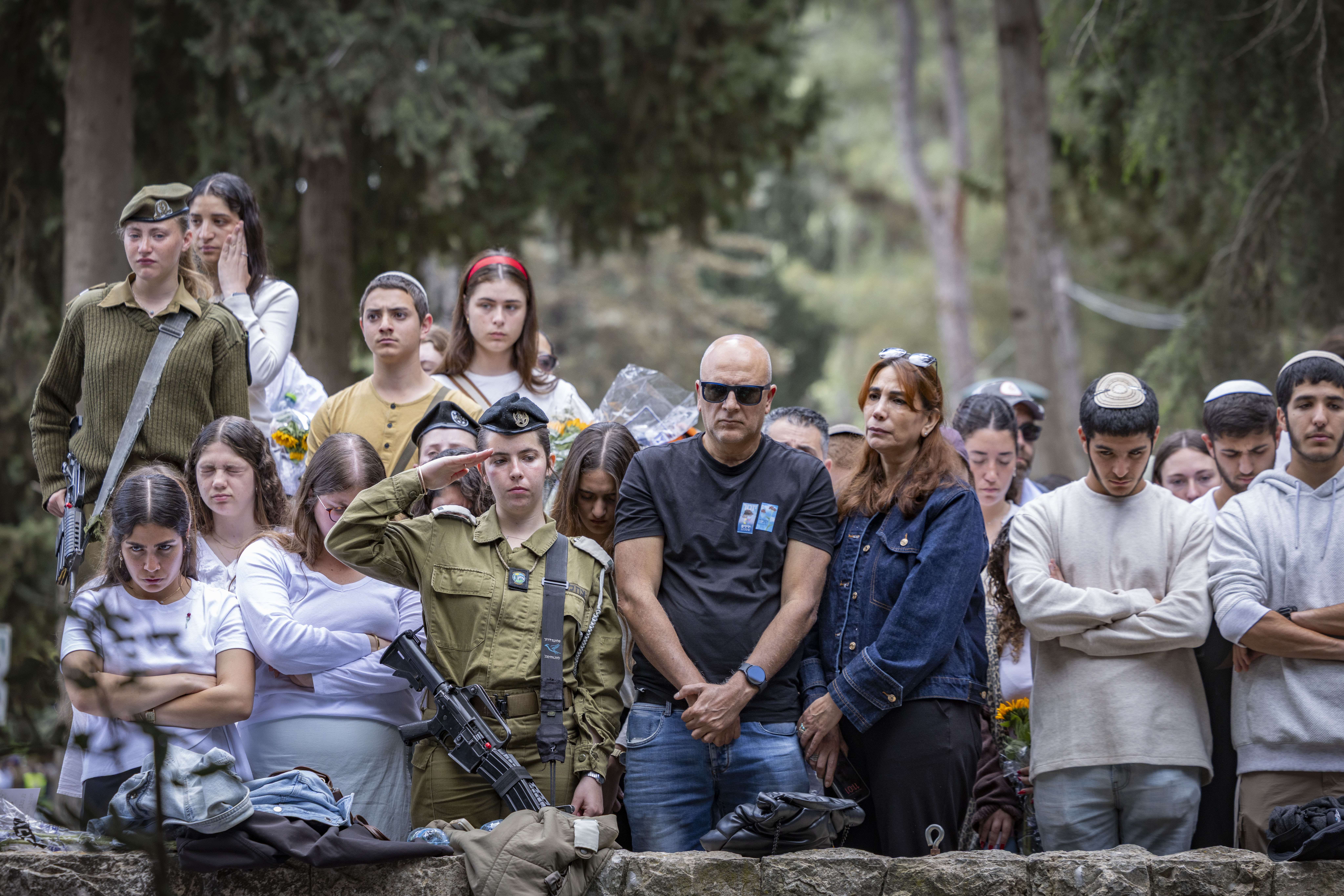
Chaim Goldberg/Flash90
People stand still as a two-minute siren sounds across Israel, marking Memorial Day which commemorates the fallen Israeli soldiers and victims of terror, at Mt. Herzl Military Cemetery in Jerusalem on April 21, 2026.




 Add EJP on Google
As in every year on Yom HaZikaron, Israel’s Memorial Day, the country came to a halt this morning for two minutes as sirens wailed across the country. These were not the oscillating air-raid sirens that have come to define Israeli life over the past two-plus years, telling anyone who hears it to run for cover, but a flat, unwavering tone calling for those who hear it to stand still.
As in every year, the country’s cemeteries were full of relatives of the 25,644 soldiers, police officers and other security personnel who have been killed defending the Zionist enterprise in the land of Israel since 1860. As in every year, the schoolyards were filled with students and teachers holding ceremonies. In the high schools, they remember the former students and faculty who are among the fallen.
But while the ceremonies and trappings of the day remain constant every year, this Yom HaZikaron is different. While the ceasefire agreements with Iran, Lebanon and Hamas are holding and the military’s safety restrictions on public gatherings have been lifted, the country remains in a state of war. Thousands of Israeli soldiers are still deployed in southern Lebanon — both as Israel prepares to establish a security zone in the area and as the military remains ready to resume active warfare with Hezbollah — and IDF troops are also awaiting the results of ongoing negotiations to disarm Hamas in Gaza.
Despite the ceasefire in Lebanon, which went into effect last Thursday, this year’s Yom HaZikaron also comes just days after two more soldiers fell in battle — Warrant Officer (res.) Barak Kalfon, 48, and Sgt. First Class (res.) Lidor Porat, 31 — both killed by roadside bombs that had been laid before the armistice went into effect.
Due to the continued travel disruptions caused by the wars with Iran and Hezbollah, many of the families of foreign-born fallen soldiers were not able to make the trip to Israel, requiring them to mark the memorial day at home.
Of course, for the families of the 170 Israeli service members who have been killed over the past year, this Yom HaZikaron is different.
And then, as in every year, as the sun sets, Israelis will do the unimaginable and perform a full 180, pivoting sharply from the mourning of Yom HaZikaron to the joy of Yom HaAtzmaut, the country’s Independence Day. While the country’s main Yom HaZikaron events were able to be held in person, due to the ceasefires, the national Yom HaAtzmaut ceremony on Mt. Herzl has already been pre-recorded. After canceling them due to the military’s restrictions on public gatherings, many Israeli cities and towns have also hastily reorganized street parties to celebrate the country’s 78th anniversary.
Yet on Yom HaAtzmaut too, things will be different this year — the celebrations perhaps a bit less jubilant in light of the lingering heaviness of war.