Opinion
PHILANTHROPY TRENDS
The more things change…




 Add EJP on Google
The past five years have been marked by uncertainty: the COVID-19 pandemic, war in Ukraine, the Oct. 7 attacks, multiple wars with Iran. We have spent this time navigating the peaks and valleys and guiding our partner organizations to strategies and approaches that will achieve success in a tumultuous world. I salute our colleagues in Israel for their resilience and determination, staying focused on making a difference and remaining engaged between sirens and red alerts.
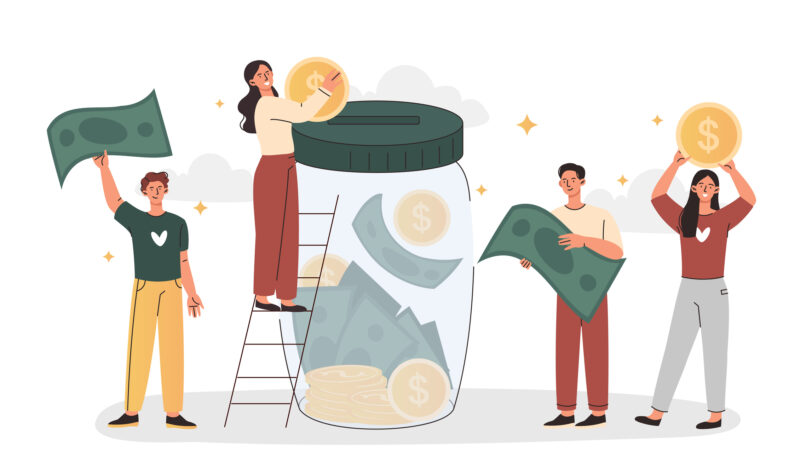
Living in the philanthropy world, I keep a close eye on the landscape and direction of major giving, the lifeblood of successful nonprofits. We hear so often that giving is undergoing profound transformation, shaped by economic pressures, generational shifts, technological innovation and evolving donor expectations. Giving remains strong, yet strategies, structures and motivations behind major giving are changing. A knowledge of emerging trends along with proven “best practices” is essential for nonprofit leaders seeking to advance growth-oriented, high-impact fundraising programs going forward.
Rudzhan Nagiev/Getty Images
Fewer donors, larger gifts
One of the defining trends in major gift philanthropy is the continued environmental shift toward “fewer donors, more dollars.” Overall, giving remains resilient, but growth is increasingly driven by larger gifts rather than broad-based participation. In fact, the decline in smaller gifts was part of the impetus by the Giving Institute to establish the Generosity Commission, which studied the trends of the philanthropic marketplace with a focused look at millennials and other younger and emerging cohorts and their impact on philanthropy going forward.
In its recently released “2025 Trends in Giving,” the Blackbaud Institute noted the following reliance of all nonprofits on major giving:
“Large organizations received 84.5% of annual revenue from major gifts, compared with 51.7% for small organizations — a gap that explains much of the performance divide. Major giving is critical for organizations of all sizes — and for organizations struggling to achieve growth. Strengthening major gift strategy is often a necessary starting point.”
This concentration of giving means that to grow, nonprofits must invest more heavily in identifying, cultivating and stewarding high-capacity donors. It widens the gap between large, well-resourced institutions and smaller organizations struggling to access major donors. As I have noted and stressed over the past decade, both in previous op-eds in eJewishPhilanthropy and with our clients, future success will increasingly depend on intentional major gift strategies, robust prospect research and use of data, integrated into long-term relationship building.
DAFs and foundations: Donors are smarter, more strategic and more sophisticated
I see it every day: Major donors in 2026 are very generous but more strategic than ever, functioning in a hyper-competitive marketplace. Gen Xers, who continue their rise into positions of nonprofit board and professional leadership and are key philanthropic decision-makers and allocators of major gifts, increasingly approach philanthropy with the same rigor they apply to business and investing. This means a focus on ROI, long-term impact and an alignment with personal values.
And while we know that charitable intent is innate and most individual giving is driven by an emotional bond and passionate purpose, it certainly is a bit more “transactional” today, with donors increasingly relying on more advanced approaches such as impact measurement frameworks and data-driven decision-making, insisting on a CEO or a rabbi who can read a spreadsheet. They are no longer satisfied with simply funding programs; they want to understand the nature and scope of results created by their dollars, how those results drive change and their translation into impact. We encourage all nonprofits to understand this and to integrate this into their approach to the market and to prospective donors and funders.
Acting as extensions of individual giving, donor-advised funds (DAFs) and private foundations continue to grow in popularity, offering donors flexibility, tax advantages and strategic control over their giving.
In CCS Fundraising’s Oct. 15, 2025, newsletter by Robin Rothman, titled “The Future is #DAF: Donor-Advised Fund Growth and How Nonprofits Can Benefit,” the author quotes Elizabeth Abel, CCS senior vice president (and a former colleague):
“When I consider donor-advised funds, I imagine new opportunity…an opportunity to connect donor intent with impact, to turn long-term planning into immediate generosity. Abel goes on to say, “The data confirms what we see in practice: DAFs are not only expanding in scale but also changing how nonprofits engage major donors and integrate a range of giving vehicles into their gift request strategies.”
So, to advance in this market, we encourage successful nonprofits to clearly articulate who they are and their value proposition and why they deserve support, while elevating and strengthening their selling proposition/case for giving. This can be achieved while employing clear metrics, compelling storytelling tied to outcomes and full transparency.
The Great Wealth Transfer
Over the next generation, an astounding amount of financial resources and philanthropic power will transfer between generations, creating one of the most significant opportunities in philanthropic history. This wealth transfer is already influencing philanthropy, as younger donors bring different expectations and values.
As noted in the 2025 article “The Great Generational Wealth Transfer” for Glenmede:
“By 2048, an estimated $124 Trillion may flow from older to younger generations, with approximately $100 trillion moving from the Silent Generation (post WWII) and Baby Boomers to Gen X and Millennial heirs as well as charities. This massive intergenerational shift in assets will affect the giving and receiving generations differently, underscoring the importance of being prepared and being clear about intentions.”
Engaging the next generation is critical for long-term growth and success. Next-generation philanthropists often prioritize social issues and are also more likely to seek hands-on engagement, collaborative giving models and transparency. Digital engagement, peer influence and authenticity play a larger role in their decision-making.
Emphasis on trust and transparency
Trust-based philanthropy is gaining traction, with donors increasingly favoring unrestricted, multiyear gifts that empower organizations rather than restrict them. High-profile philanthropists have modeled this approach by giving large, flexible grants designed to strengthen nonprofit capacity and leadership. At the same time, there is growing scrutiny of how charitable dollars are allocated.
In the future, nonprofits must demonstrate effectiveness and fairness, inclusivity and community-centered approaches. Donors are asking deeper questions about who benefits and how decisions are made. I recommend that this be part of the conversation between nonprofits and their friends and supporters. Trust goes two ways. Make it work for you and your organization.
Technology and data
Technology is transforming major giving and asking. Digital platforms, AI and advanced analytics are enabling nonprofits to identify prospects, personalize outreach and predict donor behavior with increasing precision.
Additionally, technology creates opportunities for more sophisticated stewardship, including real-time impact reporting and customized donor experiences. As online giving continues to grow quickly, digital engagement is becoming an essential component of donor cultivation.
However, I emphatically and unequivocally believe that technology is not a substitute for investing in and building relationships. The future of major giving requires a careful balance between high-tech tools and high-touch engagement.
In conclusion, the future of major gift philanthropy is dynamic, complex and full of opportunity. While the total pool of donors may be shrinking, the influence and expectations of major philanthropists are expanding. So, we recommend that you think about what you might do:
- Point your nonprofit forward: set your strategic direction and strengthen your sense of mission and purpose, expanding your capacity to achieve it.
- Understand your leaders and donors and guide them. Help them to help you.
- Gain access to data and knowledge about individuals, families and institutions — from inside and outside — that expands your organization’s network, perspective and capability.
- Build your board and volunteer leadership with individuals who bring the three W’s — wealth, wisdom and work — to the benefit of your nonprofit.
Organizations that embrace data, prioritize relationships, align with donor values, evolve from transactional giving to a more transformational partnership and demonstrate measurable impact will be best positioned to succeed. Success in this increasingly competitive market will require nonprofits to think more strategically, operate more transparently and engage donors more meaningfully than ever before.
Avrum Lapin is the president of The Lapin Group, LLC, a full-service fundraising and management consulting firm for leading nonprofits. He is also a member of the board of The Giving Institute and the Global Jewry Advisory Board.