WHAT YOU SHOULD KNOW
Western Wall gets swept up in Israeli government’s feud with the judiciary

GIL COHEN-MAGEN/AFP via Getty Images
The Orthodox section of the Western Wall.




 Add EJP on Google
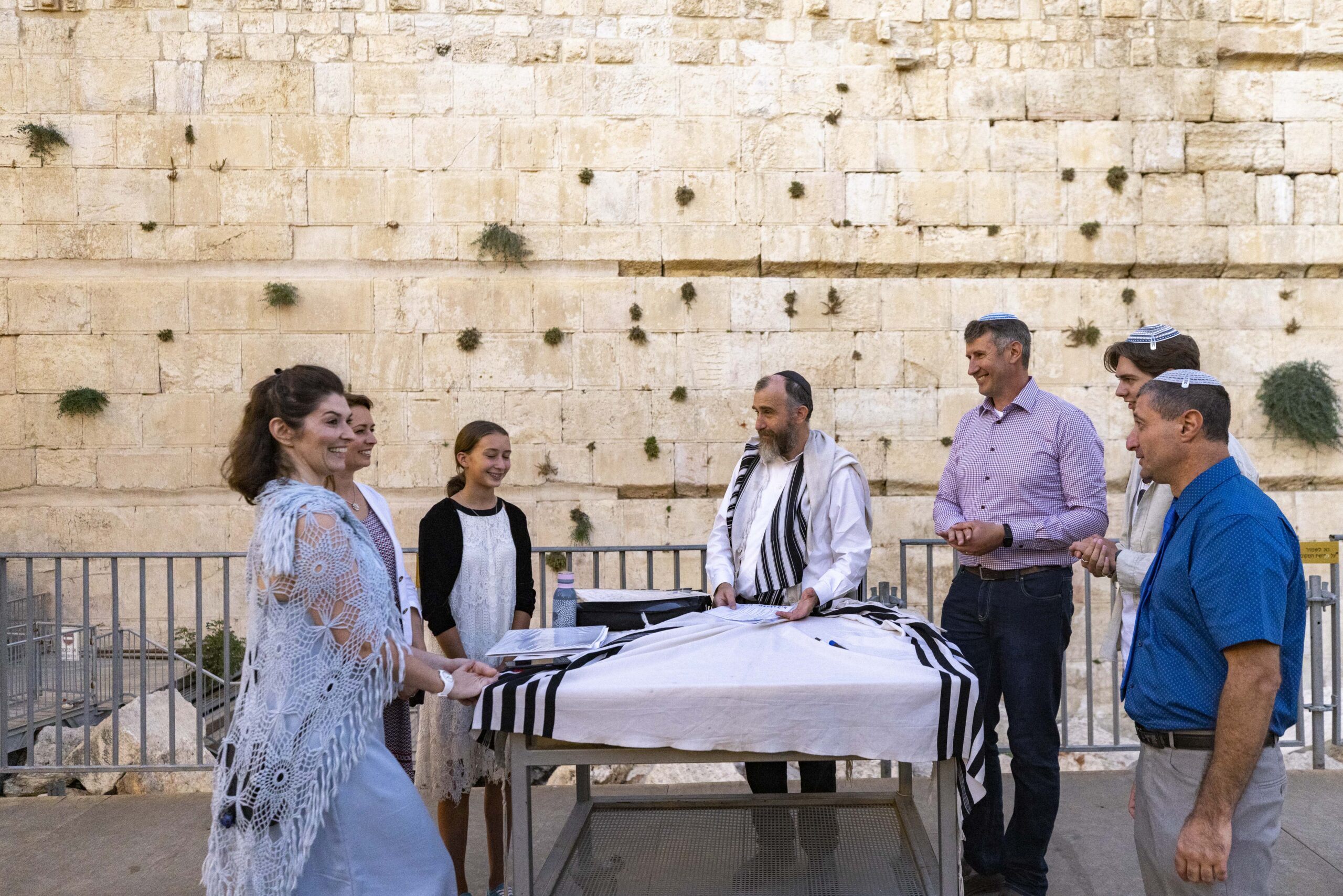
A bill that would effectively criminalize egalitarian prayer at the Western Wall, including in the southern section where today many Reform and Conservative families celebrate bar and bat mitzvahs, passed its initial reading in the Knesset today by a 56-47 vote. The measure was hailed by Haredi and other Orthodox politicians as a victory for traditionalism and sharply denounced by progressive Jewish leaders and Israeli opposition members as a blow to religious freedom and an insult to Diaspora Jewry.
From here, the bill heads to the Knesset’s Constitution, Law and Justice Committee, where it will be subject to further debate and amendments, before it can head back to the plenum for its final two votes.
The bill — an amendment to Israel’s 1967 Protection of Holy Places Law — would define as a “desecration” of the country’s holy sites any “behavior that is in violation of the Chief Rabbinate and its rulings,” which would include mixed-gender prayer. Under the law, such “desecration” is punishable by up to seven years in prison. (While the bill was devised as a counter to progressive Jewish practices, it has also faced right-wing opposition, as it could also bar Jewish visits to the Temple Mount, since they are also forbidden by the Rabbinate.)
The bill, which was proposed by Knesset Member Avi Maoz, the head of the far-right religious Noam Party, comes amid renewed debate over the long-stalled Western Wall Compromise, a 2016 agreement that would have given progressive movements official control over the egalitarian plaza, following a High Court of Justice hearing related to the matter earlier this month, as well as a separate, larger dispute in Israel over the role and authority of the court system. (Coincidentally, Maoz got his start in Israeli politics by serving as the right-hand man of then-minister Natan Sharansky, who helped broker the Western Wall Compromise when he was serving as the executive chair of the Jewish Agency.)
Introducing the bill, Maoz specifically cited the recent court ruling, which called on the government to carry out the renovations that it had previously promised to make to the egalitarian plaza of the Western Wall, also known as Ezrat Yisrael, as his primary motivation for bringing forward the legislation. “I want to say thank you to the High Court of Justice,” Maoz said. “I hadn’t submitted this bill until the High Court gave its ruling, and therefore I am submitting this bill against the High Court.”
Justice Minister Yariv Levin, who championed the bill despite voting in favor of the Western Wall Compromise 10 years ago and who has spearheaded the government’s judicial overhaul, similarly said that the legislation was a rebuke of the High Court of Justice. “The Knesset said to the High Court — enough!” Levin said today.
Despite Maoz and Levin citing the High Court of Justice ruling as their motivation for the bill, the judges did not address the status of the holy site or call for the implementation of the Western Wall Compromise, but focused instead on the government’s promises to upgrade the site, which has not had direct access to the Western Wall since a stone fell from it in 2018.
In a heated response to the bill, Yesh Atid MK Merav Ben Ari noted that the bill comes as American Jews have come to Israel’s aid for the past two-plus years since the Oct. 7 terror attacks. “What will you say the next time you visit the American Jewish community? What will you say to them? What will you say to those amazing people who after Oct. 7 donated [$2 billion]? … Who brought the money to Sderot and Ofakim, to the reconstruction of the [Gaza] envelope…? The Jews of the Diaspora,” Ben Ari said. “Instead of saying thank-you to them, you are passing this bill, which is a thumb in the eye.”
In the days before the bill was put forward, the Jewish Agency for Israel, along with the Reform and Conservative movements and other international Jewish groups, sought to scuttle the vote, holding high-level talks with Israeli Prime Minister Benjamin Netanyahu’s office and other Israeli political leaders on the matter, sources told eJewishPhilanthropy. They warned that altering the status quo at the Western Wall would drive a wedge between Israel and Diaspora Jewry, particularly American Jews, most of whom identify with the Reform and Conservative movements.
“Were legislation like this moved forward in any other country — limiting the rights of Jews to pray according to their custom at their holy sites — many of the members of Knesset who supported this legislation may even call it antisemitic,” Yizhar Hess, the vice chair of the World Zionist Organization and a former head of the Masorti Movement, said in a statement. “The prime minister of the Jewish state must publicly intervene following this horrific message having been sent to the majority of world Jewry and say: This bill will never become law.”
While the bill does not have practical ramifications until it passes its final readings, which could take several months, activists have told eJP that even its initial passage could affect the ongoing High Court proceedings, allowing the government to credibly claim that the judiciary should not intervene as the matter is being addressed by the legislature.