Opinion
FOUR YEARS LATER
The only people entitled to ‘Ukraine fatigue’ are the Ukrainians




 Add EJP on Google
There is a familiar and troubling pattern in how distant crises are received: They arrive with urgency. They dominate the headlines. And then, gradually, they fade from view, not because they have ended, but because something newer, louder or more immediate has taken their place.
The plight of Ukrainians, living through a prolonged war they did not choose, has not been spared this fate, and it demands our continued attention.
sushytska/Adobe Stock
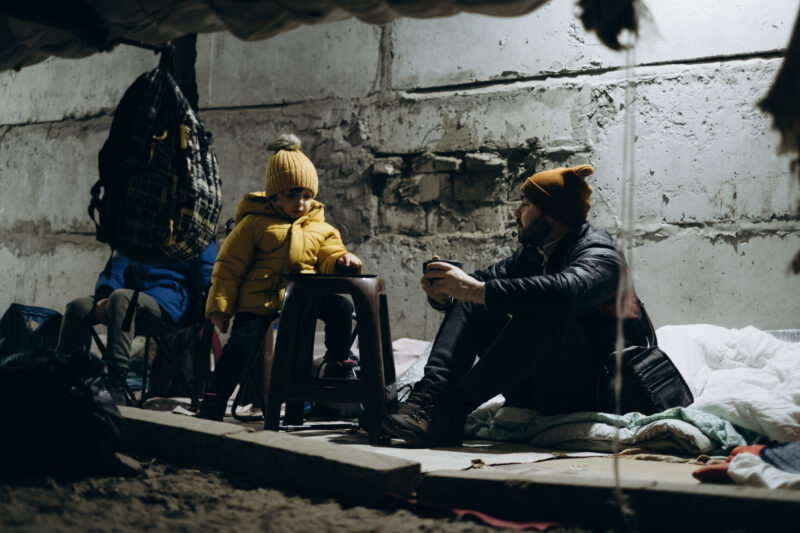
A family in a bomb shelter in Ukraine.
The war did not end when it slipped from the front page. Missiles did not stop falling because another emergency emerged, or because the world’s attention shifted, or because the story grew old. And yet Ukraine is increasingly spoken of as if prolonged suffering somehow diminishes with time, as though a crisis becomes less real once it is no longer new.
This is what people mean when they speak of “Ukraine fatigue.” They are not describing a change in the war. They are describing a change in themselves.
While the length of the war may have exhausted the world’s attention, it has exhausted Ukrainians.
Four years after Vladimir Putin launched his invasion, Ukraine still exists because Ukrainians chose to stay. They stayed when they were told Kyiv would fall within days. They stayed when the war was expected to end within weeks. They stayed as headlines thinned and attention drifted.
There is an uncomfortable truth embedded here. This war could have ended quickly. The simplest path to peace would have been for Ukrainians to give up. They could have accepted occupation, surrendered sovereignty and abandoned the idea that there should be a Ukraine at all. That option was always available. Ukrainians rejected it. They have paid for that decision with years of fear, loss and exhaustion.
A few weeks ago, I spent two days in Ukraine, visiting Kyiv in the heart of winter. Temperatures were well below zero. Electricity was rationed to just two or three hours a day after repeated attacks on power infrastructure left the electrical grid fragile. After nightfall, the city grew darker, not because life stopped, but because streetlights were turned off to conserve power and prevent total system failure.
This darkness is not metaphorical. It shapes daily life. It affects how people move, how safe they feel and how long they remain outside. It deepens isolation and sharpens fear.
Air alerts sounded without regard for time of day or night, warning of incoming drones or missiles. Even when there is advance notice, many people cannot respond in the way safety guidance assumes. Older adults. People with disabilities. Those living several flights up in buildings without elevators. How many times in a day can someone descend dark stairwells? How many times should they be expected to choose between safety and what their bodies will allow?
Over time, this constant vigilance becomes unsustainable. Many Ukrainians no longer respond to every alert, not because they believe the danger has passed, but because living in a permanent state of interruption makes ordinary life nearly impossible. This is not indifference. It is endurance.
And still, what persists is determination.
I met people living in apartments where windows had been blown out by nearby missile strikes, leaving homes exposed to brutal cold. I met mental health professionals carrying their own injuries and losses while helping others manage anxiety and grief. I met community leaders who gave up businesses and livelihoods to support civilians living closer to the front lines.
One of them is Maxim, who founded a nonprofit called Blagorob after the war began. Working with humanitarian partners, Blagorob delivers vital supplies for living, including generators, heating equipment and household essentials, to civilians who remain under constant threat near the front lines. This work is not dramatic. It does not lend itself to slogans. But it makes daily life possible.
Support for Ukraine today is not about urgency or novelty. It is about stamina. Organizations working alongside Ukrainians are repairing homes, providing winter support, offering trauma-informed mental health care and helping people adapt livelihoods so they can continue to support themselves and their families. This work is steady, practical and deeply human.
When people say they are tired of hearing about Ukraine, what they are really saying is that sustained attention has become inconvenient. But inconvenience is not the same as burden. Fatigue implies choice.
Ukrainians do not have that choice.
They cannot mute the alerts. They cannot opt out of winter. They cannot decide that the war has gone on long enough.
One day, this war will end. When it does, history will not be especially interested in who grew tired of paying attention. It will remember who remained engaged when attention no longer came easily, and who understood that solidarity is not measured by how loudly we speak at the beginning, but by how steadily we stay until the end.
And the only people who have earned the right to be tired are the Ukrainian people who never had the option to stop.
David Weisberg is the executive director of World Jewish Relief USA, which works alongside local partners to support people affected by conflict, displacement and disaster, in Ukraine and throughout the world.