Opinion
Why I support the Ezrat Yisrael egalitarian prayer space, separate from the Kotel




 Add EJP on Google
I am not Reform or Conservative — I am an Orthodox rabbi, fully committed to halacha and Jewish tradition — yet I am deeply disturbed by proposed legislative actions in the Knesset to cancel the egalitarian prayer space separate from the Western Wall, or Kotel, in Jerusalem. A new bill, up for first reading on Wednesday, would put the area, which currently allows mixed-gender prayer and other non-Orthodox practices, under the control of the Chief Rabbinate. The Rabbinate would then have the authority to outlaw these non-Orthodox practices in the area, which sits just south of the main Kotel plaza, preventing our Conservative and Reform brothers and sisters from having a sacred space where they can practice according to their customs.
After I posted these thoughts on social media earlier this week, I was so appreciative of the emails thanking me for posting such a comment, and equally appreciative — perhaps even more so — of the challenging messages I received. I want to explain further my thoughts on this subject and why such a bill, being presented in the name of protecting Orthodoxy, calls on all of us who value religious tradition and practice to look carefully at our approach to Judaism in the public sphere.
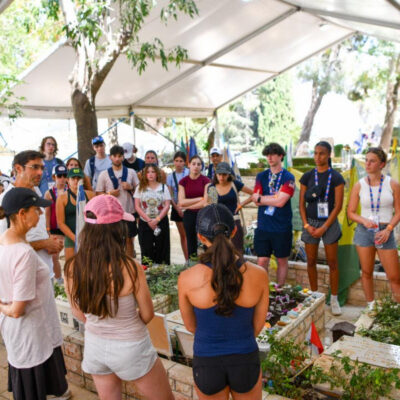
First of all, I am not asking for anything to be changed. I support maintaining the status quo, which this bill wants to abolish. The Kotel is and should remain a place of traditional, Orthodox prayer practice in accordance with halachic standards, such as formal separate prayer spaces for men and women, as well as standards of dress, and public Shabbat and holiday observance. At the same time, the nearby southwestern area of the enclosure around the Temple complex, which for more than a decade has been officially designated as Ezrat Yisrael, a place of egalitarian prayer, should also stay that way.
It is important to note that this southwestern area, within the archaeological park of the Davidson Center, never held the status of the Temple Mount and was never a makom tefillah, or place of prayer. During the First and Second Temple periods, it served as a public street to the Temple complex, containing markets and other services for visitors and pilgrims. Therefore, there has never been any halachic character to the designated alternative prayer space.
In addition, maintaining the already established modern egalitarian prayer away from the Western Wall plaza encourages unity, promotes inclusion and helps to ensure that the character of the Kotel prayer space cannot be changed. Born through a compromise approved in January 2016, the southwestern wall’s designation as a place of egalitarian prayer — while the Kotel remains operated according to Orthodox practice — is an example of respecting all streams of Judaism.
Especially at a time when antisemitism is rising across the world, and Jews are targeted not for how they practice Judaism, but simply for being Jews, all of us must remember that the Jewish people, with all its streams and movements, are one family. We are bound by a shared heritage and a shared history, stained with the blood of our persecuted ancestors, whom we mourn each Tisha B’Av.
When it comes to everything else, Orthodox rabbis are indeed now working with other denominations. When there are common Jewish concerns and causes, we sit on boards with leaders of the Conservative and Reform movements. When Israel is in need, we have no problem accepting financial support and donations from all Jews. When there was a need to discuss the antisemitic positions of New York’s mayor, Zohran Mamdami, all streams of rabbis and institutions signed a joint declaration from UJA-Federation of New York, New York Board of Rabbis, Agudath Israel of America and Orthodox Union. But when we want to maintain separate prayer locations, too many people draw the line of legitimacy in the name of protecting Orthodoxy. This is a mistake (and by the way, Orthodoxy, thank God, does not need protection).
Such antagonism toward other streams of Judaism, even when it presents itself as concern for Torah or the future of the Jewish People, does not strengthen Orthodoxy. It makes us look weak, and it undermines the unity of our people at a time when unity is needed more than ever. It risks jeopardizing Israel’s relationship with the Diaspora, where most Jews are not Orthodox. We cannot demand solidarity from world Jewry while denying them dignity in our holiest city, which is the birthplace of our common heritage.
Jerusalem has long been a symbol that galvanized and unified Jews of all kinds from all over the world. When parts were liberated in 1967 from Jordanian control, they were liberated by secular, traditional and religious Israeli soldiers. When the army declared “Har Habayit b’yadeinu” (“The Temple Mount is in our hands”) upon capturing the Old City, this was not a liberation for any specific segment of the Jewish people; they liberated it for all Jews. Upon doing so, many immediately recited prayers and blew the shofar both out of a reverence for the past and immense hope for the future of Israel.
If the southwest wall loses its status as an egalitarian prayer area in order to ‘protect Orthodoxy,’ the entire area, so central to who we are as a people, will become a symbol of exclusion. Jews attacking other Jews in the name of God destroyed the Second Temple commonwealth. Over the past two years, we have sacrificed too much to let it happen again.
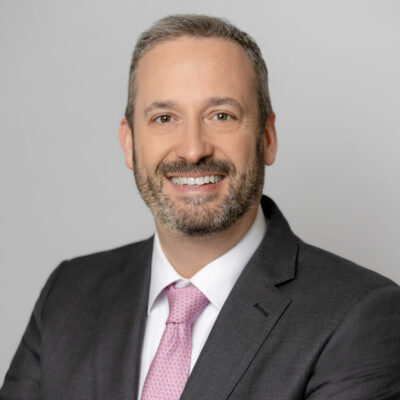
Rabbi Kenneth Brander is the president and rosh yeshiva of Ohr Torah Stone.