Opinion
Launch a decade of renewal, now




 Add EJP on Google
Zohran Mamdani, a democratic socialist, is mayor of New York City, and America’s far left is surging. Tucker Carlson and America’s far right are gaining ground. The Israel-Hamas war has ended, for now, and American Jewry remains deeply fractured. There are many reasons to be discouraged, but none for resignation. With bold leadership, 2026 can become a turning point for American Jewry toward a decade of renewal. Based on past experience, that is what will happen.
Mark Twain apocryphally said: “History doesn’t repeat itself, but it often rhymes.” Without a doubt, World War II and the Holocaust were the bleakest era in the recent history of world Jewry, but the preceding interwar period, which included the Great Depression, was not rosy for American Jews either. As described by professor Jonathan Sarna in his seminal book, American Judaism, the 1920s and 1930s were marked by rampant antisemitism and Jew-hatred, which was compounded by severe economic and societal crises and internal divides. Henry Ford disseminated conspiracy theories about a global Jewish plot; universities, clubs and neighborhoods imposed quotas; the Ku Klux Klan flourished, and Leo Frank was lynched; Catholic and Protestant leaders used their radio platforms for circulating antisemitic conspiracy theories; there were dozens of pro-Nazi and antisemitic organizations; and Jews were often harrassed, bullied and attacked in the public space. Against this backdrop, there were also deep ideological disagreements among denominations and between Zionists, non-Zionists and anti-Zionists. There were also tensions among newcomers and old timers; socialists and communists; universalists and particularists.
At the same time, the interwar years saw tremendous institutional growth that turned out to seed decades of Jewish prosperity in America. Examples of institutions launched during that period include Hillel International (1923), World Union for Progressive Judaism (1926), the National Conference of Jews and Christians (1927), Yeshiva College (1928), Council of Jewish Federations (now Jewish Federations of North America) (1932) and World Jewish Congress (1936). Furthermore, the Association of Jewish Community Centers (1917), Joint Distribution Committee (1914) and New York Federation (1917) had only just been founded.
In addition, thought leadership from that period continues to shape American Jewry. Mordechai Kaplan envisioned Judaism as a civilization, inspiring all non-Orthodox American Jews and even today’s Tikvah Fund. Bernard Revel launched Yeshiva College, built the Yeshiva University Campus in Manhattan’s Washington Heights neighborhood and effectively fathered American Modern Orthodoxy. Moreover, the concept of Judeo-Christian values was introduced to the American lexicon and the first bat mitzvah was held.
The conflicting narratives regarding the interwar period — one of pressing threats and the other of dramatic renewal — are often told separately. Nonetheless, in hindsight, they represent one integrated lesson: the tremendous trials of that period led to a wave of creativity that nurtured a more vibrant and confident Jewish community that would prosper for the following decades. This lesson gives us the confidence that current American Jewry will, again, respond to the crisis it faces with institutional and intellectual innovation that will usher in a new era of security and well-being.
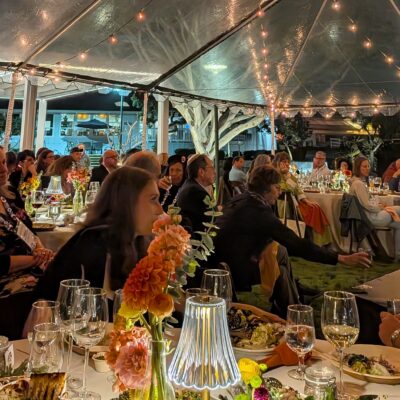
In July 2025, over 100 leaders convened for a landmark conference in New York – dubbed “American Jewry as the Great Diaspora” – to brainstorm the future of our community. Galvanized by the urgency of the moment, we looked toward the year 2054, when American Jewry will mark the 400th anniversary since the arrival of the first group of Jews in New Amsterdam in 1654.
This long-term perspective yielded a comprehensive 11-point agenda for revitalizing American Jewish life, which covers security, leadership, institutional renewal, education, relationship with Israel and civic engagement. It holds the network of institutions of American Jewry – including, but not limited to, federations, schools, camps, synagogues, JCCs, Hillels, Chabads and JCRCs — to be the superpower of our community, which needs to be recalibrated to meet current challenges and opportunities. Equally important is cultivating a pipeline of leaders who are educated and trained to lead a Great Diaspora, as well as schools that educate American Jews to be proud of the remarkable legacy of their community and its civilizational contribution to America.
Long-term security with formidable foundations are also crucially important. The 11-point agenda calls for investing in long-standing assurances for the well-being of American Jewry, primarily by partnering with government and civil society. As important are extensive people-to-people relations with Israelis, which are more immune to the whims of Israeli politics. And in the spirit of tikkun olam, the 11-point agenda encourages a distinct contribution to America, for example, by aiding underprivileged communities and veterans.
Effectuating such an ambitious renewal agenda requires confident, entrepreneurial, strategic and collaborative leadership, which embraces friction and conflict. No institution, denomination or initiative can tackle these challenges alone. Consider, for example, Jewish education, whose ecosystem includes schools, camps, curricula, teachers, experiential programs and policy. And combating antisemitism requires Jewish defense agencies, interfaith coalitions, tech companies and government partnerships. In other words, as much as we need charismatic individuals, we also need coalition-builders, and for every organization and conference to place communal renewal at the top of their agendas.
With many assets, promising initiatives and a sense of urgency, the elements for renewal are in place so that 2026, when the U.S. celebrates its 250th anniversary, becomes a once-in-a-jubilee opportunity for a renaissance.
Gidi Grinstein is founder and president of Reut USA, an Israeli and American think tank focused on the future of American Jewry. In July 2025, Reut and Rabbi Sacks Legacy led a conference on the future of American Jewry. Grinstein is an Israeli who lives in New York City.