Opinion
PRECISION LANGUAGE
What we mean when we say ‘Jewish camp,’ and why it matters




 Add EJP on Google
I’ve started paying closer attention to how the phrase “Jewish camp” is being used.
In articles, reports and social media posts, the language is consistent: Investments are described as strengthening Jewish camping. Incentive programs are credited with expanding access to Jewish camps. Evaluations conclude that these efforts have had a meaningful impact on Jewish camping as a whole. The phrasing is steady, well-supported by data and rarely questioned.

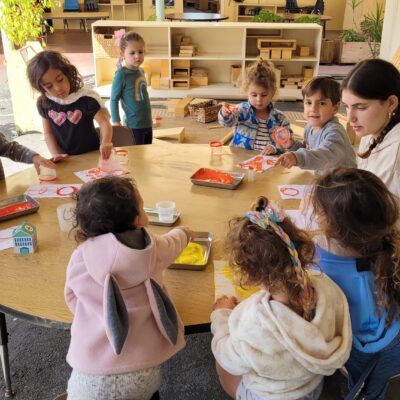
FatCamera/Getty Images
Illustrative. Kids at summer camp.
What I’ve noticed is how often “Jewish camp” appears as a unified category in headlines. Once you click on the article or open the report, however, the scope narrows almost immediately: The camps involved are mostly overnight camps. The families supported are choosing sleepaway experiences. The outcomes measured — first-time attendance, return to a second summer, long-term identity effects — are all tied to a very specific model of camp.
None of this is hidden. It is simply assumed.
“Jewish camp” has come to function as a convenient shorthand that allows multiple forms of Jewish camping — sleepaway camps, day camps, other local institutions — to sit inside a single narrative frame, even when only one type of camp is actually being referenced. And over time, the repetition does something subtle: the phrase begins to function less as a description and more as a placeholder. It moves easily through conversations, carrying approval with it, rarely slowed down long enough to be examined. Each use feels reasonable on its own.
And yet, the type of Jewish camp being referenced matters.
When a field-level term is used to describe a distinct intervention, it does more than simplify. It shapes how impact is understood, how success is claimed and which forms of work are most readily recognized.
The issue is not that overnight camps receive attention or resources. The issue is that their success is routinely allowed to stand in for the health of Jewish camping writ large. Over time, that substitution has seemed to settle. Only it hasn’t.
As more recent headlines and investments demonstrate that specificity is possible, the continued use of broad language becomes less a necessity and more a choice.
Which impact gets lifted
When people talk about the impact of Jewish camp, they tend to reach for moments that resolve: A first summer. A decision to return. A child who has come back changed. These stories have edges. They sound like impact.
Overnight camp offers this kind of story naturally. A child is entrusted to a place for a stretch of uninterrupted time. The separation is real. The immersion is complete. When it works, the change is visible. Something has happened, and it can be named.
Day camp doesn’t work that way.
Its time is shorter, but it repeats. A week. Then another. A summer. Then the next one. Trust isn’t transferred all at once. It’s built in increments. Belonging doesn’t arrive with separation; it settles in through routine. Camp becomes familiar before it becomes formative.
Day camps teach children how to be in Jewish camp settings. They make the experience legible. They make it normal. The fact that most overnight campers begin in day camps is not a coincidence. It is the result of repetition doing its quiet work.
This kind of impact accumulates, but accumulation is harder to lift into language. It resists compression — resolution into a before-and-after that can be summarized cleanly. Because of that, it is less often what gets named when people talk about impact at the field level.
Over time, the language follows what can be pointed to. Findings tied to immersion, thresholds and return are cited repeatedly — not because other forms of impact aren’t real, and not because other research doesn’t exist, but because these outcomes align with how impact is most often spoken about in public.
Nothing here is hidden. Nothing is done in bad faith. But as certain stories repeat, they begin to stand in for the whole. The phrase “Jewish camp” starts to mean something narrower than it appears. Models whose impact accumulates rather than resolves remain active and essential, but they slip out of the sentence.
The language doesn’t lie; it selects. And after enough repetition, what it selects begins to feel like what exists.
‘Participation language’
Someone “attended.” Someone “returned.” Someone “chose again.” These verbs sound like action and give us something to point to. They sound like success.
Over time, this “participation language” begins to do more than describe what happened. It starts to imply what has been built. Jewish camping is said to be stronger. The field is described as healthier. Nothing false has been said, but something else has been substituted.
The distinction between what was experienced and what was sustained quietly collapses. Participation belongs to people. Capacity belongs to places. When language about the former is allowed to speak for the latter, the field begins to sound more coherent than it actually is.
Day camps make this substitution visible because their work is inseparable from place. Their impact does not travel in the same way. It cannot be inferred from participation alone. When participation language is used to describe Jewish camping as a whole, the work that depends on continuity and local presence slips out of view.
Again, this is not misrepresentation. It is what happens when language optimized for describing experiences is asked to describe a field.
Operating support, by contrast, often enters the conversation differently. Operating support is designed to sustain an organization, not to produce a discrete outcome. Its effects are shared, indirect and cumulative, and its success often looks like continuity rather than change. Because of that, operational support rarely reshapes how impact is discussed publicly.
Day camps make this visible. Even when day camps benefit meaningfully from institutional funding, that support does not generate the kind of language that travels. It does not resolve into a headline or a summary sentence about Jewish camp impact. It sustains the work without altering the story told about the field.
So operating support does not interrupt the pattern. It runs alongside it.
The language used to describe Jewish camping continues to draw primarily from experiences that can be named, counted and summarized. The infrastructure that makes those experiences possible remains present, but largely unspoken.
What’s happening here is not confusion, and it’s not avoidance. It is connective, load-bearing language. This language didn’t emerge accidentally; it emerged because it worked.
Jewish camp has become a phrase that carries more than description. It holds alignment. It allows us to speak together without negotiating differences in public. It makes connection possible across a complex field. In doing this connective work, it allows institutions, funders, researchers and families to recognize themselves in a shared story, even when their roles in that story are quite different. The breadth is functional.
But language that carries this much weight also limits what can be seen. When a term is doing coalition work, precision begins to feel unnecessary because distinctions invite questions. And when a phrase stays wide because it has become structural, it stabilizes by absorbing difference rather than naming it.
But what holds a field together also shapes what it can notice. After a certain point, broad language stops being connective and starts becoming evasive — not because it is false, but because it asks one form of impact to do explanatory work for all the others. And once this is named, from then on speaking broadly is itself a choice.
Overnight camps can be described for what they do best without carrying the meaning of the entire field. Day camps can be recognized for the way they build continuity and familiarity, without being measured against someone else’s thresholds. Research can be read for what it actually shows, without being stretched to imply what it does not. Precision becomes additive.
The language of Jewish camp can describe without standing in. It can deepen without substituting and can grow into the shared term it has always been meant to be. And with that accuracy will come the responsibility to notice what has been doing work without being named and to recognize when language has been standing in for complexity rather than holding it. It will help the field see itself more fully and speak about impact in ways that match the complexity already at work.
Greg Feitel is the director of a Jewish day camp in Northern Virginia.