JOINT EFFORT
Just as it was wrapping up work from June war, fresh conflict thrusts JDC back into crisis mode
‘We are tired, and philanthropy is tired, and the government is tired — and the needs are just getting bigger’
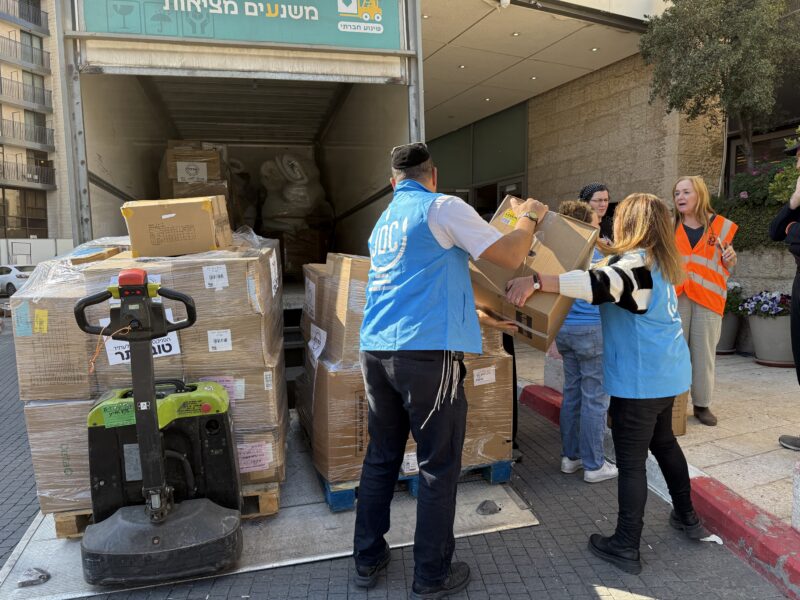
COURTESY/JDC
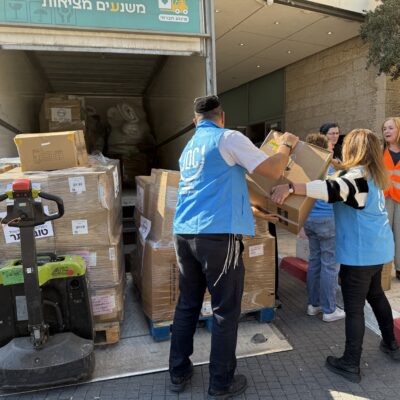
Workers from the American Jewish Joint Distribution Committee unpack supplies from a truck for residents of Beit Shemesh who were displaced by an Iranian missile strike in the city on March 2, 2026.




 Add EJP on Google
About two weeks ago, the American Jewish Joint Distribution Committee in Israel marked a milestone: A majority of families from Ramat Gan and Bat Yam in its Ad Habayit (“All the Way Home”) program — which provides “housing mentors” to help vulnerable populations who lost their homes in the June war with Iran secure new housing — were resettled.
Launched after Israel’s 12-day bombing campaign against the Islamic Republic last summer left numerous people, including seniors, people with disabilities and at-risk families scrambling for housing, the pilot program had been operating in the three cities hit hardest by Iranian rocket fire — Ramat Gan, Bat Yam and Beersheva.
“It felt like, ‘OK, we are standing in the final lines,’” Avital Rosenberger, JDC-Israel’s humanitarian operation director, told eJewishPhilanthropy on Monday. “There are still some people that will need help, but the majority of our work is done. We can look behind and be happy with what we did.”
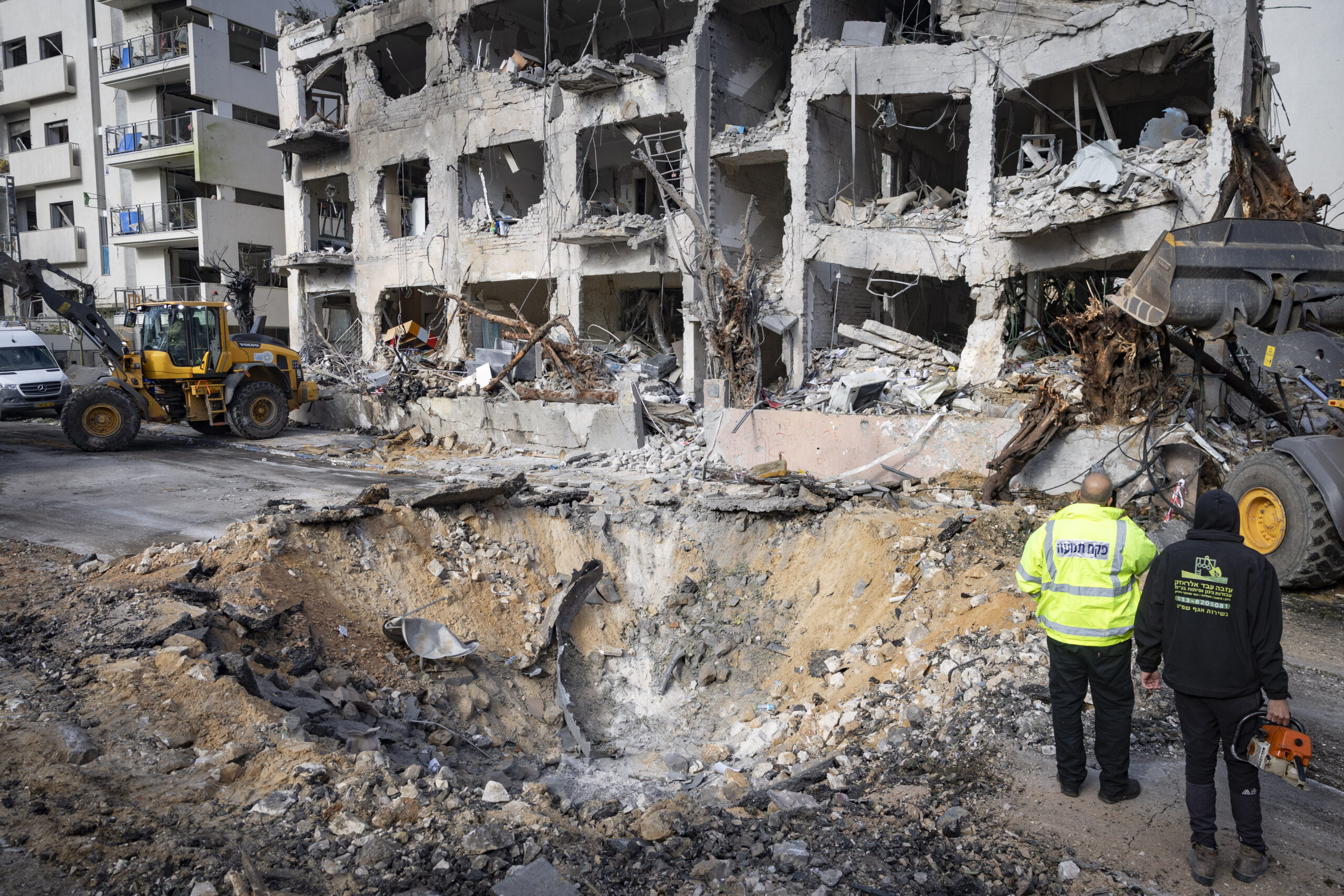
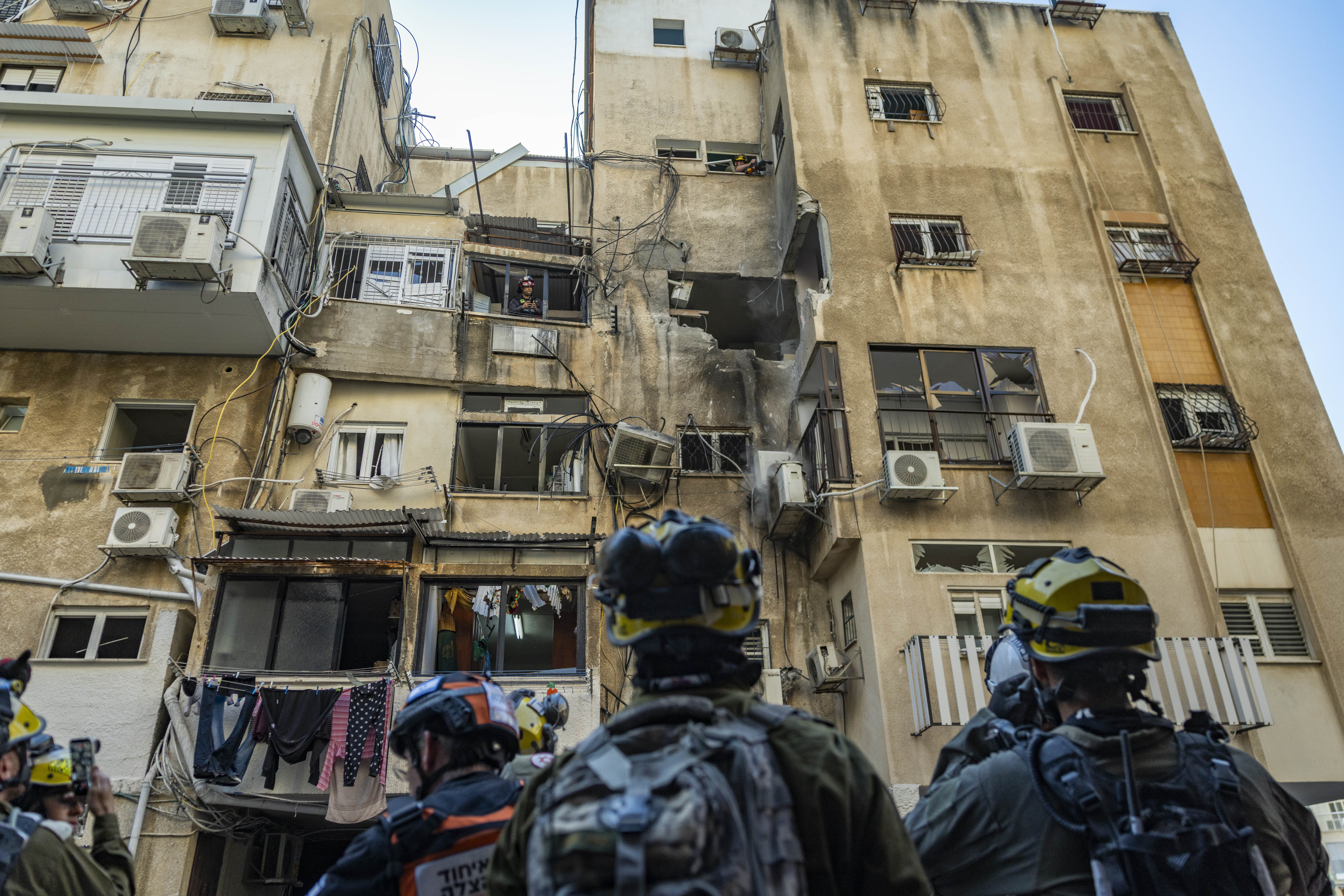
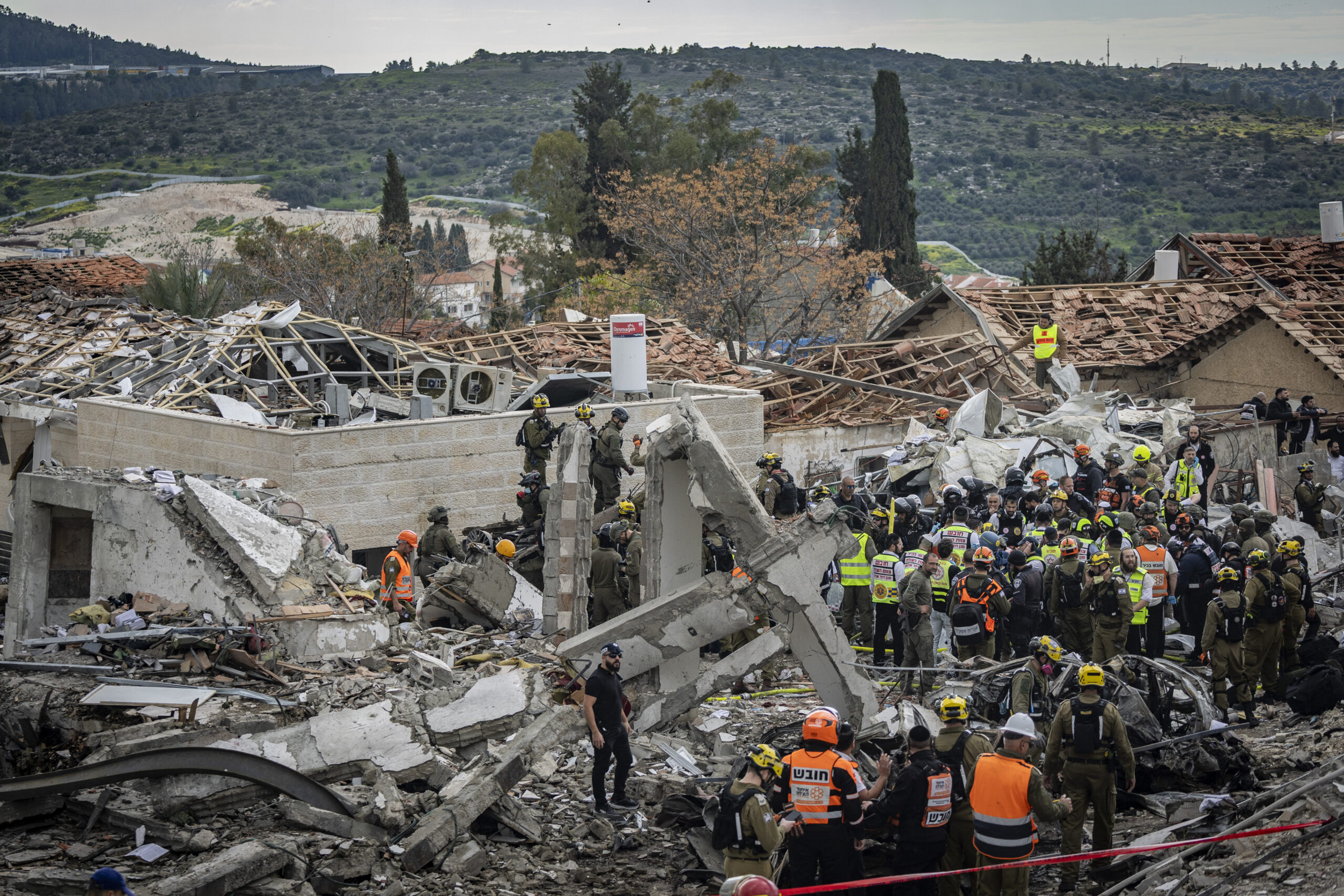
Now, five days after Israel and the U.S. launched military operations in Iran, Israeli population centers face renewed bombardment. In Israel, there have so far been three major hits including one on a synagogue in Beit Shemesh where an Iranian missile strike killed nine, injured dozens and displaced hundreds, and one in central Tel Aviv that killed one and injured dozens. And while the last two years of war have prompted groups to develop and hone their abilities to support displaced people and quickly repair infrastructure in the aftermath and midst of conflict, it has also led to compounding exhaustion.
“The needs are massive. I was there in Beit Shemesh, and I already know the evolution of a disaster. In the beginning, it’s chaos. You don’t know what you need. I was expecting to get the massive needs in a few days. But already I’m feeling that we are getting very, very heavy needs,” said Rosenberger. “We are tired, and philanthropy is tired, and the government is tired — and the needs are just getting bigger.”
According to Ran Rovner, JDC-Israel’s director of marketing and organizational knowledge, JDC’s work has become more complex in the last few years, as it has been tasked with responding to the immediate and long-term impacts of war at once. Also known as The Joint, the organization was founded in 1914 to support the Jews of Palestine, then living under Ottoman rule, though its operations quickly turned global. JDC’s activities in Israel are primarily backed by Jewish federations, as well as family foundations and private donors.
The current war with Iran opens a new, and unpredictable, pool of challenges for the organization, Rovner said. “There’s only so much we can do with our limited resources of people, funding and so on. So that’s one thing that is a challenge, because God knows what will happen in an hour from now, and hopefully not, but if something more happens, we don’t have unlimited resources to respond to all of this,” he said. “It’s not like, OK, the war started yesterday, and everything was fine beforehand. It’s a challenge on top of a challenge on top of a challenge.”
The night of the missile strike in Beit Shemesh, JDC Israel made contact with the community’s evacuees to glean their immediate necessities. This week, the organization delivered 1,800 pounds of equipment to hotels where the Beit Shemesh evacuees have been resettled, in partnership with the Israeli nonprofit Shinua Hevrati (Social Delivery). These supplies included toiletries, clothing and supplies to celebrate Purim, including mishloach manot (the traditional gifts exchanged during the holiday) and costumes.
“For Beit Shemesh, it’s just a way for us to show that we are standing next to her. Which is very important, because it’s not the only thing we are giving them. This is the first day, but we are going with them, step by step, looking at what they will need tomorrow, and then trying to be a step ahead,” said Rosenberger.
JDC made a similar delivery in partnership with Shinua Hevrati to those displaced by strikes in Beersheva, Rovner added.
JDC has also been providing municipalities with flexible funding to help evacuees access medicines and other immediate needs.
“This person, their house is ruined. But they need the pills or medicines, and they need some way to purchase them. Many of them don’t have anything, credit cards or whatever to purchase. They need chargers for their cellphones. They need all sorts of things that they had in their house,” Rovner said.
The flexible funding and physical aid are two of four “pillars” JDC has developed throughout the war to accommodate the needs of affected communities across Israel. The other two include community case workers, who visit the municipalities and provide support, mainly for those with disabilities and the elderly due to the complexity of their needs, and providing medical and emergency supplies and training for municipal emergency teams. They’ve also reengaged digital mental health resources for those in shelters, and support groups for reservist families, after 100,000 reservists were called up again this week.
After the release of the hostages, and as the period of immediate trauma was seemingly subsiding, said Rosenberger, the war’s effects on mental health were beginning to bubble to the surface. A challenge in and of itself, she said, it was a good sign and a step towards healing.
Now, that process has been further delayed.
“We know what expects us when it will be over again, and it will be worse,” she said.
But, while working to support its system at its most strained has been a challenge, said Rovner, it has also helped build a degree of resilience, and provided a crash course in developing plans for long-term crises.
“There is the element of being tired, of course, because we’re 2 1/2 years into it on one hand, but on the other hand, the support systems, they know the drill. They know how to react, which is very uplifting to see,” Rovner said. “We know what are the next steps, because we’ve been there already. That’s something that wasn’t there before.”
Related News

EXCLUSIVE
Detroit-based philanthropists Nancy, James Grosfeld donate $8M to renovate JDC’s Israel campus

MAJOR GIFTS
Center for Jewish History celebrates 25 years with a $25M matching grant
In AZM address, Cosgrove links communal ‘orthodoxy’ on Israel to rising anti-Zionism among young Jews

MAGICAL EXPERIENCE
Shefa launches psychedelics retreat for Jewish professionals suffering burnout
ADVANCING A VISION
N.Y. federation donates $1M toward building shared-society center named for peace activist killed on 10/7