WHAT YOU SHOULD KNOW
Israel’s second-place Eurovision finish offers hope as country faces diplomatic isolation
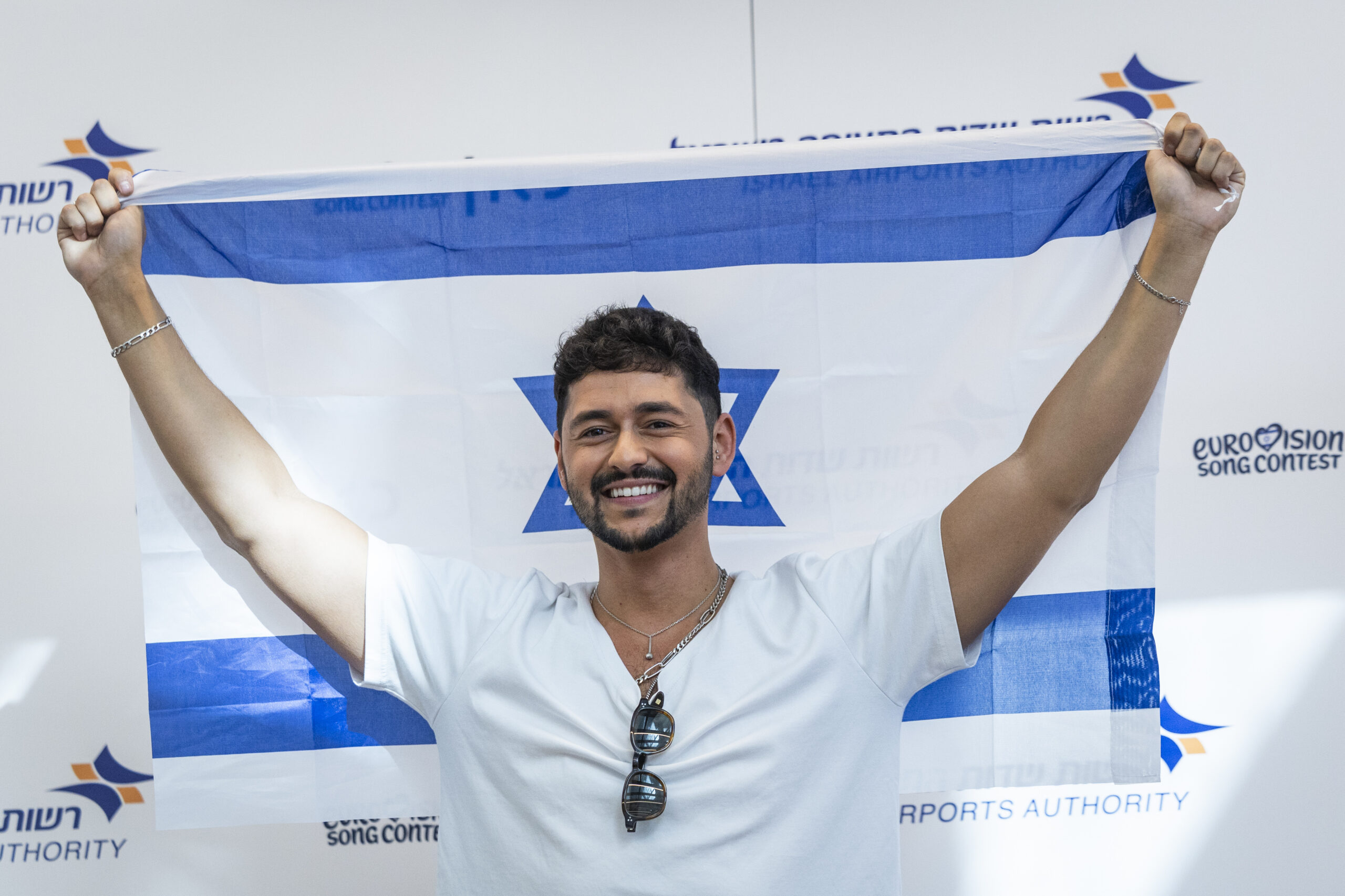
Chaim Goldberg/Flash90
Israeli singer Noam Bettan lands in Ben Gurion Airport outside Tel Aviv after coming in second in the Eurovision Song Contest, on May 17, 2026.




 Add EJP on Google
On Saturday evening in Vienna, Israeli singer Noam Bettan finished second at the Eurovision Song Contest with his multilingual pop ballad “Michelle” — marking the second year in a row that the Jewish state has claimed the runner-up spot in one of the world’s most-watched competitions.
Born in the central Israeli town of Raanana to French-born parents, the 28-year-old garnered 343 points in the final round, finishing behind the Bulgarian winner’s 516 points in a field of 35 countries.
This second-place finish for Israel offers a rare glimmer of hope for the country’s international standing, which has taken a serious hit over the past 2 1/2 years of war. The achievement also stands in stark contrast to much of the controversy surrounding the event and comes as Jewish communities throughout the world have faced growing threats and deadly attacks.
“It showed that beneath the polarization often amplified online or in political debates, there remain strong human, cultural and strategic ties between many Europeans and Israelis,” said Benjamin Touati, CEO of ELNET-Israel, a nonpartisan organization dedicated to strengthening strategic, diplomatic and economic relations between Europe and Israel.
It’s easy to dismiss Eurovision as a silly spectacle, full of over-the-top costumes and bizarre performances. But behind all the kitsch and choreography, there are profound people-to-people connections, Touati told eJewishPhilanthropy.
“It can sometimes be difficult to fully grasp the place Eurovision holds in European culture. Eurovision is not simply a music competition; it is one of the few truly shared cultural moments watched simultaneously by hundreds of millions of people across very different countries, languages and histories,” he said.
Bettan’s entry, a pop ballad about heartbreak on the streets of one of Tel Aviv’s hippest neighborhoods that flowed seamlessly between Hebrew, French and English, marked something of a return to normal for Israel.
“Walking down Florentin/ ocean eyes, memories. I’m losing my mind/ An angel, but is it hell/ Trapped in your carousel/ round and round, under your spell,” Bettan belted out.
This story of the eponymous Michelle, Bettan’s “queen of problems,” serves as a far more lighthearted, personal song compared to last year’s submission by Nova massacre survivor Yuval Raphael, dubbed “New Day Will Rise,” about national feelings of hope, healing and war. The year before, Eden Golan sang “Hurricane,” which was written explicitly about the Oct. 7 terror attacks that took place just a few months before and was originally titled “October Rain,” until the contest organizers demanded a rewrite, claiming it was too political.
Ahead of the competition, Iceland, Ireland, the Netherlands, Slovenia and Spain announced that they were boycotting the event due to Israel’s participation, while large-scale protests took place outside the venue. The vitriol led to Israel’s Shin Bet security service providing heavy protection for Bettan — more fitting for a foreign minister than a singer.
There was also a New York Times piece in the lead-up to the contest that was widely seen as describing Israel’s efforts to perform well in the competition as nefarious and duplicitous. (The article found no direct evidence of rule violations.)
Despite the tensions and threats, Eurovision viewers demonstrated a markedly different narrative at the virtual ballot box. Despite the contest’s name, participants do not only come from Europe, and residents of nonparticipating countries, including the U.S., can also vote.
Under the Eurovision format, standings are determined by a 50-50 split between a professional panel and the public televote. While Bettan finished eighth with the judges, scoring 123 points, he clinched the No. 2 spot after receiving the third-most public votes — 220 points, including the maximum 12 points from viewers in France, Germany and Switzerland.
Touati explained that there are numerous grounds for optimism regarding the future of Europe-Israel relations beyond Bettan’s achievement. Over the last few years, collaboration has deepened with nations such as Germany, Czechia, Greece, Hungary and Poland, along with several Baltic and Nordic states, spanning critical sectors such as defense, energy, technology and cybersecurity, he said. Touati added that a growing number of Europeans recognize Israel not merely as a regional ally, but as a vital contributor to the continent’s own security, economic resilience and technological innovation.
Next year in Sofia!